


Gilt Bronze Mounted Chairs
These gilt bronze mounted chairs bring French grandeur to a room, combining rich woods with cast metal enrichment.
Gilt Bronze Mounted Chairs
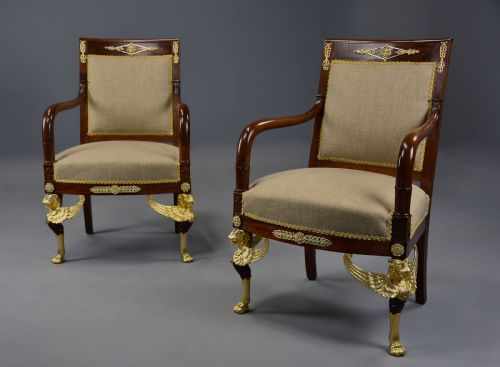
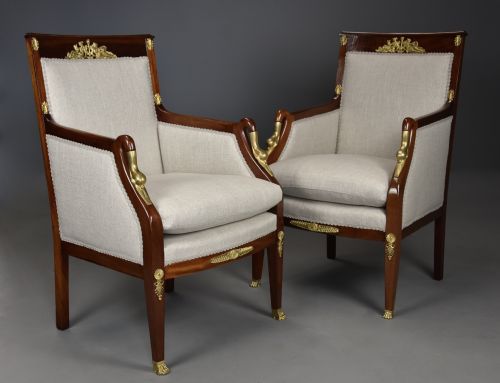
When you search for gilt bronze mounted chairs, you encounter nineteenth-century French seating built in revival styles. The selection centres heavily on Empire and Louis XV revivals, alongside Swedish interpretations of the Empire mode.
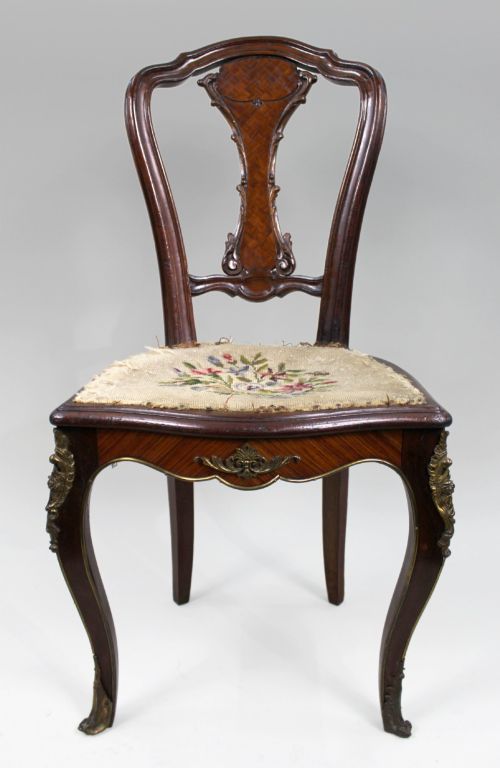
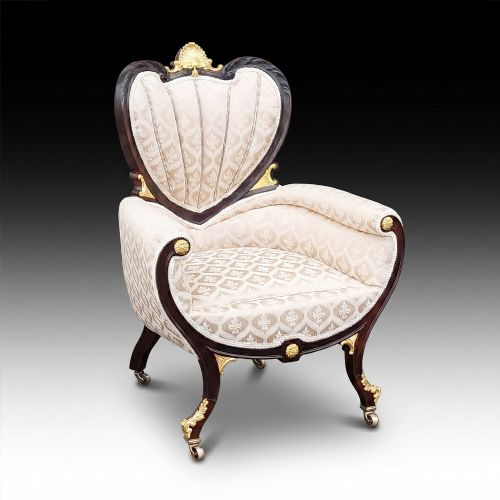
You meet open armchairs, side chairs and lounge suites rather than solitary pieces, often surviving in matched pairs. Mahogany and kingwood provide the primary timber foundations for these ornate frames.
The decorative vocabulary draws directly on classical motifs, executed with heavy cast metal mounts applied to structural timber. These chairs served formal reception rooms and parlours where display mattered as much as comfort.
How they were made
Cabinetmakers constructed the supportive frames using dense timbers like mahogany and kingwood, occasionally employing parquetry patterns on flat surfaces. These wooden carcases received careful shaping to accommodate the heavy metal mounts.
Ormolu mounts, cast in bronze and finished with a gold wash, were secured to the timber structure at prominent stress and decorative points. Upholstery finishes range from simple linen and woven fabric to moroccan leather and tapestry.
Gilt Bronze Mounted Chairs Retail Price Guide 2026
Typical asking prices for gilt bronze mounted chairs among the pieces listed under this phrase on Sellingantiques today, from the lower quarter to the upper quarter. They describe what is for sale here now, not the wider market.
Mahogany and kingwood dominate the timber choices across these nineteenth-century listings, paired with ormolu mounts.
What varies in quality
The crispness of the bronze casting dictates the visual success of the mount, separating sharp detail from soft, muddy execution. Better pieces display precise chasing on the metalwork after casting.
Timber selection and the accuracy of joinery determine the structural integrity of the chair over generations of use. Coarser examples rely on thick surface application rather than integrated design between wood and metal.
The Gilt Bronze Mounted Chairs Glossary
- Ormolu
- A gilded bronze technique used for decorative mounts on furniture. It provides a bright metallic contrast against dark hardwoods like mahogany.
- Parquetry
- Geometric wood inlay work arranged in patterns across panels. It creates subtle tonal variations on flat chair components.
- Empire Revival
- A nineteenth-century design movement copying classical Roman and Napoleonic motifs. This style heavily incorporates symmetrical bronze mounts and heavy mahogany forms.
Gilt Bronze Mounted Chairs: Frequently Asked Questions
What woods were used for these chairs?
Makers relied primarily on mahogany and kingwood for the structural carcases and decorative surfaces. These dense hardwoods provided a stable dark background that made the metallic mounts stand out.
Lighter secondary timbers occasionally appear in concealed areas, but visible surfaces favour rich, polished grains.
Are these chairs comfortable for daily use?
These seating forms were designed for formal reception rooms rather than lounging. Their upright postures and rigid frames reflect nineteenth-century social habits.
Original webbing and stuffing may require professional restoration if you intend to sit in them regularly.
How do I identify an Empire revival piece?
Look for strict symmetry, classical military or architectural motifs, and prominent gilt bronze mounts. Mahogany is the dominant timber choice for this aesthetic.
Most examples date from the mid to late nineteenth century rather than the original Napoleonic period.
Do these chairs come in pairs?
Pairs and suites appear frequently in surviving examples, reflecting how formal rooms were furnished symmetrically. Single side chairs and open armchairs also emerge.
Matching sets of three-piece lounge suites represent the larger scale of these survivals.