




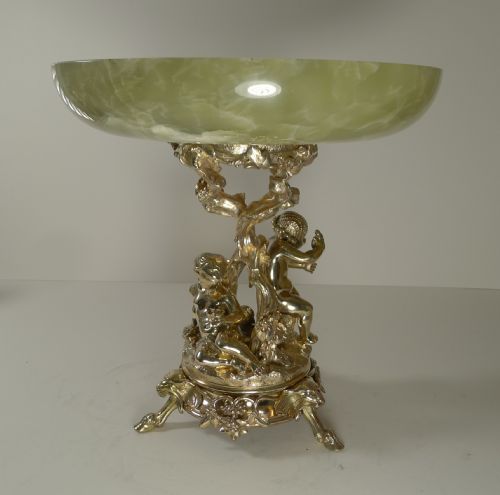
Ormolu Centrepiece Bowl
An ormolu centrepiece bowl brings a rich focal point to a table, combining gilded metal with crystal, porcelain or glass.
Ormolu Centrepiece Bowl
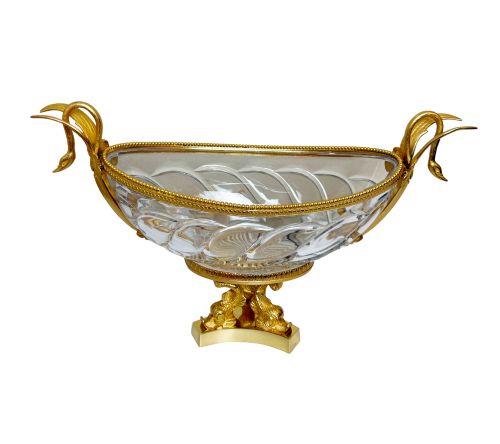
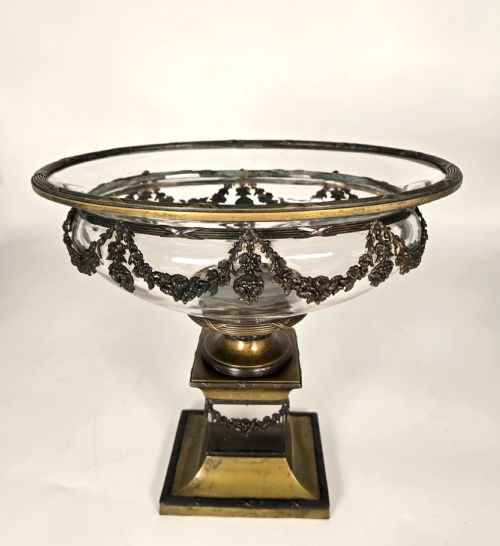
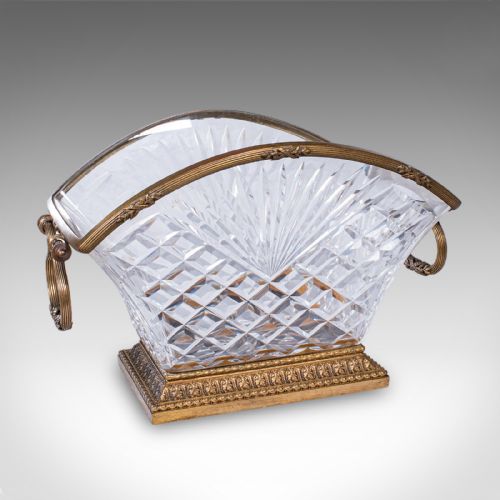
An ormolu centrepiece bowl serves as a grand table decoration, designed to draw the eye in a dining room or drawing room. When exploring an ormolu centrepiece bowl, buyers encounter ornate vessels intended for display rather than heavy daily use.
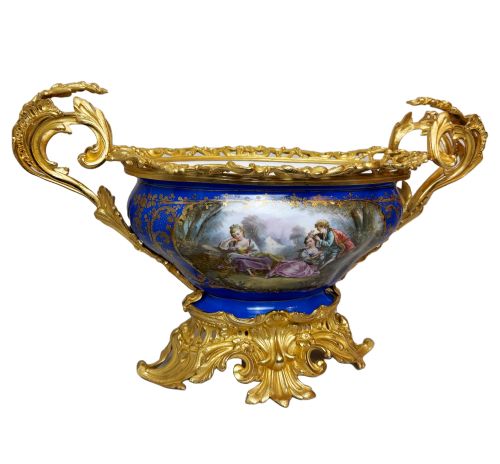
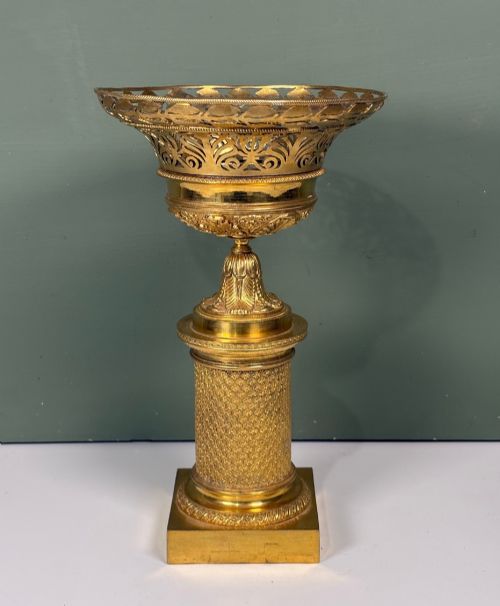
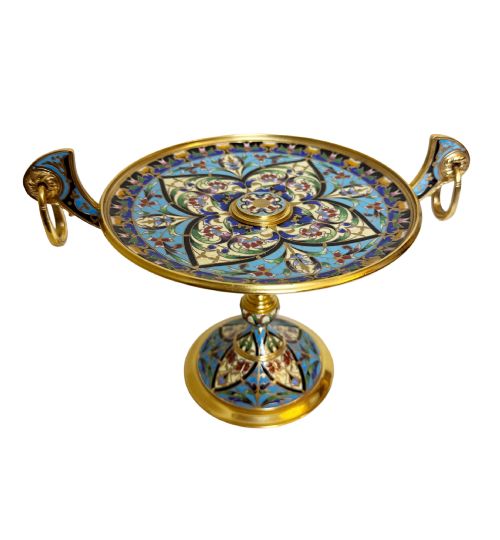
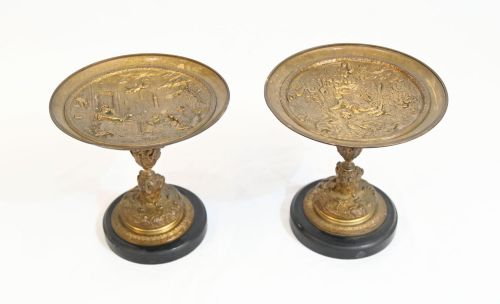
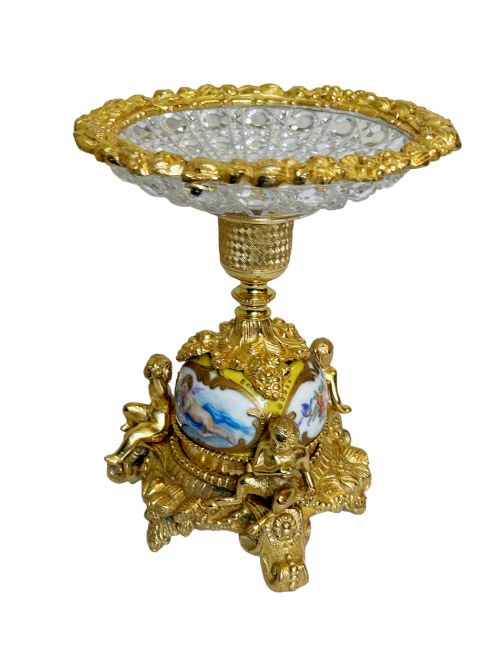
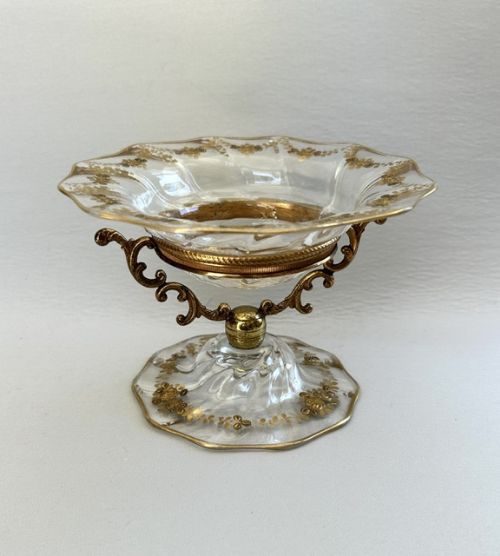
The selections here span the nineteenth century, including Victorian examples and pieces from around eighteen eighty to nineteen hundred. Forms range from tazzas and comports to glass pedestal bowls and porcelain vessels mounted in gilt bronze.
French taste dominates these items, appearing in styles from Rococo Revival and Empire to Grand Regency and French Neoclassical. Makers such as Christofle, Paris contribute to the variety alongside uncredited workshops producing Sevres style porcelain and champleve enamel.
How they were made
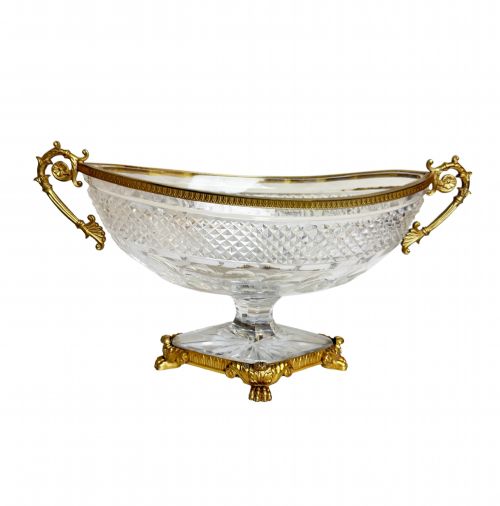
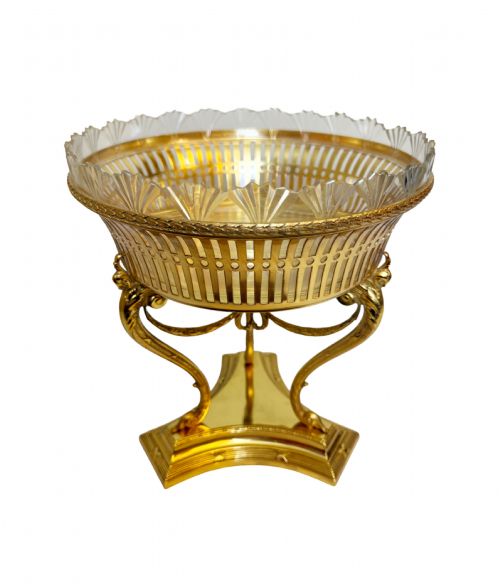
Artisans built these objects by combining cast metal mounts with glass, crystal or porcelain bodies. Gilt bronze and ormolu provide the structural frames and decorative feet, often shaped into cherubs or classical motifs.
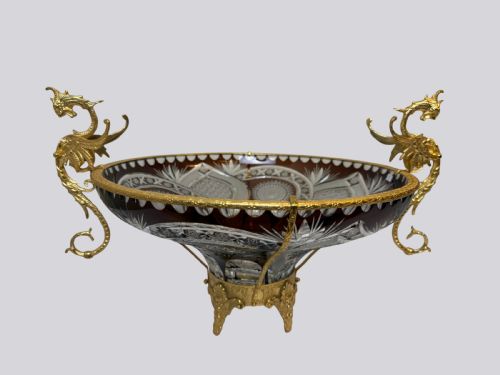
Vessels feature cut crystal, cut glass, coloured glass or Sevres style porcelain inserts held securely within the metalwork. Additional detailing relies on champleve enamel, Limoges enamel plaques, malachite and blue John to enrich the surface texture.
Marble bases frequently anchor heavier works, adding stability and contrasting colour beneath the gilded bronze. Crafting these pieces required close collaboration between metalworkers, ceramicists and glasscutters operating largely within French workshops.
Ormolu Centrepiece Bowl Retail Price Guide 2026
Typical asking prices for ormolu centrepiece bowl among the pieces listed under this phrase on Sellingantiques today, from the lower quarter to the upper quarter. They describe what is for sale here now, not the wider market.
Listings feature items from the nineteenth century, including Victorian periods, Empire styles and Grand Regency designs.
What varies in quality
Quality rests heavily on the crispness of the gilt bronze chasing and the depth of the gilding itself. Finer examples display sharp, detailed casting in elements like cherubs and scrolling foliage, whereas lesser pieces show softer, shallower definition.
The choice and execution of the central bowl material dictate another tier of distinction. Heavy, brilliant cut crystal and hand-painted Sevres style porcelain elevate a piece far above standard moulded glass.
The integration between the metal mounts and the vessel body reveals the maker's skill. Top-tier works align every mount flush against the porcelain or glass without gaps, demonstrating precise planning during construction.
Christofle Paris
The Ormolu Centrepiece Bowl Glossary
- Ormolu
- Gilt bronze created by applying a finely ground high-carat gold-mercury amalgam to a bronze object before firing. This historic technique produces a distinctive warm, soft lustre.
- Tazza
- A shallow ornamental bowl or cup set upon a stem and foot. Collectors prize these elevated vessels for their formal silhouette on a dining table.
- Champleve
- An enamelling technique where troughs or cells are carved into the surface of the metal and filled with vitreous enamel. The piece is then fired and polished flat.
- Comport
- A large standing dish or bowl used historically for serving fruit or sweets at dessert. They often match smaller dishes in a larger dining service.
Ormolu Centrepiece Bowl: Frequently Asked Questions
How were centrepiece bowls used?
These bowls stood at the centre of dining tables during formal nineteenth-century meals, often holding fruit, flowers or sweetmeats. They functioned primarily as decorative displays of wealth and taste.
Between courses, guests admired the craftsmanship of the gilded mounts and coloured glass inserts. The pieces also sat on sideboards or mantelpieces when not gracing the dining table.
What is the difference between ormolu and gilt bronze?
Ormolu specifically refers to gilt bronze created using the historic mercury-gilding process popular in eighteenth and nineteenth-century France. The term denotes the bright, warm gold finish achieved through this method.
By the later nineteenth century, safer electroplating methods largely replaced mercury gilding. Both terms appear in descriptions for these decorative bronze mounts.
Are Sevres style porcelain bowls genuine Sevres?
Sevres style porcelain indicates pieces made in the manner of the famous French royal manufactory rather than products of the factory itself. Many nineteenth-century French and European workshops produced these decorative wares.
These items borrow the distinctive colours, gilt highlights and painted panels associated with Sevres. They remain collectible works of art in their own right.