



Ormolu Candelabra Set
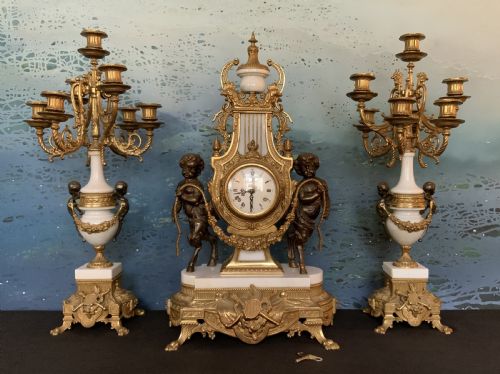
These heavy, gilded metal candleholders designed for multiple tapers bring formal symmetry and warm candlelight to a room, often forming the matching side pieces of a grand mantel clock garniture.

Ormolu Candelabra Set
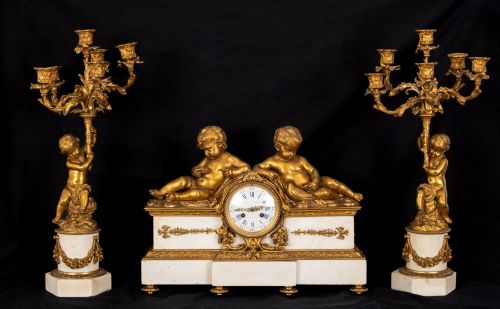
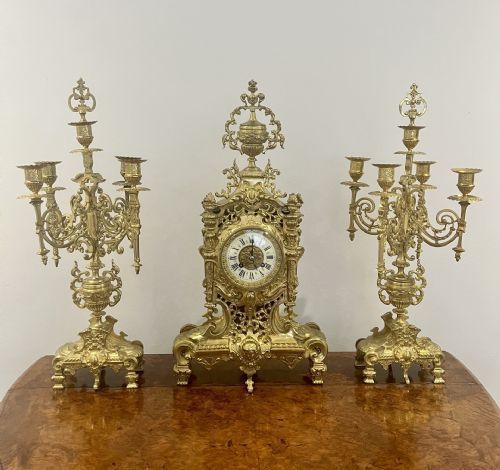
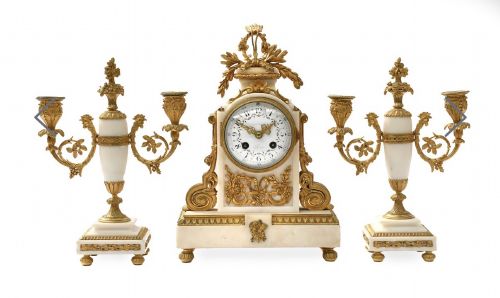
When you search for an ormolu candelabra set, you are looking at elaborate multi-branch candleholders that frequently accompany mantel clocks as part of a matching three-piece or larger garniture. These decorative suites originate predominantly from nineteenth-century French workshops, drawing on Louis XVI, Rococo, and Empire revivals.
The most common configurations on this page include pairs of twin-branch or multi-light candelabra cast in brass or bronze, then treated with mercury gilding to achieve that characteristic bright golden finish. They sit alongside matching clocks on white marble, onyx, or porcelain bases, frequently decorated with cherubs, scrolls, and classical foliage.
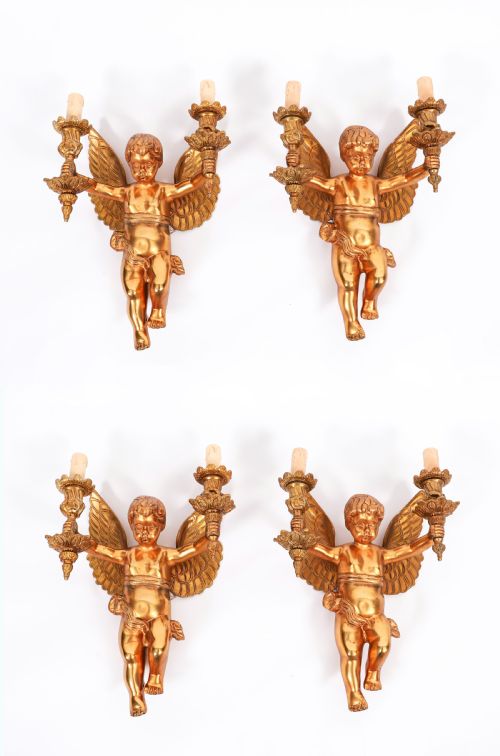
While many survive as complete garnitures paired with a central clock, individual pairs of candelabra and wall sconces also appear from the same stylistic periods. The forms range from modest two-branch mantel ornaments to large ten-light exhibition pieces designed for grand nineteenth-century drawing rooms.
Materials and manufacture
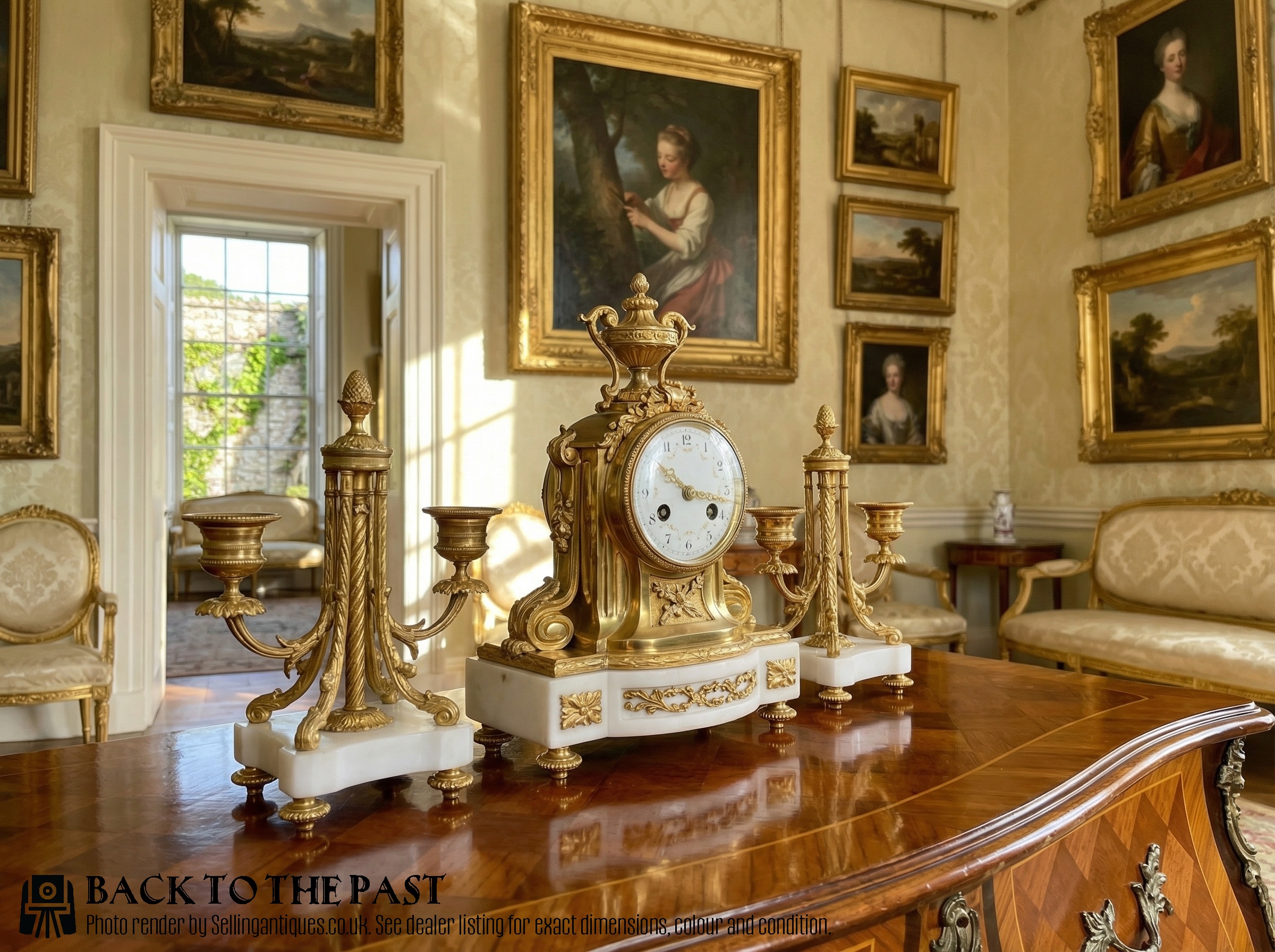
The foundation of these pieces lies in bronze or brass, which workers melted and poured into intricate multi-part moulds to capture high-relief ornamentation such as acanthus leaves, cherubs, and rococo scrolls. Artisans then chased the cooled metal by hand using chisels and punches to sharpen the details and create varying textures across the surfaces.
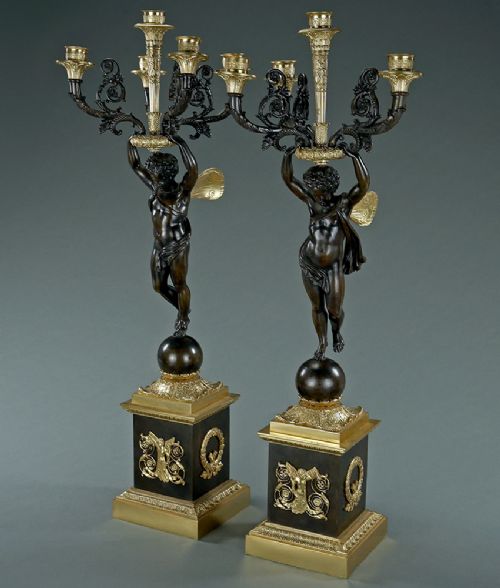
Gilding was typically achieved through an amalgamation of gold and mercury applied to the bronze and heated until the mercury vaporised, leaving a permanent golden layer known as ormolu. Many pieces combine this gilded bronze with contrasting elements of polished white marble, coloured porcelain, or patinated dark bronze.
Ormolu Candelabra Set Retail Price Guide 2026
Typical asking prices for ormolu candelabra set among the pieces listed under this phrase on Sellingantiques today, from the lower quarter to the upper quarter. They describe what is for sale here now, not the wider market.
Listings span the nineteenth century, incorporating Victorian, Regency, and Empire periods alongside Louis XVI and Rococo revival styles.
Assessing quality and craftsmanship
Quality in these sets is dictated by the crispness of the bronze chasing and the depth of the hand-finishing, where superior examples retain sharp, clean details in the foliage and figures rather than soft, rounded edges from worn moulds. The weight and stability of the casting also matter greatly, with better sets utilising heavier bronze components that fit together securely without wobble.
The richness and evenness of the ormolu gilding separate finer works from lesser production, as does the quality of the associated materials such as unblemished white marble bases or finely painted porcelain panels. Sets that retain their original matching components and uniform patination command greater appreciation among collectors.
Henry Dasson·Auguste Cain·H Luppens Paris·Raingo Fres Paris
The Ormolu Candelabra Set Glossary
- Ormolu
- Gilded bronze, derived from the French term for ground gold. It involves applying a gold-mercury amalgam to bronze and heating it to leave a durable metallic finish.
- Garniture
- A set of matching ornamental objects designed to be displayed together on a mantelpiece or sideboard, typically comprising a central clock flanked by two candelabra or vases.
- Chasing
- The manual process of refining a metal casting after it comes from the mould. Artisans use small hammers and steel punches to sharpen details and create matte or textured finishes.
- Patinated Bronze
- Bronze that has been chemically treated or allowed to darken naturally over time. This creates a deep brown or greenish surface tone that contrasts with bright ormolu highlights.
- Louis XVI Style
- A neoclassical design movement popular in nineteenth-century revivals. It is characterised by straight architectural lines, symmetrical floral swags, and classical motifs.
Ormolu Candelabra Set: Frequently Asked Questions
What is a clock garniture?
A clock garniture is a matched decorative set designed for display together, typically featuring a central mantel clock accompanied by two matching candelabra or side urns.
These suites were produced in large numbers during the nineteenth century to create a unified and symmetrical focal point on grand drawing-room mantelpieces.
How do I clean ormolu?
Ormolu requires very gentle care to protect the thin layer of historic gold leaf or mercury gilding from abrasive damage.
Dust the surface lightly with a dry, soft microfiber cloth and avoid using metal cleaners, water, or chemical solvents which can strip the precious finish.
Are these candelabra wired for electricity?
Most antique candelabra on this page retain their original configuration designed for wax candles rather than modern electrical wiring.
Converting them for electric lighting is possible through specialist intervention, though many collectors prefer to use them with standard taper candles to preserve their original integrity.
How can I tell the period?
Dating these pieces relies on examining the casting techniques, material combinations, and stylistic revivals characteristic of nineteenth-century French manufacturing.
Closer inspection of dial signatures, movement maker marks, and the specific composition of the marble or bronze often helps narrow down the decade of production.