
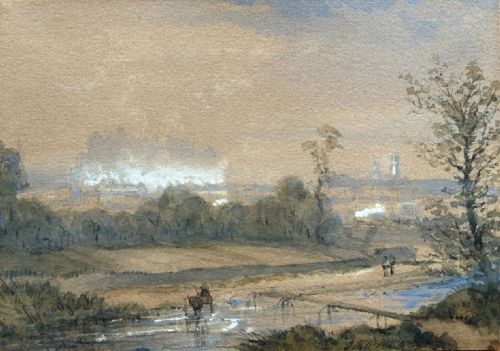

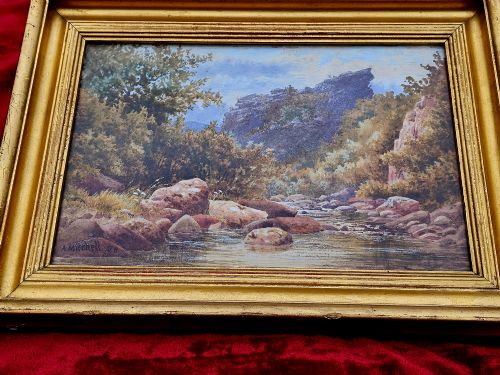
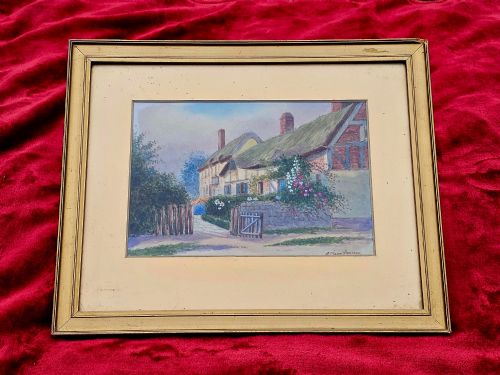
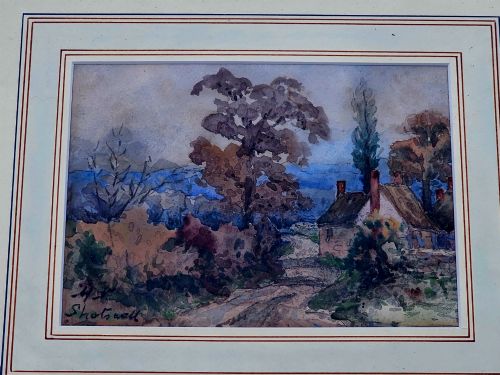
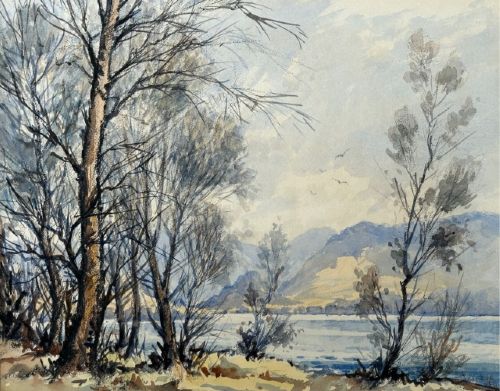
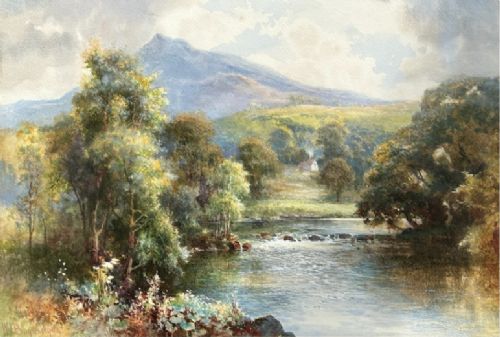
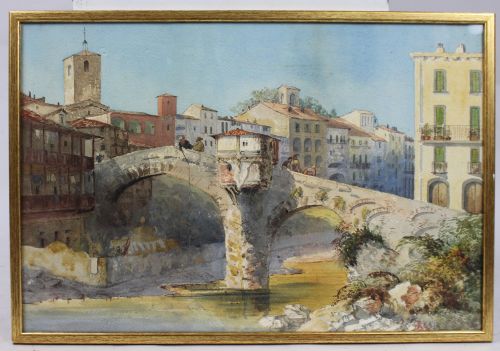
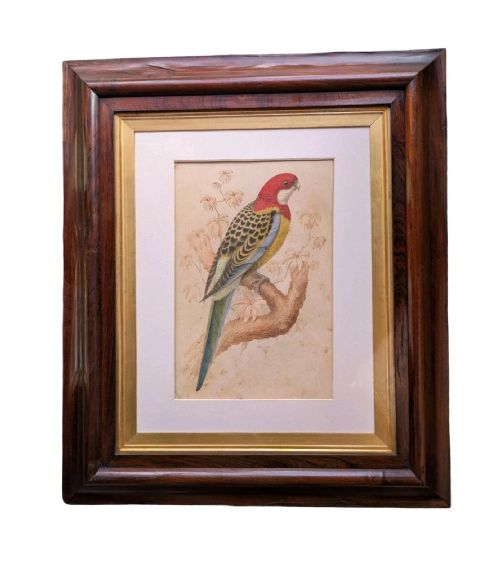
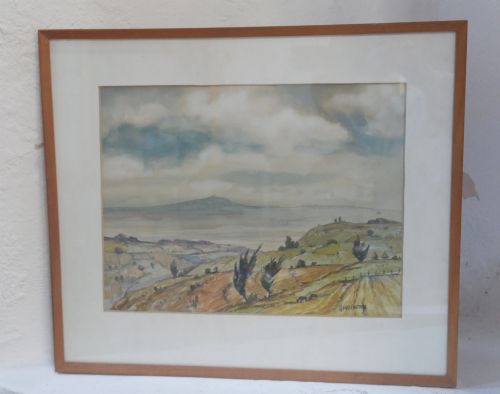


Original Signed Watercolour Picture
An original signed watercolour picture captures the immediacy of the artist's hand through delicate pigment on paper.
Original Signed Watercolour Picture
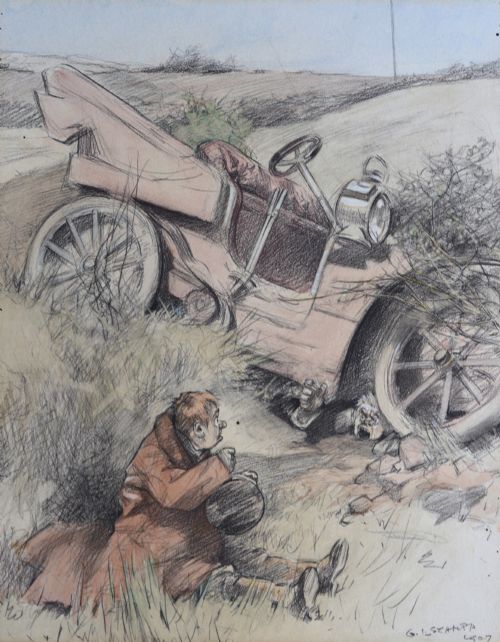
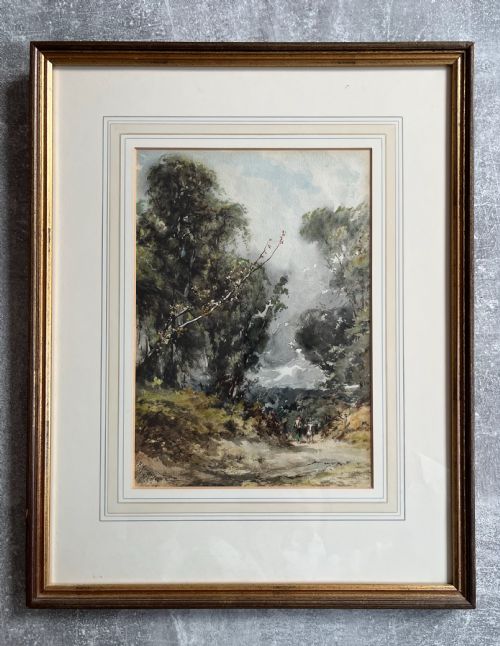
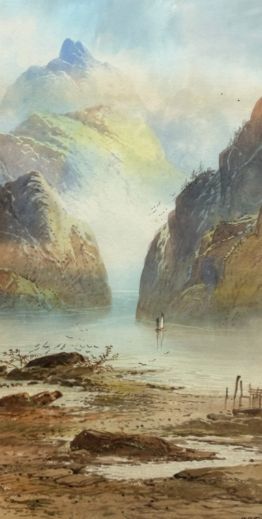
An original signed watercolour picture represents a unique painted artwork on paper bearing the direct mark and signature of its creator. When exploring this selection, buyers frequently encounter works executed across the nineteenth and twentieth centuries, capturing landscapes, coastal views, and still life compositions.
The pieces available span from Victorian and Edwardian portrayals of British countryside to later Modern British and impressionistic studies. Each item offers a direct window into the aesthetic preoccupations of its period, framed for display on domestic walls.
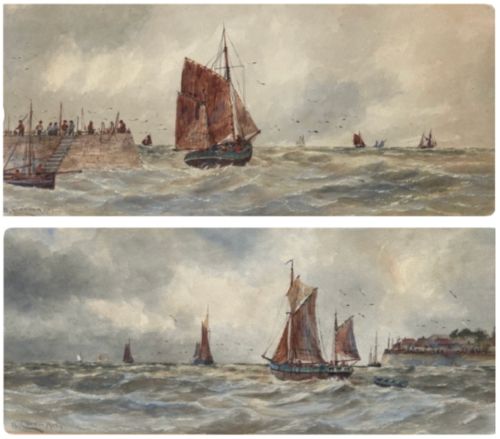
Formats vary from intimate botanical studies and townscapes to larger maritime scenes and architectural views. These works demonstrate the enduring appeal of water-soluble pigments applied to paper supports, often retained within period frames.
How they were made
Artists utilise watercolour paint and pigment applied directly to paper supports, often employing gum arabic to bind the colour and enhance transparency. The technique relies on the white of the paper shining through thin washes to create luminosity and light.
Framing typically involves wood and glass to protect the delicate surface of the paper from atmospheric moisture and handling. Many historical examples retain their gilt wood frames, which complement the tonal qualities of the painting within.
Somewhere out there, a nineteenth-century artist carefully dipped their brush while bracing against a salty North Sea gale.
What varies in quality
Quality rests upon the sureness of the brushwork and the artist's command of tone and perspective within the composition. Stronger works display confident handling of light and atmospheric depth rather than laboured detail.
Condition plays a vital role in evaluation, particularly the stability of the paper support and the vibrancy of the pigments. Works that have avoided excessive fading retain the intended contrast and atmospheric mood conceived by the artist.
George Lorain Stampa·George Fotherly Hargitt·William Henry Earp·William Cannon·John R Prentice·A. Marie Parsons·Robert Leslie Howey·William Joseph Boyes·Alfred George Morgan·Harry Wanless·Cuthbert Crossley·William Tuck·Henry Bailey·Robert Buchan Nisbet·Frank Wood·Frederick William Booty·Kate E Booth·Adrian Heath·Thomas Woolnoth·Edith E Caswall·Grace Hastie·Margaret Laing·Phyllis I Hibbert·Albert Robert Quinton·Arturo Orselli
The Original Signed Watercolour Picture Glossary
- Watercolour
- A painting method in which the paints are made of pigments suspended in a water-based solution. The technique allows for translucent washes of colour that rely on the reflective quality of the paper underneath.
- Gilt wood
- Wood that has been treated with a thin layer of gold leaf or gilt paint. This traditional framing material provides a warm, reflective border that enhances the tones of the artwork.
- Signed
- Bearing the handwritten name or monogram of the artist. This autograph authenticates the piece and links the finished work directly to its creator.
- Impressionism
- A style of painting that focuses on the accurate depiction of light in its changing qualities. Works in this manner often feature visible brush strokes and open compositions.
- Support
- The foundational material upon which the paint is applied. In this category, paper serves as the primary support for the pigment.
Original Signed Watercolour Picture: Frequently Asked Questions
How should I hang a watercolour picture?
Watercolour pictures require careful placement away from direct sunlight to prevent the pigments and paper from fading over time. Maintaining a stable environment protects the paper from moisture and temperature fluctuations.
Using proper picture wire and fixings suited to your wall type ensures the framed artwork remains secure. Professional framing with conservation-grade backing further safeguards the piece for daily enjoyment.
What subjects are common in these paintings?
British landscapes, coastal harbours, and floral still lifes appear frequently across the selection. Artists often recorded local scenery, architecture, and rural life during their travels.
Maritime scenes and townscapes also feature strongly, reflecting the nineteenth and twentieth-century interest in topographical and impressionistic recording. Each subject offers a glimpse into historical environments and domestic tastes.
How do I identify the period of a watercolour?
Stylistic clues, framing materials, and artist signatures help narrow down the date of creation. Victorian and Edwardian works often exhibit meticulous detail or soft tonal washes characteristic of academic training.
Later mid-century pieces may adopt looser brushwork or abstract forms influenced by modern movements. Comparing the paper type and framing style provides additional context for dating.
Are these paintings always unique?
Watercolour works on paper are inherently individual creations painted directly by the artist's hand. Even when an artist painted similar subjects, each application of pigment remains distinct.
This singular nature distinguishes original paintings from mass-produced prints or reproductions. Collectors value this direct connection to the moment of creation.