
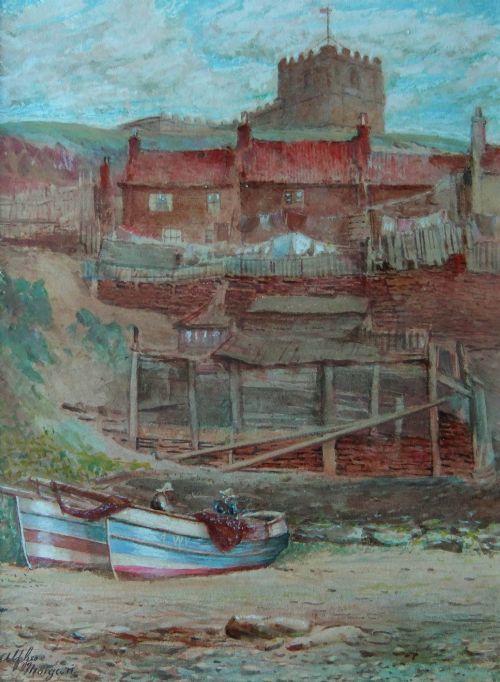


Antique Yorkshire Coastal Scene
An antique Yorkshire coastal scene captures the gritty charm of northern harbours and fishing villages, prized by collectors for authentic regional atmosphere.
Antique Yorkshire Coastal Scene
An antique Yorkshire coastal scene portrays iconic northern locations such as Whitby, Staithes, Runswick Bay, and Scarborough through historical perspectives spanning the Victorian era, Edwardian period, and early twentieth century. These works depict bustling harbour docks, historic abbeys, townscapes, and local figures like flither pickers engaged in daily coastal life.
Buyers encounter these subjects predominantly as watercolour paintings on paper, alongside a smaller selection of oil paintings on canvas. The artistic approaches range from Victorian realism and maritime documentation to British Impressionism and modern British interpretations.
Materials and Techniques
Watercolour pigment applied to paper forms the foundation of the majority of these coastal works, often framed beneath glass within traditional wood and gesso frames. Painters utilised fluid washes and fine brushwork to capture the shifting light and sea spray of the North Sea.
Oil paintings on canvas utilise rich pigment layers to build texture, particularly suited for capturing the weight of maritime vessels and the rugged Yorkshire cliffs. Artists mounted these canvases securely within wood frames, sometimes finished with decorative gesso moulding.
The listings span from the nineteenth century through the 1930s, executed in watercolour pigment, oil, paper, canvas, wood, and gesso.
Judging Quality and Execution
Superior examples demonstrate confident brushwork and an acute understanding of northern light and atmosphere, whereas weaker pieces rely on formulaic repetition without true observation of the subject. The handling of difficult coastal elements, such as moving water and crowded harbour docks, distinguishes master practitioners from competent amateurs.
Condition plays a vital role in assessment, separating works with vibrant, unfaded pigment and stable paper or canvas from those degraded by damp or excessive light exposure. Original framing involving period wood and gesso also enhances the integrity of the piece.
Alfred G. Morgan·Arthur Tucker·James Watson·George Hamilton Constantine·James Thomas Watts·Kate E Booth·Rowland Henry Hill·Harry Wanless·Thomas Clavering Alder·Robert Farren·Walter Emsley·Frank Rousse·Fred Lawson·Donald Wood·Walter Meegan·Alec Caruthers Gould
The Antique Yorkshire Coastal Scene Glossary
- Watercolour
- A painting method in which the paints are made of pigments suspended in a water-based solution. This technique allows for transparent washes that capture coastal light effectively.
- Gesso
- A plaster mix used as a base for moulding decorative details on picture frames. It provides a smooth surface for gilding or painting.
- Impressionism
- An art style focused on capturing the visual impression of the moment, particularly shifting light and atmosphere. British practitioners applied these principles to northern fishing ports.
- Flither picker
- A local gatherer of limpets used for fish bait along the rocky Yorkshire shore. This subject appears in nineteenth-century maritime art.
Antique Yorkshire Coastal Scene: Frequently Asked Questions
What subjects feature in these scenes?
These works focus primarily on northern maritime locations, depicting busy harbour docks, historic abbeys, and fishing villages.
Artists frequently recorded local daily routines, including market scenes and figures gathering bait along the shore.
How do watercolours and oils differ here?
Watercolours on paper offer transparent washes of pigment that render coastal mists and bright skies with delicate clarity.
Oil paintings on canvas build heavier textures, capturing the dramatic weight of the sea and rugged cliffs.
How do I identify the period of a painting?
Period styles range from Victorian realism and maritime documentation to early twentieth-century British impressionism.
Signatures, framing materials, and recorded active dates of the artists help narrow the creation window.
How should I display these works at home?
Watercolour paintings require protection from direct sunlight to prevent pigment fading and paper degradation.
Keep them in stable indoor environments away from excessive moisture to preserve both the art and the historic frame.