






British Maritime Landscape
British maritime landscape works capture coastal views, harbours, and river scenes across the nineteenth and twentieth centuries.
British Maritime Landscape
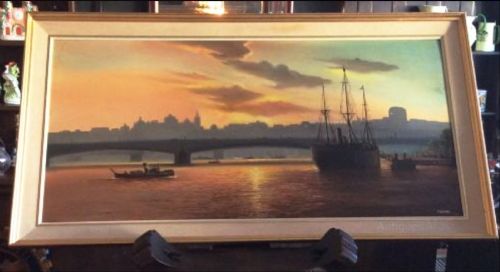
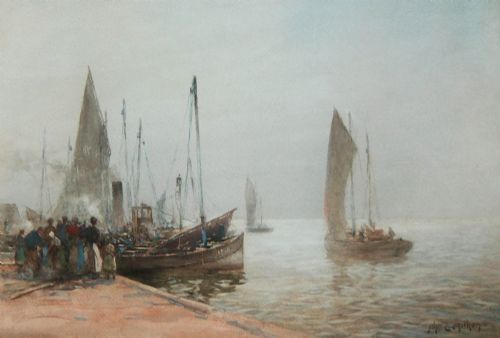
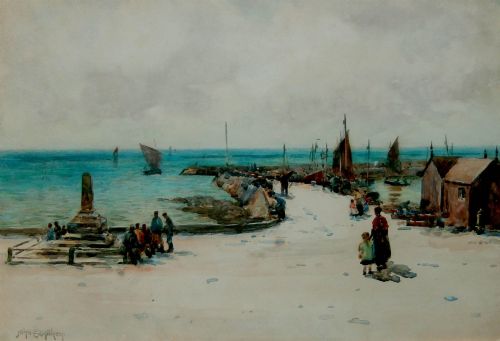
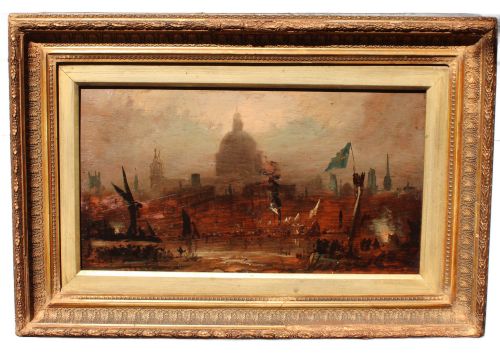
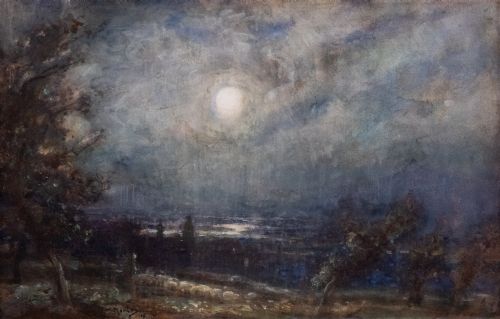
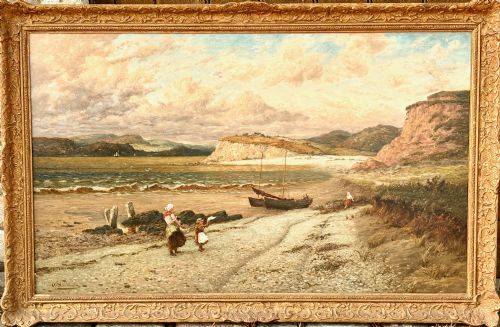
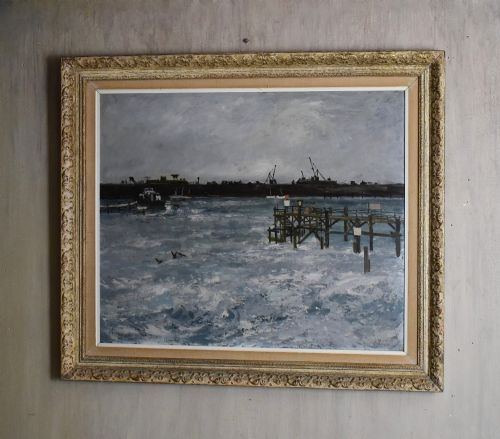
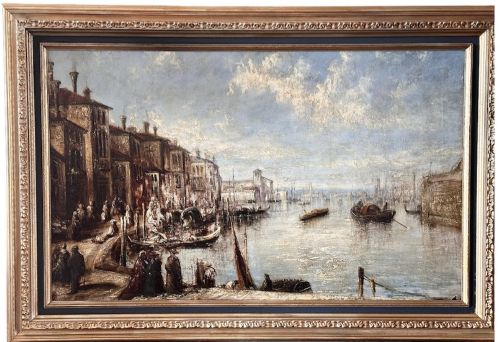
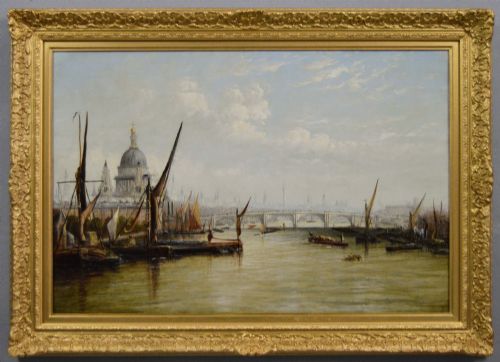
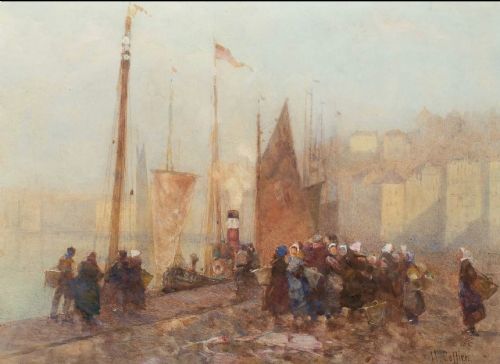
A British maritime landscape typically depicts coastal views, fishing ports, tidal rivers, and estuaries painted during the nineteenth and twentieth centuries. These works combine topographical views of harbours with marine subjects such as fishing boats, sailing ships, and coastal paths.
The selection here encompasses oil paintings on canvas or board alongside watercolours on paper. Pieces range from Victorian scenes of Yorkshire and Cornish harbours to mid twentieth century views of rivers and coastal towns.
How they were made
Artists worked primarily in oil on canvas or board, and in watercolour on paper, often employing heavy impasto or fluid washes to capture the movement of water and atmospheric coastal light.
Framing typically involves wood mouldings, frequently finished in gilt, which complement the traditional palette and protect the paper or canvas supports.
Several coastal scenes capture smuggled horses on rocky paths, proving that early artists preferred high drama with their tides.
What varies in quality
Quality rests upon the artist's command of light, atmosphere, and spatial depth, distinguishing accomplished compositions from standard topographical records.
The preservation of the pigment, the stability of the canvas or paper support, and the presence of original framing elements also influence the standing of an individual work.
Kenneth Cozens·James Orrock·Edward Mills·James E. Aitken·John E. Aitken·William Banks Fortescue·Thomas William Morley·Peter Brannan·Francis Moltino·Hector Caffieri·Bernard Benedict Hemy·Thomas Creswick·Lucy Pratt·Cyril Walduck Edwards·Thomas Maidment·Donald McIntyre·Cecil Allan Mould·John Wilson Carmichael·Alfred G. Morgan·Abraham Cooper·William Matthison·Thomas Hodgson Liddell·William Henry Williamson·John Holland·George Stanfield Walters
The British Maritime Landscape Glossary
- Seascape
- A work of art depicting the sea, coastal views, or marine shipping. These pieces focus heavily on tidal conditions and maritime activities.
- Impasto
- Paint applied thickly to a canvas or board so that it stands out from the surface. This technique adds visible texture and three-dimensional quality to water and sky.
- Topographical
- Representing specific real-world places accurately. These views often record historical coastal towns, bridges, and harbours before modern industrial changes.
- Watercolour
- Pigments suspended in a water-based solution applied to paper. It allows for translucent washes and delicate atmospheric effects.
British Maritime Landscape: Frequently Asked Questions
What is a British maritime landscape?
A British maritime landscape is an artwork depicting coastal scenery, harbours, rivers, or marine vessels around Britain. These pieces record historical ports, shipping activity, and coastal topography.
They reflect changing artistic styles from the nineteenth century through the mid twentieth century, utilising oil or watercolour.
How do I care for an antique watercolour?
Antique watercolours on paper require protection from direct sunlight to prevent fading of the pigments. Framing behind conservation glass helps shield the paper from ultraviolet light and environmental moisture.
Keeping the works in stable indoor humidity conditions ensures the paper and mount board remain well preserved.
How do I date a nineteenth century oil painting?
Dating often relies on the style of clothing, architecture, and shipping vessels depicted within the composition. Examining the canvas, stretchers, and any inscriptions or signatures on the reverse provides further clues.
Exhibition labels and framer marks attached to the wooden frame also help establish a reliable chronology.
Where were these coastal scenes usually painted?
Artists frequently set up their easels in prominent fishing ports and coastal towns around Britain. Locations such as Whitby, St Ives, Scarborough, and the River Thames appear regularly in these works.
Painters travelled extensively to capture local maritime industries, tidal harbours, and dramatic cliff landscapes.