

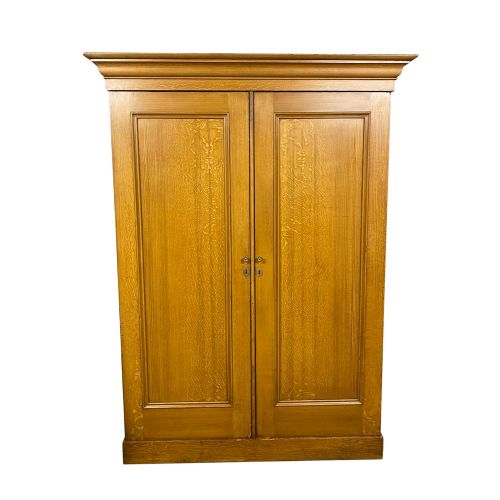
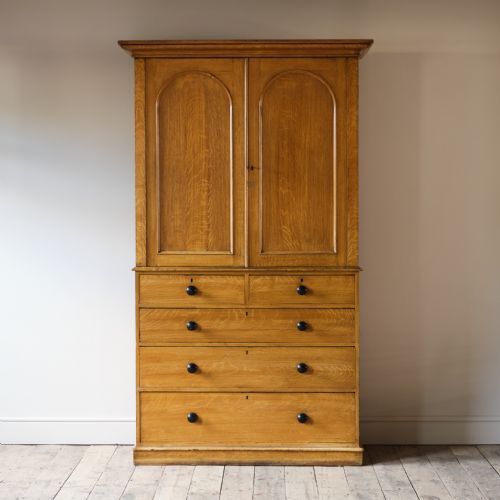
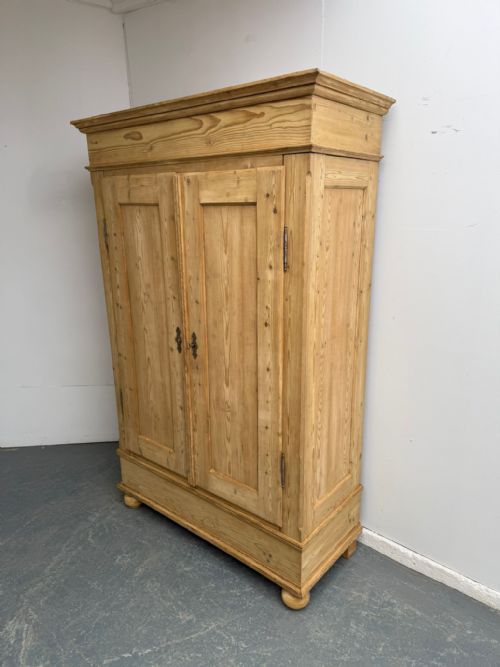
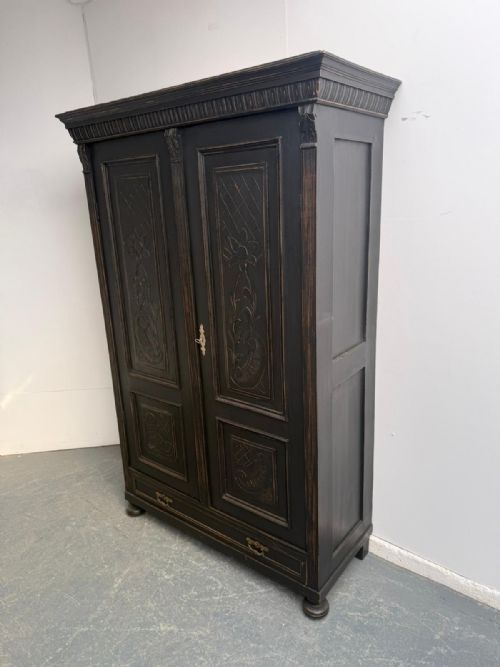
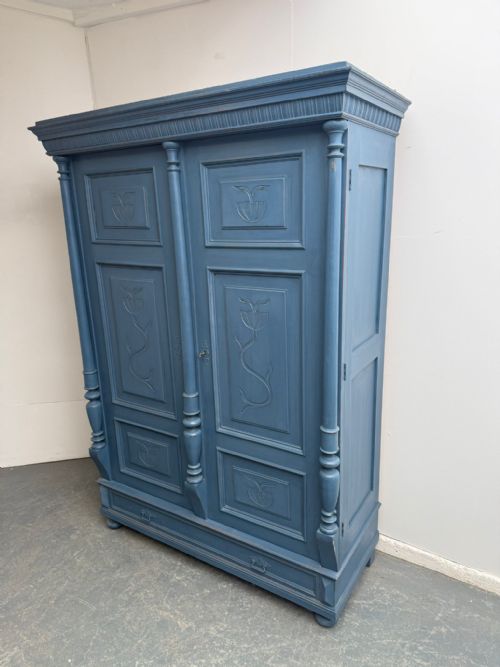
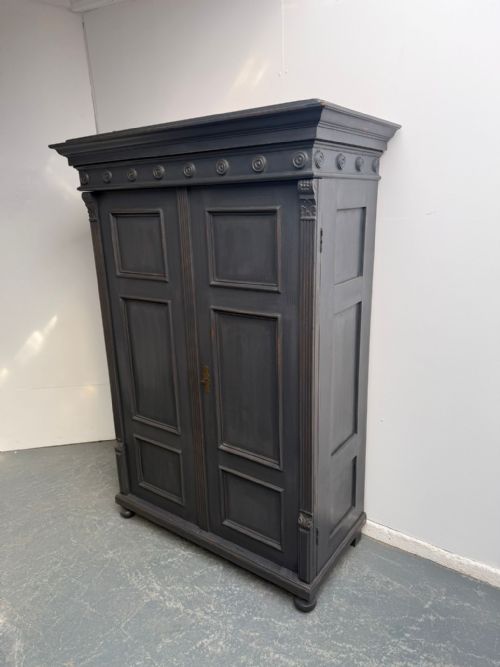


Original Painted Armoire
An original painted armoire brings historic timber and time-softened colour directly into a bedroom or hallway.
Original Painted Armoire
An original painted armoire combines substantial storage capacity with historical surface decoration that has survived decades or centuries of domestic use. When searching for an original painted armoire, buyers encounter robust pieces built from pine, oak, and mixed timbers, often originating from English, French, Hungarian, and Italian country workshops.
The inventory on this page spans several distinct eras, featuring Georgian, Victorian, and nineteenth-century designs alongside early twentieth-century French pieces. Forms range from two-door knockdown wardrobes and linen presses to compactums, hall cupboards, and industrial cabinets.
Continental country pieces often display regional folk colours like deep blue, black, or soft grey, while English examples frequently showcase scumble paintwork simulating richer woods or simpler domestic finishes. Buyers selecting these items want practical storage that carries genuine historical patina rather than a modern factory-distressed surface.
Materials and construction methods
Carpenters constructed these wardrobes and cupboards predominantly using solid pine and oak, relying on pegged joints, dovetails, and panelled door construction to ensure stability over generations. Many larger wardrobes, particularly Georgian examples, were built as knockdown units so they could be dismantled and moved between rooms.
Surface finishes applied to these timbers include traditional lead-based paints, milk paints, and scumble glazes manipulated with combs or feathers to create faux wood grains. Hardware such as iron hinges, brass escutcheons, and metal latches were secured by hand, completing the vernacular manufacture of each piece.
Original Painted Armoire Retail Price Guide 2026
Typical asking prices for original painted armoire among the pieces listed under this phrase on Sellingantiques today, from the lower quarter to the upper quarter. They describe what is for sale here now, not the wider market.
Listings feature pine, oak, iron, and brass across nineteenth-century English, Victorian, Georgian, and French periods.
Judging quality in historic painted furniture
The primary distinction between pieces lies in the survival and integrity of the original paint layer, where untouched historic surfaces command greater interest than modern overpainting. Evidence of genuine wear, gentle fading, and the natural craquelure of age separates authentic historical finish from later decorative intervention.
Structural honesty also dictates value, with preference given to wardrobes retaining their original backboards, internal shelving, timber floors, and period hardware. Pieces that have undergone extensive timber replacement or unsympathetic alterations sit lower in the hierarchy of historical authenticity.
The Original Painted Armoire Glossary
- Scumble paint
- A translucent oil-based glaze manipulated with tools to imitate the grain of costly hardwoods like oak or walnut. This technique was widely utilised in nineteenth-century country workshops to elevate plain pine furniture.
- Linen press
- A tall storage cabinet featuring upper sliding trays or shelves for linens and lower drawers for bulkier garments. These pieces often share structural similarities with traditional armoires.
- Knockdown wardrobe
- A large piece of furniture designed to be assembled and disassembled without permanent fixings using pegged tenons or wedge joints. This design allowed bulky furniture to travel up narrow staircases in historic homes.
- Compendium wardrobe
- A multi-compartment wardrobe combining hanging space, drawers, and shelving within a single unified case. It represents a more complex internal layout than basic single-door cupboards.
- Patina
- The surface sheen and textural softening developed by wood and paint over decades of cleaning, handling, and environmental exposure. It serves as a primary visual indicator of genuine age.
Original Painted Armoire: Frequently Asked Questions
How do I care for historic painted surfaces?
Maintain the original finish by dusting gently with a dry, soft cloth and avoiding modern chemical polishes or abrasive cleaners. Keep the timber away from direct heat sources and strong sunlight to prevent the historic paint from drying out, cracking, or fading further.
Wax can be applied very sparingly to unpainted interior pine, but painted exterior surfaces generally require nothing more than occasional gentle cleaning to preserve their fragile historical skin.
Can these wardrobes be dismantled for moving?
Many larger examples, particularly nineteenth-century knockdown wardrobes, were specifically engineered to separate into manageable sections for transport and installation. Examine the internal corners and cornices for visible pegs or bolts that indicate a demountable construction.
Solidly constructed cupboards without knockdown joints must be measured carefully against staircases, doorways, and ceiling heights before attempting delivery into an upper room.
How can I tell if the paint is original?
Original paint typically displays natural micro-cracking, subtle softening around handles and high-touch areas, and layers of historical dust embedded within the brushstrokes. Under close inspection, genuine historic paint reveals multiple underlying coats and harmonious tonal ageing consistent with the century of manufacture.
Flat, uniform coverage applied directly over modern preparation marks or lack of wear around working parts often suggests a later decorative overpaint rather than a untouched factory finish.
What is the difference between an armoire and a wardrobe?
Traditionally, an armoire is a large Continental European cupboard with deep proportions, often originating from France or Hungary, historically used for storing weapons, armour, or household goods before being adapted for clothes. Wardrobes are generally associated with British cabinet-making and developed specifically for hanging garments.
In modern usage, the terms are frequently interchanged, though Continental pieces often retain distinct regional moulding profiles and distinctive painted folk motifs absent in standard British furniture.