


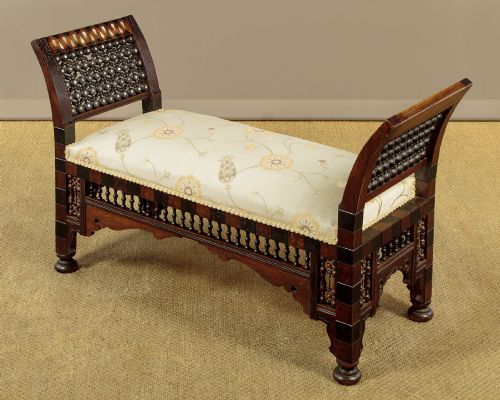


Orientalist Inlaid Furniture
Orientalist inlaid furniture brings together intricate geometric patterns and dense surface decoration from the late nineteenth and early twentieth centuries.
Orientalist Inlaid Furniture
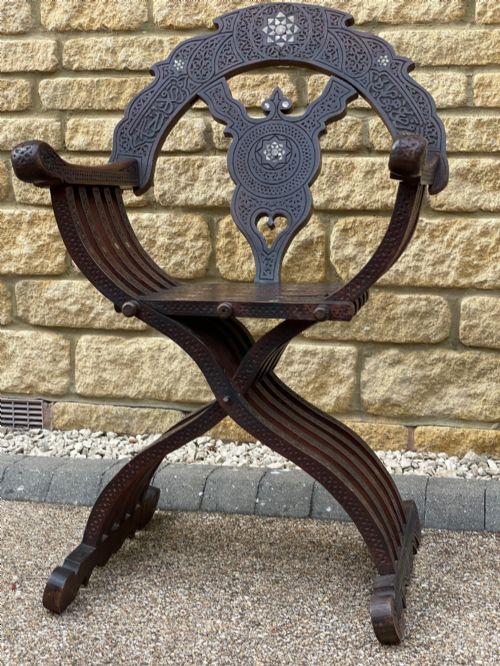
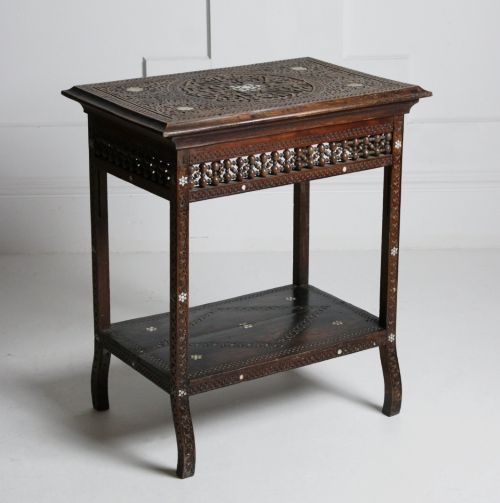
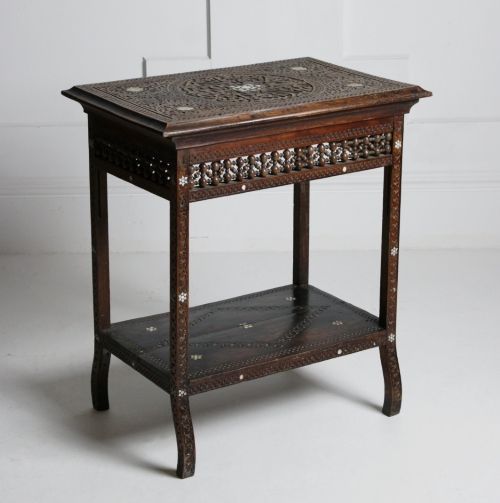
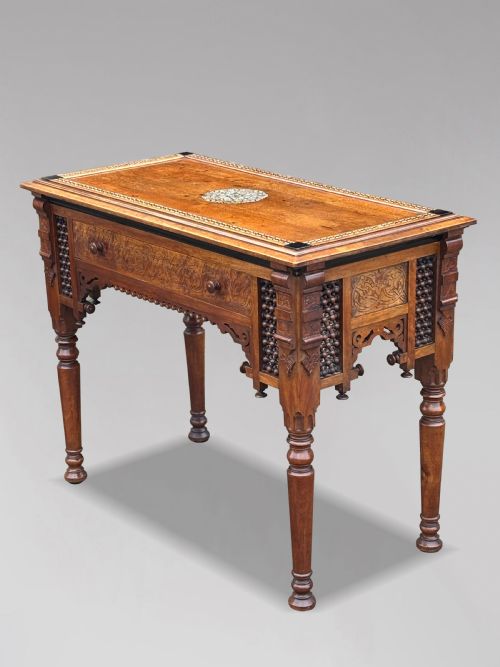
Orientalist inlaid furniture encompasses seating, tables, desks, and storage pieces drawn from nineteenth-century revivalist and Levantine traditions. When exploring orientalist inlaid furniture on this page, buyers frequently encounter octagonal occasional tables, folding chairs, and low seating designed with complex geometric frames.
The objects span periods from the mid nineteenth century through to the 1930s, reflecting Moorish, Mamluk, Syrian, and Ottoman design vocabularies. Forms range from simple occasional tables and window seats to conversation sets and large cabinets.
Pieces originating from Syrian, Levantine, and North African workshops sit alongside British Aesthetic Movement interpretations and European designer commissions. This mix provides varied scales, from compact hexagonal side tables to substantial settees.
Materials and construction methods
Makers utilised walnut, hardwood, and ebonised wood as structural timbers, forming the dense framework for subsequent surface work. Metal elements such as brass, copper, and white-metal appear in specific tables and stand forms.
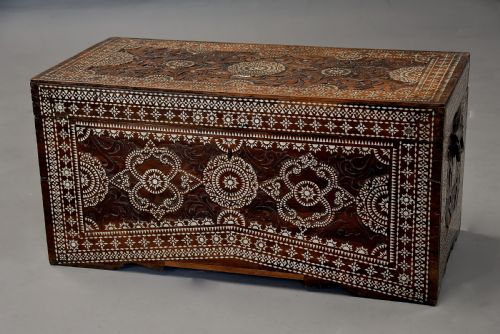
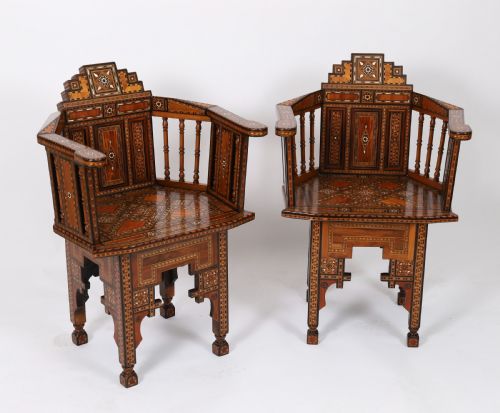
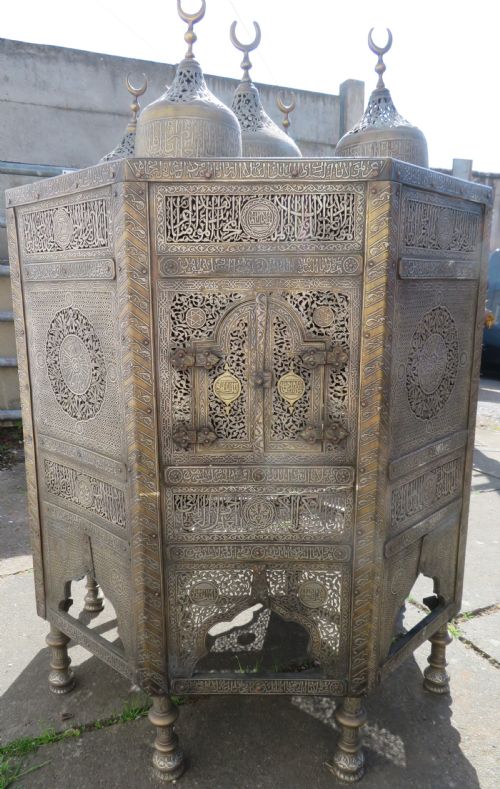
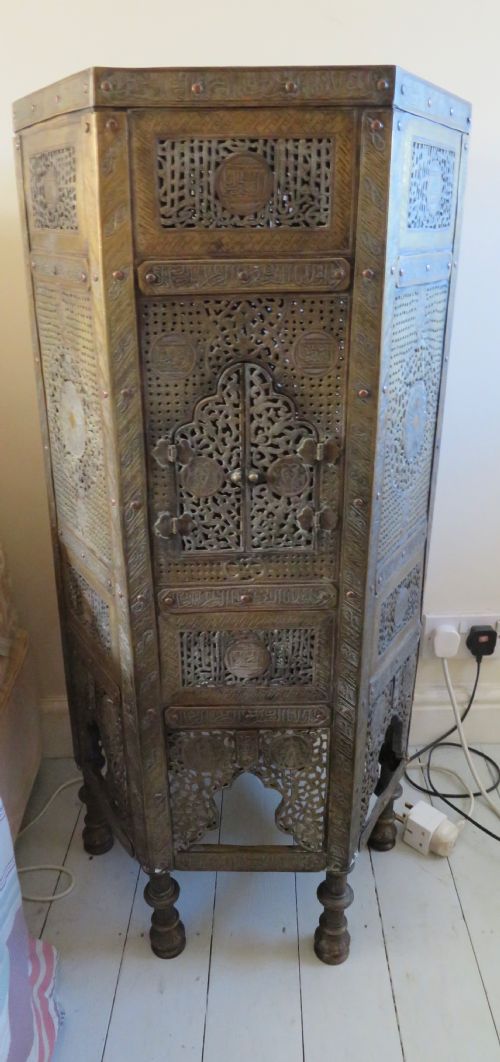
Surface decoration relies on intricate parquetry and meticulous inlay work using bone and mother-of-pearl to create geometric stars and scrolling foliage. Certain metal-inlaid brass pieces employ techniques associated with Cairo ware production.
Joinery and openwork carving support the complex surface patterns, combining structural woodwork with flat or raised inlay elements. Frameworks frequently utilise folding or modular designs to accommodate intricate surface decoration.
Object forms on this page include occasional tables, folding chairs, window seats, conversation benches, and multi-tiered side tables.
Evaluating construction and surface detail
Quality rests upon the precision of the parquetry and the tightness of the joints holding the individual bone and mother-of-pearl tesserae. Superior examples maintain intact surface geometry without missing sections or shrinkage cracks in the wood.
The depth and clarity of the carving separate standard production items from finer workshop pieces. Better items exhibit crisp lines in the openwork and balanced proportions across multi-tiered or folding structures.
Attribution and provenance influence standing, particularly items connected to documented retailers or specific designers working in the Moorish taste.
Liberty & Co·Adriano Brambilla·Carlo Bugatti
The Orientalist Inlaid Furniture Glossary
- Parquetry
- Geometric mosaic woodwork formed by small pieces of wood, bone, or shell fitted together to cover a surface. This technique creates the intricate patterned panels seen across tables and chairs.
- Moorish Revival
- An architectural and decorative style popular in the nineteenth century drawing on Islamic Spanish and North African design motifs. It relies heavily on horseshoe arches, intricate carving, and dense surface patterns.
- Cairo ware
- Metalwork vessels and furniture inlaid with silver, gold, or copper, produced in Egypt and imitated in Europe during the late nineteenth and early twentieth centuries. These objects display characteristic bands of Arabic calligraphy or geometric arabesques.
- Kursi
- A traditional low stand or table, often octagonal, used to support books such as the Quran or serve as a general occasional table. Examples in this category frequently feature complex openwork and metal inlay.
- Ebonised wood
- Timber treated to imitate ebony, providing a dark, uniform background that highlights contrasting inlay materials like mother-of-pearl or bone. This finish appears frequently on European interpretations of orientalist forms.
Orientalist Inlaid Furniture: Frequently Asked Questions
What is orientalist inlaid furniture?
It encompasses decorative tables, chairs, chests, and seating produced during the nineteenth and early twentieth centuries under the influence of Middle Eastern and North African design traditions.
These pieces combine European furniture forms with Levantine, Syrian, or Ottoman surface decoration, often featuring detailed parquetry.
How do I care for inlaid wood?
Keep the furniture away from direct heat sources and dramatic humidity changes to prevent the wood from shrinking and loosening the inlay.
Dust gently with a dry, soft cloth and avoid applying modern liquid polishes that can seep beneath the bone or mother-of-pearl tesserae.
How do I distinguish regional styles?
Syrian and Levantine pieces often display dense bone and mother-of-pearl geometric parquetry on walnut or hardwood frames. European interpretations, such as those from the Aesthetic Movement, frequently employ ebonised wood and distinct structural silhouettes.
Cairo ware items are identifiable by their brass or copper construction with contrasting metal inlays.
Where were these pieces used?
In nineteenth-century European and British homes, they furnished smoking rooms, drawing rooms, and hallways as exotic statement pieces. Their portable designs also suited garden rooms and occasional entertaining spaces.
Today, they function as versatile accent tables and seating within modern interiors.