
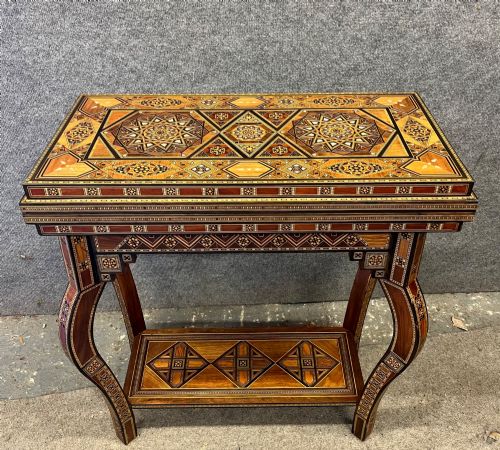
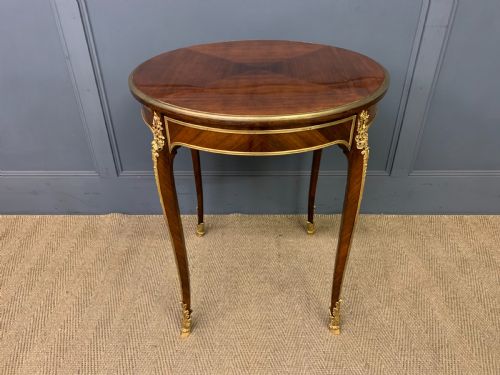
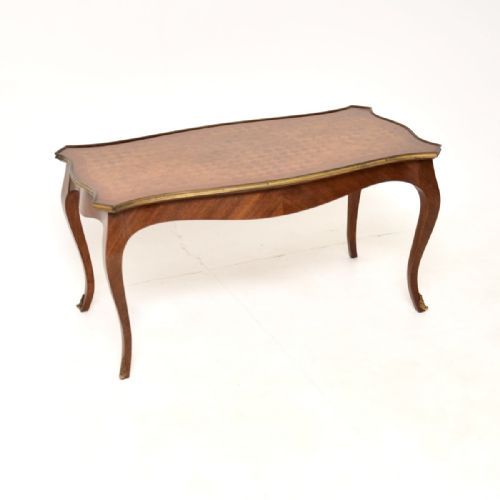
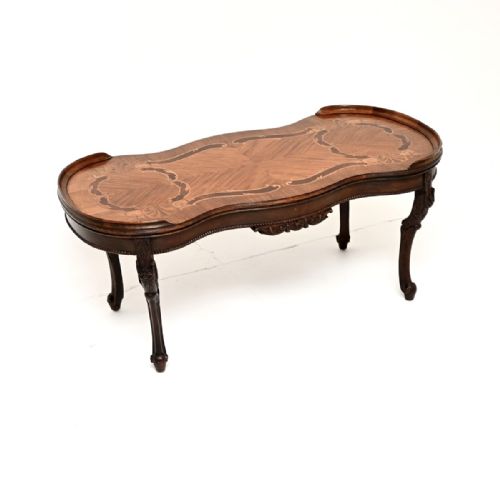
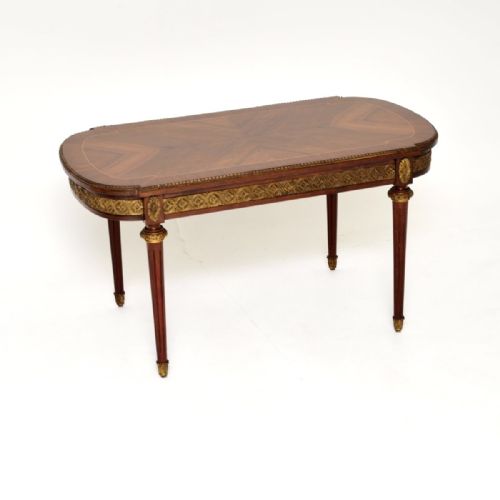


Parquetry Tea Table
A parquetry tea table brings geometric wood patterns into daily service, offering a stable surface with considerable decorative presence.
Parquetry Tea Table
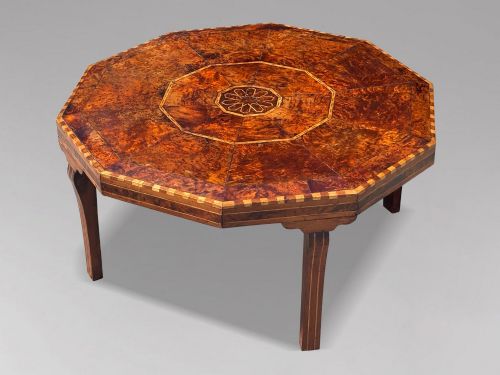
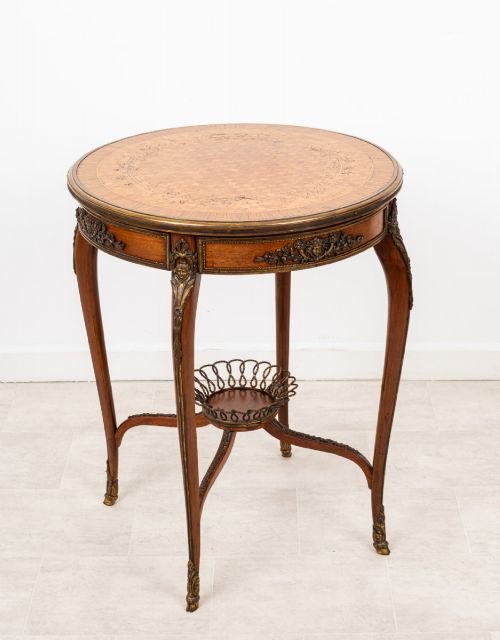
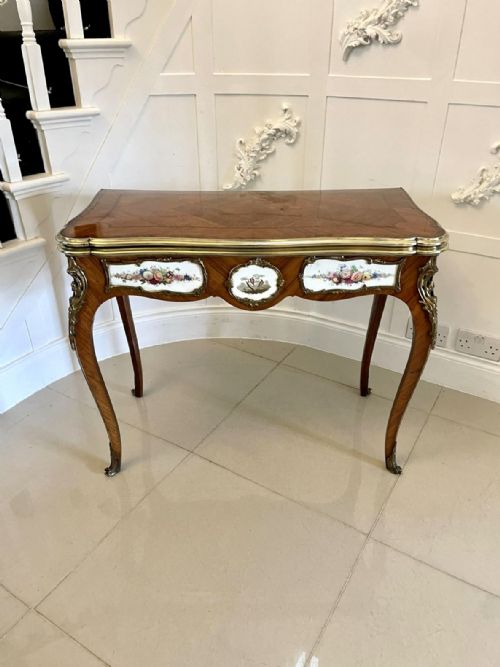
When you search for a parquetry tea table, you encounter small serving pieces defined by geometric wood veneers laid out in repeating patterns. The selection spans the eighteenth century through to the mid-twentieth century, with nineteenth-century French revival pieces appearing most frequently alongside occasional and coffee tables.
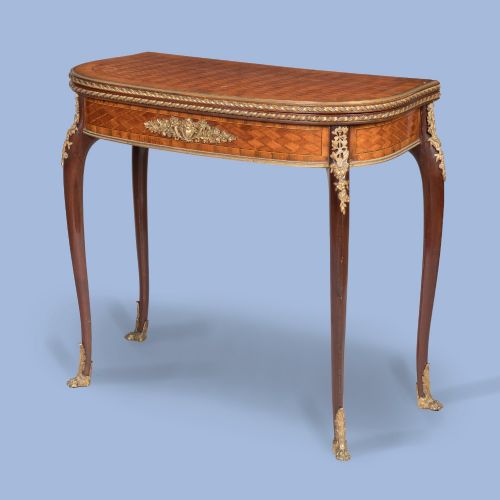
Makers utilised various forms ranging from card and games tables to tray top side tables and occasional tables. Walnut, kingwood, rosewood, mahogany, and fruitwood provide the foundational structure for these inlaid surfaces.
Materials and construction methods
Cabinetmakers cut thin veneers of contrasting timbers such as kingwood, walnut, and fruitwood to assemble precise geometric compositions across the table top. Ormolu and brass mounts often reinforce the corners and legs, adding structural definition to the woodwork.
The underlying carcase frequently employs mahogany or oak, supporting intricate parquetry and marquetry panels finished with traditional polish.
Listings span several centuries, incorporating walnut, kingwood, rosewood, mahogany, and fruitwood alongside ormolu and brass mounts.
Assessing craftsmanship and execution
Finer examples demonstrate exceptional precision in the timber joints, ensuring the geometric veneers align seamlessly without visible gaps or lifting edges. The quality of the cast ormolu mounts and the depth of the timber figuring elevate certain pieces significantly above standard production.
Proportion and stability distinguish superior tables, where the grain selection enhances the overall visual rhythm of the parquetry pattern.
Joseph-Emmanuel Zwiener·François Linke·G T Morant, London·Morison of Edinburgh
The Parquetry Tea Table Glossary
- Parquetry
- Geometric mosaic of wood veneers arranged in repeating patterns such as cubes, chequers, or diagonals. It forms the primary decorative surface on these tables.
- Ormolu
- Gilded bronze mounts applied to the edges and legs of furniture. This technique provides metallic contrast against dark exotic woods.
- Kingwood
- A dense, richly figured timber native to Brazil utilised extensively in fine cabinetmaking. Its contrasting dark and golden tones suit intricate inlay work.
- Marquetry
- Pictorial or curvilinear veneer work depicting flowers, foliage, or scenes. It often accompanies geometric parquetry on finer tables.
Parquetry Tea Table: Frequently Asked Questions
What is a parquetry tea table?
A parquetry tea table is a small decorative surface featuring geometric wood veneers arranged in patterns like cubes or lozenges. These tables were designed for domestic service and display.
They appear in various forms including occasional tables, card tables, and tray top side tables dating from the eighteenth century onwards.
How do I identify French styles?
French revival pieces often incorporate Louis XV or Louis XVI elements such as cabriole legs, ormolu mounts, and satinwood or kingwood veneers. The proportions tend to emphasise graceful curves and refined marquetry details.
Maker attributions or specific stylistic markers like tray tops help distinguish these continental designs from British production.
Where were these tables used?
These pieces functioned primarily in sitting rooms and parlours for serving tea, playing card games, or holding small decorative objects. Their versatile sizes allowed them to move easily about the interior.
Today they serve equally well as lamp tables, coffee tables, or focal points in a traditional room.
How do I care for the surface?
Maintain parquetry surfaces by dusting with a soft dry cloth and avoiding excessive moisture or direct sunlight. Natural waxes help nourish the timber veneers without building up heavy residue.
Keep ormolu mounts clean with gentle methods to preserve the original gilding.