


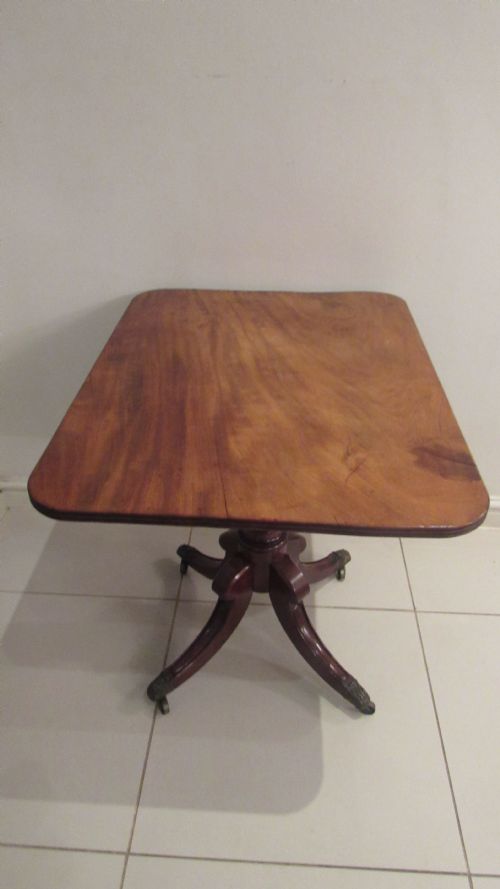


Carved Wooden Card Table
A carved wooden card table turns a quiet corner into a room for play, offering a fold-over top designed for cards and games.
Carved Wooden Card Table
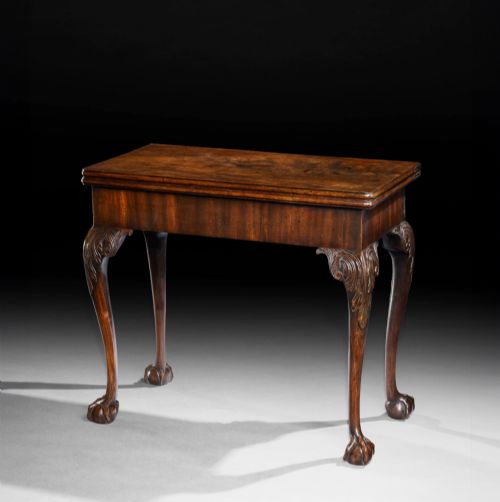
A carved wooden card table is a multi-functional piece built for folding out to reveal a baize-lined surface for evening entertainment, sitting comfortably among side and occasional tables. These pieces emerge from periods ranging through the eighteenth century, Georgian eras, Regency designs, and Victorian revivals.
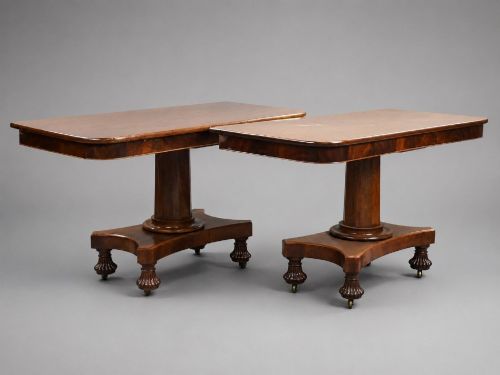
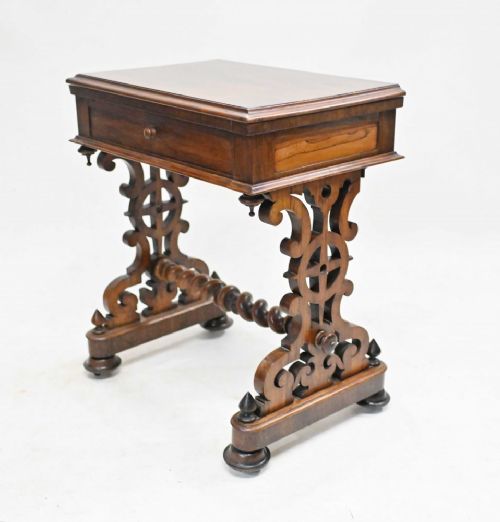
The version most commonly met on this page is the Victorian walnut or mahogany fold-over games table, often featuring carved details along the edge or pedestal base. Alongside these, buyers encounter Georgian and eighteenth-century examples built from mahogany, plus occasional pieces from the Edwardian years.
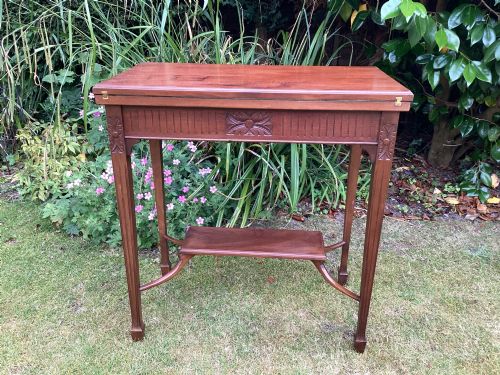
Many of these tables double as tea tables or console pieces when closed, offering versatility in a drawing room or hallway. The construction typically involves a turnover flap supported by a swinging rear leg or concertina action framework.
Distinguishing quality across periods
The distinction between standard examples and finer pieces rests upon the crispness of the hand-carving and the selection of timber figures, such as burr walnut or dense mahogany. Mechanisms also differentiate the build, with concertina actions or clever pivoting legs demonstrating superior cabinetmaking compared to simpler folding brackets.
Proportion and timber selection dictate visual balance when the piece stands closed against a wall as an occasional table. Finer examples retain original patination and matched veneer grains across the fold-over leaves, showing careful planning by the maker.
Materials recorded across these pieces include mahogany, walnut, burr walnut, oak, rosewood, brass accents, and detailed wood inlay.
Giles Grendey·Gillows
The Carved Wooden Card Table Glossary
- Concertina action
- A frame design that expands like an accordion when the table top is unfolded, providing support on all four corners. This mechanism is typically found on eighteenth-century and Georgian pieces.
- Fold-over top
- A hinged wooden surface that doubles the top area when opened for gaming or dining. It rests on a swivel or pull-out leg.
- Figured walnut veneer
- Thin slices of walnut timber selected for swirling grain patterns, applied over a secondary wood base. This treatment creates decorative surfaces on Victorian and later tables.
- Tea table
- A small occasional table designed for serving tea, often sharing forms with card tables from the Georgian period. Many feature fold-over tops or dished wooden surfaces.
- Centre table
- A freestanding piece finished on all sides to sit in the middle of a room rather than against a wall. These often feature elaborate carving beneath the top and around the pedestal.
Carved Wooden Card Table: Frequently Asked Questions
What is a carved wooden card table used for?
These tables served as versatile furniture in historic homes, remaining closed against a wall as a side or occasional table during the day. In the evening, the top folded open to create a level surface for card games, chess, or backgammon.
Modern buyers often use them in living rooms or studies as console tables that can quickly transform into auxiliary surfaces when entertaining guests.
How do I tell a Georgian card table from a Victorian one?
Georgian examples often display restrained lines, cleaner mahogany grain, and sophisticated mechanisms like concertina frames. They typically date from the eighteenth century.
Victorian pieces lean towards heavier proportions, darker walnut or rosewood timbers, and more exuberant carved decoration, occasionally incorporating chess boards within the baize lining.
How do the folding mechanisms work?
Most tables utilise a hinged leaf that swings open over a pivoting frame, requiring a rear leg to pull out or swing sideways for support. More complex designs employ a concertina action where the entire wooden framework pulls outward to hold the double leaf.
When closed, the top sits flush, concealing the hinges and the playing surface within.
Can I use these tables for daily dining?
While the surfaces provide adequate space for cards and occasional items, the folding leaves and support mechanisms are generally not engineered for heavy downward pressure or frequent family meals. The interior baize surfaces and delicate veneers require protection from spills and heavy heat.
They function best as display surfaces, hallway consoles, or dedicated game stations.