



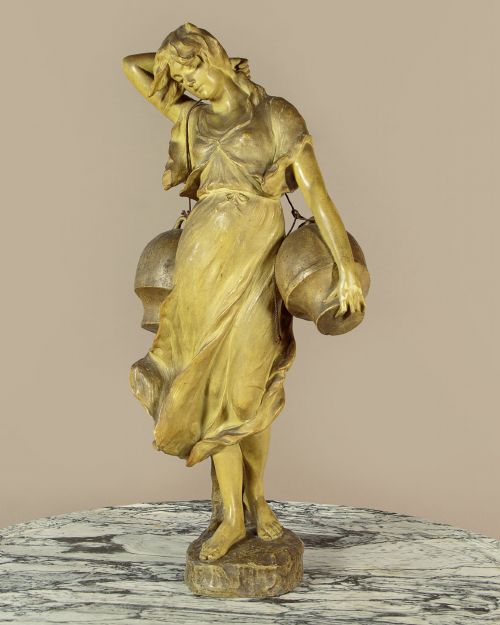
Orientalist Figure Sculpture
Orientalist figure sculpture captures dramatic scenes and native subjects through the lens of nineteenth and early twentieth century makers.
Orientalist Figure Sculpture
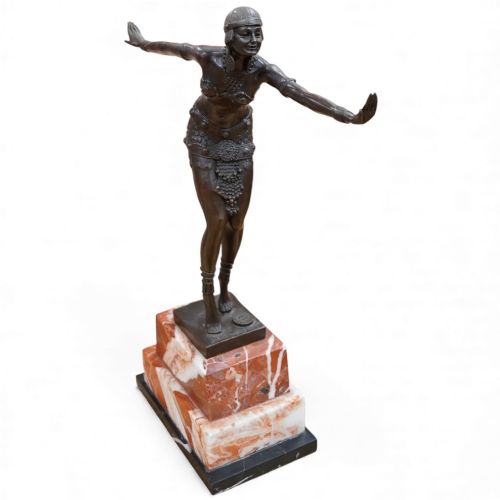
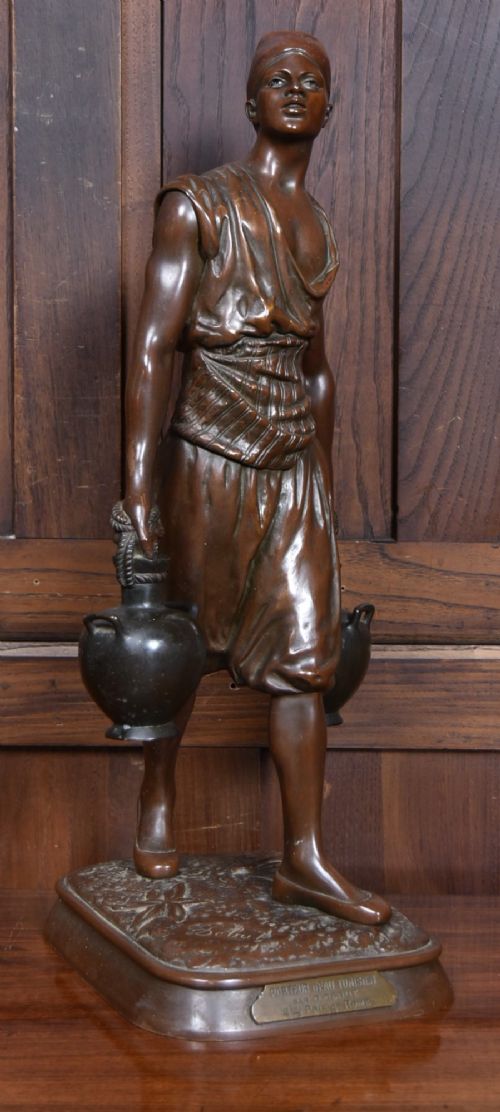
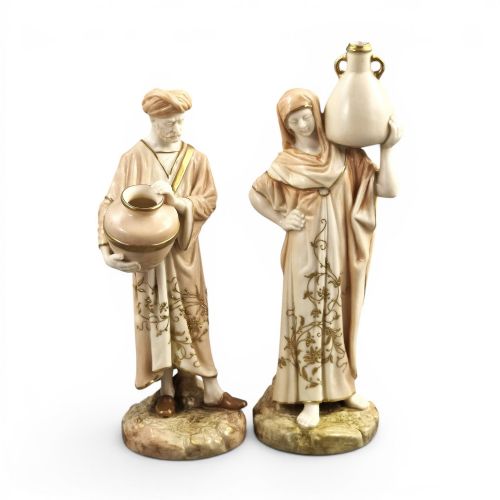
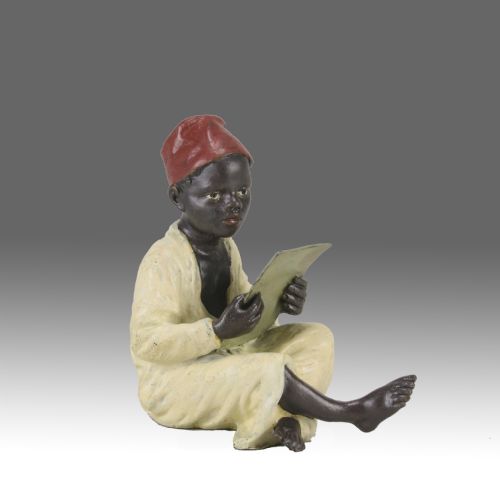
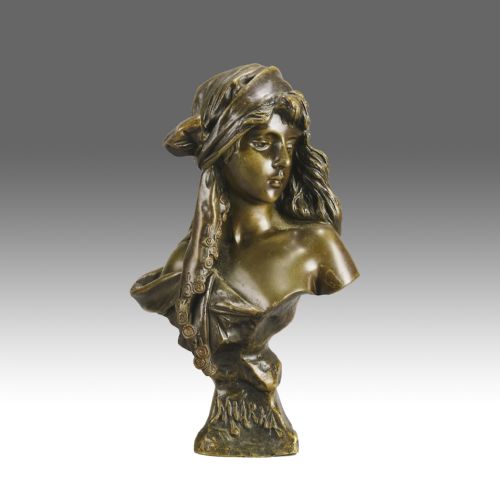
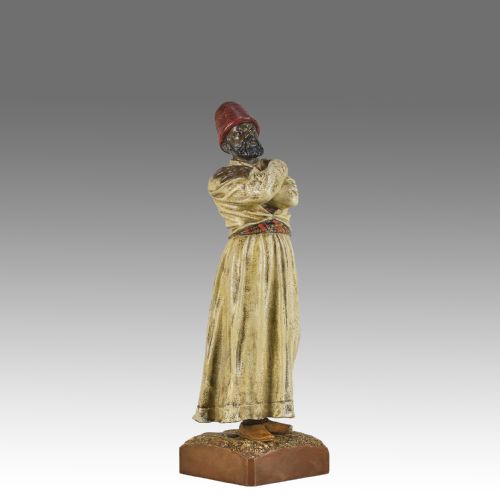
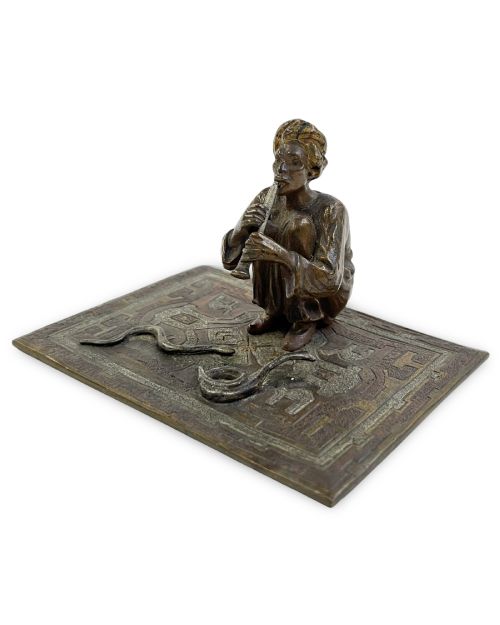
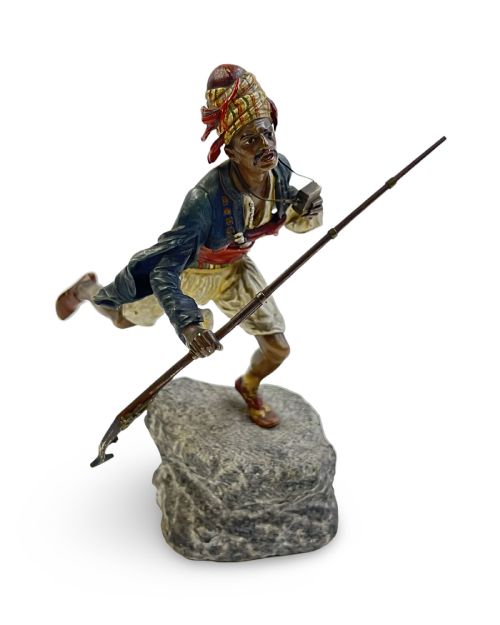
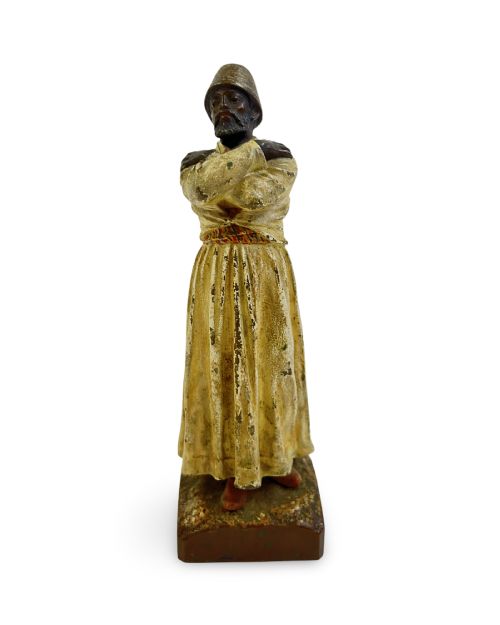
Orientalist figure sculpture encompasses standing figures, busts and group studies depicting subjects from North Africa, the Middle East and Asia. These works frequently portray water carriers, dancers, merchants and warriors in characteristic regional dress. The selection on this page leans heavily toward cold-painted bronze statuettes and porcelain figures produced during the Victorian and Edwardian eras.
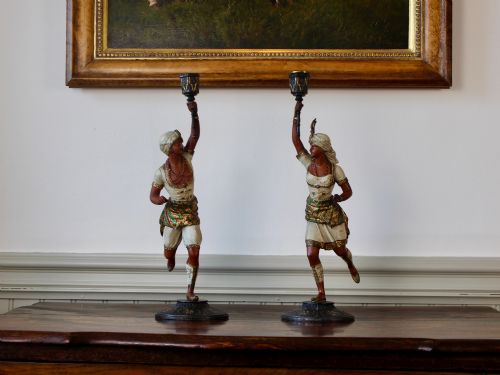
Makers rendered these subjects in diverse forms ranging from small cabinet bronzes to large decorative table lamps and figural candlesticks. Figures appear cast in bronze, carved in alabaster, or modelled in porcelain and earthenware by prominent European factories. Such pieces reflect a widespread period fascination with foreign lands and traditional trades.
Materials and methods of production
Foundries utilised traditional lost-wax casting methods to shape bronze sculptures, allowing for intricate surface detail and dynamic postures. Cold-painted bronze pieces received polychrome enamel finishes applied by hand over a metallic base layer. Porcelain and earthenware figures underwent careful moulding, glazing and hand-painting before being fired in kilns.
Makers combined mixed media such as marble bases, gold leaf accents and enamel pigments to heighten the visual drama of the figures. Spelter and plaster served as alternative casting mediums for larger decorative statues and figural lamps. Artisans applied patination treatments to bronzes to create rich dark or highlighted surface tones.
Listings feature works spanning the nineteenth century through the Art Deco period, rendered in bronze, porcelain and cold-painted metal.
Distinctions in craftsmanship and finish
In ceramic and porcelain works, precision in moulding and delicacy of the facial expressions separate standard production runs from exceptional artist-designed pieces. The integration of functional elements such as lamp fittings or baskets into the sculptural composition requires careful balance and proportion. Original factory markings and legible signatures contribute to the standing of individual works.
Franz Bergman·Emmanuel Villanis·James Hadley·Alfred Dubucand·Arthur Waagen
The Orientalist Figure Sculpture Glossary
- Cold-painted bronze
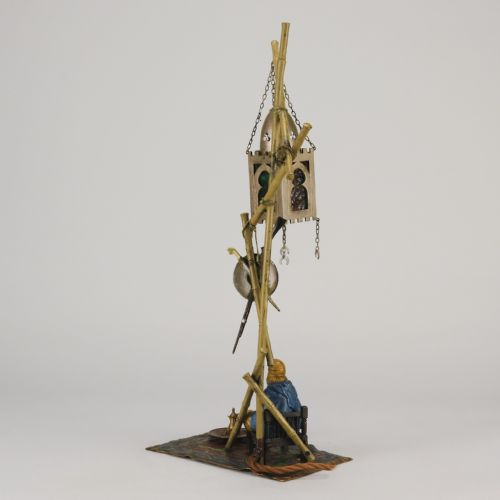
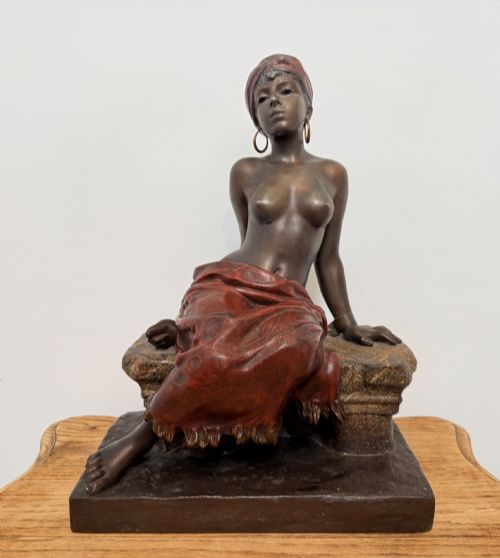
- Bronze sculpture finished with polychrome enamel paints applied without heat firing. This technique produces vibrant, colourful garments and skin tones on small cabinet figures.
- Spelter
- An alloy of zinc and lead used as a cheaper alternative to bronze. It accepts metallic patination and paint finishes closely resembling bronze.
- Patination
- The chemical treatment or natural ageing process that colours the surface of metal. Artisans utilise acids to achieve rich brown, green or dark patinas on bronze figures.
- Lost-wax casting
- A method where a wax model is melted from a mould and replaced with molten metal. This process allows for the creation of highly complex and undercut sculptural forms.
- Polychrome
- The practice of decorating sculptural surfaces in multiple colours. It appears frequently on Austrian bronzes and European ceramics to render realistic costume details.
Orientalist Figure Sculpture: Frequently Asked Questions
What is cold-painted bronze?
Cold-painted bronze refers to metallic figures finished with oil or enamel paints applied directly to the cold metal surface rather than fired in a kiln.
This delicate technique was particularly favoured by Viennese foundries to render colourful native garments and intricate patterns on small cabinet sculptures.
How were these figures displayed?
These sculptures typically served as interior ornaments placed upon mantelpieces, side tables, or specialised pedestals within nineteenth-century drawing rooms.
Some pieces doubled as functional objects, incorporating lamp fixtures, inkwells, or card trays into their figural designs.
How do I identify the maker?
Signatures, foundry marks, and artist stamps are frequently cast directly into the bronze base or impressed into the ceramic body.
Many European foundries and individual sculptors stamped their works with specific monograms or published edition numbers near the foot of the figure.
What materials are common?
Bronze and cold-painted metal dominate the sculptural offerings, alongside glazed porcelain, earthenware, and carved alabaster.
Makers frequently combined these mediums with marble plinths or gilt accents to enhance the decorative impact of the composition.