20,068  PAGES BROWSED TODAY PAGES TODAY 36  ANTIQUES UPLOADED TODAY NEW ARRIVALS
ID #SA1220731
FOR SALE
£1,450
Email
Save
Early 20th Century Cold-painted Bronze "Whirling Dervish" by Franz Bergman
Hickmet Fine Arts
for sale €1,697     $1,842
£1,450
Hickmet Fine Arts

Hickmet Fine Arts

Sellingantiques Verified Since Apr 2012
View Dealers Stock Page
  • About Us
    Established in 1936, hickmet fine arts is an international family run antiques business
  • Trade Associations
    Hickmet Fine Arts is a registered member of LAPADA  BADA  CINOA
Id #SA1220731
PDF SHARE
SAVE

Early 20th Century Cold-painted Bronze "Whirling Dervish" by Franz Bergman

1900 - 1920
Description

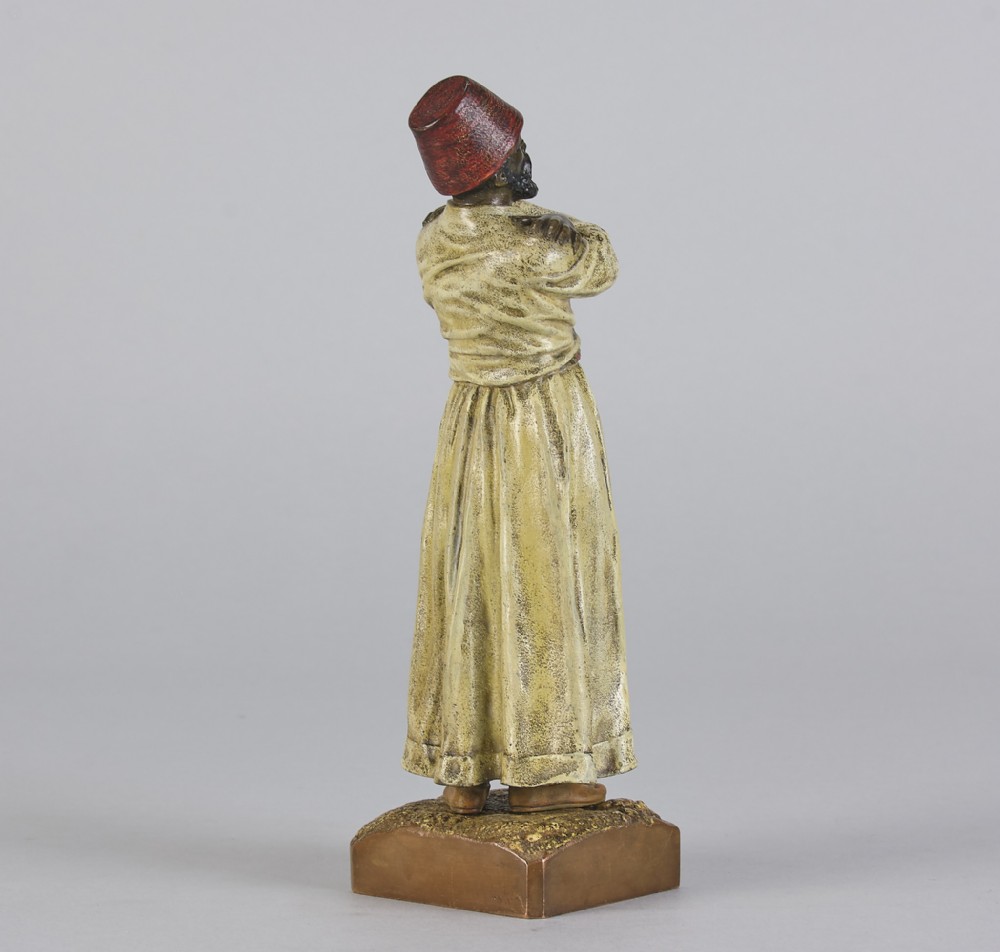
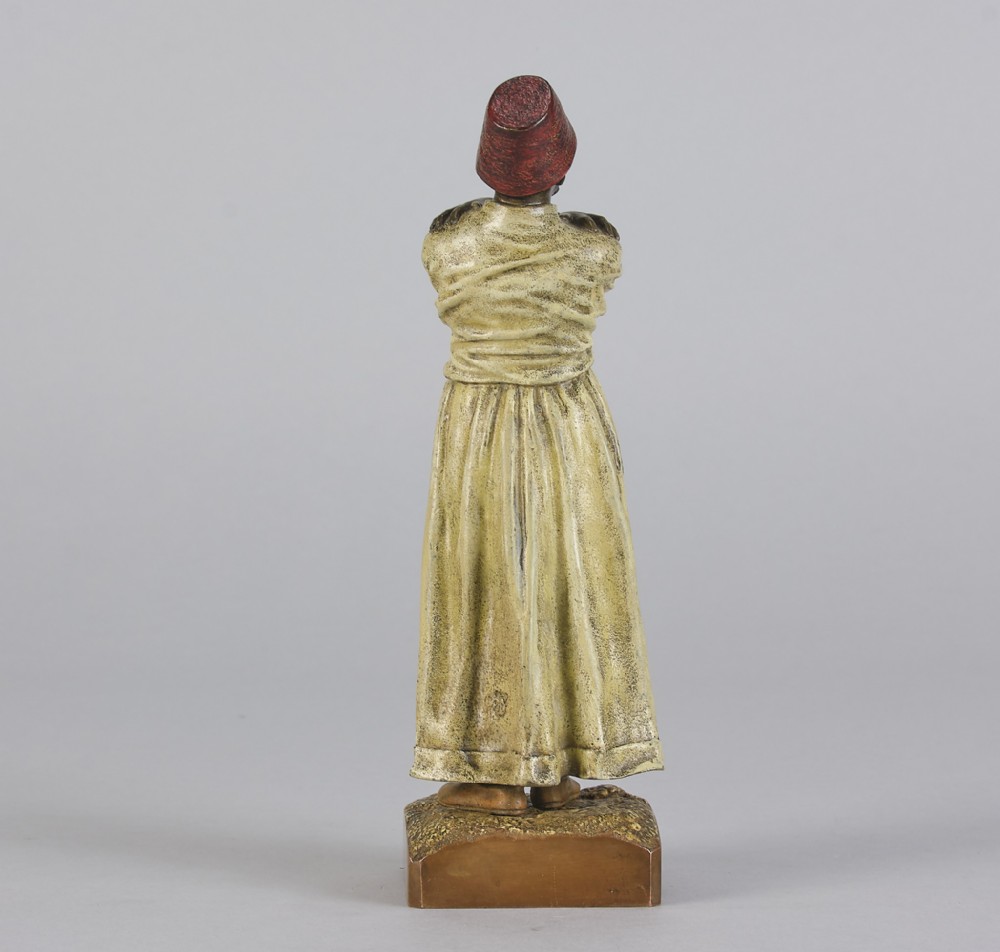
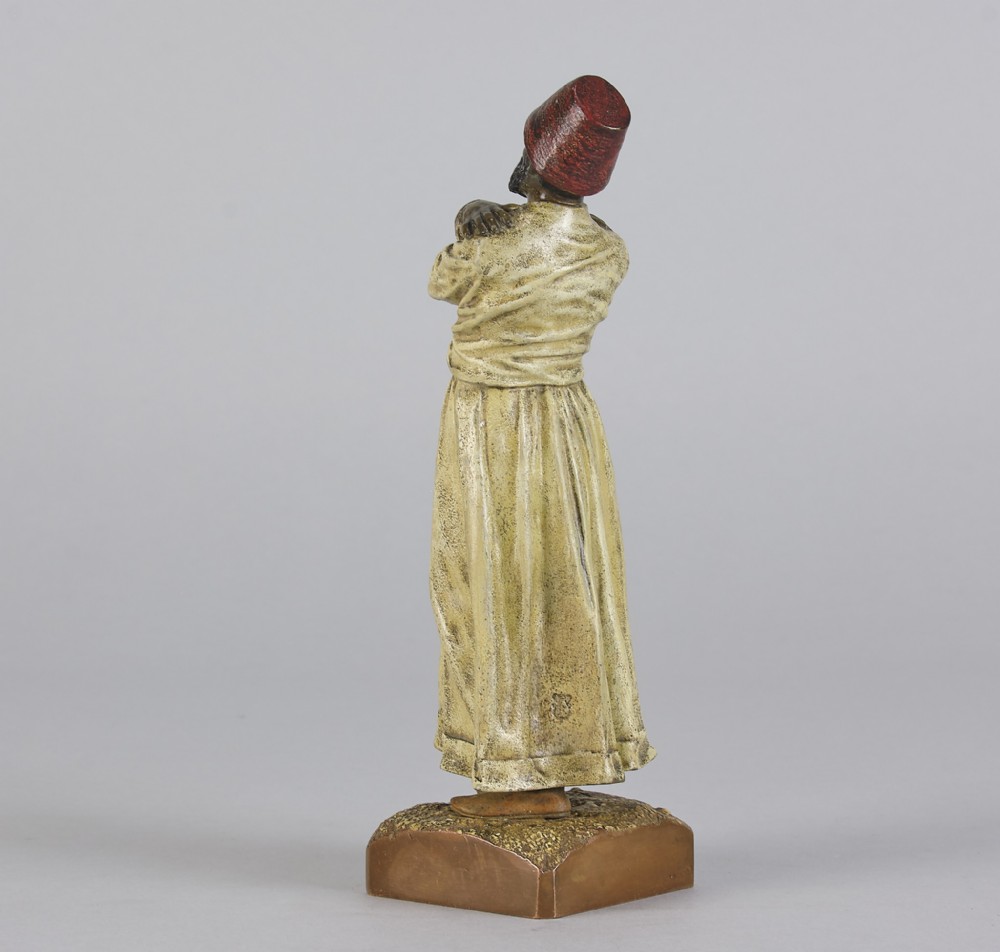
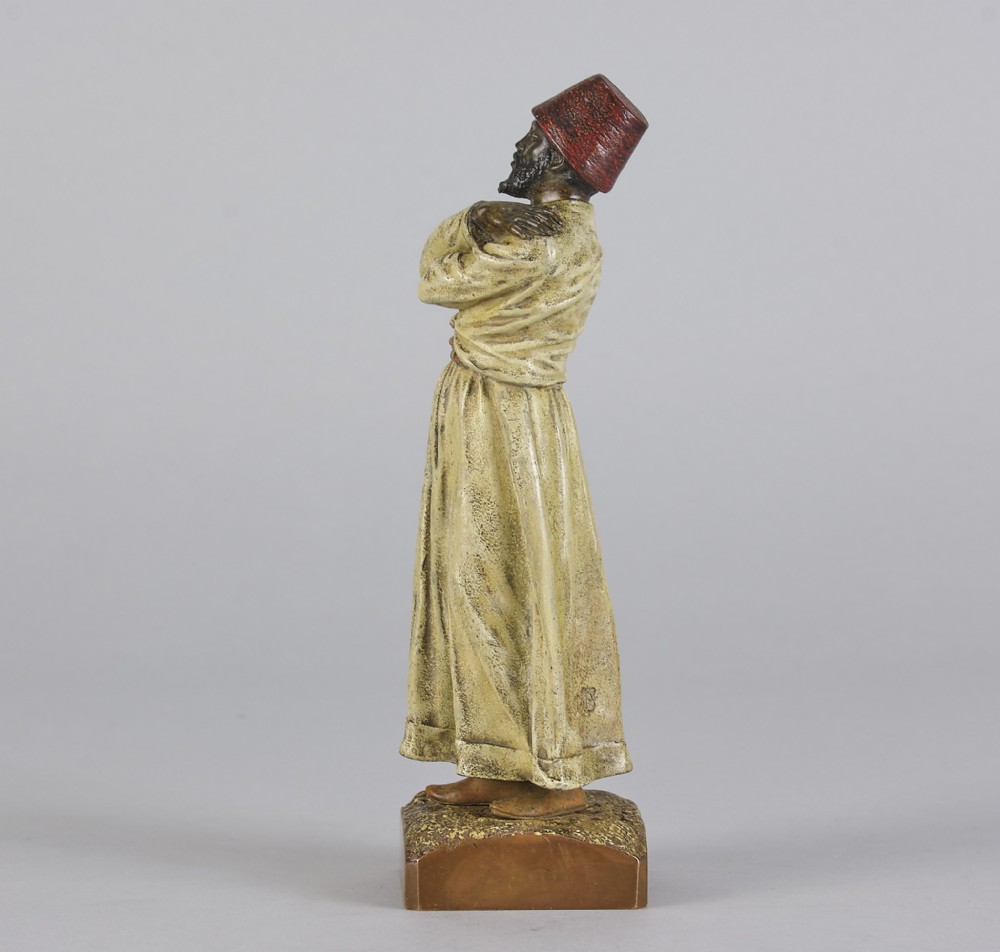
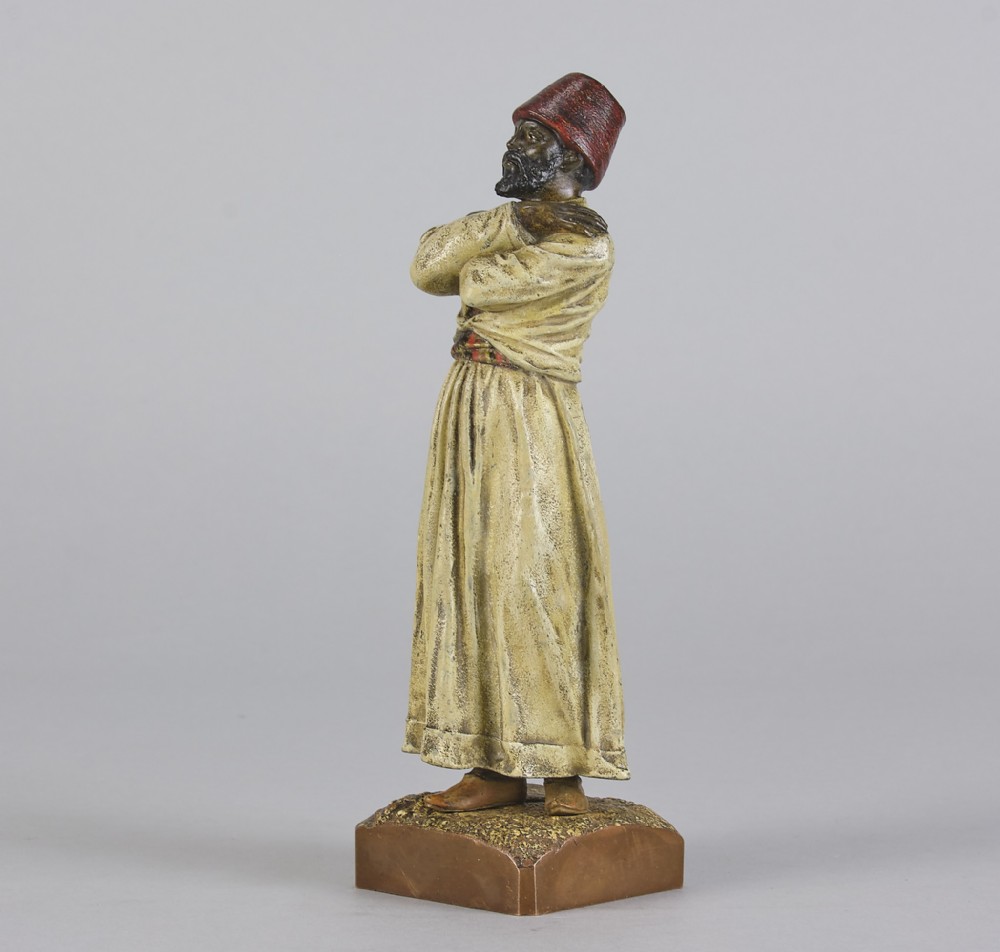
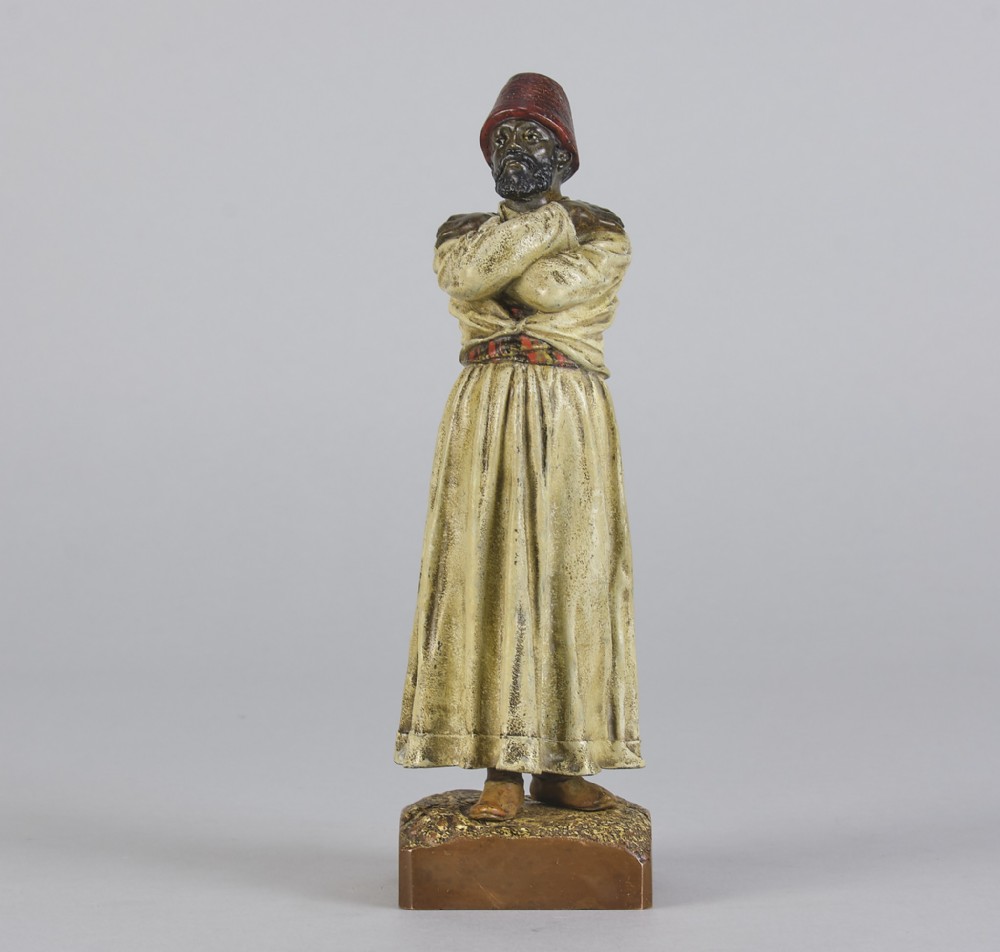
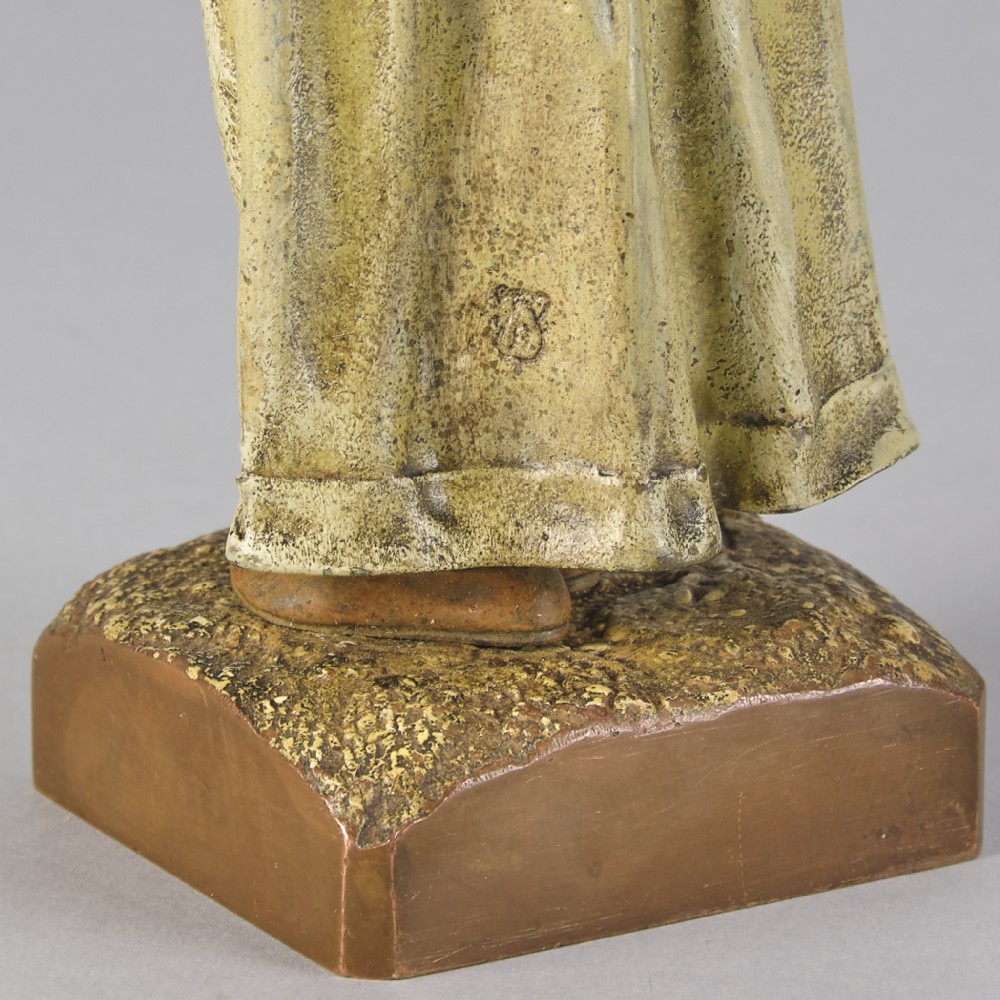
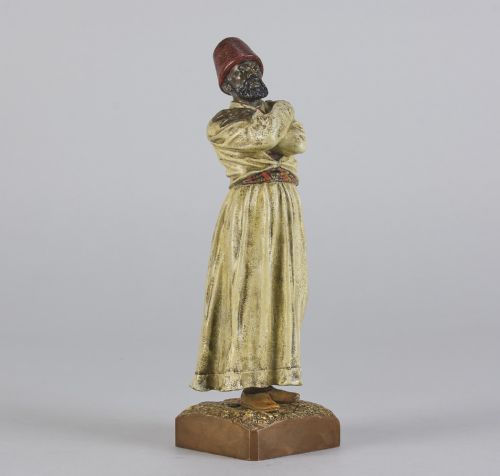
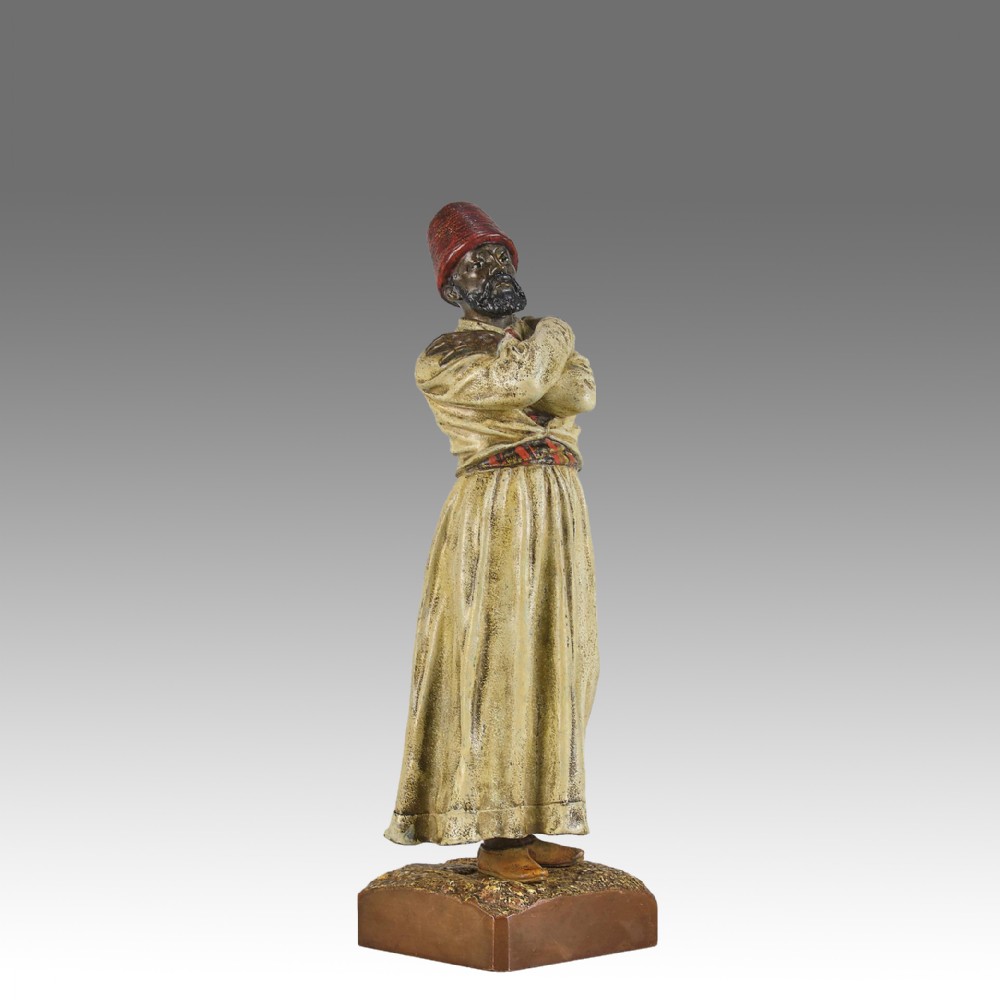
An excellent early 20th Century cold painted Vienna Bronze study of a standing Whirling Dervish with his arms folded across his chest in deep contemplation. The bronze with fine naturalistic colour and good detail, signed with the Bergman ‘B’ in an amphora vase

ADDITIONAL INFORMATION

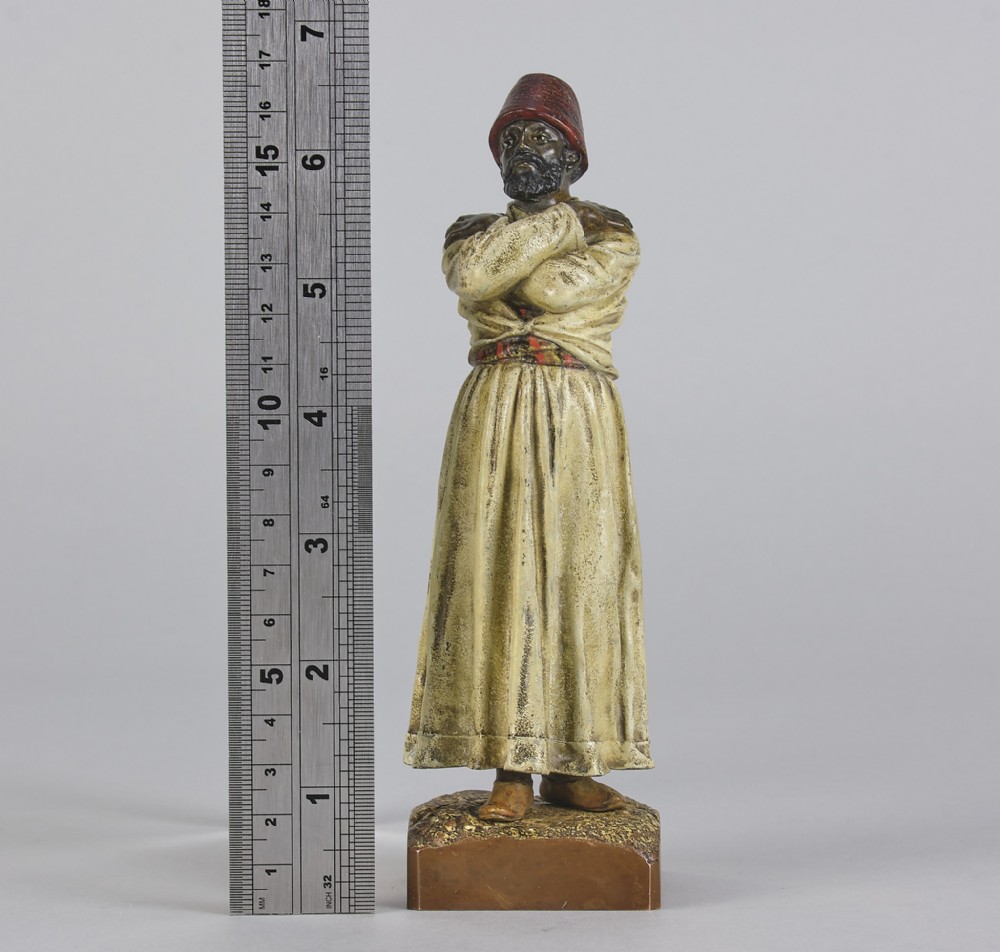
Height: 16.5 cm

Circa: 1900

Foundry: Franz Bergman Foundry

Materials: Cold Painted Bronze

Book Ref: Antique Vienna Bronzes by Joseph Zobel

SKU: 9501

ABOUT

Franz Bergman and his use of Cold Painting:

Whirling Dervish

Whirling Dervish - Franz Xavier Bergman (1861-1936) probably the most famous of the Viennese sculptors who specialized in cold-painted bronzes. But first, let’s be clear of the difference between, say, our Arab and a bronze from antiquity. The latter has a surface untouched by anything other than time. Over the centuries such pieces develop a patina caused by oxidation and are highly prized by connoisseur collectors who appreciate the effects produced by age (which is why cleaning them is such a specialized task). The Arab Warrior is decorated with several layers of special, heavy lead-based polychrome paints, applied after objects are removed from the mould. Pieces decorated with enamels would normally be kiln-fired to melt the paint and ensure it has fused to the surface of the object to be decorated. Cold-painted bronzes are not subjected to the enamelling process – they remain cold – relying on the standard of painting to dictate the quality of the finished item. The technique was popular around the turn of the century and thousand upon thousand of the little animals (such as birds, foxes and even insects) and other figures, some as small as a few inches in height, poured out of Viennese foundries. Bergman’s manufacture was one of the leading makers. It was founded by his father, also Franz (1838–1894) a professional metal chaser from Gablonz, in Austria, who came to Vienna in 1860. Franz Xavier inherited the business on his father’s retirement and opened a bigger, much more productive foundry there in 1900. By no means all the animal figures came from Bergman’s works, but many did and sadly, many are unmarked. Those that are marked carry a capital “B” in a vase-shaped design as with the Arms Dealer, the presence of which removes any doubt as to the provenance. Bergman was also a fan of the exotic, producing larger figures and groups. Some depict Arabs, perhaps selling colourfully painted carpets, riding a camel or sitting in tents at an oasis complete with palm tree and water. Others are based on models from Bergman senior’s days. More rare are those wired for electricity and fitted small light bulbs to be used as table or bedside lamps. Being bigger objects, such pieces are more likely to carry the factory mark. Prices often run into four figures. Bergman junior also had an eye for the erotic, fantasy pieces that today’s collectors covet most. Always featuring a naked or scantily clad young woman in sensuous pose, Edwardian bachelors no doubt delighted in showing them off to their friends. But they were subtle too. The Camel figure, a model of an owl, a bear or some other unassuming object was constructed cleverly with a hidden button or lever which, when activated, causes the model to open, revealing the saucy secrets hidden inside. Expect to pay handsomely for such novelties. They were no doubt pricey when they were new. Manufacturing them was also something of a risk for Bergman, but he covered his tracks by marking them with the trade name “Nam Greb” to avoid upsetting his more conservative customers, and, perhaps, making them sound even more exotic. The joy of cold-painted bronzes

Physical Dimensions
Height
16.5cm (6.50")
Declaration

Hickmet Fine Arts has dated this Cold Painted Bronze Figurine to the 1900s.
Reference Numbers
Sellingantiques Reference
SA1220731
Dealers Internal Reference
9501
Dealers Notes

Please contact us for a shipping quotes.

Viewing can be arranged at our gallery and everything sold by Hickmet Fine Arts comes with a full certificate of Authenticity and Valuation.

If you have enjoyed seeing this item and wish to see more quality pieces please visit our website www.hickmet.com

Description
An excellent early 20th Century cold painted Vienna Bronze study of a standing Whirling Dervish with his arms folded across his chest in deep contemplation.
The bronze with fine naturalistic colour and good detail, signed with the Bergman ‘B’ in an amphora vase.
Hickmet Fine Arts
fig 1. An early twentieth-century cold-painted bronze figure depicting a bearded man in a cream robe and red fez with arms crossed on a rectangular base.
fig 1. Early 20th Century Cold-painted Bronze "Whirling Dervish" by Franz Bergman

ADDITIONAL INFORMATION

Height: 16.5 cm

Circa: 1900

Foundry: Franz Bergman Foundry

Materials: Cold Painted Bronze
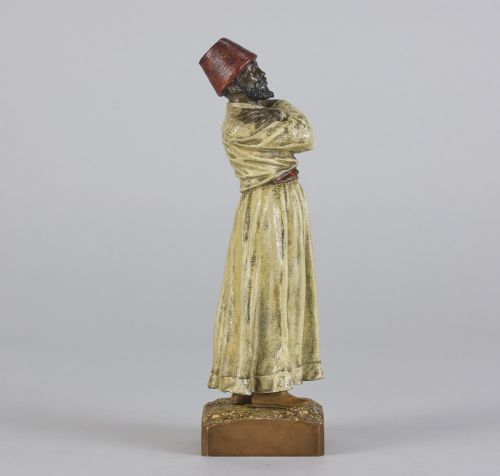
fig 2. An early twentieth-century cold-painted bronze figure depicting a bearded man in a cream robe and red fez with arms crossed on a rectangular base.
fig 2. Early 20th Century Cold-painted Bronze "Whirling Dervish" by Franz Bergman

Book Ref: Antique Vienna Bronzes by Joseph Zobel

SKU: 9501

ABOUT

Franz Bergman and his use of Cold Painting:

Whirling Dervish

Whirling Dervish - Franz Xavier Bergman (1861-1936) probably the most famous of the Viennese sculptors who specialized in cold-painted bronzes. But first, let’s be clear of the difference between, say, our Arab and a bronze from antiquity. The latter has a surface untouched by anything other than time. Over the centuries such pieces develop a patina caused by oxidation and are highly prized by connoisseur collectors who appreciate the effects produced by age (which is why cleaning them is such a specialized task). The Arab Warrior is decorated with several layers of special, heavy lead-based polychrome paints, applied after objects are removed from the mould. Pieces decorated with enamels would normally be kiln-fired to melt the paint and ensure it has fused to the surface of the object to be decorated. Cold-painted bronzes are not subjected to the enamelling process – they remain cold – relying on the standard of painting to dictate the quality of the finished item. The technique was popular around the turn of the century and thousand upon thousand of the little animals (such as birds, foxes and even insects) and other figures, some as small as a few inches in height, poured out of Viennese foundries. Bergman’s manufacture was one of the leading makers. It was founded by his father, also Franz (1838–1894) a professional metal chaser from Gablonz, in Austria, who came to Vienna in 1860. Franz Xavier inherited the business on his father’s retirement and opened a bigger, much more productive foundry there in 1900. By no means all the animal figures came from Bergman’s works, but many did and sadly, many are unmarked. Those that are marked carry a capital “B” in a vase-shaped design as with the Arms Dealer, the presence of which removes any doubt as to the provenance. Bergman was also a fan of the exotic, producing larger figures and groups. Some depict Arabs, perhaps selling colourfully painted carpets, riding a camel or sitting in tents at an oasis complete with palm tree and water. Others are based on models from Bergman senior’s days. More rare are those wired for electricity and fitted small light bulbs to be used as table or bedside lamps. Being bigger objects, such pieces are more likely to carry the factory mark. Prices often run into four figures. Bergman junior also had an eye for the erotic, fantasy pieces that today’s collectors covet most. Always featuring a naked or scantily clad young woman in sensuous pose, Edwardian bachelors no doubt delighted in showing them off to their friends. But they were subtle too. The Camel figure, a model of an owl, a bear or some other unassuming object was constructed cleverly with a hidden button or lever which, when activated, causes the model to open, revealing the saucy secrets hidden inside. Expect to pay handsomely for such novelties. They were no doubt pricey when they were new. Manufacturing them was also something of a risk for Bergman, but he covered his tracks by marking them with the trade name “Nam Greb” to avoid upsetting his more conservative customers, and, perhaps, making them sound even more exotic. The joy of cold-painted bronzes

Height
16.5cm (6.50")
Date of Manufacture

Hickmet Fine Arts has dated this Cold Painted Bronze Figurine to the 1900s.

Reference Numbers
Sellingantiques Ref
SA1220731
Dealers Internal Ref
9501
Hickmet Fine Arts
Hickmet Fine Arts
Sellingantiques verified Since Apr 2012

Established in 1936, hickmet fine arts is an international family run antiques business

Dealer Profile

You can view the stock and full dealer information on the Hickmet Fine Arts Profile Page

Trade Associations

Hickmet Fine Arts is a registered member of LAPADA  BADA  CINOA
PDF SHARE
SAVE
An early twentieth-century cold-painted bronze figure depicting a bearded man in a cream robe and red fez with arms crossed on a rectangular base.
1 / 11
Archive I An early twentieth-century cold-painted bronze figure depicting a bearded man in a cream robe and red fez with arms crossed on a rectangular base.

Early 20th Century Cold-painted Bronze "Whirling Dervish" by Franz Bergman
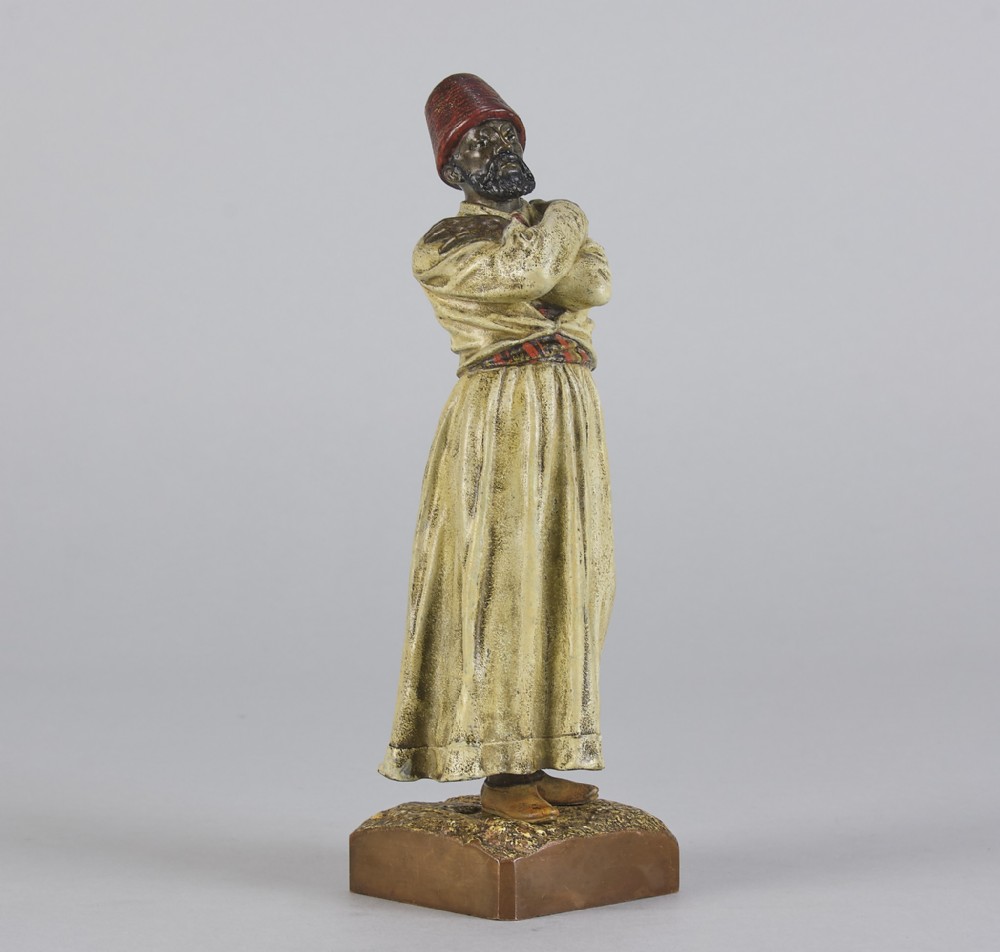
Archive II An early twentieth-century cold-painted bronze figure depicting a bearded man in a cream robe and red fez with arms crossed on a rectangular base. View II
Archive III An early twentieth-century cold-painted bronze figure depicting a bearded man in a cream robe and red fez with arms crossed on a rectangular base. View III
Archive IV An early twentieth-century cold-painted bronze figure depicting a bearded man in a cream robe and red fez with arms crossed on a rectangular base. View IV
Archive V An early twentieth-century cold-painted bronze figure depicting a bearded man in a cream robe and red fez with arms crossed on a rectangular base. View V
Archive VI An early twentieth-century cold-painted bronze figure depicting a bearded man in a cream robe and red fez with arms crossed on a rectangular base. View VI
Archive VII An early twentieth-century cold-painted bronze figure depicting a bearded man in a cream robe and red fez with arms crossed on a rectangular base. View VII
Archive VIII An early twentieth-century cold-painted bronze figure depicting a bearded man in a cream robe and red fez with arms crossed on a rectangular base. View VIII
Archive IX An early twentieth-century cold-painted bronze figure depicting a bearded man in a cream robe and red fez with arms crossed on a rectangular base. View IX
Archive X An early twentieth-century cold-painted bronze figure depicting a bearded man in a cream robe and red fez with arms crossed on a rectangular base. View X
Archive XI An early twentieth-century cold-painted bronze figure depicting a bearded man in a cream robe and red fez with arms crossed on a rectangular base. View XI
Enlarged Archival View
Telephone 07971 850405
Location
Gallery Eighty Five
85 Portobello Road
London
W11 2QB
United Kingdom
Verified Since Apr 2012
Items For Sale 112
Items Sold 6
Hickmet Fine Arts
Hickmet Fine Arts
Verified Since Apr 2012
View Dealer Info
Location: Gallery Eighty Five, 85 Portobello Road, London, W11 2QB, United Kingdom
Verified
Apr 2012
For Sale
112
Sold
6
An early twentieth-century cold-painted bronze figure depicting a bearded man in a cream robe and red fez with arms crossed on a rectangular base.
Early 20th Century Cold-Painted Bronze "Whirling Dervish" by Franz Bergman
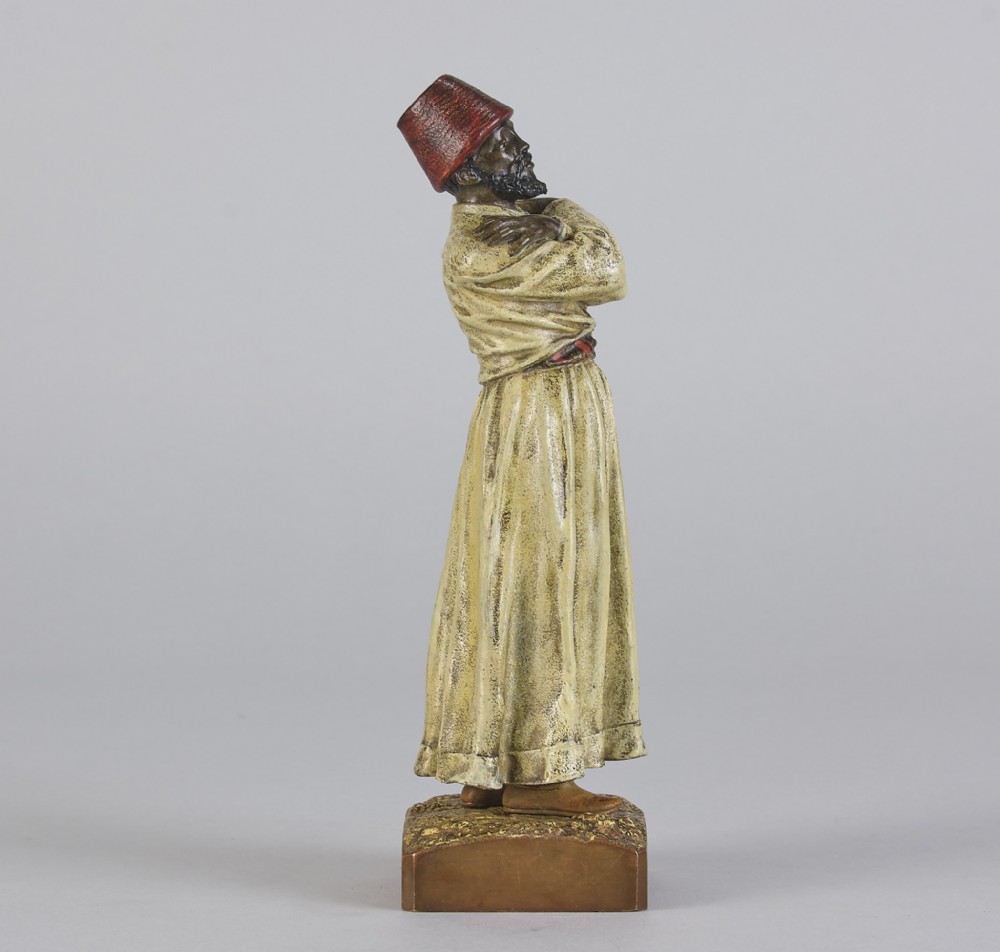
Ref: SA1220731
An early twentieth-century cold-painted bronze figure depicting a bearded man in a cream robe and red fez with arms crossed on a rectangular base.
Detail View 1
Detail View 2
Detail View 3
Detail View 4
Detail View 5
Detail View 6
Detail View 7
Detail View 8
Detail View 9
Detail View 10
Archival Detail
Every single antique dealer on our platform is individually approved by our internal team. We verify their professional trade history, ethical standards, and photographic quality to ensure a secure, high-standard buying environment. Upon joining, every dealer agrees to a strict 9-point code of conduct. While issues can occasionally arise, our dealers typically resolve them swiftly and directly with the buyer. In fact, since our founding in 2002, Sellingantiques has only had to step in to help resolve an issue on roughly five occasions—a true testament to the quality of our dealers and their dedication to your happiness.
Our dealers are highly experienced in packing and shipping fragile, high-value antiques. Because you are in direct contact with the dealer, you will be able to easily go through all available shipping and insurance options together to ensure your item arrives safely.
Antiques are the ultimate green purchase. By choosing historical pieces over newly manufactured goods, you completely eliminate the carbon footprint of modern mass production while preserving exceptional, timeless craftsmanship.

Vienna cold-painted bronzes are cast metal figures produced in Austria during the late 19th and early 20th centuries, decorated using layers of unfired enamel paint to achieve detailed polychrome finishes.

These sculptures were cast in solid bronze using lost-wax or sand-casting techniques, after which artists applied cold enamel oil paints directly onto the bare metal surface without subsequent heat firing.

Authentic examples frequently feature specific foundry marks, such as Franz Xaver Bergmans registered capital letter B inside a vase silhouette, alongside natural wear patterns on the unfired paint layer.

These figurative objects are suitable for display on mahogany bookshelves, inside glass cabinet displays, or atop an office desk within traditional, eclectic, or dark academia interior layouts.

Dust the item gently using a dry, soft microfibre cloth or camel-hair brush, avoiding water, chemical solvents, or polish which can permanently strip or damage the unfired painted surface.
items
Add keywords to the filter
Price
£100
£250000
Era
Movements
Material
Origin
Stock Location
Freshness
Online Payments
Categories