

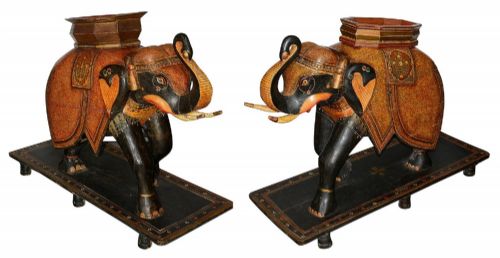

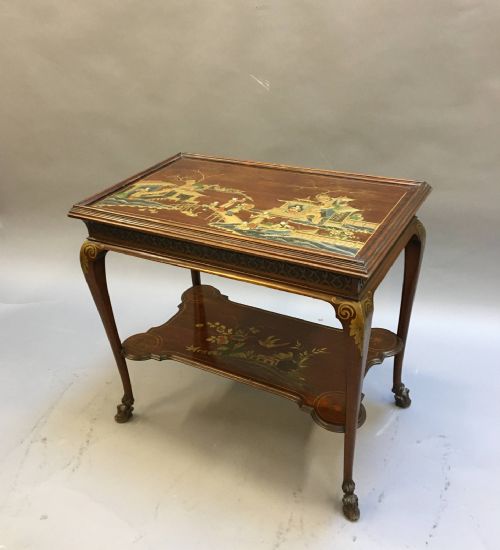
Oriental Lacquer Side Tables
Oriental lacquer side tables bring rich painted narratives and glossy finishes to a room, ranging from quiet elm forms to bold Chinoiserie.
Oriental Lacquer Side Tables
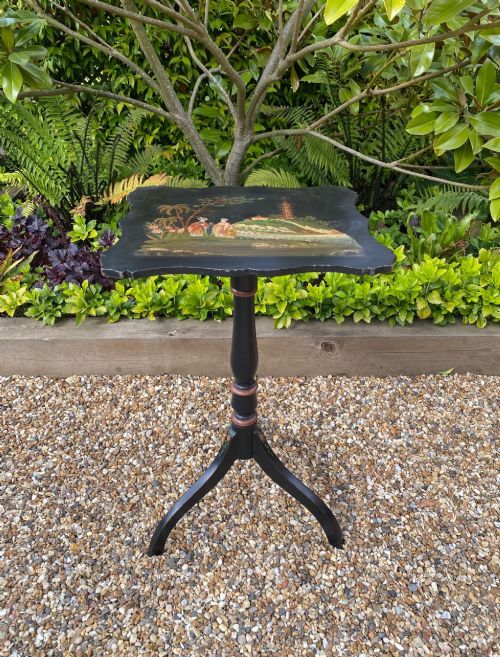
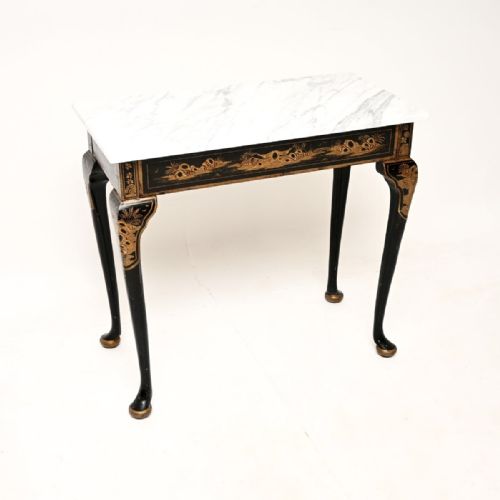
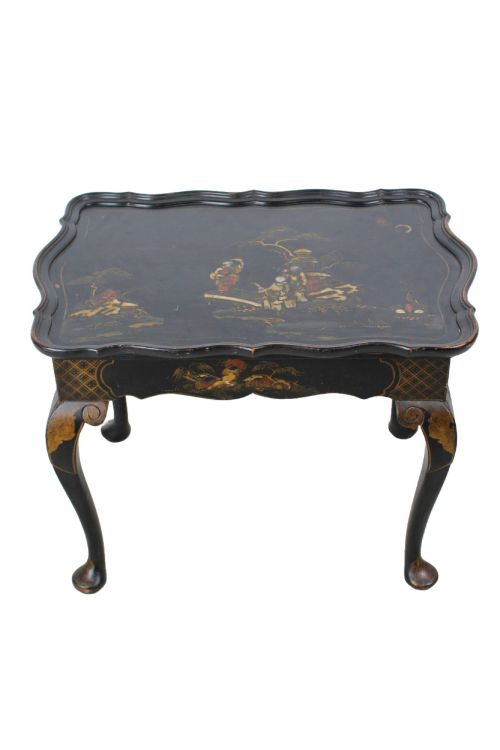
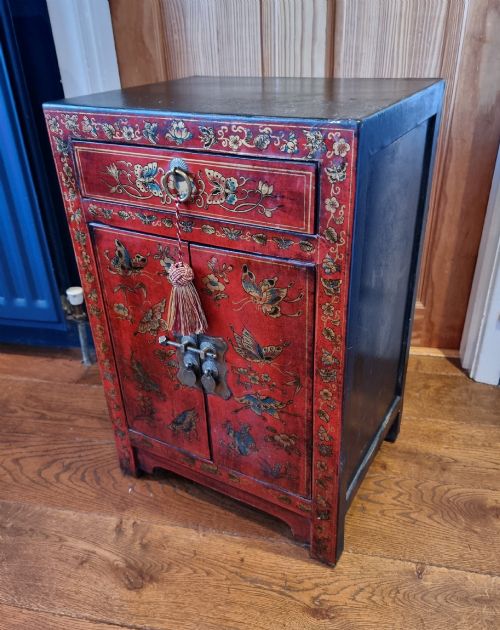
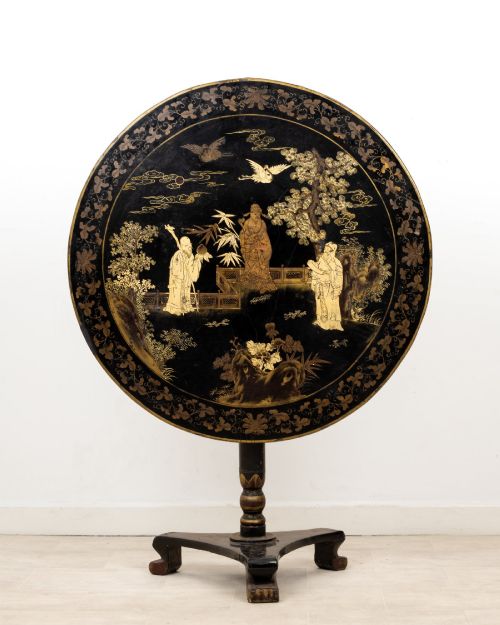
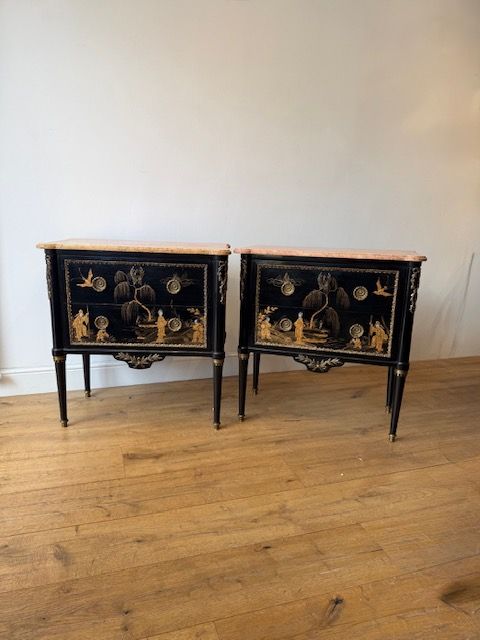
Oriental lacquer side tables encompass a diverse group of occasional, coffee, and nest tables spanning the nineteenth and early twentieth centuries. These pieces draw from Chinoiserie, Qing Dynasty, and Victorian interpretations, utilising forms like tripod bases, tray tops, and multi-tiered nests. Buyers encounter everything from deep black finishes to red and cream painted surfaces.
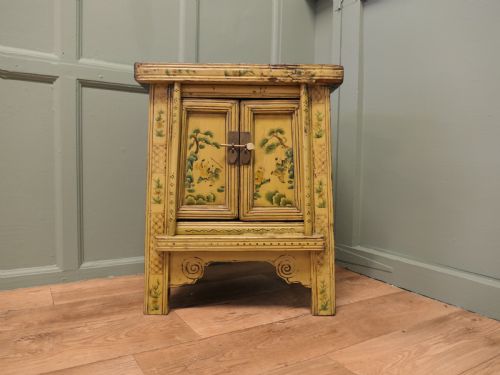
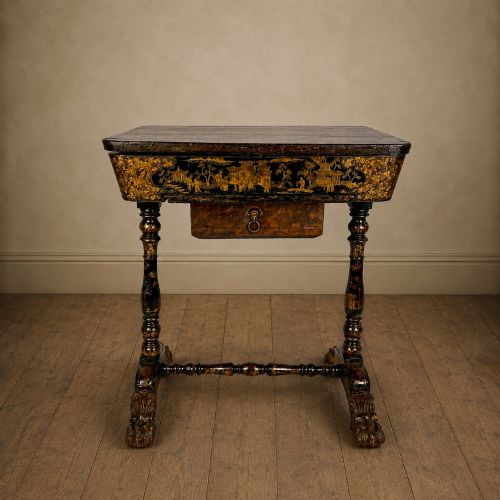
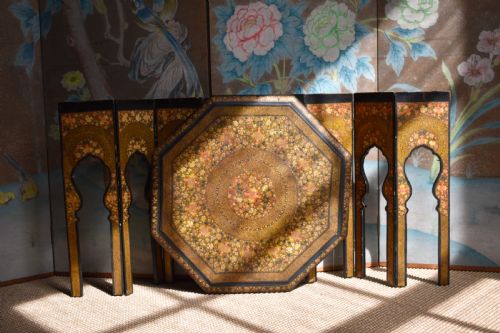
The selection includes specific regional variants such as Chinese elm surfaces, Japanese Chabudai tables, and Indian Kashmiri painted items. Side tables sit alongside related occasional furniture like plant stands, sewing tables, and small cabinets. Most examples date from the Victorian and Edwardian eras up to the nineteen-thirties.
How oriental lacquer side tables were made
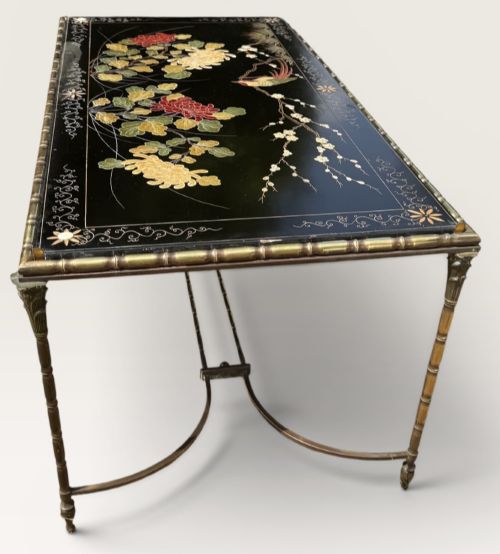
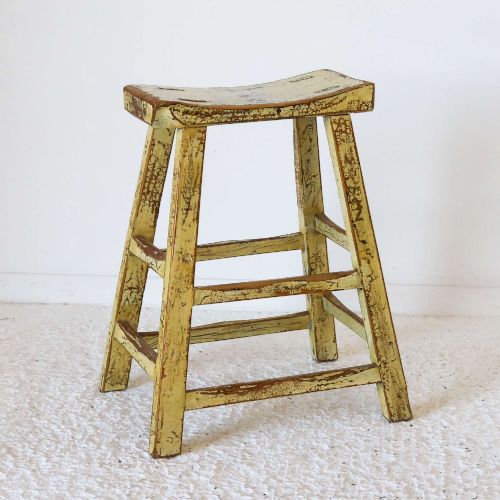
Makers built these tables using primary woods such as elm, supplemented by bamboo and rootwood for specific structural forms. Surfaces received layers of lacquer, paint, and gold leaf or gilt to build up traditional Chinoiserie scenes and decorative motifs.
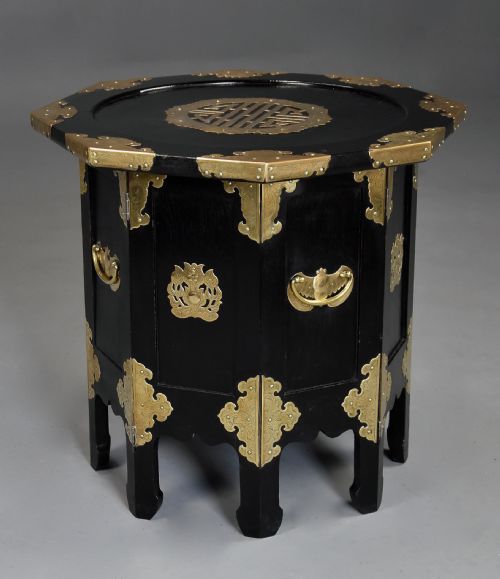
Metal elements like brass appeared on corners, trays, and occasional table structures to provide contrast against the dark or brightly coloured lacquer grounds. Artisans employed carving techniques on wood components before applying the final decorative finishes.
Listings feature woods including elm, bamboo, and rootwood, paired with surface finishes of lacquer, paint, and gold leaf.
What varies in quality in oriental lacquer side tables
The depth and preservation of the original lacquer finish dictate the visual strength of each table, separating worn surfaces from those with intact pictorial detail. Crispness in the execution of gold leaf, gilt, and painted Chinoiserie motifs reflects the skill of the original workshop.
Structural integrity depends on the joinery of the underlying wood, whether sturdy elm or lighter bamboo. Consistency in period details, such as matching sets of nest tables or integrated brass fittings, elevates the standing of an individual piece.
Maison Bagues
The Oriental Lacquer Side Tables Glossary
- Chinoiserie
- European theatrical interpretation of Chinese artistic motifs and styles. This decorative approach dominates the painted scenes found on nineteenth and twentieth century tables.
- Lacquer
- Protective and decorative resin finish applied in multiple layers to wood surfaces. It provides the smooth, glossy background characteristic of oriental occasional tables.
- Nest of tables
- Set of graduated tables designed to fit neatly beneath one another. They appear frequently in Chinoiserie and Edwardian furniture groupings.
- Gilt
- Application of gold leaf or powdered gold to a surface for ornamentation. It highlights figures and landscapes against dark lacquer backgrounds.
- Elm
- Durable hardwood commonly utilised in traditional Chinese furniture construction. It forms the solid base for many provincial and structural tables.
Oriental Lacquer Side Tables: Frequently Asked Questions
How do I style an oriental lacquer side table?
These tables work well beside plain upholstery where their decorated surfaces can stand out without visual clutter. Pairing a black or red lacquered nest of tables with neutral interiors highlights the painted Chinoiserie detail.
Lighter elm or bamboo versions suit smaller sitting rooms or hallways as occasional lamp tables. Their compact footprints allow them to function easily alongside modern seating.
Are nest of tables practical for daily use?
A set of nesting tables offers flexible surface space that stores compactly beneath the main table when not in use. They provide convenient pull-out spots for drinks or books during gatherings.
Care should be taken with moisture and heat on antique lacquer surfaces, so utilising coasters helps preserve the finish during everyday tasks.
How do I care for antique lacquer?
Dusting surfaces regularly with a soft, dry cloth prevents particle buildup without scratching the sensitive varnish. Avoid placing these tables in direct sunlight to prevent the painted scenes from fading over time.
Keep lacquer away from extreme temperature shifts and excessive humidity to protect the wood and resin layers underneath. Professional wax or cleaning products should be used sparingly and only if suited to historic finishes.
What is the difference between Chinoiserie and Chinese export pieces?
Chinoiserie generally describes European-made furniture decorated in a stylistic, imaginative interpretation of East Asian art. These items reflect Western tastes during the Victorian and Edwardian periods.
Chinese export pieces were manufactured in Asia specifically for Western markets, often combining traditional regional woodworking techniques with forms requested by European buyers.