



Oriental Display Shelf
An oriental display shelf brings intricate craftsmanship and storied timber into a room, offering a dedicated stage for small treasures.
Oriental Display Shelf
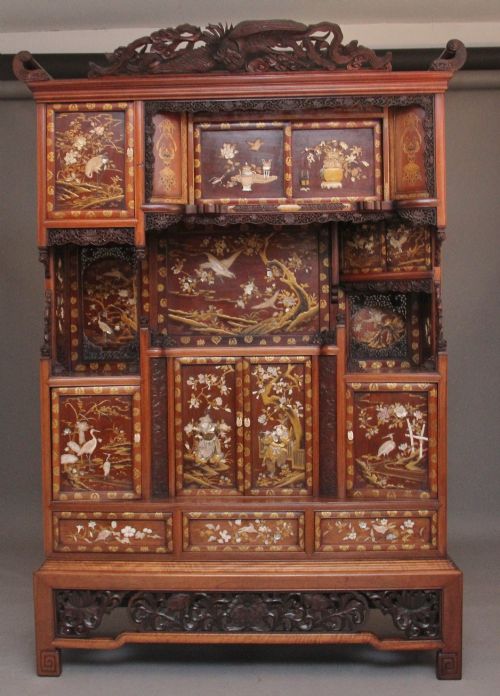
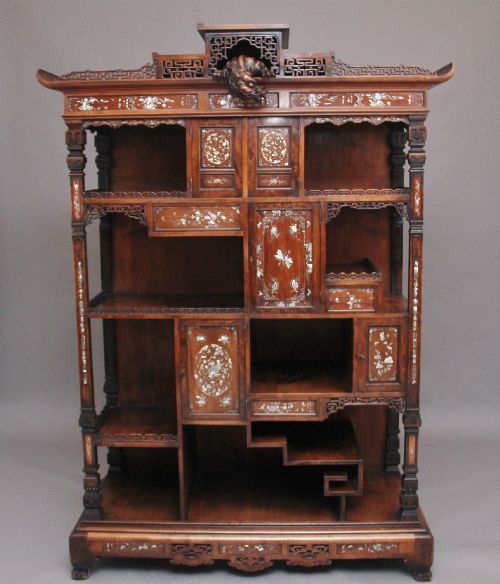
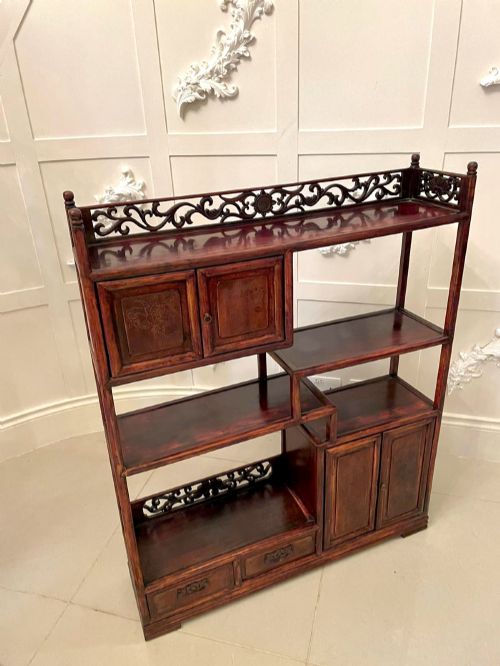
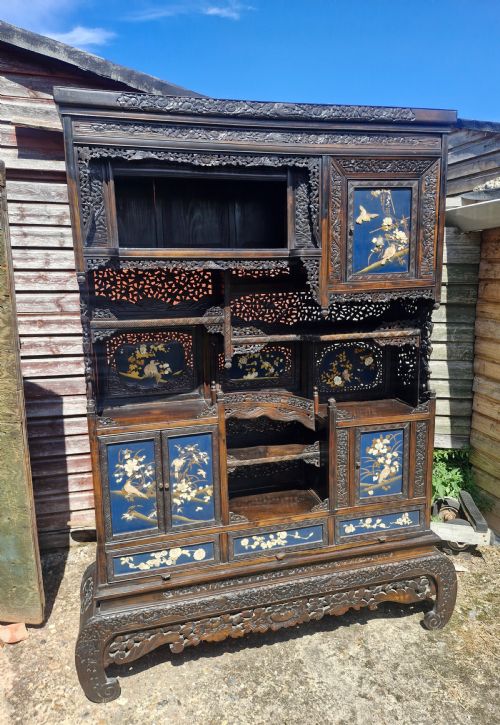
When you search for an oriental display shelf, you encounter pieces designed to exhibit curiosities, porcelain, and small decorative items. These include intricately carved cabinets, open shelving structures, and traditional shodana forms originating from East Asia or European workshops inspired by Eastern aesthetics.
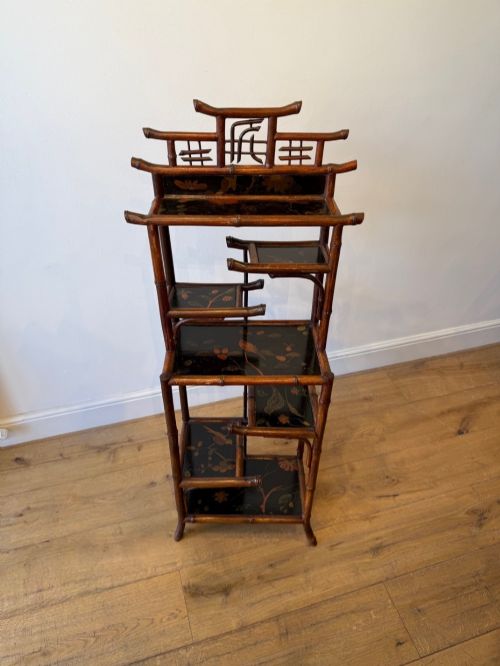
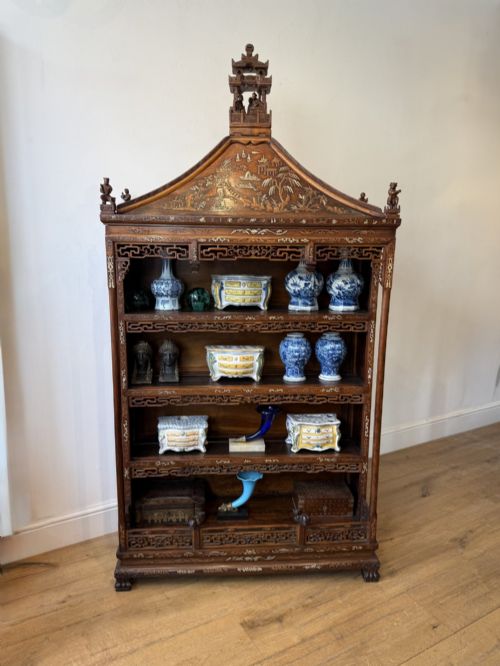
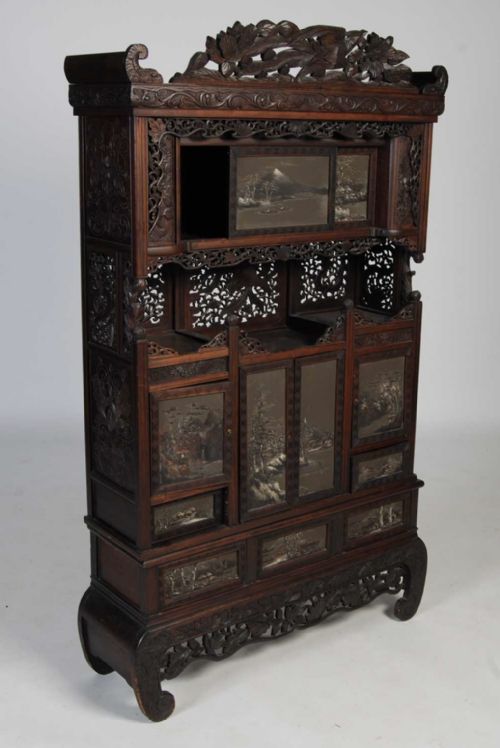
The pieces on this page span from the nineteenth century into the early twentieth century, encompassing Chinese hardwood cabinets, Japanese Meiji period shodanas, and bamboo constructions. You will find floor-standing units, corner cabinets, and cabinets on stands, reflecting diverse domestic storage traditions.
Stylistic influences range from the Qing Dynasty and Chinese Export pieces to Japanese Meiji examples and Victorian Chinoiserie or Japonisme interpretations. Such variety demonstrates how makers across different regions adapted traditional display furniture for varied interiors.
How they were made
Construction relies heavily on dense timbers such as hardwood, rosewood, Hongmu, teak, and bamboo, selected for their structural stability and capacity for intricate shaping. Woodworkers utilised joinery techniques that allowed complex assemblies of open shelves, enclosed cupboards, and stepped tiers.
Many examples feature surface ornamentation including red lacquer finishes, mother-of-pearl inlay, and profuse carving. Brass mounts and glass panels appear on select cabinets, adding textural contrast to the dark wood and lacquered surfaces.
Listings feature items from the nineteenth and early twentieth centuries, spanning the Meiji period and Qing Dynasty.
What varies in quality
Quality reveals itself in the depth and crispness of the carving, particularly where openwork foliage and panels meet the structural frame. The precision of mother-of-pearl inlay and the smoothness of lacquer applications distinguish finer workshop output from simpler commercial production.
Structural integrity of the tiered shelves and cabinet doors indicates the maker's skill in timber selection and joinery. Finer pieces demonstrate careful attention to balanced proportions across complex, asymmetrical shodana layouts.
Gabriel Viardot
The Oriental Display Shelf Glossary
- Shodana
- A traditional Japanese tiered display cabinet featuring irregular shelving and small cupboards. These pieces were designed to show objects of art.
- Hongmu
- A dense, dark Chinese hardwood frequently utilised for fine furniture and display stands. It is prized for its strength and rich natural colour.
- Japonisme
- A late nineteenth-century Western artistic movement influenced by Japanese art and design. It is evident in European furniture adopting Eastern motifs.
- Whatnot
- A piece of furniture consisting of open shelves for displaying small objects. They became popular in Victorian interiors for decorative storage.
Oriental Display Shelf: Frequently Asked Questions
What is a shodana cabinet?
A shodana is a Japanese cabinet featuring asymmetric shelves, sliding doors, and small compartments designed for displaying precious objects and art.
These pieces emerged strongly during the Meiji period, combining functional storage with elaborate architectural detailing.
How were display shelves used?
These cabinets and shelves served to exhibit ceramics, bronzes, and scholarly items within traditional and domestic settings.
Their varied shelf heights allowed owners to arrange collections with visual balance and hierarchy.
How do I care for hardwood furniture?
Keep hardwood and lacquered surfaces away from direct sunlight and sudden temperature shifts to protect the timber and inlay.
Dust gently with a dry microfibre cloth and avoid using chemical polishes that can damage historic finishes.
What is Chinese Export furniture?
Chinese Export furniture refers to items manufactured in China specifically for Western markets during the nineteenth and early twentieth centuries.
These works often fused traditional Eastern forms and materials with decorative preferences suited to European homes.