



Oriental Decorative Ceramic Urns
Oriental decorative ceramic urns bring the rich palettes and intricate hand-painted detail of Asian and European kilns into domestic spaces.
Oriental Decorative Ceramic Urns
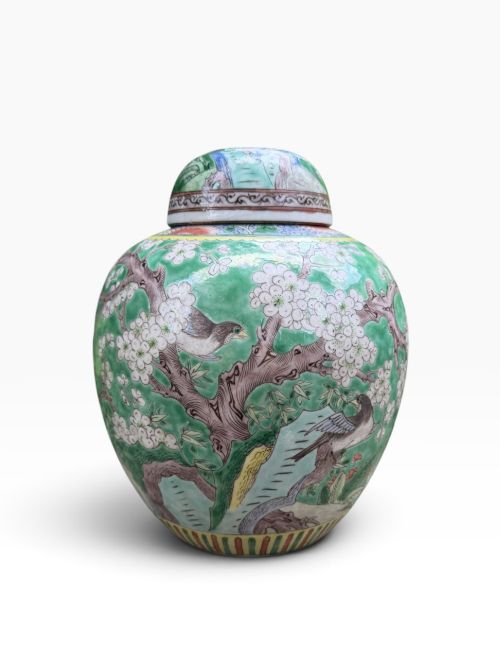
These pieces encompass a diverse group of vessels, including ginger jars, floor-standing vases, garnitures, and jardinieres designed for display. When searching for oriental decorative ceramic urns, buyers encounter numerous Japanese Satsuma and Imari works alongside Chinese porcelain and earthenware.
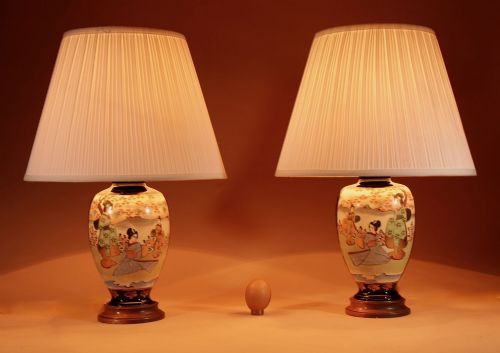
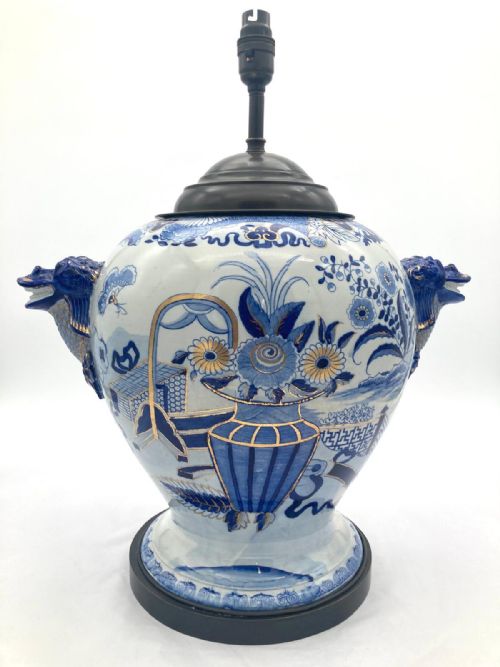
The selections span the nineteenth and early twentieth centuries, capturing periods from the late Edo and Meiji eras through the Edwardian and Showa decades. Many function as traditional lidded jars or open vases, while others have been adapted into table lamps.
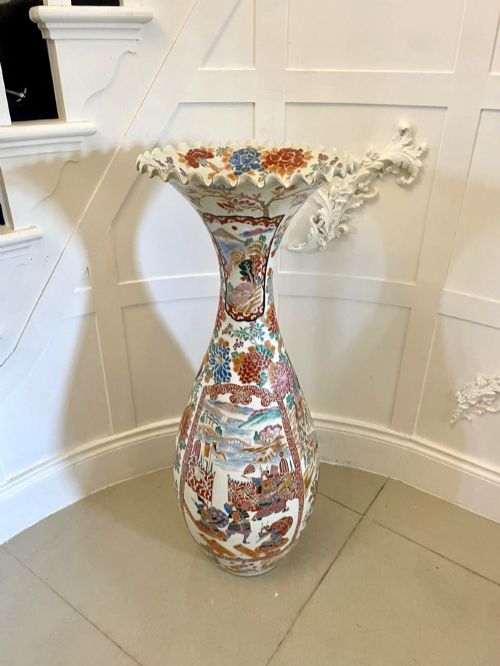
Originating from major centres like Arita, Kyoto, and Kobe, the forms range from miniature vessels to large floor vases reaching notable heights. They bring varied silhouettes into an interior, including baluster, globular, and bottle shapes.
How they were made
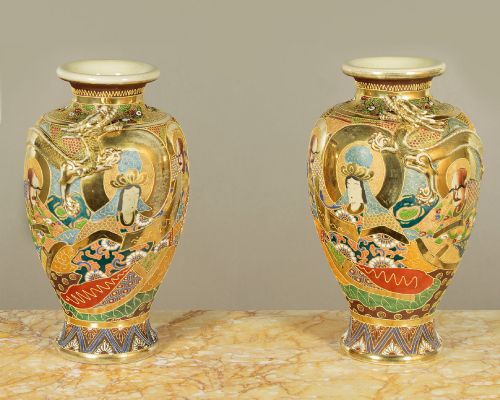
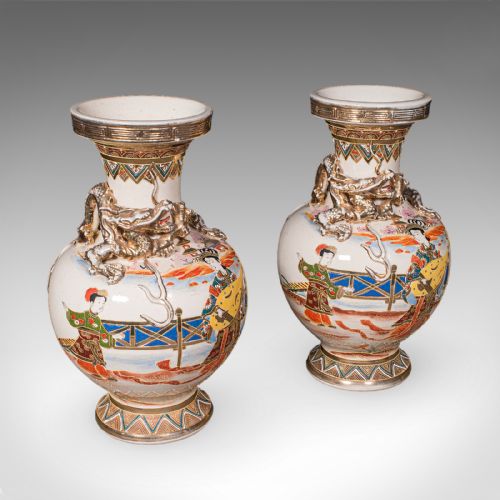
Makers shaped these bodies from porcelain, stoneware, and earthenware, applying glazes and underglaze pigments before firing. Many incorporate raised enamel work known as moriage, which adds tactile relief to the surface.
Details are frequently heightened with gold leaf, gilt, and intricate enamel colours, particularly within the blue and white or Imari palettes. Some examples integrate supplementary materials such as wood stands or lacquer panels.
Listings feature porcelain, earthenware, and stoneware bodies decorated with enamel, gold leaf, and raised moriage.
What varies in quality
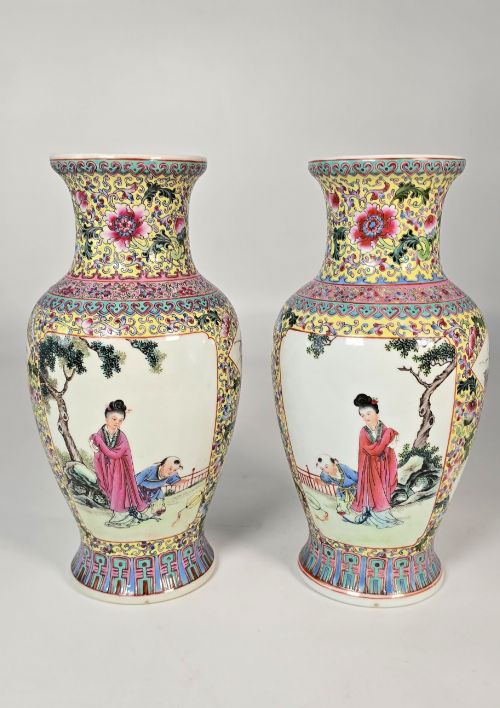
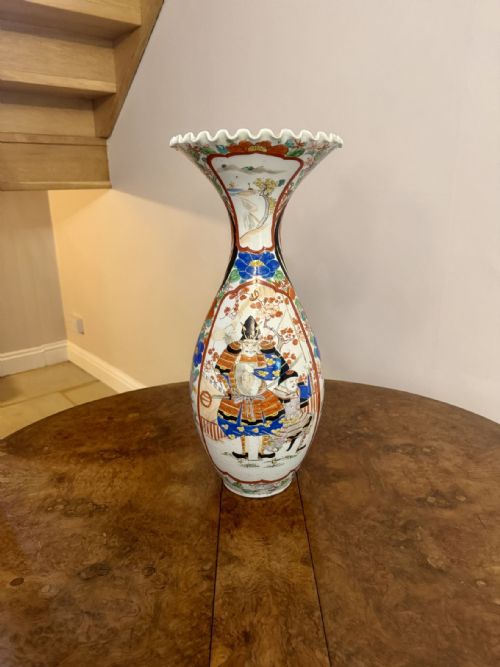
Execution of the painted detail separates ordinary production from the finest exhibition pieces. Precise brushwork in the figures, landscapes, and floral panels indicates superior skill.
The application of heavy gilding and complex moriage relief distinguishes notable makers and workshops from standard commercial output. Preservation of the original enamel and gilt surfaces without significant rubbing maintains the visual strength of the piece.
Hicks and Meigh·Manpei, Kobe·Makuzu Kozan II·Kinkozan Circle·Chosei, Kyoto·Nanzan mark·Kinkozan·Hakusan·Hododa
The Oriental Decorative Ceramic Urns Glossary
- Satsuma
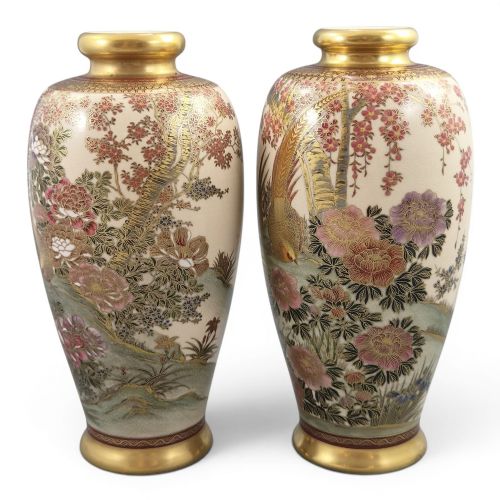
- A type of earthenware originating from the Satsuma province in Japan, characterised by an ivory-coloured, crackled glaze and elaborate enamel and gilt decoration. It became widely produced for export during the Meiji period.
- Imari
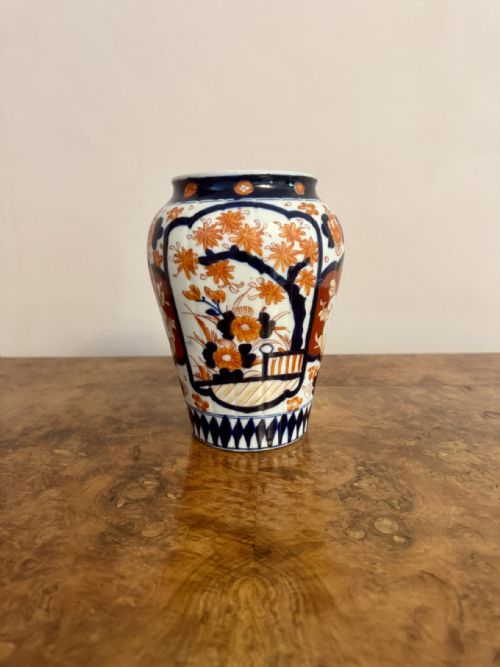
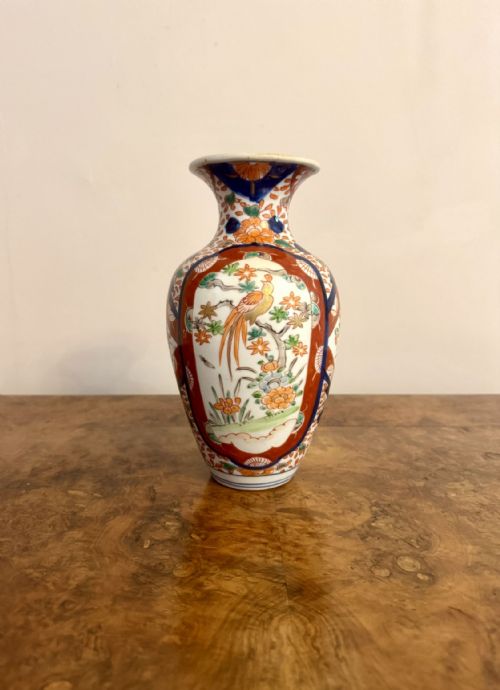
- A style of Japanese porcelain named after the port from which it was shipped, typically featuring a palette of underglaze blue, iron red, and gilt. The designs often incorporate dense floral and brocade patterns.
- Garniture
- A set of matched vases or jars designed to be displayed together on a mantelpiece or cabinet. These sets usually comprise three or more pieces of graduating or matching sizes.
- Moriage
- A decorative technique utilising piped clay to create raised, textured patterns beneath the glaze or enamel. It provides a tactile, three-dimensional quality to the surface of the ceramic.
- Baluster
- A vase form with a rounded body that tapers towards the base and flares at the neck. This classical silhouette provides a stable and balanced proportion for intricate surface painting.
- Jardiniere
- An ornamental pot or stand designed to hold large plants or floral arrangements. They appear in ceramic and stoneware, often decorated with exterior landscape or figural panels.
Oriental Decorative Ceramic Urns: Frequently Asked Questions
How do I distinguish Satsuma ware from Imari ware?
Satsuma ware typically presents an ivory-coloured earthenware body covered in a fine crackle glaze, decorated with detailed enamel and heavy gilt. Imari ware utilises a hard porcelain body painted in a distinct palette of deep cobalt blue, iron red, and gold.
Examining the base and the texture of the surface will quickly reveal whether you are looking at the absorbent, crackled earthenware of Satsuma or the vitrified porcelain characteristic of Imari.
Were these vessels originally used for storage?
Many forms, such as ginger jars and covered urns, served practical storage functions in their original domestic or mercantile contexts. Over time, their decorative qualities led to them being manufactured primarily as display pieces.
By the nineteenth and twentieth centuries, workshops produced these jars and vases specifically for export and interior ornamentation rather than dry goods containment.
How should I care for antique ceramic urns in my home?
Keep these pieces out of direct sunlight to prevent any fading of the delicate overglaze enamels and gold leaf. Dust them gently with a soft, dry cloth without applying water or modern cleaning solvents.
If the vessel has been converted into a table lamp, ensure the electrical components are periodically tested by a professional to protect the antique body from heat damage.
What is a garniture set?
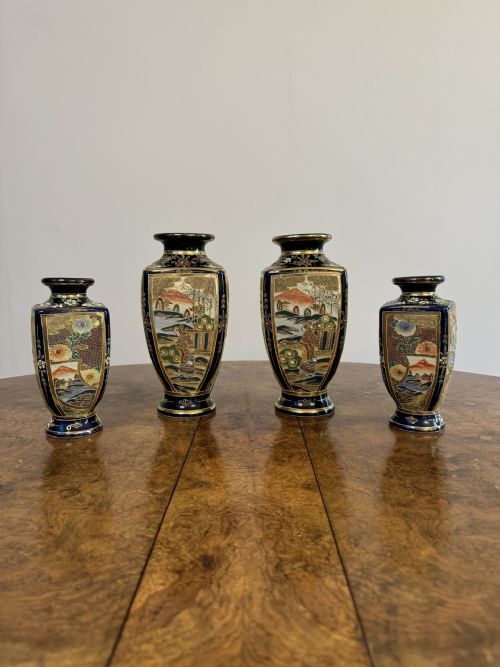
A garniture is a matching set of three, four, or five vases and jars designed to create a symmetrical decorative arrangement on a mantel or sideboard. These sets share a unified decorative scheme, palette, and maker.
Individual pieces from a dismantled garniture can sometimes be found independently, though complete surviving sets remain particularly sought after by collectors.