
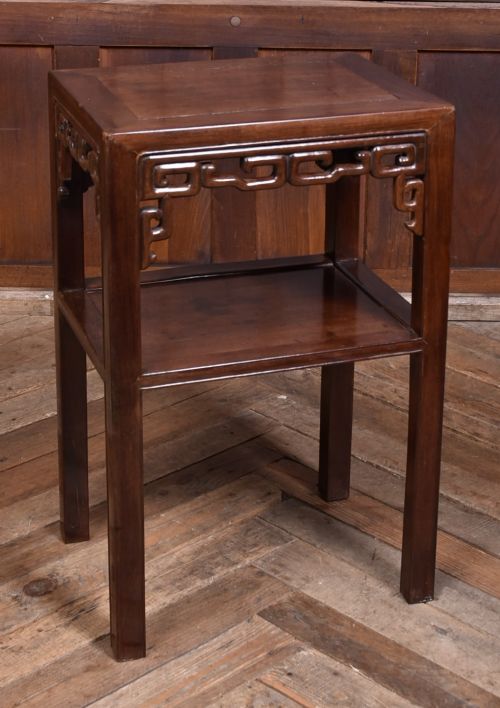
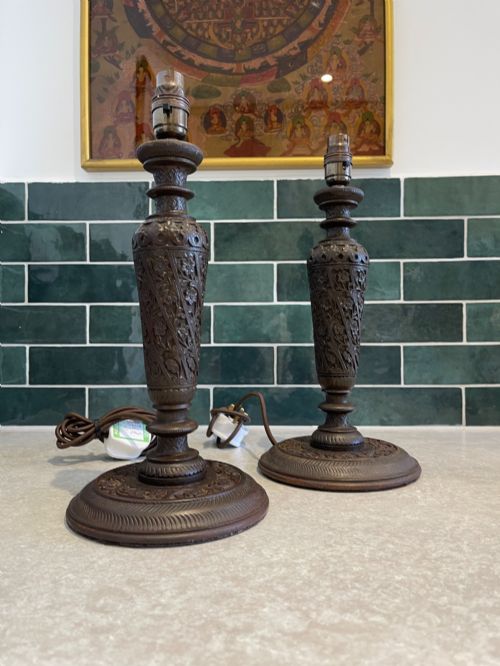
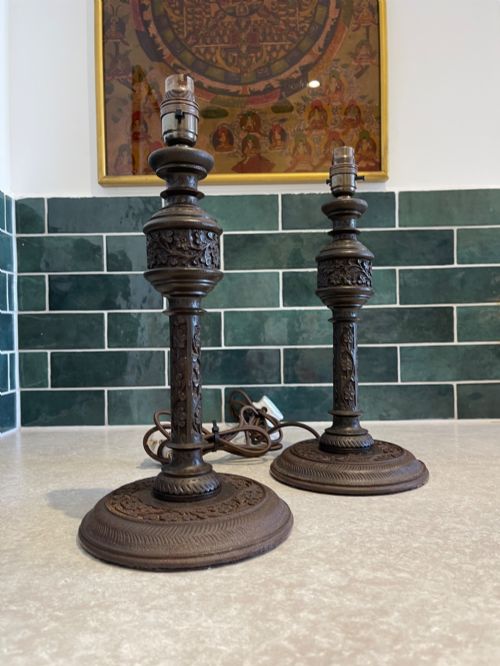

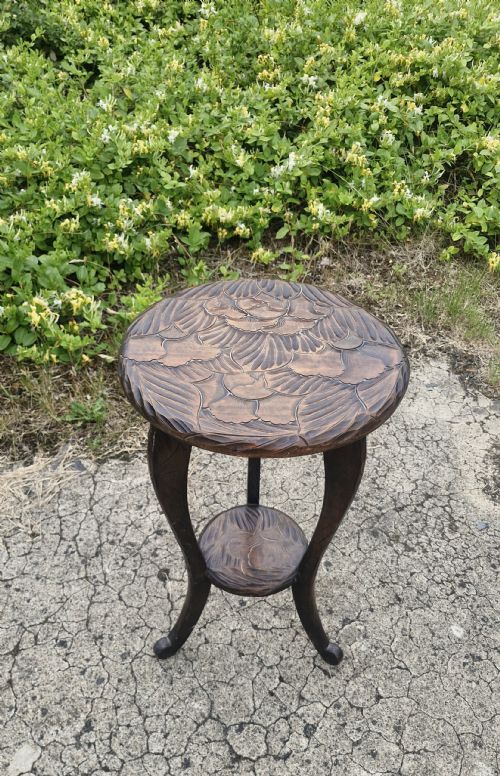
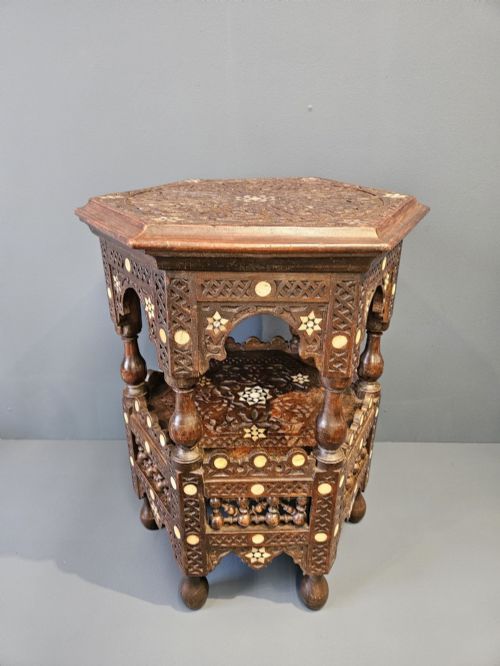
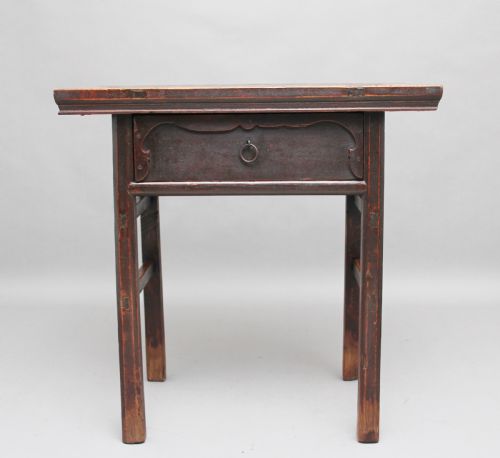


Oriental Carved Lamp Table
An oriental carved lamp table brings dense hand-carved detail and rich dark timbers into a room, serving as a sturdy surface for lighting.
Oriental Carved Lamp Table
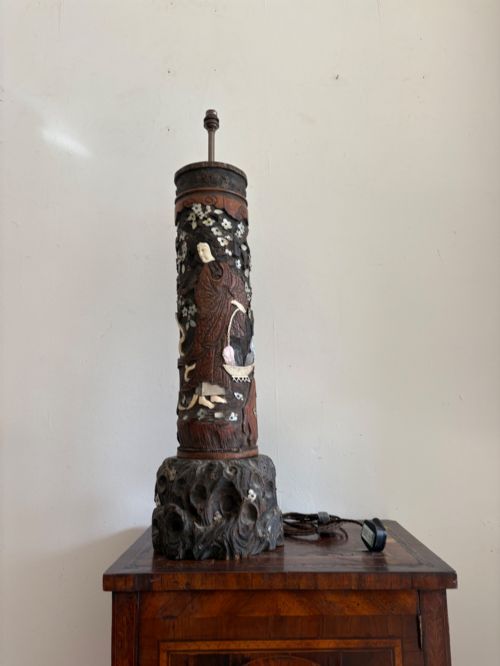
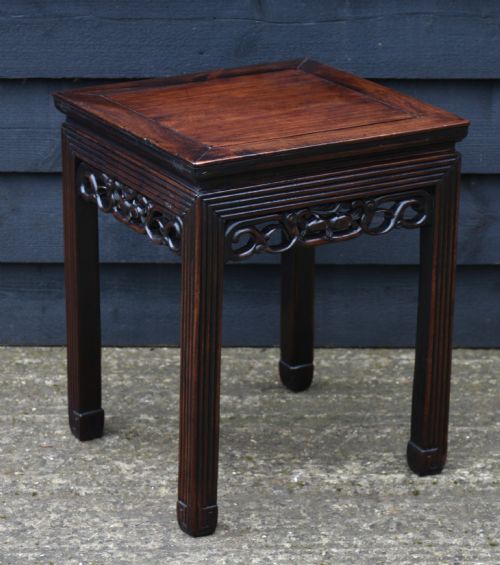
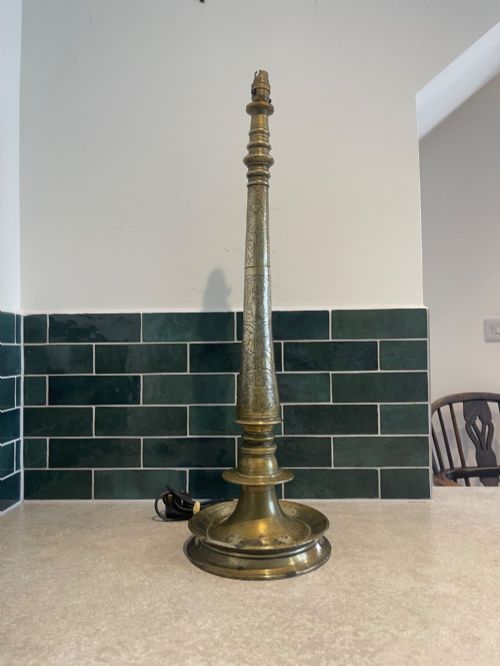
When you search for an oriental carved lamp table, you encounter low tables, side tables, jardiniere stands and converted vase lamps originating from various eastern and colonial traditions. The pieces span the nineteenth century, the Victorian and Edwardian eras, and the early twentieth century.
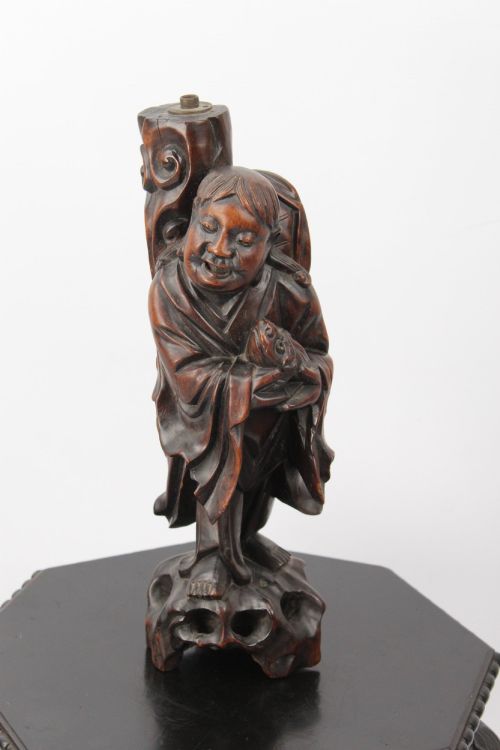
Hardwoods predominate, frequently enhanced by inset marble tops, root wood construction, or elaborate dragon carvings. Buyers find both dedicated lamp tables and versatile small stands suited for holding illumination.
What varies in quality
The distinction between ordinary and exceptional pieces lies in the crispness and depth of the hand carving. Finer examples display meticulous undercut detailing on dragons, foliage and figures without soft edges or shallow execution.
Material selection also dictates the hierarchy. Heavy, well-seasoned rosewood or huali hardwood with tight grain commands attention, as do intact inset marble tops and original patination rather than later surface treatments.
Oriental Carved Lamp Table Retail Price Guide 2026
Typical asking prices for oriental carved lamp table among the pieces listed under this phrase on Sellingantiques today, from the lower quarter to the upper quarter. They describe what is for sale here now, not the wider market.
Listings incorporate nineteenth-century Victorian pieces alongside Edwardian examples up to the 1920s.
Liberty's
The Oriental Carved Lamp Table Glossary
- Hardwood
- Dense timber derived from broad-leaved trees, used extensively for durable oriental furniture and stands. It resists heavy carving without splitting.
- Root wood
- Timber formed from the root mass of a tree, highly prized for gnarled, organic forms utilised in lamp bases and stands. Each piece presents entirely unique natural contours.
- Meiji Period
- The era in Japanese history lasting from 1868 to 1912, noted in these listings for high-grade bronze works and decorative objects. Pieces from this time show exceptional metalcasting and finishing.
- Jardiniere stand
- A tall or low decorative table designed to support a plant pot or bowl. They frequently serve as lamp tables in modern interiors.
- Qing Dynasty
- The final imperial dynasty of China, lasting until 1912, associated here with formal huali and rosewood tables. Items from this period reflect strict traditional craftsmanship.
Oriental Carved Lamp Table: Frequently Asked Questions
Are these tables sturdy enough for heavy lamps?
Most of these pieces are constructed from dense regional hardwoods like rosewood and teak, providing a solid foundation for lighting.
Heavier examples, particularly those with marble tops or sturdy pedestal bases, easily support substantial table lamps without wobbling.
How do I identify a Meiji period piece?
Meiji period items in this selection date between 1868 and 1912 and typically feature Japanese bronze work or intricate carved wood.
Look for refined metalcasting, realistic animal forms such as elephants or dragons, and distinct aesthetic characteristics of late nineteenth-century Japanese export art.
What is the difference between a lamp table and a jardiniere stand?
A lamp table generally provides a stable surface specifically proportioned for holding a light fixture and its cord.
A jardiniere stand was originally built to elevate potted plants, though both forms share similar heights and compact footprints that suit modern rooms.
How should I care for antique hardwood tables?
Maintain the timber by keeping the surface dusted with a dry cloth and avoiding placement near direct heat sources.
Occasional light application of appropriate wood wax helps preserve the natural sheen of rosewood, teak, and elm without building up residue.