




Oriental Bronze Lighting
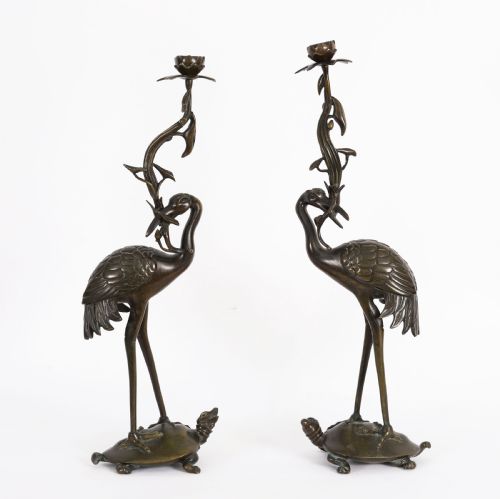
Oriental bronze lighting brings together cast metal forms, cloisonné enamel and porcelain mounts to illuminate interiors with substantial weight and distinct historic character.
Oriental Bronze Lighting
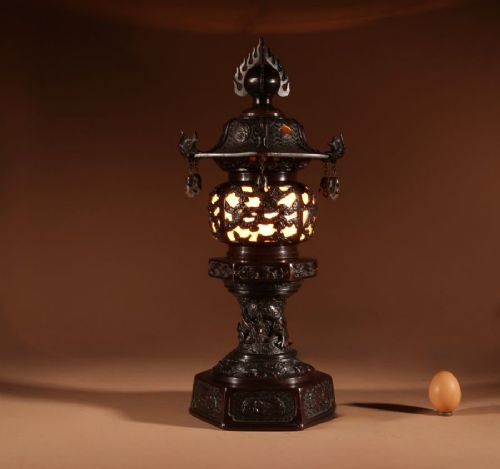
When you search for oriental bronze lighting, you encounter a selection spanning table lamps, floor lamps, candlesticks and hanging lanterns created from the nineteenth century into the twentieth. These pieces draw upon Japanese Meiji period metalwork, Chinese export styles, Chinoiserie tastes and French interpretations of Asian forms.
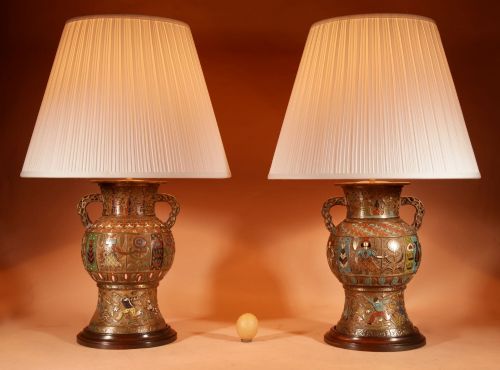
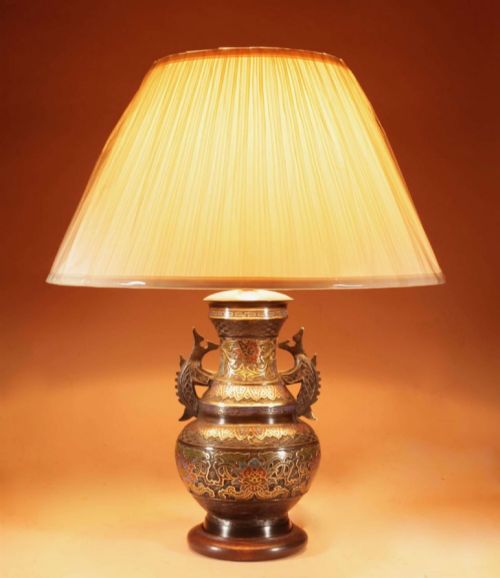
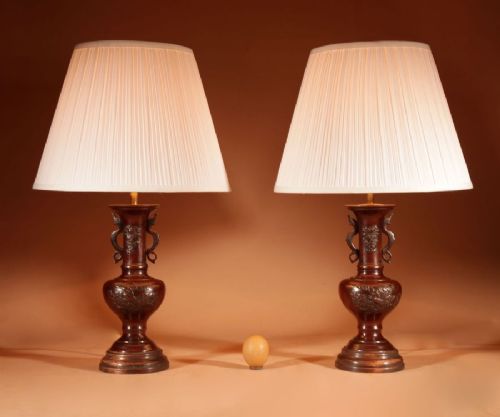
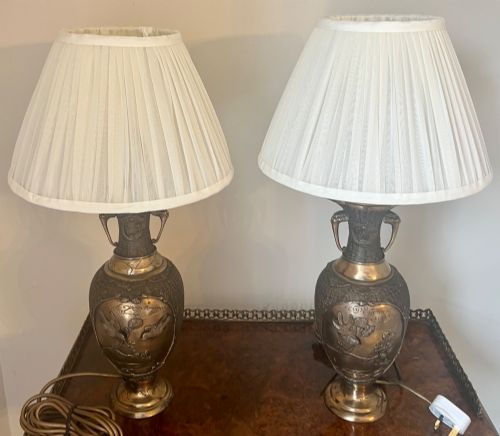
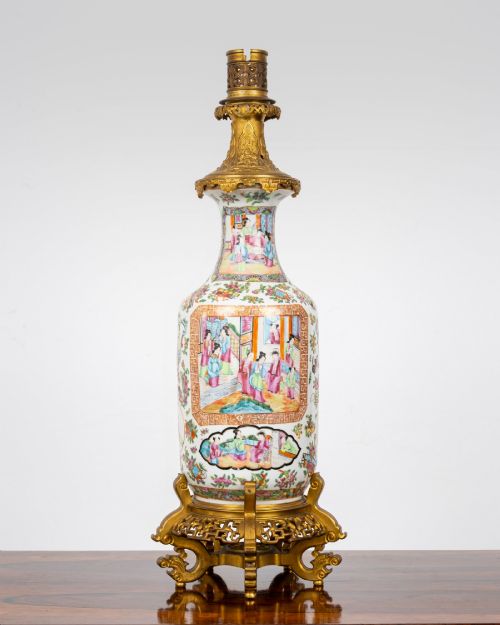
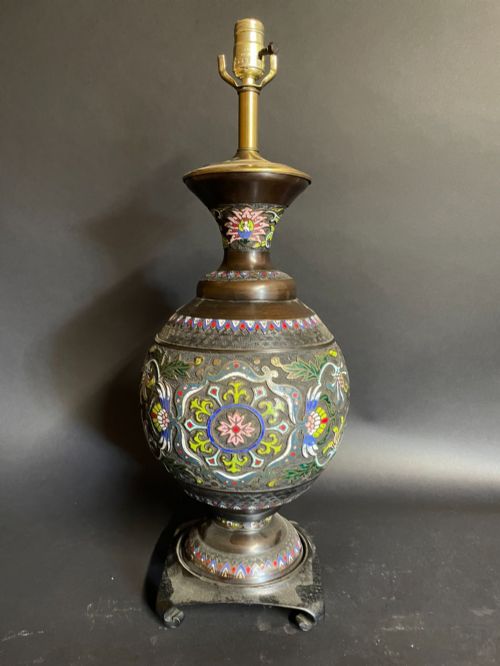
You are most likely to meet table lamps fashioned from converted vases, urns and sculpted animal figures rendered in bronze, brass and gilt bronze. Many incorporate porcelain elements such as Satsuma, Rose Medallion and Celadon alongside intricate champlevé and cloisonné enamelling.
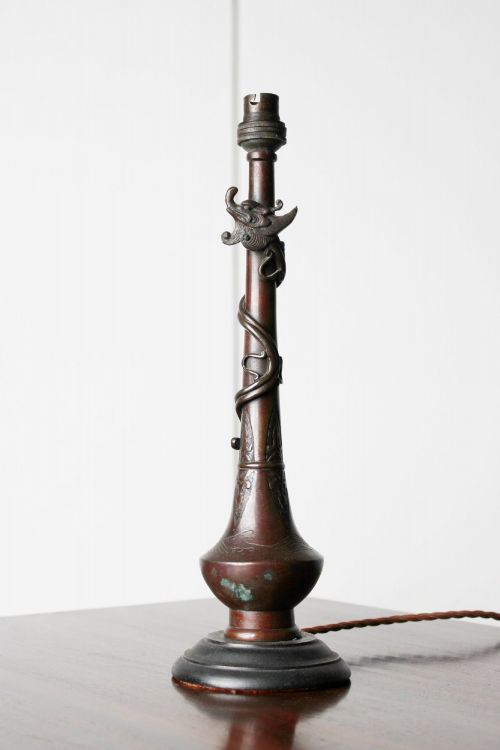
The assortment reflects both Eastern craftsmanship and Western adaptation, as many Asian vessels and bronze works were mounted or wired for electricity during the Victorian and Edwardian eras. These objects range from pairs of dragon or elephant lamps to simpler patinated bronze lanterns and candlesticks.
Materials and construction
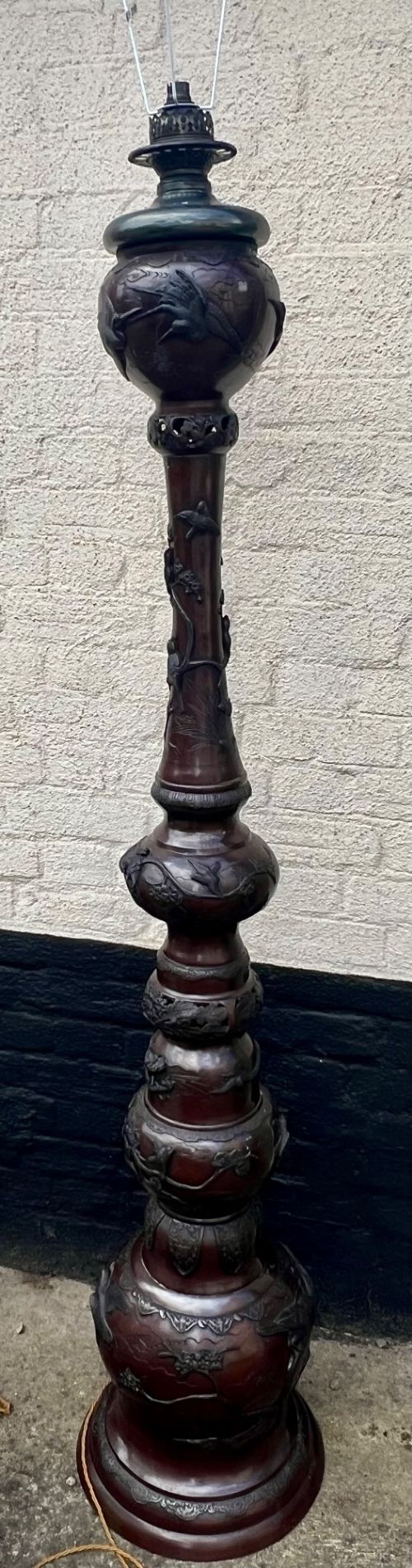
The backbone of these pieces is cast bronze, often paired with brass, ormolu and gilt bronze mounts that frame ceramic bodies. Artisans utilised lost-wax casting and detailed hand-chasing to produce sculptural figures of dragons, elephants and human subjects with distinct textures.
Surface ornamentation relies heavily on cloisonné and champlevé enamel work, where vitreous pastes fill wire cells or recessed troughs before firing. Porcelain components, including Celadon and Canton wares, frequently combine with these metal housings, secured by bolted mounts and brass fittings.
Several bronze elephants stand ready to illuminate the room, their trunks raised to support the weight of the day.
Quality and craftsmanship
Distinction in these pieces rests on the crispness of the bronze casting and the depth of the hand-chased detail in figures like dragons and elephants. Finer examples display rigorous control in cloisonné and champlevé enamel work, where cells remain even and colours stay uniform without pitting.
The harmony of the conversion matters significantly, as original or sympathetic ormolu mounts and balanced proportions separate thoughtfully adapted lamps from hurried assemblages. The weight of the metal and the integrity of the underlying porcelain or bronze vessel dictate the overall presence of the object.
The Oriental Bronze Lighting Glossary
- Champlevé
- An enamelling technique where troughs or cells are dug into the surface of the bronze and filled with coloured vitreous enamel before firing. This method creates bold patterns alongside raised metal outlines.
- Cloisonné
- A decorative metalwork process using thin metal wires soldered to a bronze body to create compartments that receive enamel pastes. The piece is then fired and polished to a smooth finish.
- Ormolu
- Gilded bronze mounts and decorative hardware applied to ceramics and stone vessels. This technique was frequently utilised by European makers adapting Asian vases into lamps.
- Celadon
- A type of Chinese ceramic glaze known for its pale green jade-like tones. Pieces featuring this glaze frequently date from the nineteenth century or earlier.
- Meiji Period
- The era of Japanese history lasting from 1868 to 1912, noted for exceptional bronze casting and decorative arts exported widely to the West.
Oriental Bronze Lighting: Frequently Asked Questions
How do I identify a converted lamp?
Converted lamps generally started life as vases, incense burners or decorative vessels before being drilled and fitted for electrical wiring. You can often spot threaded rods, washers and wiring channels running through the base or centre of the piece.
Many Asian bronzes and ceramics underwent this transformation during the Victorian and Edwardian periods as households adopted electric lighting. The original character of the vessel remains intact despite the interior modifications for modern use.
How should I clean bronze lighting?
Dust bronze surfaces gently with a soft, dry cloth to prevent the accumulation of grime in recessed areas. Avoid chemical polishes, as they strip away patination and damage fragile enamel or gilt highlights.
Enamelled and porcelain sections require particular care, needing only a damp cloth where necessary. Preserving the natural surface patina maintains both the historic character and visual depth of the metal.
Are these lamps wired for modern use?
Most antique lamps found on the market have been fitted with modern wiring and plugs to comply with current safety standards. Rewiring is often undertaken by previous owners or dealers to ensure the piece functions reliably.
Buyers should nevertheless have a qualified electrician inspect older internal wiring before daily use. This guarantees that the original fittings and lamp holders operate safely within a contemporary home.