



Asian Bronze Table Lamp
An asian bronze table lamp brings weight, texture and intricate metalwork into a room.
Asian Bronze Table Lamp
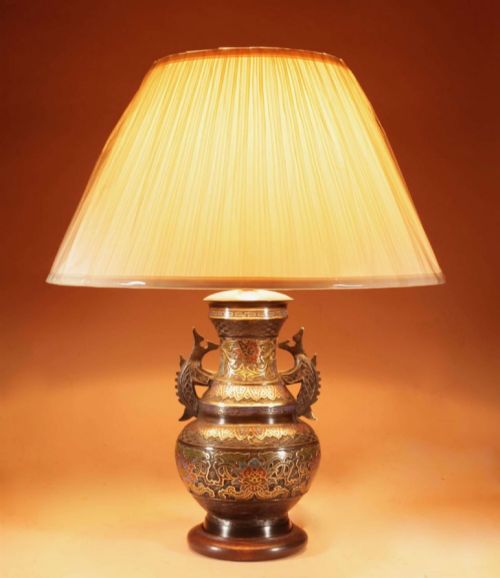
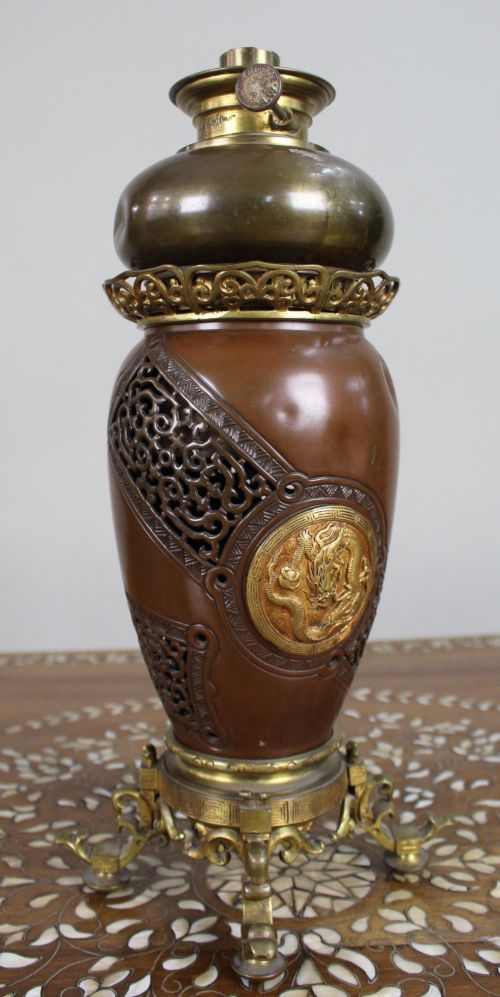
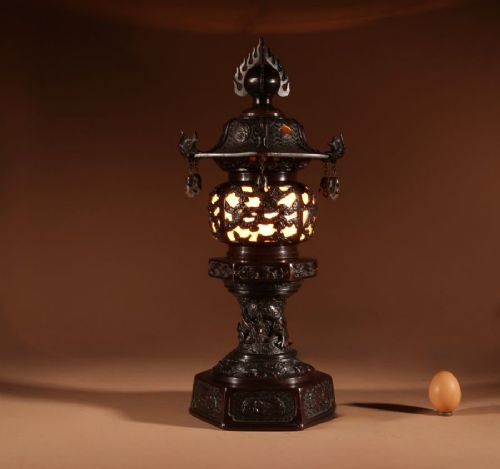
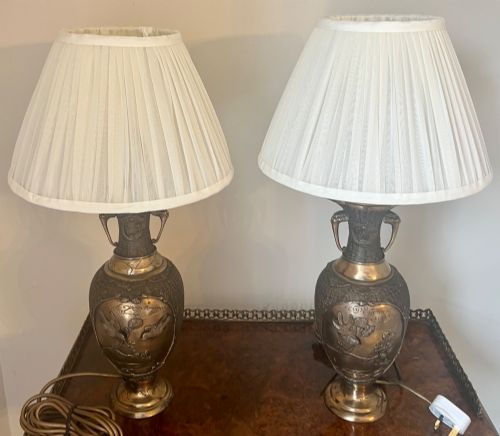
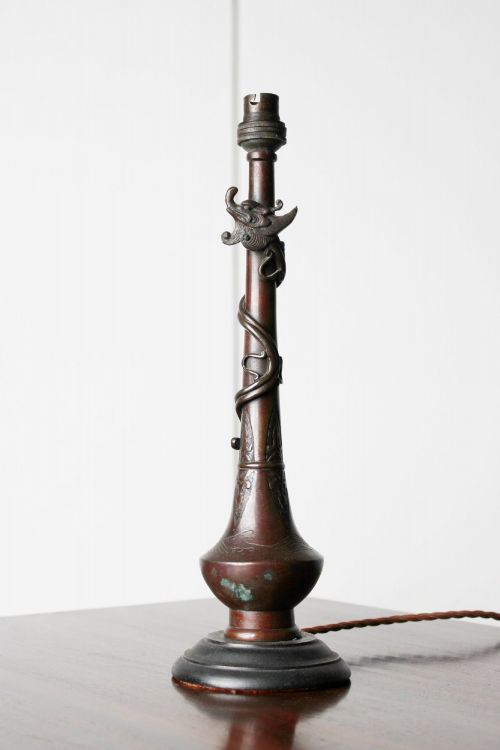
When you search for an asian bronze table lamp, you encounter metal vessels, vases, and lanterns adapted for electric lighting from the nineteenth and early twentieth centuries. These pieces originate from Japanese Meiji period workshops or Chinese dynastic traditions, often featuring dragons, elephants, or archaistic motifs.
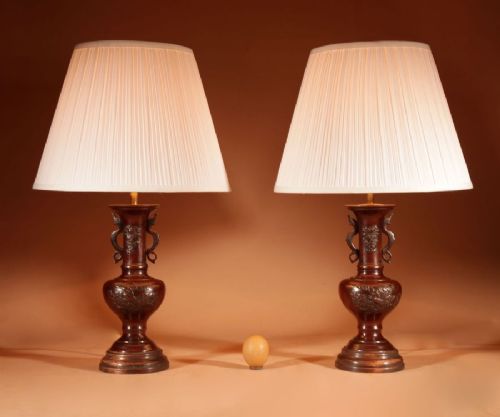
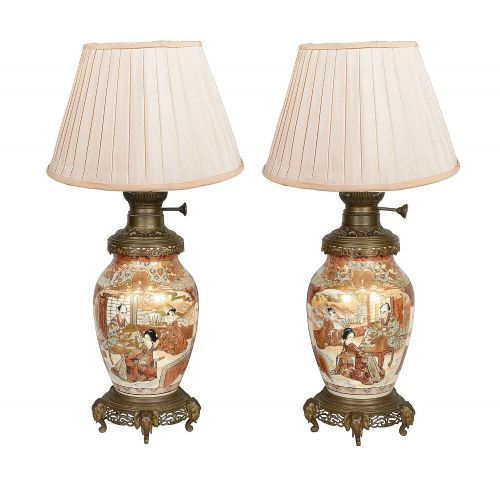
The selection here ranges from converted oil lamps and hanging lanterns to pairs of vases mounted for domestic illumination. Victorian, Edwardian, and later twentieth-century adaptations sit alongside pieces bearing enamel or porcelain elements.
How they were made
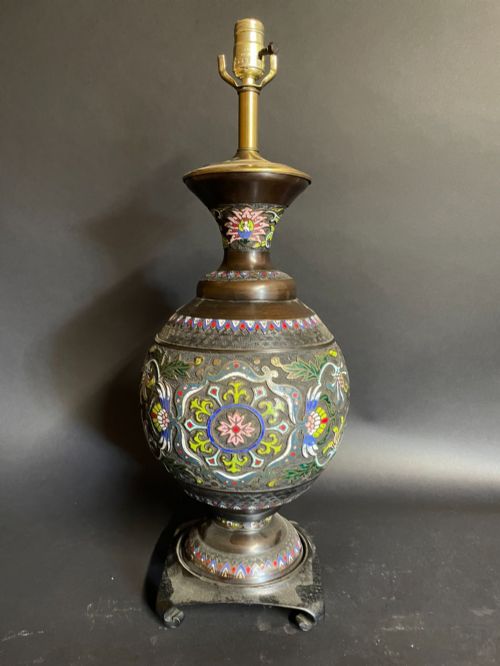
The foundational material is cast bronze, sometimes combined with brass, gilt bronze, or carved wood bases. Many surfaces incorporate champlevé or cloisonné enamel work, where coloured pastes fill recessed metal cells before firing.
Vessels utilise traditional foundry methods, subsequently drilled or fitted for electrical wiring during conversion. Fabric and silk shades frequently accompany these bodies to complete the lighting fixture.
Elephants and dragons hold up the nineteenth-century wiring with surprising domestic cheer.
What varies in quality
Quality rests in the crispness of the bronze casting and the depth of the chased surface detail. Superior examples display sharply rendered motifs like scales on dragons or feathers on birds, rather than soft or smoothed-over contours.
The integration of the conversion matters significantly, as does the preservation of original enamel work without extensive losses. Pairs of matching lamps command greater interest than single conversions due to the difficulty of finding balanced survivors.
The Asian Bronze Table Lamp Glossary
- Champlevé
- An enamelling technique where metal cells are gouged into the bronze body and filled with vitreous enamel before firing. The technique creates colourful, patterned surfaces flush with the surrounding metal lines.
- Cloisonné
- A method where thin metal wires are soldered to the bronze base to form compartments that receive coloured enamel pastes. Subsequent firing and polishing produce a smooth, patterned decorative finish.
- Meiji Period
- The era in Japanese history spanning from 1868 to 1912, characterised by opening trade with the West and exceptional metalwork output. Pieces from this time often show naturalistic animal forms and complex patination.
- Archaistic
- A design style that deliberately mimics ancient ritual bronzes from earlier dynasties. Makers used these ancient shapes to impart a sense of scholarly antiquity and historical weight.
- Celadon
- A type of pale green glazed ceramic frequently mounted alongside bronze elements to form hybrid table lamps. The glaze imitates the appearance of jade through controlled iron-oxide firing.
Asian Bronze Table Lamp: Frequently Asked Questions
How are these lamps wired?
Most pieces are historic conversions where original oil burners or vase interiors were adapted for modern electrical cables. Wiring styles vary depending on when the conversion took place.
Buyers should inspect the internal fittings and consult an electrician to ensure compliance with current safety standards before plugging them in.
Can I date a bronze lamp easily?
Dating relies on stylistic clues, period markers such as Victorian or Meiji reign dates, and the manufacturing methods of the bronze body. Enamel style and mounting techniques also provide chronological anchors.
Evidence from nineteenth-century vessels differs noticeably from later twentieth-century interpretations through casting weight and patina.
What is champleve enamel?
Champlevé involves carving troughs directly into a bronze surface to hold coloured enamel before kiln firing. This creates durable decorative panels integrated into the metal structure.
The technique differs from wire-based cloisonné by offering recessed colour fields within the solid bronze.
How do I care for antique bronze?
Dust the metal gently with a soft, dry cloth to prevent accumulation without disturbing the historic patination. Avoid harsh chemical cleaners or abrasive polishes that strip the surface.
Protect silk or fabric shades from direct sunlight to preserve their colour and integrity over time.