
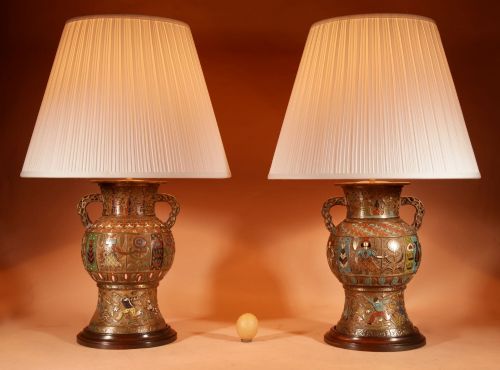
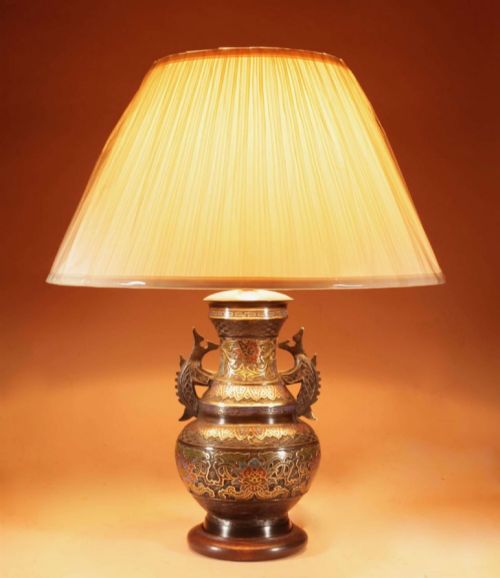
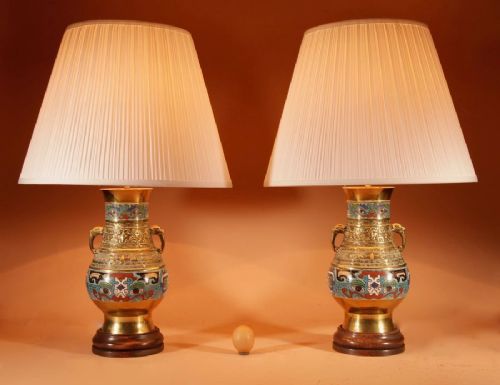
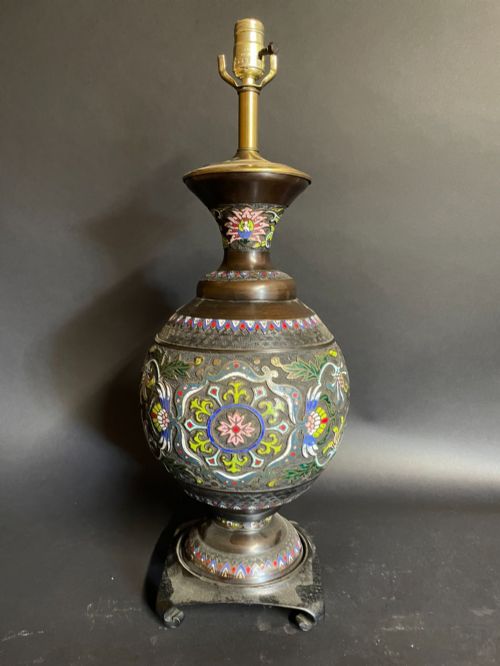




Enamel Urn Table Lamp
These enamel urn table lamp designs bring heavy metal bodies and rich colour into a room, offering both character and warm illumination.
Enamel Urn Table Lamp
When searching for an enamel urn table lamp, you encounter substantial metal vessels adapted for modern lighting from the nineteenth and early twentieth centuries. The selection on this page relies heavily on Japanese Meiji period works and Chinese export pieces.
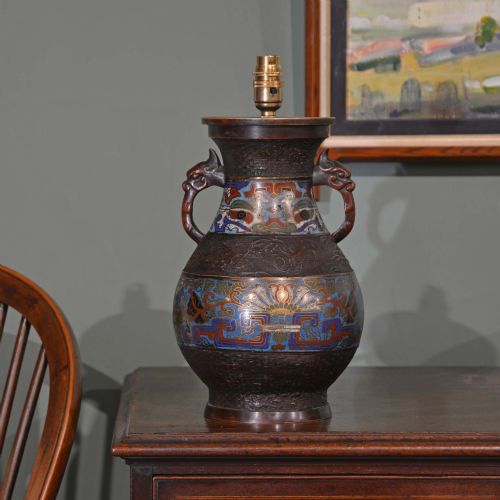
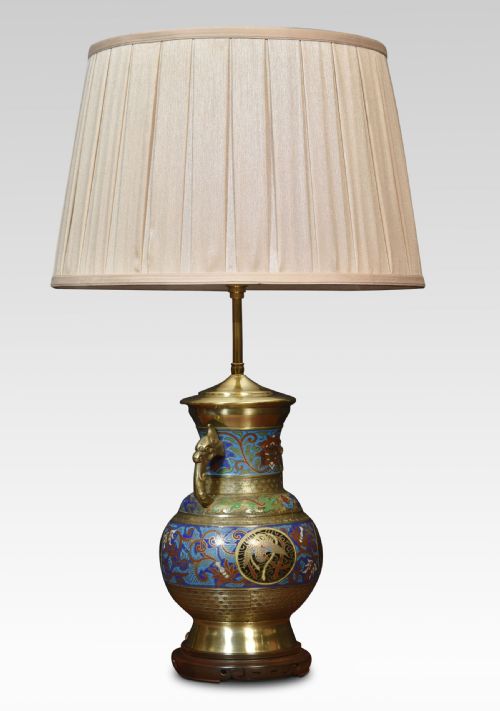
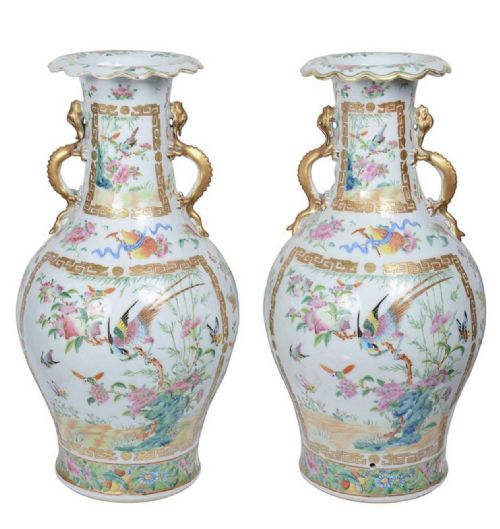
Most examples originate as decorative vases or urns before conversion into table lamps, retaining their original twin handles or robust silhouettes. Materials span from traditional bronze and brass to porcelain bodies with intricate surface decoration.
The forms frequently draw on Chinoiserie and Chinese Qing Dynasty styles alongside Japanese export aesthetics. You will find both single lamps and matching pairs suited for sideboards or large desks.
How they were made
The foundation of these pieces rests on heavy cast bronze or brass, shaped into traditional urn and vase forms. Makers utilised cloisonné and champlevé techniques to apply colourful enamel within wirework cells or recessed metal troughs.
Surfaces underwent repeated firing and polishing to achieve a smooth finish across intricate floral and geometric motifs. Many bases incorporate supplementary wooden mounts or traditional metal footings to support the weighted vessel.
Listings feature items spanning the Victorian era, the Meiji period, and the early twentieth century, utilising brass, bronze, copper, and porcelain.
What varies in quality
Quality rests primarily in the crispness of the metalwork and the precision of the enamel cells. Superior pieces display deep, vibrant colour saturation and flawless wire boundaries that require immense skill to execute.
The weight and integrity of the underlying bronze or brass structure also dictate the grade of the lamp. Pairs with matching patination and intact original hardware command greater attention than mismatched conversions.
The Enamel Urn Table Lamp Glossary
- Cloisonné
- Enamelling technique where thin metal wires are soldered to a metal base to create compartments for coloured glass paste. These compartments are then fired and polished flat.
- Champlevé
- Enamelling method involving troughs or cavities gouged directly into a thick metal surface to hold the coloured paste before firing. This leaves thicker walls of exposed metal between the enamel sections.
- Meiji Period
- Japanese historical era spanning from eighteen sixty-eight to nineteen twelve, known for prolific decorative arts destined for export. Pieces from this time frequently feature naturalistic motifs and meticulous craftsmanship.
- Rose Medallion
- A distinctive style of Chinese porcelain decoration characterised by panels filled with figures, birds, and flowers painted in predominantly rose pink and green palettes. These decorated vessels are frequently adapted into lamp bases.
- Chinoiserie
- European artistic style reflecting Chinese aesthetic influences, prominent in decorative objects and furnishings throughout the nineteenth century.
Enamel Urn Table Lamp: Frequently Asked Questions
Are these lamps converted from old vases?
Many of these pieces began life as decorative oriental vases or urns before being fitted with electrical components. The conversion process preserves the primary vessel while adapting it for interior illumination.
Evidence in the listings shows numerous examples explicitly described as converted vases or twin-handled urn bases dating back to the nineteenth century.
How do I date a bronze lamp?
Dating relies on stylistic clues, manufacturing techniques, and the character of the metal patination. Nineteenth-century pieces often reflect specific periods such as the Meiji era or Qing Dynasty aesthetics.
Examining the construction methods of the base and the complexity of the champlevé or cloisonné work helps narrow down the decade of origin.
What is the difference between cloisonné and champlevé?
Cloisonné involves soldering thin metal strips onto the surface to form design cells, whereas champlevé carves the design directly into the thick metal body. Both techniques result in vibrant enamel surfaces but create distinct visual textures.
Close inspection of the partitions reveals whether wires were applied on top or if the metal itself was excavated.
How do I style an urn lamp?
These substantial lamps anchor a room well when placed on sturdy sideboards, large console tables, or heavy wooden desks. Their ornate metalwork and colourful enamel pair effectively with classic fabric shades.
Matching pairs work particularly well to balance a large mantelpiece or a formal living space.