



Chinese Cloisonne Lamps
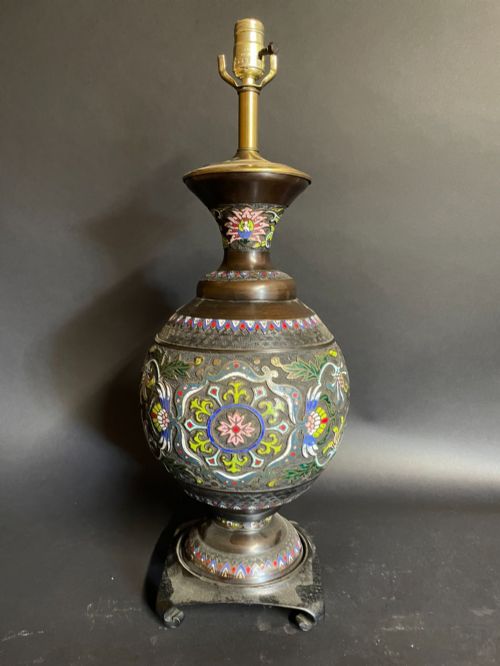
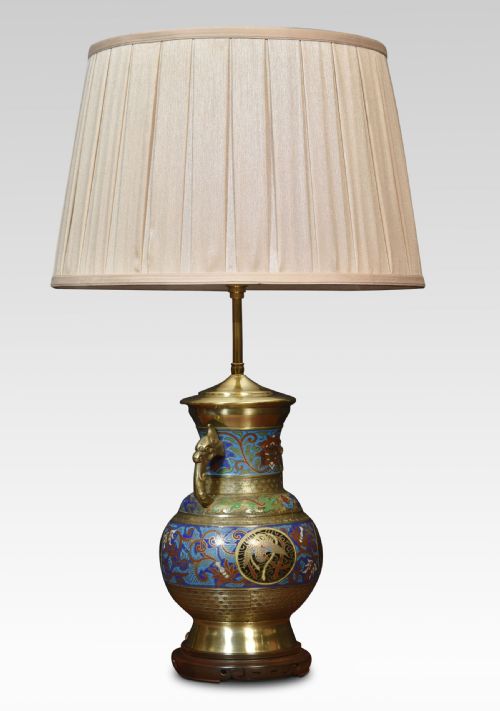
Chinese cloisonne lamps bring vibrant colour and intricate metalwork into a room, offering striking decorative presence on a table or sideboard.
Chinese Cloisonne Lamps
When you search for chinese cloisonne lamps, you encounter traditional vases and vessel forms converted into lighting, mostly dating from the nineteenth century and the early twentieth century. These pieces combine historic Asian metalwork with functional wiring for modern interior spaces.
How they were made
Maker craft involves soldering thin metal wires, known as cloisons, onto a metal body made of brass, copper, or gilt bronze to form distinct decorative cells. Artisans then fill these partitioned compartments with coloured enamel paste before firing the piece at high temperatures.
Finished metalwork bodies are fitted with mounts, bases in wood or ormolu, and paired with shades fashioned from fabric and silk. This construction unites traditional enamelware vessels with structural elements required for household lighting.
Listings span the nineteenth century and early twentieth century, featuring materials such as brass, copper, gilt bronze, wood, and silk.
What varies in quality
The standard of these items rests upon the precision of the wirework cell boundaries and the depth of the coloured enamel fills. Finer examples display meticulous artistry in the metallic patterns and harmonious pigment distribution across the vessel surface.
Mounting choices and the integration of materials such as ormolu or carved wood bases influence the overall presence of the object. Superior craftsmanship shows in the seamless adaptation of antique vases into balanced, stable table lamps.
The Chinese Cloisonne Lamps Glossary
- Cloisonne Enamel
- A decorative metalwork technique where thin wires are soldered to a base to create cells filled with enamel paste. This method produces intricate patterns defined by delicate metal lines.
- Gilt Bronze
- Bronze metal coated with a thin layer of gold to give a rich, lustrous finish. This material appears frequently in mounts and structural fittings.
- Ormolu
- Finely chopped gold or gold amalgam applied to bronze, creating a brilliant golden surface finish. It serves as decorative mounting hardware on select antique pieces.
- Chinoiserie
- European artistic styles reflecting Chinese motifs and decorative traditions. This aesthetic influences various export and oriental style items found in collections.
Chinese Cloisonne Lamps: Frequently Asked Questions
What periods do these lamps come from?
The available selection primarily includes pieces from the nineteenth century and the early twentieth century, spanning specific dates such as eighteen-eighty, eighteen-ninety, and nineteen-twenty. These items reflect late Qing Dynasty and Chinese Republic manufacturing periods.
Craftsmen during these eras produced the vases and vessels that later found new life as wired table lamps for modern homes.
How were these lamps originally used?
The core components of these lamps started life as decorative vases and vessel bases created in China. Artisans subsequently adapted these fine objects into functional lighting fixtures for Western and Eastern interiors.
Today, they serve the same dual purpose, functioning as practical table lighting while retaining their character as historic works of art.
What materials make up these lamp bases?
Construction relies heavily on metal foundations such as brass, copper, and bronze, embellished with coloured enamel fillings. Additional components often incorporate wood bases, gilt bronze, and ormolu mounts.
Shades paired with these bases are typically constructed from fabric and silk to complement the colourful metalwork below.
Are pairs commonly available?
Many listings feature matched pairs of vases converted into lamps, offering symmetry for placement on sideboards or large tables. Single lamp bases also appear within the selection for more focused placement.
Collectors seeking balanced decorative arrangements frequently look for these paired configurations.