




Asian Porcelain Lamps
Asian porcelain lamps bring centuries of Far Eastern ceramic artistry into domestic interiors, combining antique vases with fitted electrical hardware.
Asian Porcelain Lamps
Asian porcelain lamps are decorative lighting fixtures created by mounting antique ceramic vessels onto bases and fitting them for electricity. These pieces transform historical vases, jars, and figures into functional household lamps.
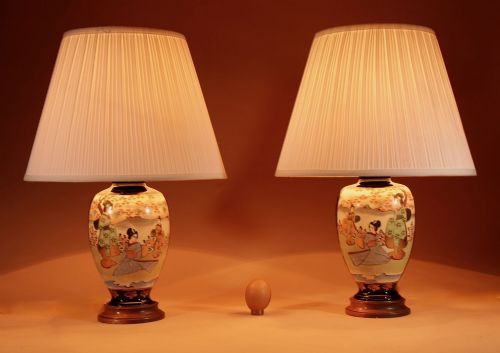
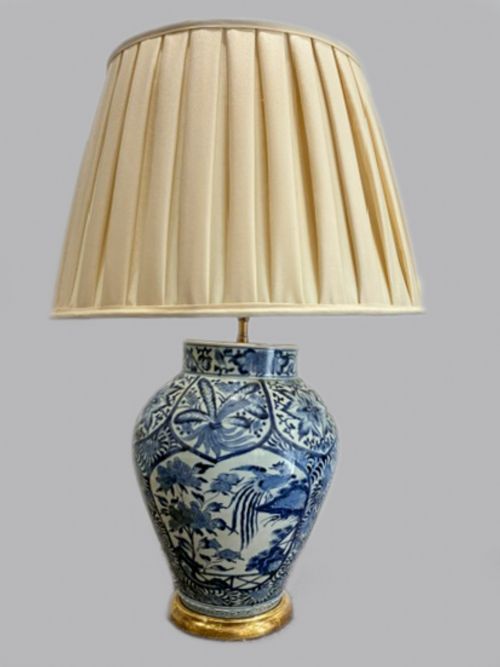
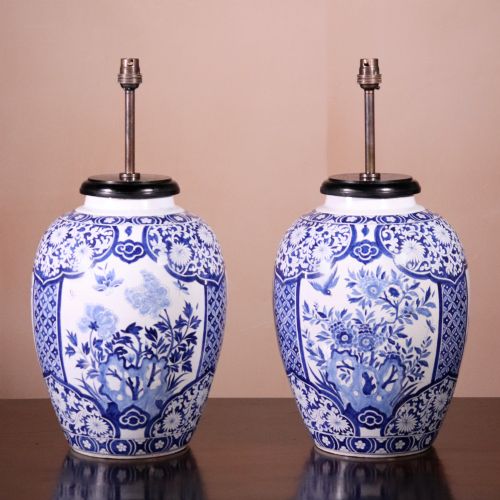
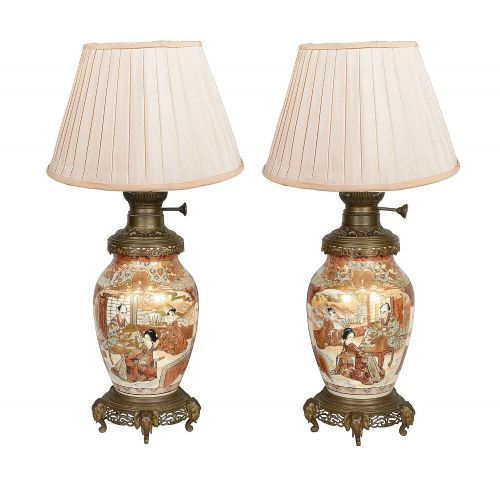
The selections available here span from the seventeenth century through the early decades of the twentieth century, originating from Chinese and Japanese workshops. Buyers frequently encounter pairs of Japanese Satsuma or Kutani vessels alongside Chinese celadon, blue and white, and Imari pieces.
Many items began their existence purely as decorative vases, spill vases, or temple jars before conversion into lamps at a later date. This adaptation allows historic ceramic forms to serve as functional centrepieces in modern rooms.
Materials and construction
The primary bodies consist of fired porcelain or earthenware, glazed in various colours including turquoise, powder blue, and celadon, or decorated with enamel pigments and famille rose palettes. Artisans shaped these vessels by hand or on the wheel before applying intricate painted motifs.
Metal mounts in brass frequently secure the ceramic body to a stable base, while fabric and silk shades complete the conversion into lighting. Structural adjustments typically incorporate drilled holes or internal rods to support electrical fittings without damaging the antique ceramic.
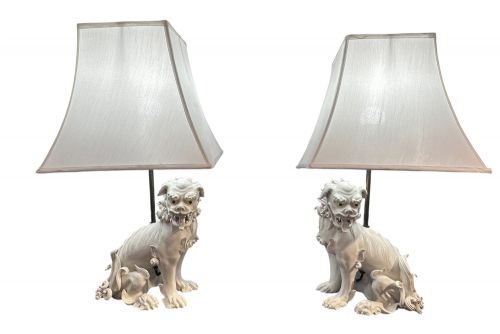
Many guardian lions gaze out from lamp bases with expressions of fierce protection, unaware they now illuminate reading nooks.
Distinctions in quality
Quality rests primarily upon the artistic merit and age of the underlying ceramic vessel, with earlier seventeenth and eighteenth-century bodies commanding attention for their hand-painted detail and glaze depth. The precision of the brushwork on Satsuma, Kutani, and Famille Rose pieces determines the visual hierarchy.
The execution of the conversion hardware also matters significantly to the overall integrity of the piece. Superior examples utilise sympathetic brass mounts and wiring methods that respect the original porcelain rather than compromising its structure.
The Asian Porcelain Lamps Glossary
- Satsuma
- A type of earthenware originating from Satsuma province in Japan, typically characterised by a crackle glaze and elaborate polychrome and gilt decoration. These pieces frequently depict figures, floral scenes, and landscapes.
- Imari
- A style of Japanese porcelain exported from the port of Arita, traditionally featuring a palette of underglaze blue, iron red, and gilt. The designs often incorporate intricate floral and brocade patterns.
- Celadon
- A term for ceramics denoting a pale green glaze resembling jade, achieved through iron oxide in the reduction firing. This glaze style appears on numerous Chinese vessels ranging from early periods to the nineteenth century.
- Famille Rose
- A major palette of Chinese ceramic enamels introduced in the eighteenth century, dominated by opaque pink or rose colours. The style allows for subtle shading and detailed depiction of flowers and figures.
- Dog of Fo
- Traditional guardian lions, also known as Shi lions, frequently rendered in porcelain such as blanc de chine. These mythical figures often appear in pairs flanking entrances or serving as sculptural lamp bases.
Asian Porcelain Lamps: Frequently Asked Questions
Were these made as lamps originally?
Almost none of these ceramic vessels were manufactured as lamps. They started as decorative vases, temple jars, ginger jars, or spill vases during earlier centuries.
At a later date, often in the nineteenth or early twentieth century, these decorative objects were converted into lamps to suit Western domestic interiors.
Can I use modern lampshades?
Standard modern lampshades can be fitted to these lamps provided the harp and fitter size match the hardware. It is important to select a shade scale that complements the proportions of the antique porcelain body.
Fabric and silk shades in neutral or complementary tones often mirror the traditional aesthetic of the base without overwhelming the hand-painted details.
What is the difference between Satsuma and Kutani?
Satsuma ware is typically an earthenware body featuring a distinctive ivory crackle glaze overlaid with detailed enamel painting and heavy gilding. It often portrays narrative scenes with human figures and dense floral borders.
Kutani porcelain is generally harder-bodied and traditionally employs a vibrant palette dominated by greens, blues, yellows, and purples, often referred to as the Kutani five colours.