

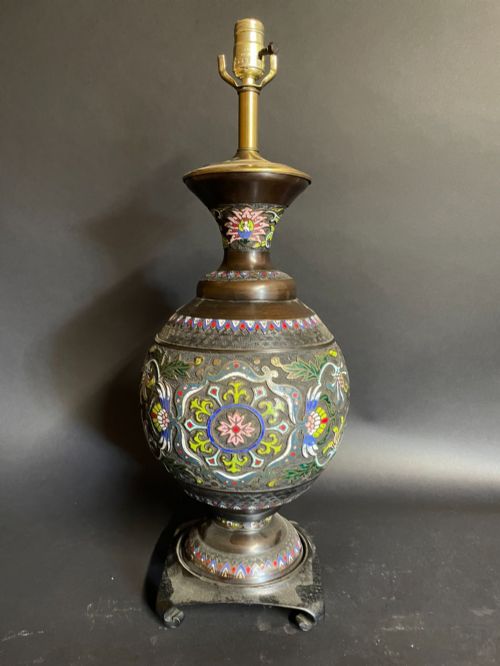


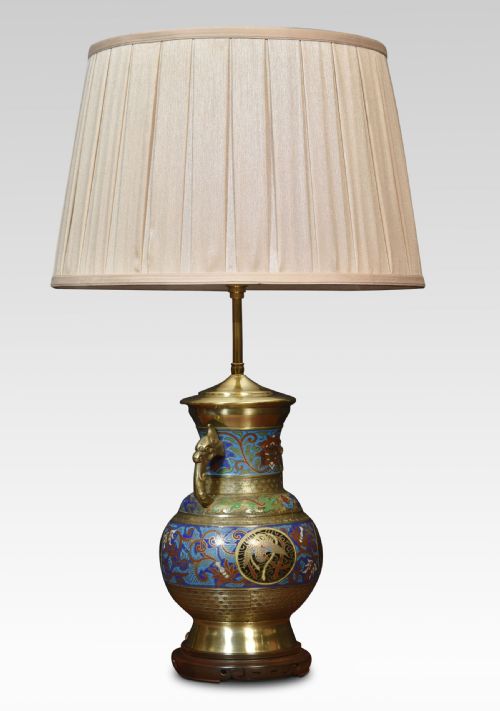

Antique Cloisonne Vase Lamps
Antique cloisonne vase lamps bring rich enamelled texture and sculptural form into a room.
Antique Cloisonne Vase Lamps
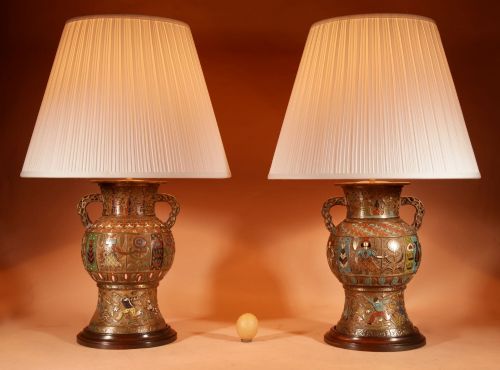
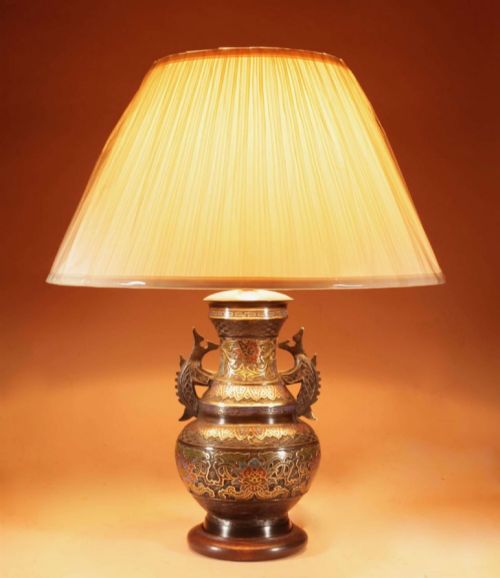
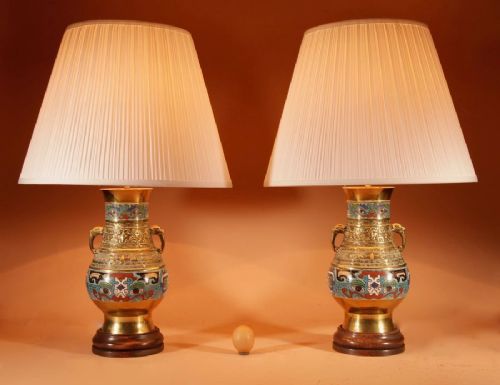
When you search for antique cloisonne vase lamps, you are looking at repurposed Oriental vessels that have been converted into table lamps. These pieces combine decorative metalwork with practical lighting for modern interiors.
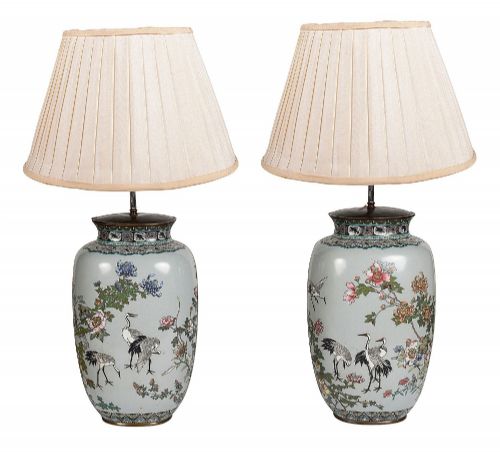
The versions you are most likely to meet on this page originate from Chinese and Japanese workshops dating from the nineteenth century into the early twentieth century. Many appear as matched pairs featuring detailed enamel decoration on bronze, brass or copper bases.
Makers often drew upon traditional aesthetic movements such as the Meiji period in Japan or the Qing dynasty and Chinese Republic eras. Their forms function naturally as statement lighting while retaining their original character as cabinet vases.
Materials and construction methods
Craftsmen built these lamp bodies by soldering thin metal wires, known as cloisons, onto a metal foundation of brass, bronze or copper. These wires created intricate compartments that were subsequently filled with coloured enamel pastes before firing.
The finished enamel surfaces required extensive polishing to achieve a smooth finish flush with the wire boundaries. Many examples also incorporate gilt bronze or ormolu mounts fitted during later western conversions.
Several pairs preserve their original twin handles, originally intended for lifting heavy vessels before their quiet retirement as lamps.
Distinguishing quality in enamel and metalwork
Quality rests upon the precision of the wirework and the depth of the enamel fields. Finer examples display tightly uniform cells and complex polychrome patterns without pitting or clouding in the glazed surfaces.
The structural integrity of the underlying bronze or brass and the refinement of any ormolu mounts further separate standard pieces from exceptional ones. Heavier gauge metals and crisp casting details indicate superior workshop production.
The Antique Cloisonne Vase Lamps Glossary
- Cloisonne
- A decorative metalwork technique where thin wires form compartments to hold coloured enamel pastes. This method creates detailed cellular patterns across the body of the vessel.
- Champleve
- An enamelling process where troughs or cells are carved directly into the thick metal surface rather than using soldered wires. It produces bold relief work often seen alongside standard cloisonne.
- Ormolu
- Gilded bronze mounts applied to decorative objects and lamp bases. This French finishing technique adds ornamental brassy trim to the vessel neck or foot.
- Chinoiserie
- European artistic style reflecting Chinese aesthetic influences. Many lamps adopt this stylistic descriptor due to their oriental origins.
Antique Cloisonne Vase Lamps: Frequently Asked Questions
Are these lamps converted from old vases?
Most antique cloisonne vase lamps began life as decorative vessels before receiving electrical fittings at a later date. This adaptation allowed fine antique vases to find practical use in domestic lighting.
Wiring methods and mounting hardware often reflect the period of conversion rather than the original date of the vase itself.
How do I identify Chinese versus Japanese pieces?
Chinese pieces often feature symmetrical floral designs and rich turquoise ground colours derived from Qing traditions. Japanese works from the Meiji period frequently display asymmetrical flora, fauna or distinct avian motifs.
Examining the underlying metal finish and wire weight also helps distinguish between the two regional styles.
What periods do these lamps come from?
The available selection spans the nineteenth century through to the early decades of the twentieth century. Dates frequently encompass the late nineteenth century and the Meiji period.
Earlier nineteenth century examples generally exhibit heavier bronze foundations and deeper enamel tones compared to later pieces.
How should I clean the enamel surface?
Dust the cloisonne surface gently with a soft dry cloth to prevent any accumulation of grime within the wire cells. Avoid using harsh chemical polishes or abrasive cleaners on the delicate glass enamels.
Metal mounts can be maintained with minimal intervention to preserve their aged appearance.