




19th Century Enamel Lamps
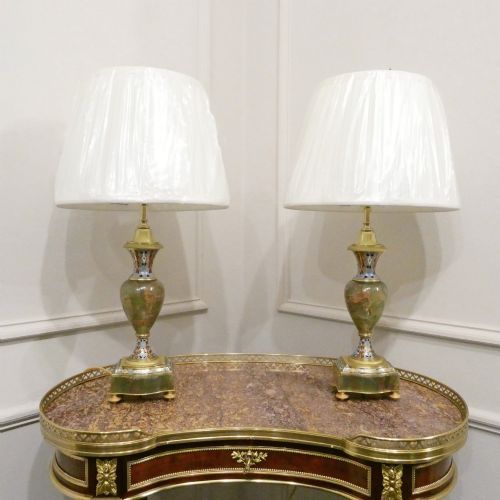
These 19th century enamel lamps bring together brass, gilt bronze and intricate hand-finished work to illuminate any room with period character.
19th Century Enamel Lamps
When searching for 19th century enamel lamps, collectors encounter items adapted from earlier decorative objects alongside pieces designed specifically for lighting. The pieces on this page span the Victorian era, the Meiji period and the Qing Dynasty, reflecting global trade and aesthetic exchanges of the nineteenth century.
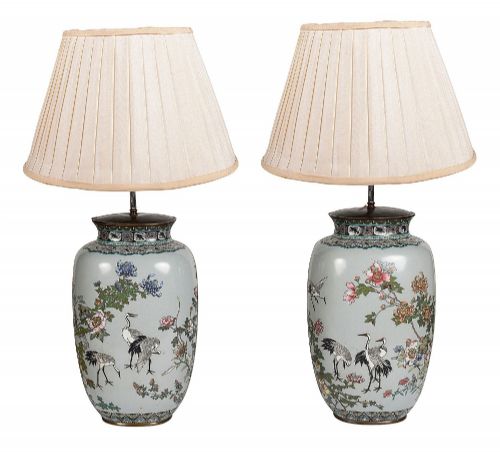
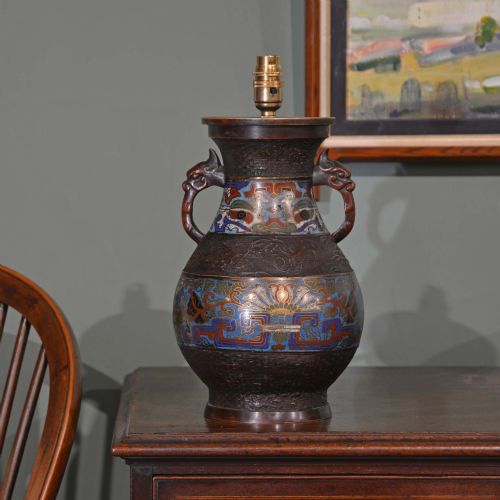
Most examples originate from Chinese workshops and French studios, frequently taking the form of vases or decorative vessels mounted as lamps. Chinese cloisonné and famille rose porcelain provide the central bodies for many of these conversions, often paired with mounts of brass or gilt bronze.
Buyers also meet Japanese cloisonné vessels and English glass or porcelain vessels adapted for oil or early electricity. Pairs predominate among the offerings, making them suitable for mantelpieces, side tables or grand architectural settings.
How they were made
Maker-craftsmen built these lamps using foundational materials such as brass, bronze, porcelain and glass, applying enamel and cloisonne techniques to create vibrant surface patterns. Metal wire soldered to metal bases formed the intricate cellular grids for cloisonne enamel, which artisans filled with coloured vitreous pastes before firing and polishing.
Porcelain vessels received hand-painted overglaze decorations in famille rose and famille verte palettes, sometimes incorporating gilt details. Workshops then fitted these bodies with metal mounts, ormolu accents, and occasionally wooden or fabric elements to support burners and electrical hardware.
Many a Victorian parlour gained its exotic atmosphere simply because an enterprising decorator decided a Chinese vase made a splendid column for a burner.
What varies in quality
Quality rests in the precision of the enamel work, the weight and finish of the metal mounts, and the overall harmony of the conversion. Superior examples display tightly soldered wire cells, deep and even enamel tones, and finely chased ormolu or brass fittings that complement the central vessel.
The sophistication of the painted porcelain or cloisonne design dictates the tier of the piece, with complex multi-coloured palettes and well-balanced compositions marking out finer workshops. Matched pairs of identical height and proportion naturally command greater attention than assembled counterparts.
The 19th Century Enamel Lamps Glossary
- Cloisonne Enamel
- A decorative metalwork technique where fine metal wires are soldered to a base to form compartments filled with enamel paste. This method creates detailed patterns defined by thin metallic outlines.
- Famille Rose
- A prominent palette of Chinese ceramic glazes introduced in the eighteenth century, dominated by opaque pink or rose enamel. Nineteenth century examples continue this tradition on vases adapted for lighting.
- Famille Verte
- A Chinese porcelain glaze family distinguished by green enamel as the predominant colour, supplemented by other vibrant hues. These ceramic bodies frequently serve as the central columns for lamps.
- Ormolu
- Gilt bronze ornamentation applied to furniture, clocks and lamp mounts during the nineteenth century. The technique involves treating bronze with a finely ground gold-mercury amalgam.
- Mantle Lustres
- Ornamental mantelpiece vases hung with glass crystal prisms, occasionally found adapted as lighting fixtures. They reflect candlelight and gaslight through their cut crystal drops.
19th Century Enamel Lamps: Frequently Asked Questions
Are these lamps converted from old vases?
Many examples began life as decorative Chinese vases, Japanese vessels or French porcelain pieces before being mounted as lamps in the nineteenth century or later. This adaptation practice preserves historic ceramics by giving them a functional role in contemporary interiors.
Makers utilised sturdy brass and gilt bronze fittings to secure the electrical or oil hardware without damaging the original body.
How do I care for antique enamel lamps?
Clean the metal mounts and enamel surfaces gently with a soft, dry cloth to remove dust without abrasive chemicals. Avoid getting moisture into unsealed internal wiring or antique ceramic bases during routine maintenance.
Periodic checks by a qualified professional ensure that old wiring or converted burner assemblies remain safe for modern use.
Can I find matching pairs easily?
Pairs appear frequently among nineteenth century lighting, particularly in Chinese cloisonné and Rose Medallion styles. These matched sets suit placement on twin bedside tables, sideboards, or either end of a mantelpiece.
Slight variations in hand-applied enamel work often confirm the handmade authenticity of paired antique items.
What styles are most common?
Chinese export wares, Japanese Meiji period cloisonne, and Victorian French designs dominate the selection. These styles reflect the nineteenth century fascination with orientalism and ornate continental craftsmanship.
Each style brings distinct colour palettes, ranging from the pinks of famille rose to the deep blues and greens of cloisonne.