


Victorian Chinoiserie Side Lamps
Victorian chinoiserie side lamps and related tables bring exotic lacquer, bamboo and gilt decoration into a room, offering a distinct nineteenth-century look.
Victorian Chinoiserie Side Lamps
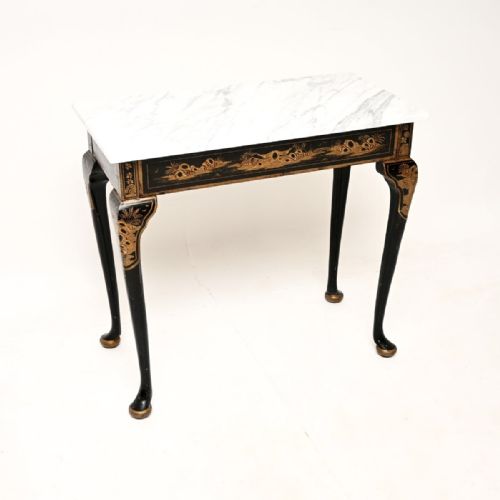
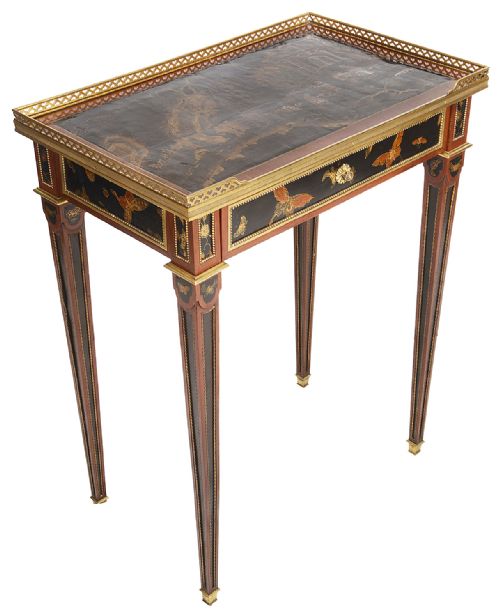
When you search for victorian chinoiserie side lamps, you encounter a mix of nineteenth-century occasional tables, plant stands and converted lamps that incorporate eastern decorative motifs. The pieces range from black lacquered and gold leaf surfaces to bamboo frames and marble tops.
You are most likely to meet two-tier bamboo side tables, lacquered occasional tables, and nineteenth-century enamel or cloisonné vases adapted as table lamps. These items date primarily from the Victorian era and the broader nineteenth century, reflecting a strong period interest in Chinese export styles.
The forms serve practical functions as side tables, plant stands and wine tables while displaying characteristic Chinoiserie and Aesthetic Movement designs. Ebonised tripartite bases and panelled lacquer work frequently appear among these furnishings.
How they were made
Maker's workshops built these pieces using wood, bamboo and brass, applying black lacquer and gold leaf to create decorated panels and surfaces. Enamel and cloisonné techniques were also utilised for the ceramic and metal elements seen on the lamp bodies.
Construction methods combined traditional English furniture forms with imported or inspired Chinese motifs, incorporating marble inserts and ebonised woodwork. Artisans layered lacquer and gilding over wood or bamboo frames to achieve the characteristic aesthetic.
Materials recorded across the inventory include bamboo, lacquer, brass, marble and gold leaf.
What varies in quality
The standard of execution in the lacquer work and the richness of the gold leaf application distinguish finer pieces from simpler examples. Crisp detailing in the Chinoiserie scenes and the structural integrity of the bamboo or wood frames indicate superior workmanship.
Quality also rests in the selection of materials, such as the weight of the brass, the finish of the marble tops, and the preservation of the original enameled surfaces on lamps and stands.
The Victorian Chinoiserie Side Lamps Glossary
- Chinoiserie
- European decorative style reflecting Chinese artistic influences. It employs motifs like figures, landscapes and pavilions rendered in lacquer and gold.
- Aesthetic Movement
- Nineteenth-century design movement promoting art for art's sake. It favored simplified forms and incorporated Japanese and Chinese decorative arts.
- Cloisonné
- Enamelling technique where wires are soldered to a metal base to create compartments filled with paste. These are then fired and polished smooth.
- Ebonised
- Wood treated to resemble ebony. It is typically stained or painted black to provide a dark, formal finish.
- Tripartite
- Divided into three parts. This term describes bases or legs arranged in a three-way configuration for stability.
Victorian Chinoiserie Side Lamps: Frequently Asked Questions
What is a chinoiserie side lamp?
A chinoiserie side lamp typically combines nineteenth-century eastern decorative styles with practical lighting functions, often utilising converted vases or decorated tables.
They bring distinct visual interest to a room through lacquered finishes and oriental motifs.
How do I identify a Victorian piece?
Victorian pieces show construction methods, materials like bamboo and lacquer, and design styles characteristic of the nineteenth century.
Look for period specific joinery and aesthetic movement influences.
Where were these lamps used?
These items functioned as occasional tables, plant stands, and lighting supports in Victorian sitting rooms and parlours.
Their compact sizes allowed them to fit easily beside seating or in corners.
What materials are common?
Common materials include lacquered wood, bamboo, brass, marble, and gold leaf.
Enamel and cloisonne also appear frequently on the lamp bodies and vase conversions.