



Antique Enamel Lamp
An antique enamel lamp brings rich colour and enduring industrial or decorative utility to a room through fused vitreous surfaces.
Antique Enamel Lamp
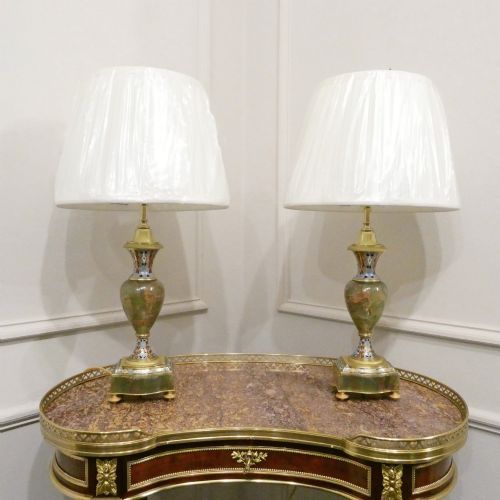
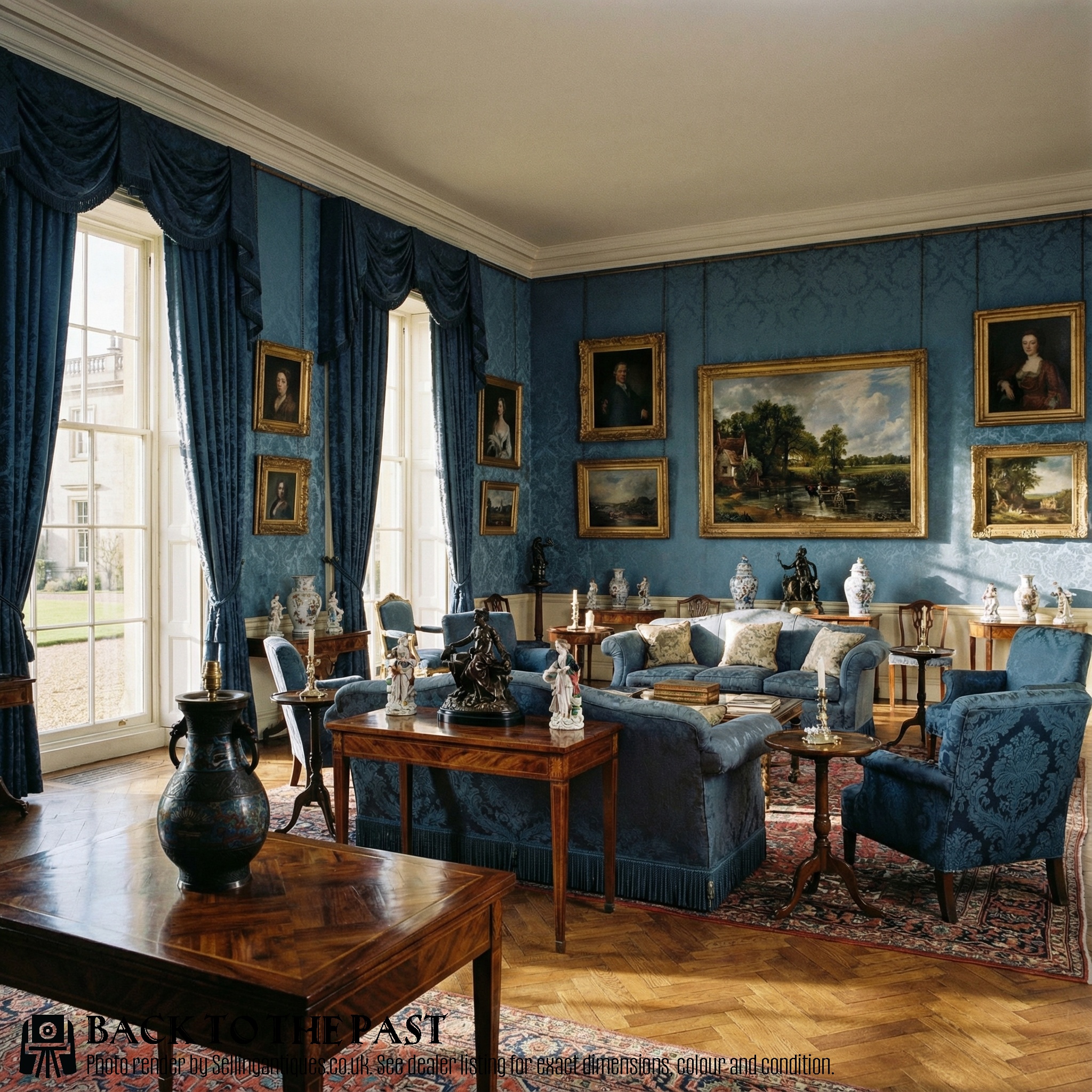
When you search for an antique enamel lamp, you encounter pieces spanning the nineteenth and twentieth centuries, originating from British, French, and Asian workshops. The selection ranges from industrial factory pendant lights and ship's gimbal fittings to domestic table lamps mounted on bronze, brass, or onyx bases.
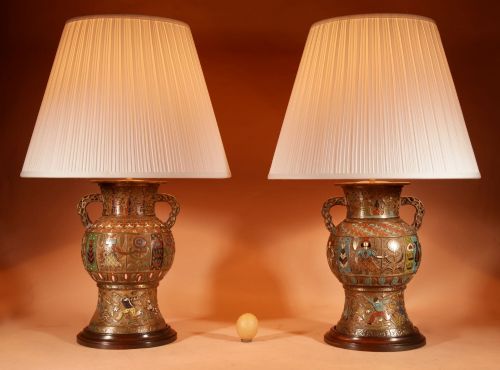
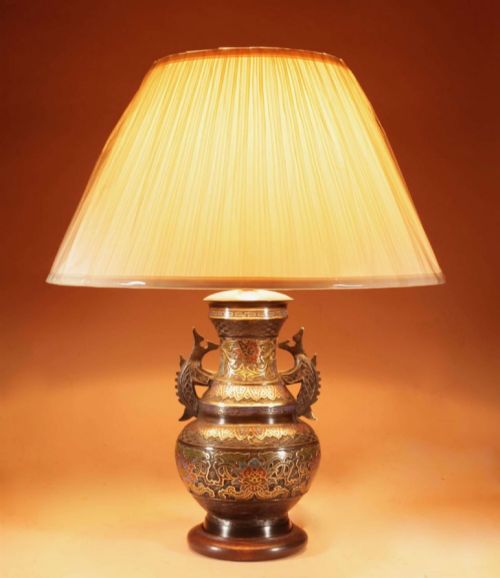
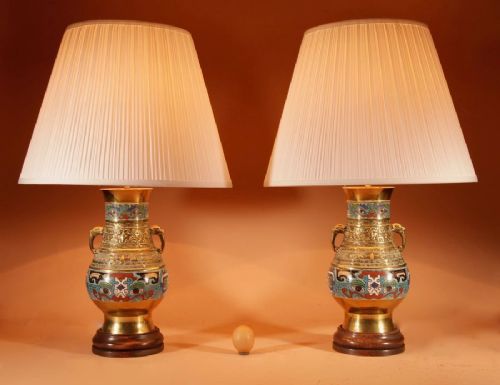
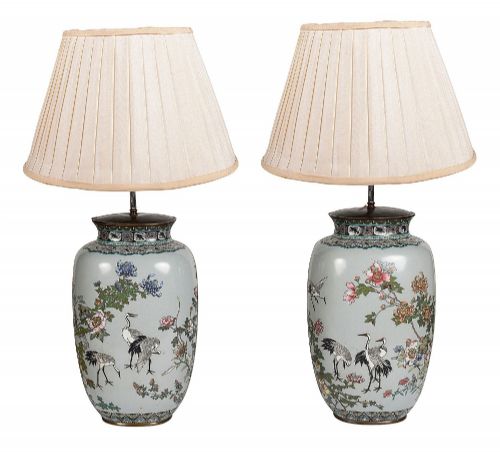
Vessels such as Chinese cloisonné and Japanese champlevé vases, alongside Famille Rose and Famille Verte porcelain, frequently appear converted into table lamps. These diverse forms bridge the gap between utilitarian workplace lighting and ornamental Asian export artistry.
The periods represented stretch from Victorian and Meiji eras through the Art Nouveau and Art Deco movements, accommodating both industrial utility and refined decorative schemes.
Materials and construction methods
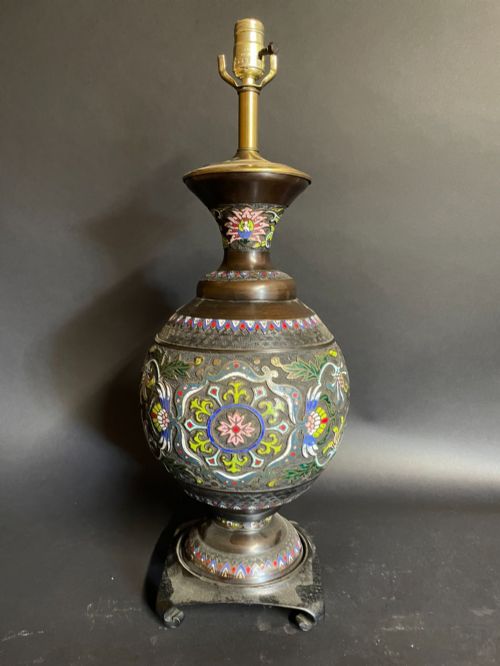
Makers fused powdered glass onto metal substrates such as iron, brass, or bronze at high temperatures to create durable, lustrous enamel surfaces. Industrial pendants and ship lamps typically utilised heavy iron or steel coated in robust coloured enamel, whereas decorative oriental examples employed intricate wirework cloisonné or carved champlevé techniques.
Many table lamps began life as porcelain vases, glass shades, or bronze vessels before being subsequently mounted with metal fittings and wired for electricity. These hybrid pieces combined traditional ceramic and glass bodies with structural brass, ormolu, and wrought iron.
Heavy iron ship lamps feature internal gimbals so the light stays level while the oceans roll.
Assessing craftsmanship and finish
The refinement of the vitreous coating and the precision of the underlying metalwork dictate the standard of an antique enamel lamp. Superior examples display even glazing without bubbling or cracking, alongside crisp detailing in the cloisonné wire or cast bronze mounts.
The integrity of the original conversion or mounting separates standard items from finer specimens. Well-executed Ormolu mounts and harmonious proportions between the converted vase and its lighting hardware distinguish the more accomplished pieces.
Karl Palda·Daum
The Antique Enamel Lamp Glossary
- Cloisonne
- A decorative metalwork technique where thin metal wires are soldered to a base to form compartments filled with enamel paste before firing.
- Champleve
- A method where troughs or cells are carved directly into the surface of a metal object and filled with enamel.
- Gimbal
- A pivoted ring assembly designed to keep a lamp level aboard a ship despite the rolling of the vessel.
- Ormolu
- Gilded bronze used for decorative mounts and structural elements on lighting and furniture.
- Famille Rose
- A palette of Chinese porcelain enamels dominated by opaque pink, introduced during the Qing dynasty.
Antique Enamel Lamp: Frequently Asked Questions
What is an antique enamel lamp?
An antique enamel lamp is a lighting fixture or converted vessel featuring fused glass coatings on metal, ceramic, or glass bodies.
These pieces range from industrial factory pendants and marine gimbal lights to ornate Chinese cloisonné and French art glass table lamps.
How do I date an antique enamel lamp?
Dating relies on identifying stylistic markers such as Victorian brass mounts, Meiji period bronze work, or Art Deco geometric iron forms.
Manufacturing techniques, material combinations, and wiring styles also provide reliable clues to the period of origin.
Were all these lamps originally made for electricity?
Many industrial pendants and railway fittings were originally designed for oil or gas before later conversion to electrical power.
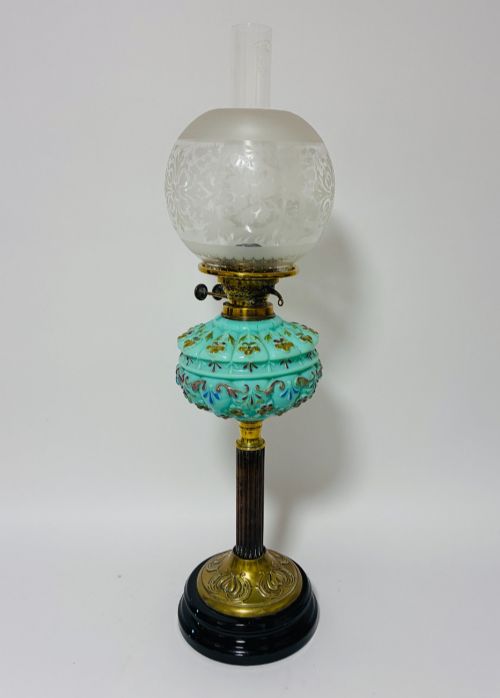
Furthermore, numerous decorative table lamps started life as nineteenth-century vases, oil lamps, or mantel lustres before being adapted into electric lamps.
How do I clean an antique enamel lamp?
Cleaning requires gentle dusting with a soft dry cloth to protect fragile enamel surfaces and aged metal patinas.
Harsh chemical solvents and abrasive cleaners should be avoided to prevent permanent damage to the glaze and gilt decorations.