


Traditional Bronze Table Lighting
Traditional bronze table lighting brings weight and warmth to a room, spanning column lamps, desk lamps and converted candlesticks.
Traditional Bronze Table Lighting
Traditional bronze table lighting encompasses heavy metal desk lamps, slender column lamps, bouillotte lamps with adjustable shades, and candlesticks converted to take electric fittings. The selection on this page draws heavily from the nineteenth century, the Edwardian era, and the early decades of the twentieth century, reflecting varied production across England, France, and Japan.
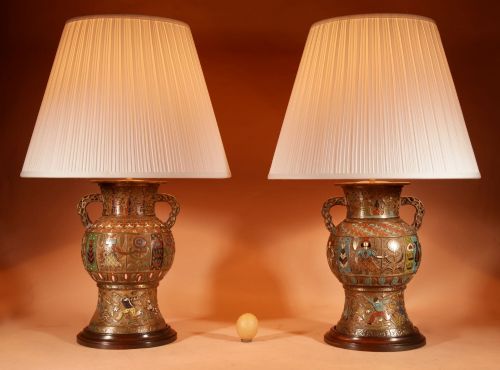
French pieces often lean towards Louis XV and Louis XVI styles, incorporating ormolu and marble, while Japanese Meiji period examples utilise patinated bronze and champlevé enamel. Buyers frequently encounter pairs of candlesticks adapted for modern illumination alongside solid cast bronze desk models and column lamps with mahogany or metal shafts.
How traditional bronze table lighting was made
Maker's workshops cast these pieces using traditional methods, frequently combining bronze and brass with gilt ormolu, marble bases, and fabric shades of silk or tole. Ormolu details require mercury gilding or electroplating on cast bronze bases, whilst champlevé enamel pieces involve recessing glass pastes into cast metal channels before firing and polishing.
Many items begin life as seamed bronze candlesticks or decorative vases, later adapted for electrical wiring with threaded brass columns and silk-trimmed shades. Structural stability relies on heavy marble plinths, solid cast metal pillars, and weighted bases designed to support the substantial heft of metal work.
Elephants occasionally hold up the room, appearing as substantial bronze bases from the Japanese Meiji period.
What varies in quality in traditional bronze table lighting
Quality rests in the crispness of the casting, the depth of the original patination, and the integrity of the materials, such as solid marble versus composite bases. Superior French and English examples exhibit finely chased surface detailing, substantial weight, and harmonious proportions between the metal body and its mounts.
Wear and alterations also dictate standing, particularly where antique candlesticks or Japanese vases have received electrical conversions. Untouched patination, original fire gilding, and authentic period fittings separate standard utility lighting from superior decorative works.
The Traditional Bronze Table Lighting Glossary
- Ormolu
- Gilded bronze, where finely ground gold is applied to a base metal using mercury or electricity. This technique gives French empire and neoclassical pieces their characteristic golden sheen.
- Champlevé
- An enamelling technique where troughs or cells are carved into the surface of a bronze object and filled with vitreous enamel before firing. It is frequently seen on Japanese Meiji period pieces.
- Bouillotte lamp
- An adjustable desk or table lamp featuring a central column, a saucer-like base to catch wax, and a metal or card shade that moves up and down on a central rod. Traditional versions often use green toleware shades.
- Meiji period
- The era in Japanese history spanning from 1868 to 1912, noted for highly detailed bronze work, elephant motifs, and decorative vessels later converted into lamps.
- Seamed bronze
- Metalwork constructed by joining shaped plates or sections together along visible or concealed seams rather than casting as a single solid piece.
Traditional Bronze Table Lighting: Frequently Asked Questions
What is a bouillotte lamp?
A bouillotte lamp is an adjustable table or desk light featuring a central metal column, a saucer base, and a shade that slides up and down on a rod. They were originally designed for card playing.
Traditional examples pair a bronze or brass body with a painted metal tole shade, providing directional light for reading or writing.
How do I identify a converted candlestick?
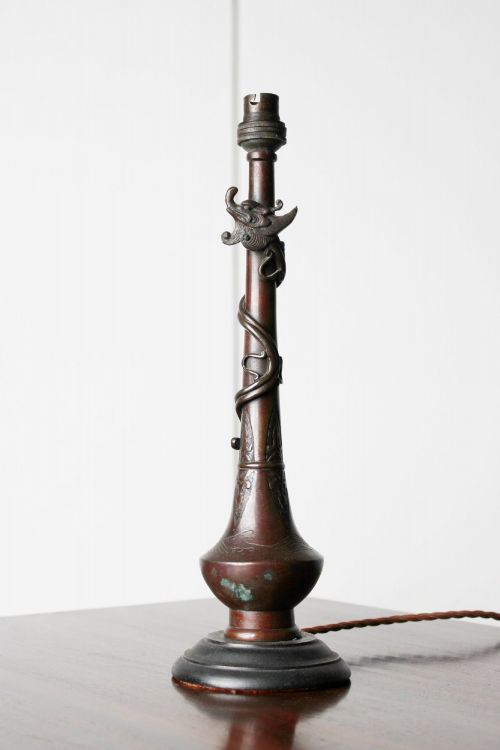
Converted candlesticks retain their original drip pans, slender stems, and weighted bases designed for wax candles, but now feature an electrical flex and bulb holder fitted to the top. Many nineteenth-century pairs were adapted in this way.
Inspect the top socket and base for wiring channels that integrate neatly into the historic metalwork without compromising the silhouette.
Are these lamps heavy?
Traditional bronze table lighting is notably heavy due to solid metal casting and the frequent use of marble plinths. This weight provides stability for taller column designs.
When lifting or placing these pieces, support the marble base and heavy bronze column rather than relying on the upper shade frame or wiring.