




Orange Porcelain Charger Plate
An orange porcelain charger plate brings vivid colour and intricate patterns to a room, drawing the eye with rich ironstone or Imari palettes.

Orange Porcelain Charger Plate
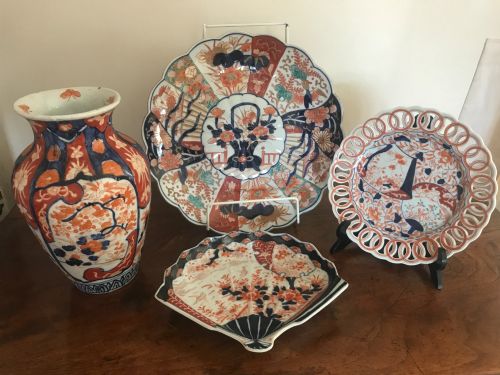
When searching for an orange porcelain charger plate, buyers encounter substantial display dishes spanning the eighteenth century through the early twentieth century. These pieces appear in Japanese Imari, Chinese export, and English Georgian styles, reflecting diverse international production.
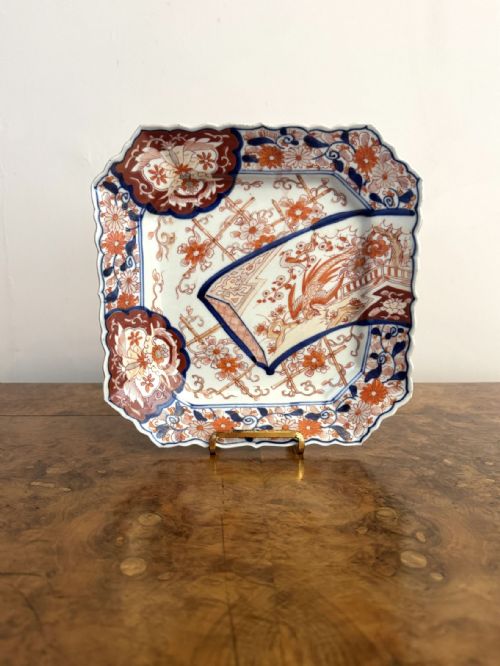
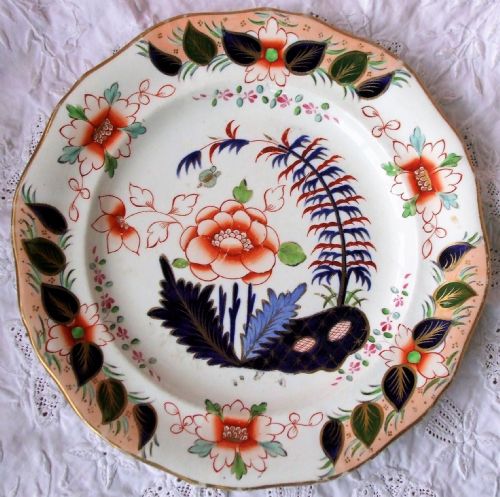
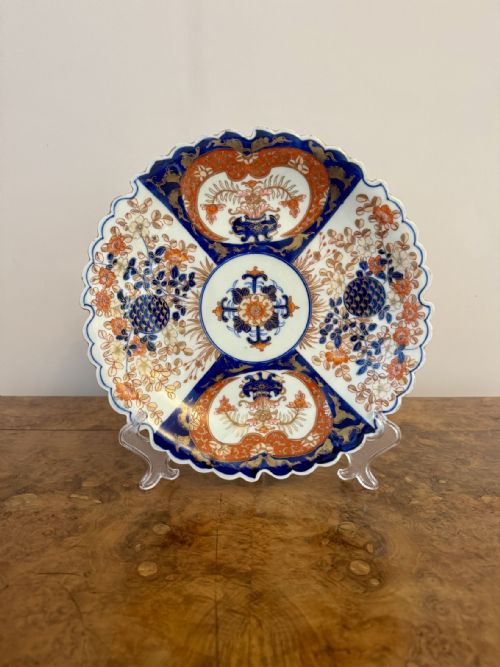
The selection on this page leans heavily towards Japanese Imari pieces from the Meiji and Edo periods, alongside Chinese export wares and nineteenth-century English ironstone. Forms range from traditional circular chargers and wall plates to square, fan-shaped, and scalloped display dishes.
Originating as grand table pieces or decorative wall furnishings, these chargers offer robust ceramic bodies painted with characteristic orange, red, and blue tones. Collectors utilise them to introduce historical depth and vibrant palettes into traditional and modern interiors.
Materials and construction methods
Makers formed these chargers from hard-paste porcelain or dense ironstone, applying durable ceramic glazes before firing the clay at high temperatures. This created a solid foundation capable of supporting dense hand-painted surface decoration.
Artisans applied intricate pigments including enamel and gold leaf, frequently incorporating rich gilding to highlight specific motifs. The distinctive orange and rust-red tones characteristic of the Imari palette derive from iron-rich pigments fused into the glaze during secondary firings.
Several chargers depict the Seven Lucky Gods, ensuring divine contentment accompanies your porcelain collection.
Factors determining quality
Quality rests in the crispness of the hand-painted brushwork and the complexity of the figural or floral motifs rendered across the porcelain surface. Superior examples demonstrate confident execution by skilled artisans, particularly in detailed Japanese Imari compositions and Chinese famille rose dishes.
The depth and preservation of the enamel colours and gold leaf application distinguish finer pieces from standard production wares. Additionally, unusual structural forms such as square, fan-shaped, or deeply scalloped edges indicate higher ambition from the maker.
John Davenport of Longport
The Orange Porcelain Charger Plate Glossary
- Imari
- A style of Japanese porcelain decorated in underglaze blue, iron red, and gold, originating in the town of Arita. The palette relies heavily on rust orange tones combined with white and blue.
- Charger
- A large decorative plate utilised historically for ceremonial dining or prominently displayed on walls and sideboards. These substantial dishes measure significantly larger than standard dinner plates.
- Ironstone
- A type of heavy earthenware patented in England during the nineteenth century, offering high durability and porcelain-like qualities. English makers utilised it to produce robust plates decorated in Imari patterns.
- Famille rose
- A major palette of Chinese ceramic glaze introduced during the Qing dynasty, characterised by opaque pink and orange enamel colours. This decorative scheme allowed for nuanced shading of floral and figural scenes.
Orange Porcelain Charger Plate: Frequently Asked Questions
How were charger plates used historically?
Charger plates served primarily as decorative base plates beneath other courses during formal banquets or remained displayed upright on sideboards.
Over time, many of these large dishes transitioned into purely ornamental wall plates and cabinet pieces due to their striking visual designs.
How do I identify an Imari charger?
Imari chargers are recognisable by their distinctive colour combination, which pairs deep cobalt blue with rust orange and gold leaf highlights.
Most examples feature densely patterned panels of flora, fauna, or figures executed on a white ceramic ground.
Can these antique plates be hung on walls?
Many large chargers feature sufficient structural strength and considerable diameter, making them suitable for wall display utilising proper hardware.
Buyers should ensure that any mounting bracket distributes the weight evenly across the ceramic body without applying stress to the rim.
What is the difference between porcelain and ironstone?
Porcelain is a vitrified ceramic material made from kaolin, fired at extremely high temperatures to achieve a translucent, non-porous body.
Ironstone is a dense, opaque earthenware developed in England to mimic porcelain while providing greater weight and durability.