


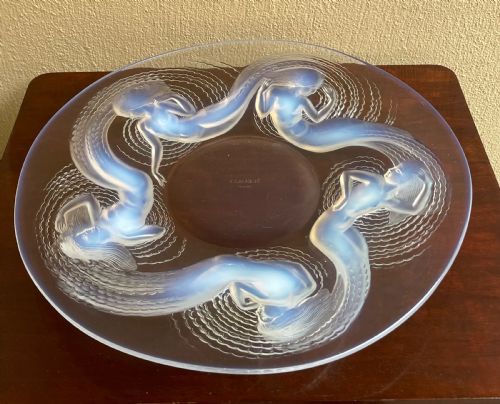


Opalescent Glass Centrepiece
An opalescent glass centrepiece brings a luminous, milky iridescence to a table, catching the light with soft shifts from blue to amber.
Opalescent Glass Centrepiece
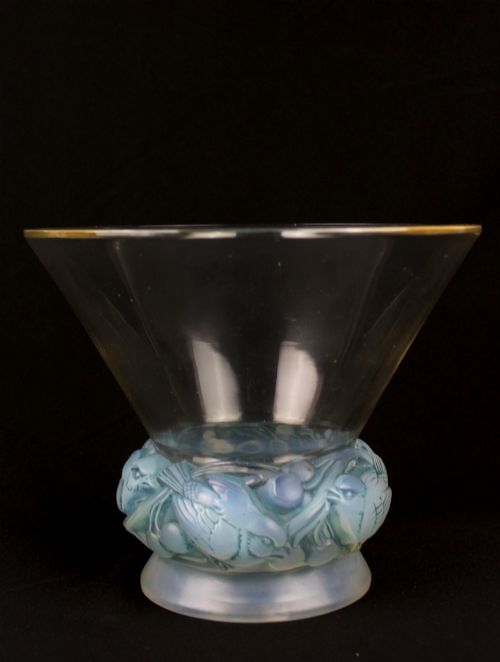
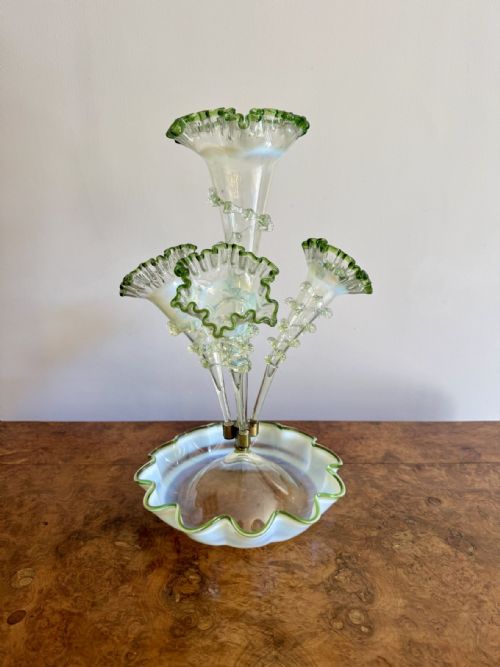
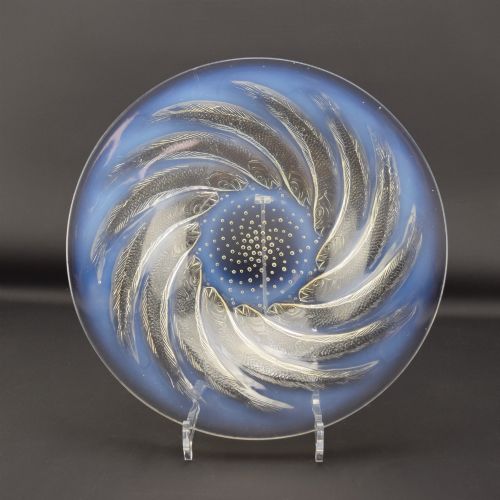
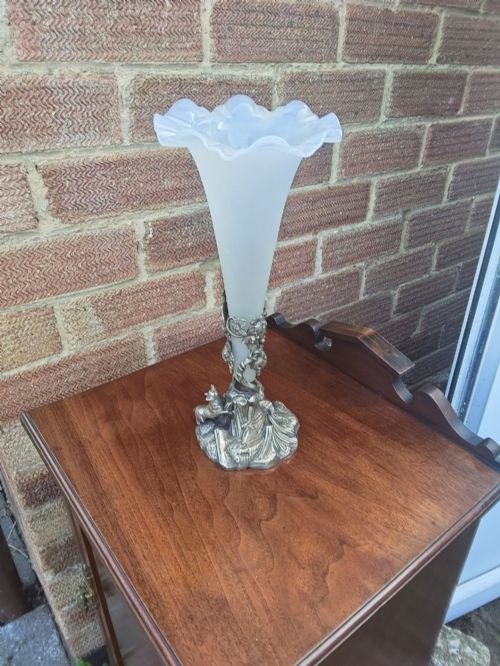
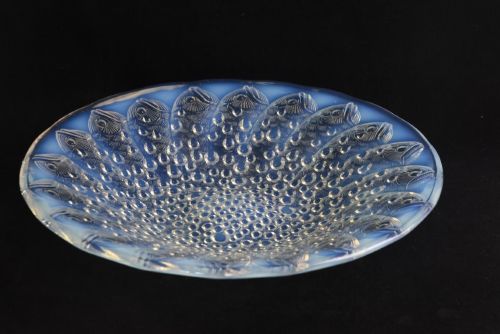
An opalescent glass centrepiece draws the eye with its milky, translucent body that shifts in hue as the light changes. These table pieces take the form of decorative bowls, expansive chargers, shallow coupes, and multi-trumpet epergnes designed to anchor a room.
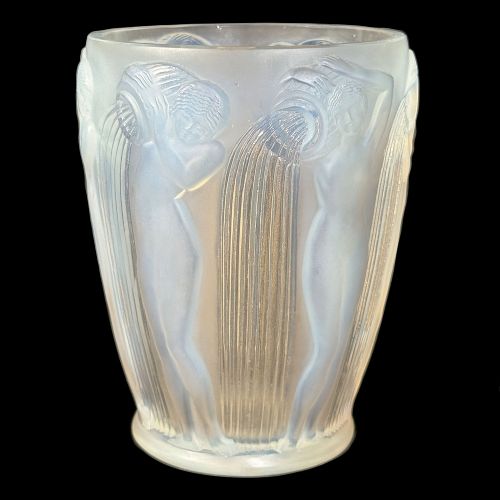
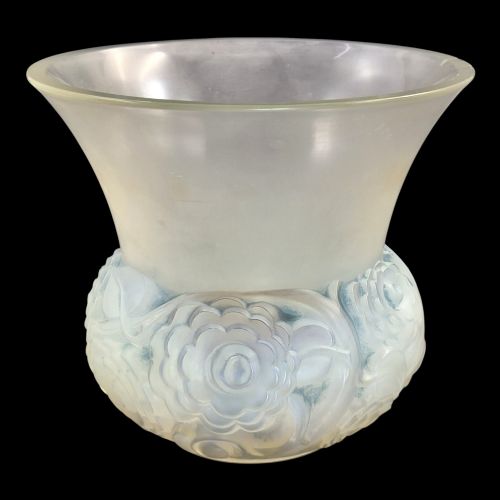
The selection ranges from Victorian and Edwardian iterations incorporating silver plate and white metal mounts to striking Art Deco statements. Many examples originate from French workshops, bringing moulded and hand-blown forms into domestic settings.
Buyers encounter grand centrepieces alongside footed bowls and salvers designed for display. These objects serve as focal points, combining utilitarian function with the sculptural presence characteristic of early twentieth-century glass design.
Materials and technique
Makers utilised specialised glass formulations containing bone ash, arsenic, or tin oxide to create the milky, translucent body that scatters light into blue and amber tones. Moulded and hand-blown techniques shaped the hot metal into deep bowls, chargers, and tiered epergne trumpets.
Designers incorporated metal mounts, combining opaline and opalescent glass with silver plate or white metal for structural support and decorative contrast. Pieces often received acid-etching, frosting, or sepia staining to accentuate the moulded relief designs of flora and fauna.
Opalescent Glass Centrepiece Retail Price Guide 2026
Typical asking prices for opalescent glass centrepiece among the pieces listed under this phrase on Sellingantiques today, from the lower quarter to the upper quarter. They describe what is for sale here now, not the wider market.
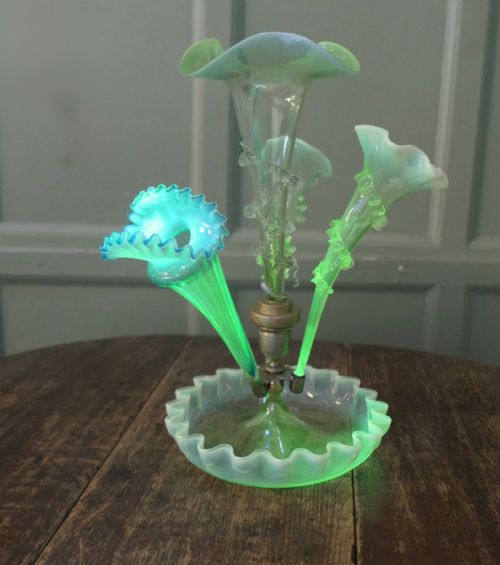
Some pieces glow bright green under ultraviolet light because their makers added uranium to the molten mix.
Distinctions in quality
The depth of the opalescent fire and the crispness of the moulded relief separate exceptional pieces from simpler wares. Master makers achieved a subtle play of colour where the milky highlights contrast sharply against darker backgrounds.
The integration of metal mounts, such as silver plate frames on Victorian examples, reflects the original commission's cost and ambition. Artistry in the surface finish, including meticulous staining and frosting, distinguishes premier studio output from standard production.
Rene Lalique·Etling·Jobling·James Dixon·Julien Glass
The Opalescent Glass Centrepiece Glossary
- Opalescent Glass
- Glass that exhibits a milky, translucent appearance with characteristic blue or amber highlights when viewed in transmitted and reflected light. This optical effect results from the controlled cooling of specific chemical agents mixed into the batch.
- Epergne
- A large table centrepiece featuring multiple detachable trumpets, baskets, or dishes arranged for holding fruit or flowers. Victorian and Edwardian examples often combine glass components with silver plate or white metal frames.
- Coupe Ouverte
- An open bowl or shallow vessel designed for display or service. These pieces frequently feature moulded relief decoration across the interior or exterior surface.
- Salver
- A flat decorative plate or tray used as a centrepiece or serving vessel. In glass work, these pieces display intricate moulded borders and opalescent finishes.
- Vaseline Glass
- Glass containing uranium dioxide that exhibits a distinct yellow-green colour and glows brightly under ultraviolet light. It appears frequently in early twentieth-century decorative wares.
Opalescent Glass Centrepiece: Frequently Asked Questions
How do I clean an opalescent glass centrepiece?
Clean these pieces using lukewarm water and a mild, non-abrasive detergent applied with a soft cloth. Avoid harsh chemical cleaners or abrasive sponges that can damage the delicate surface frosting and staining.
Dry the vessel thoroughly with a lint-free cloth to prevent water spots. Take particular care with pieces that incorporate metal mounts or silver plate to avoid tarnishing the surrounding metal.
How do I date an opalescent glass centrepiece?
Dating relies on stylistic markers such as Victorian silver plate mounts, Edwardian pearlescent epergnes, or the geometric motifs of Art Deco design. Maker signatures, registry numbers, and specific moulding techniques also help establish the era of production.
Earlier Victorian and Edwardian pieces often feature applied metal stands and softer floral motifs, while 1930s examples showcase moulded signatures and crisp relief work typical of French glassworks.
Where should I place a centrepiece in my home?
Place a centrepiece on a dining table, a wide sideboard, or a central console where light can pass through the translucent glass. Positioning the object away from high-traffic edges prevents accidental knocks while allowing the opalescent fire to catch the room's illumination.
Ensure the supporting surface is stable and level, particularly with multi-trumpet epergnes or large glass bowls that carry significant weight. Keep the piece clear of direct, intense heat sources.