



Vintage Vaseline Glass
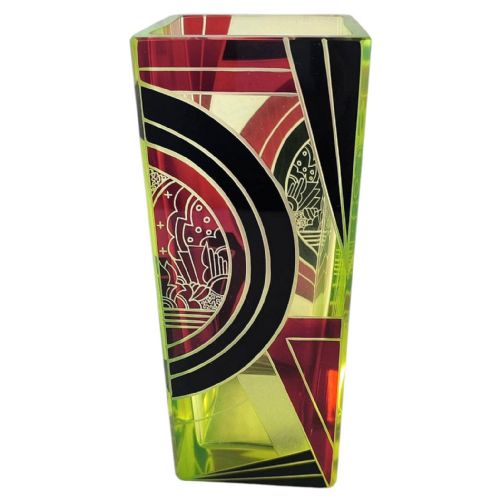
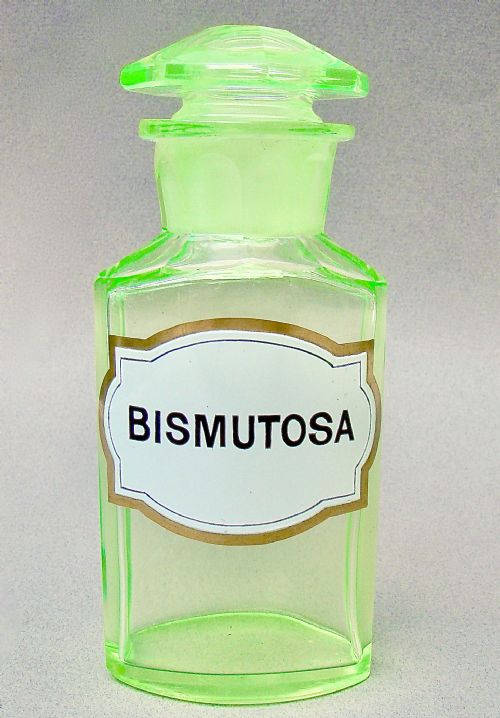
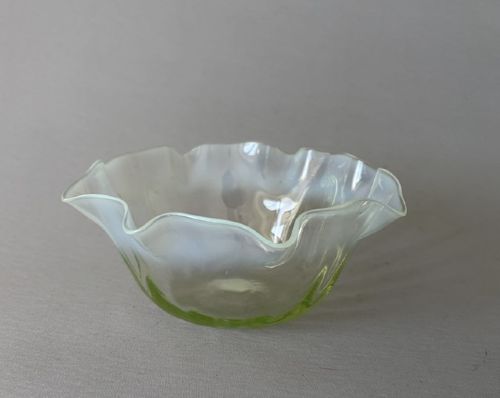
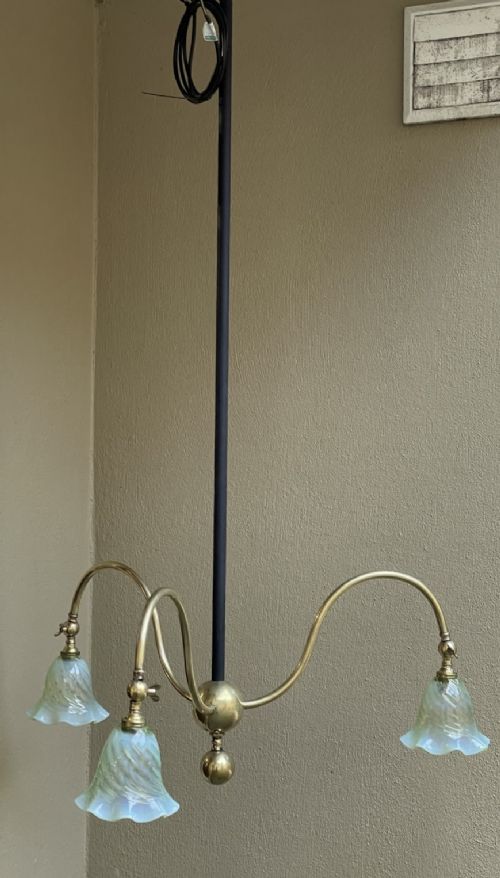
Vintage vaseline glass pieces bring a distinct uranium glow to interiors, spanning Victorian to Art Deco lighting, glassware and decorative objects.
Vintage Vaseline Glass
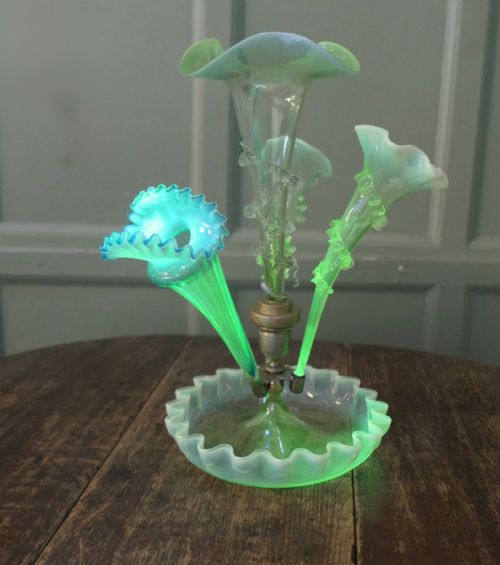
Vintage vaseline glass encompasses items sought for their characteristic yellow or greenish hue, which stems from the inclusion of uranium dioxide in the melt. When exploring vintage vaseline glass on this page, buyers encounter domestic lighting and decorative tableware ranging from the nineteenth century into the twentieth.
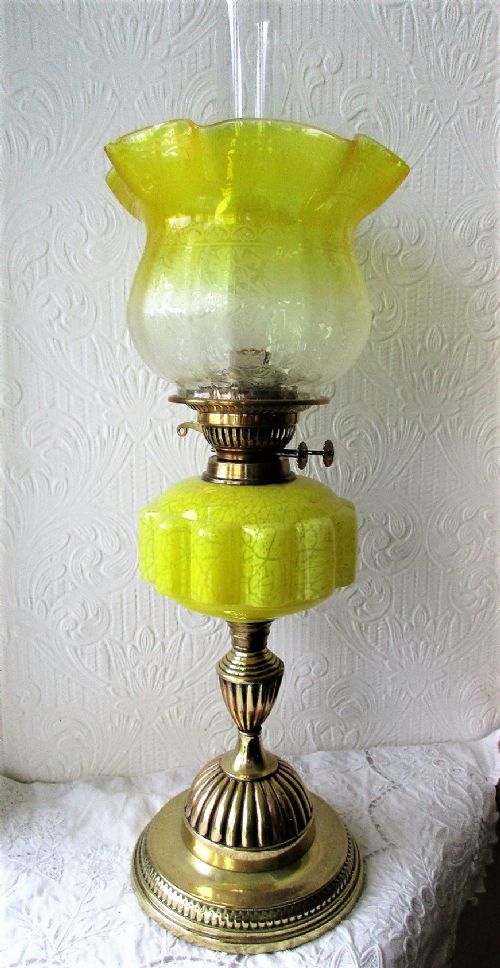
The selections span distinct periods, moving from Victorian brass oil lamps and hand-blown epergnes to later Art Deco clocks and vases. Objects such as wine glasses, tazzas, and ceiling lights show how makers utilised the material across different decorative movements including Arts and Crafts and Art Nouveau.
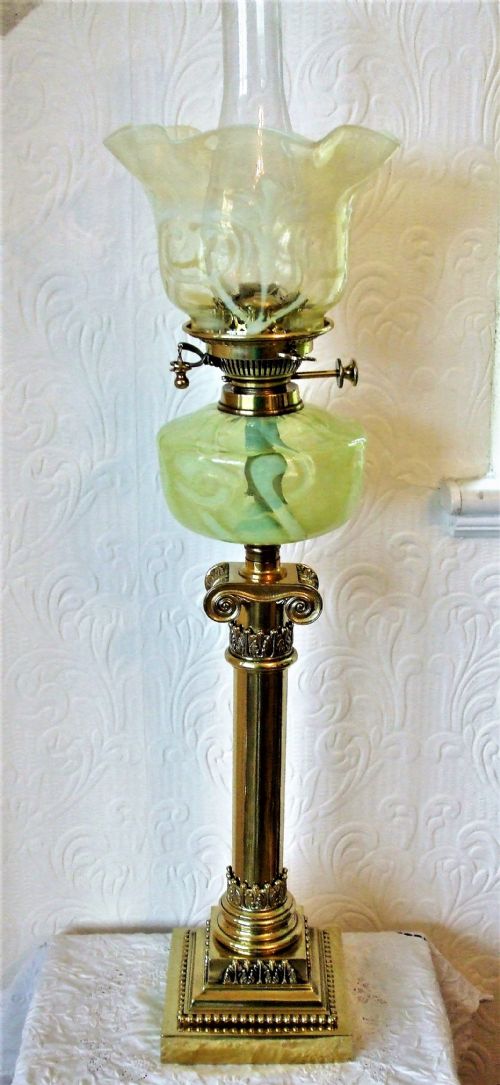
Victorian examples often pair the glass with brass columns or leaf designs, while later 1930s pieces incorporate chrome and enamel. This mix of forms demonstrates the wide adaptability of uranium glass throughout successive design eras.
Materials and production methods
Production relies on glass formulas containing uranium oxide, which yields the distinctive translucent yellowish-green tone visible in these objects. Master glassmakers shaped this material through free-blowing techniques, as seen in multi-trumpet epergnes and wine glasses.
Many items combine the glass with metal mounts, notably brass and copper frames found on Victorian oil lamps and Arts and Crafts hanging lights. Later twentieth-century manufacturing introduced combinations of opaline uranium glass with chrome and enamel details.
Vintage Vaseline Glass Retail Price Guide 2026
Typical asking prices for vintage vaseline glass among the pieces listed under this phrase on Sellingantiques today, from the lower quarter to the upper quarter. They describe what is for sale here now, not the wider market.
Listings feature items spanning the Victorian era through to the 1930s, incorporating brass, copper, chrome, and multiple glass types.
Assessing quality and craftsmanship
Quality rests primarily on the sophistication of the form and the integration of the glass with its mounting. Pieces featuring hand-blown trumpet formations or intricate brass casting reflect a higher standard of workmanship than standard production wares.
The distinction also lies in the provenance of named makers and the purity of the design execution across periods. Art Deco works signed by specific studios or attributed to known designers demonstrate the upper tier of execution for this material.
Etling·Karl Palda
The Vintage Vaseline Glass Glossary
- Vaseline glass
- A type of glass coloured with uranium dioxide to produce a yellow or yellowish-green shade. Under ultraviolet light, it emits a bright green fluorescence.
- Epergne
- A centrepiece table ornament featuring a central bowl with multiple Trumpet-like attachments. Victorian versions often utilise hand-blown uranium glass.
- Tazza
- An ornamental shallow cup or bowl mounted on a stem and foot. They serve as decorative display pieces on tables or sideboards.
- Opaline glass
- A delicate, translucent white or tinted glass developed in France. It frequently appears combined with uranium content in twentieth-century designs.
- Ionic column
- A classical architectural column style featuring scroll shapes on the capital. Victorian oil lamps frequently adopted this form for their brass bases.
Vintage Vaseline Glass: Frequently Asked Questions
What is vintage vaseline glass?
Vintage vaseline glass refers to decorative and functional glassware manufactured with uranium dioxide added to the batch, creating a yellow or greenish translucent colour. Items range from Victorian tableware to Art Deco decorative objects.
The glass is particularly noted for glowing brightly under ultraviolet light due to the uranium content. This characteristic helps collectors identify authentic pieces across various historical periods.
How were these items used?
These pieces served practical and decorative roles in homes, functioning as lighting fixtures, table centerpieces, and glassware. Oil lamps and ceiling lights provided illumination, while epergnes and tazzas decorated dining tables.
Smaller items like wine glasses and vases added colour and visual interest to interior displays. Their dual role as functional objects and decorative art made them popular in wealthy and middle-class households alike.
How do I date these pieces?
Dating relies on examining the object's style, manufacturing technique, and associated materials. Victorian examples often feature ornate brass mounts and hand-blown elements, whereas 1930s pieces incorporate streamlined Art Deco forms and chrome.
Design markers such as Arts and Crafts copper work or specific maker signatures provide further chronological clues. Comparing the object's form against known period styles helps establish its approximate era.
Are these items safe to own?
These items contain trace amounts of uranium trapped within the glass matrix during manufacturing. They are generally considered safe for display and decorative use in domestic settings.
Collectors typically handle them as normal decorative objects rather than items for daily food service. The radiation emitted is extremely low and poses minimal risk under normal conditions.