

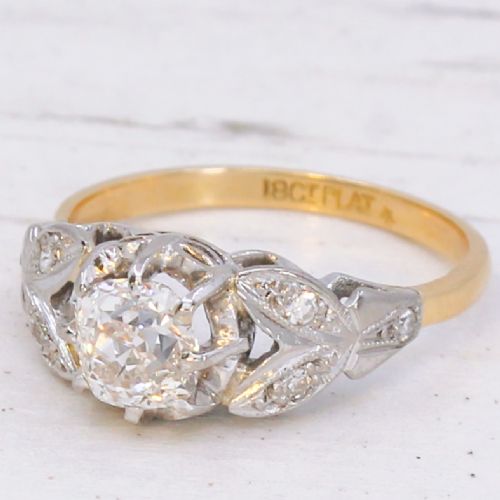
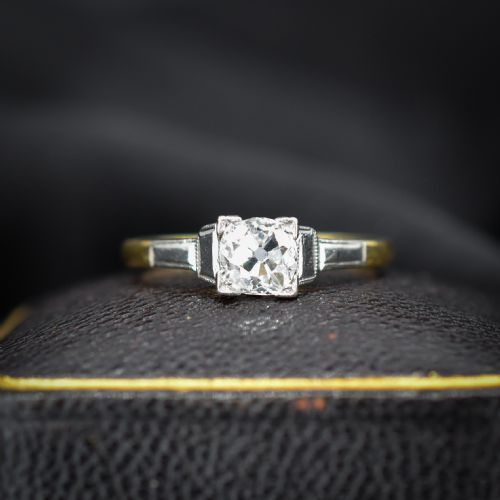
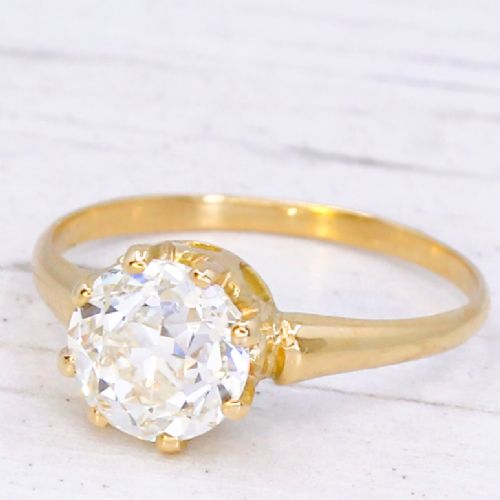
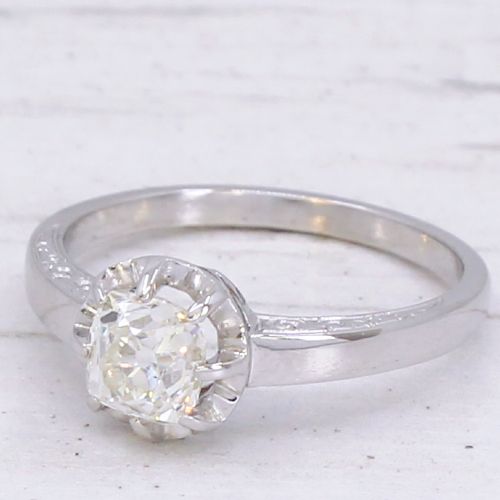
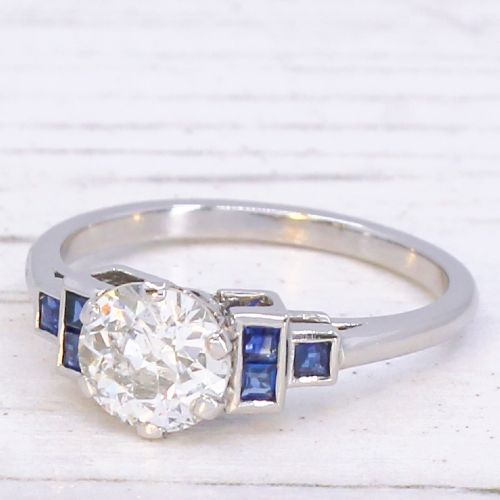
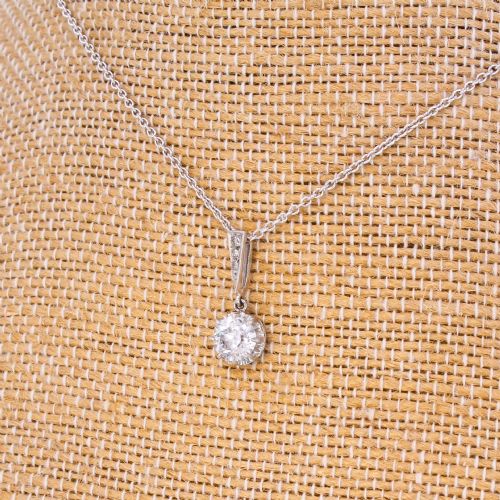
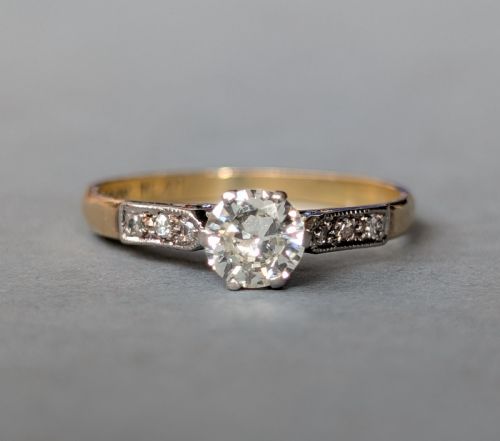
Old European Cut Solitaire
An old european cut solitaire brings together hand-faceted brilliance and the distinctive character of early twentieth-century design.
Old European Cut Solitaire
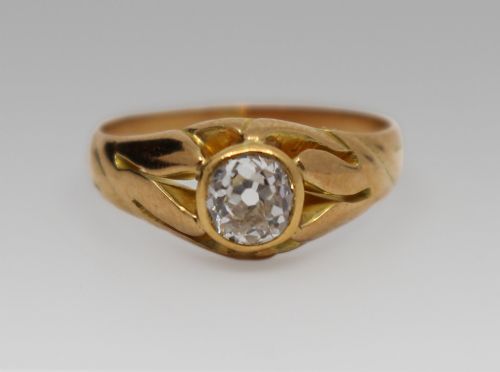
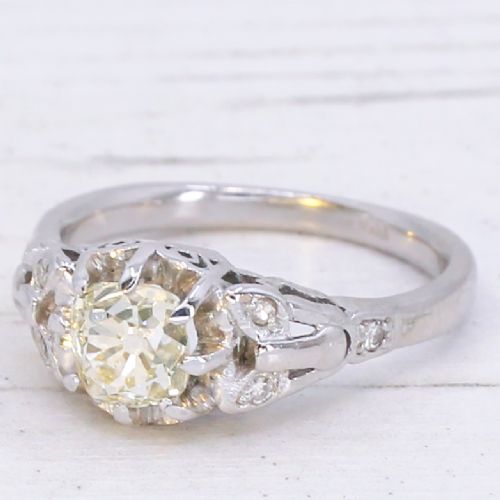
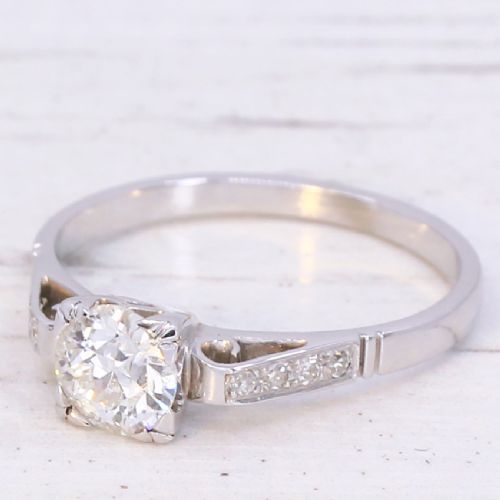
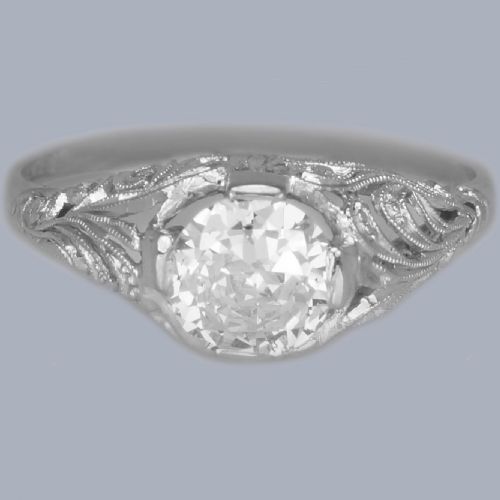
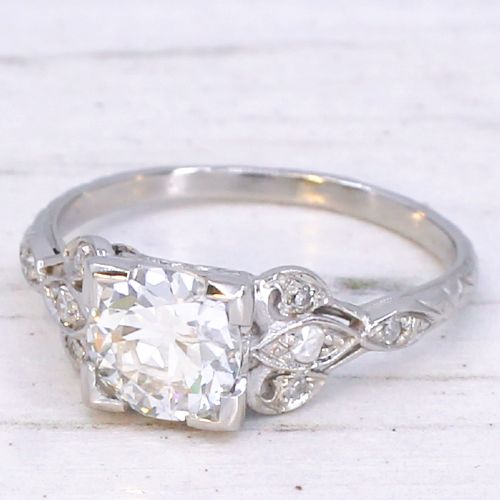
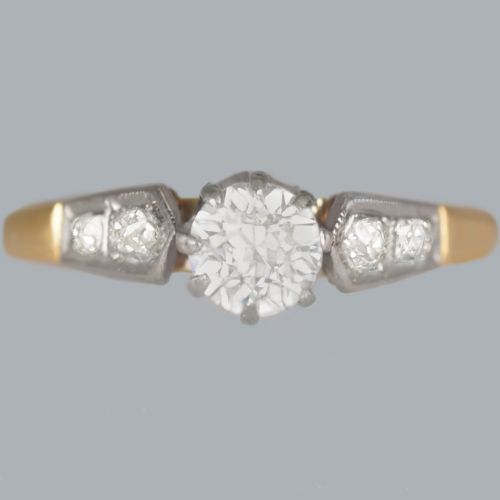
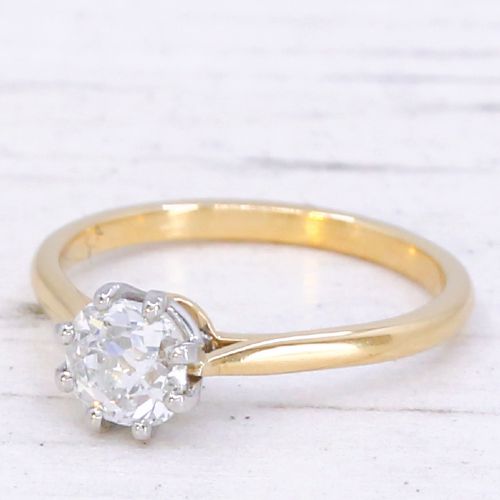
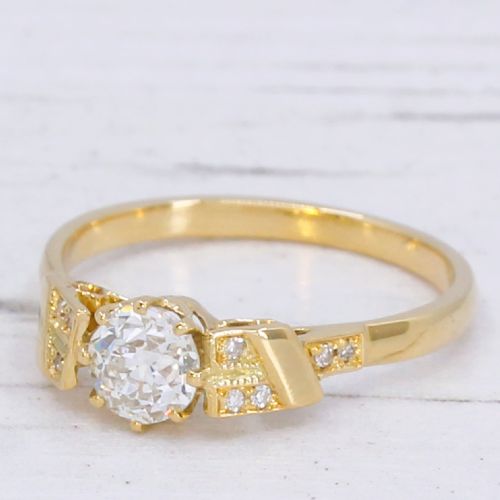
An old european cut solitaire primarily manifests as an engagement ring, alongside pendants, brooches, and pins set with a single prominent stone. These pieces originate predominantly from the Edwardian, Victorian, and Art Deco eras, extending into mid-century modern periods.
The stones themselves display characteristic small tables, deep pavilions, and open culets that distinguish them from modern brilliant cuts. Settings range from delicate platinum mountings to combinations of yellow gold, white gold, and eighteen-carat gold.
Most examples encountered on this page date from the early decades of the twentieth century, reflecting the prevailing styles of the 1910s, 1920s, and 1930s. The forms vary from straightforward solitaire mountings to designs featuring smaller accent diamonds along the shoulders.
Materials and Construction
The metals utilised in these mountings centre heavily on durable platinum and various carats of gold, including yellow gold and white gold. Platinum gained widespread favour during the Edwardian and Art Deco periods for its ability to support delicate wirework and securely hold stones without heavy prongs.
Diamonds are hand-cut by artisans using techniques that predated modern standardised machinery, resulting in unique facet patterns for each stone. Goldsmiths combined casting and hand-fabrication methods to shape the bands, often incorporating millegrain edges or sapphire accents into the overall structure.
Old European Cut Solitaire Retail Price Guide 2026
Typical asking prices for old european cut solitaire among the pieces listed under this phrase on Sellingantiques today, from the lower quarter to the upper quarter. They describe what is for sale here now, not the wider market.
Several diamonds retain their original hand-polished culets, catching the candlelight of a century ago.
Evaluating Quality
Quality in these pieces rests upon the proportions and light performance of the central diamond, alongside the integrity of the surrounding metalwork. Stones possessing symmetry and good clarity command attention, though hand-cut variations remain inherent to the period.
The craftsmanship of the setting distinguishes finer examples, particularly where platinum or gold work exhibits precise pierced details and secure stone retention. Preservation of the original mounting without modern alterations maintains the historical character of the piece.
The Old European Cut Solitaire Glossary
- Old European Cut
- A round diamond faceting style popular from the late nineteenth century through the mid-twentieth century, characterised by a small table, steep crown, and large open culet.
- Solitaire
- A piece of jewellery designed to showcase a single central gemstone, most commonly utilised in engagement rings.
- Culet
- The small facet at the very bottom of a gemstone, which appears as a tiny open circle when viewed through the table in older hand-cut diamonds.
- Millegrain
- A decorative technique involving a line of tiny metal beads along the edges of a setting, frequently seen in Edwardian and Art Deco jewellery.
- Platinum
- A dense, strong, and ductile white metal widely used in fine jewellery fabrication during the early twentieth century for its durability and bright finish.
Old European Cut Solitaire: Frequently Asked Questions
How do I care for an old european cut solitaire?
Clean the piece gently using warm water, mild soap, and a soft brush to remove everyday oils from beneath the stone.
Avoid harsh ultrasonic cleaners, which can damage delicate antique settings or disturb older metalwork.
What periods do these rings come from?
The pieces span from the Victorian and Edwardian eras through the Art Deco period and into the mid-twentieth century.
Each era contributes distinct design characteristics, from intricate platinum filigree to cleaner geometric mountings.
Can these rings be easily resized?
Most gold and platinum mountings can be adjusted by a skilled jeweller experienced in working with antique pieces.
The complexity of the adjustment depends on the shoulder design and the presence of intricate metalwork along the band.
What is the difference between old European and modern cuts?
Older cuts feature hand-polished facets tailored to candle or gas lighting, producing broader flashes of light.
Modern brilliant cuts are mathematically optimised for maximum electrical light return and uniform sparkle.