


Turn of Century Ring
A turn of century ring captures the shift from Victorian ornamentation to the cleaner lines of the Edwardian and Art Nouveau eras.
Turn of Century Ring
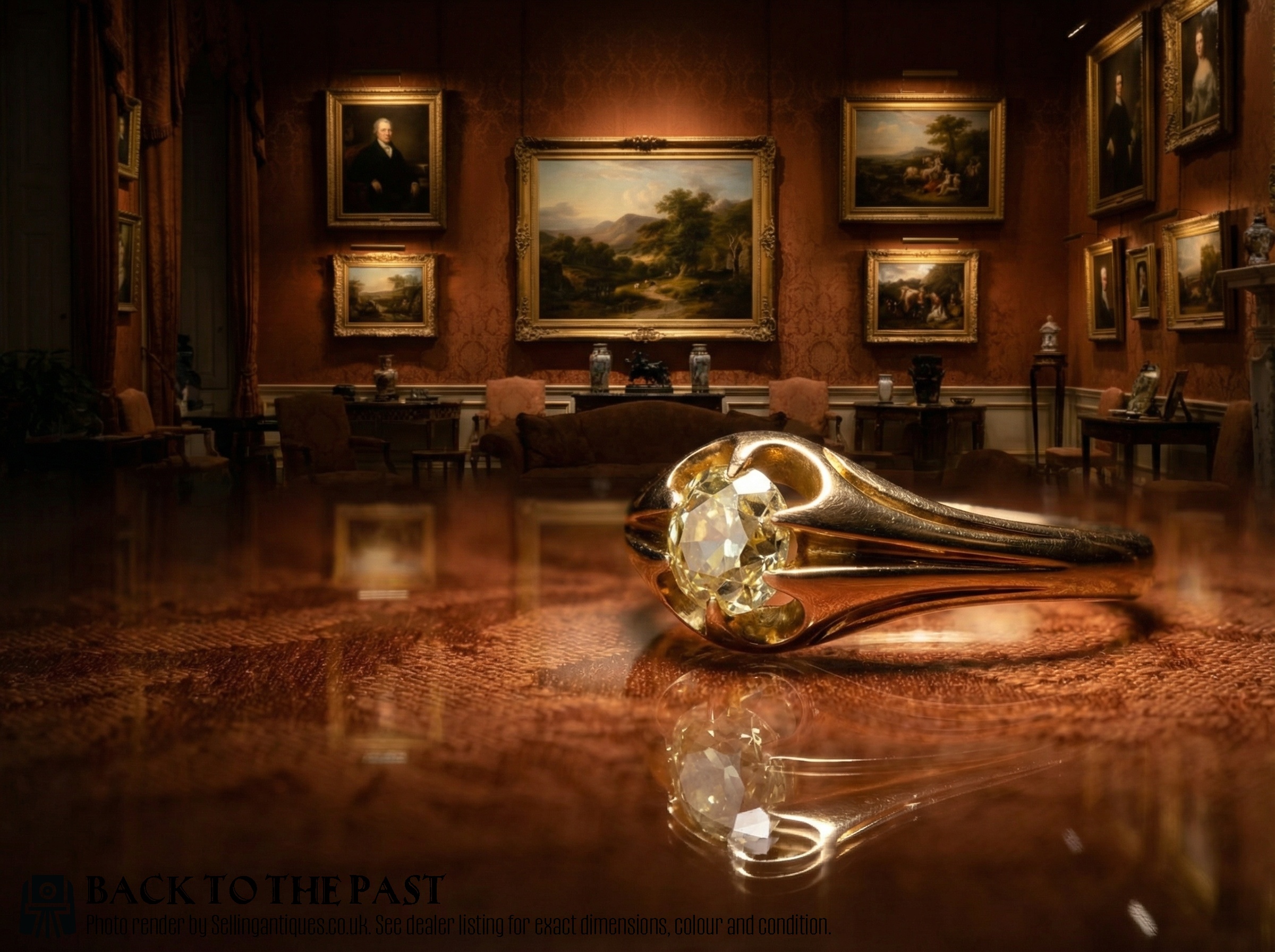
When buyers search for a turn of century ring, they encounter pieces originating around 1900, spanning Victorian, Edwardian, and Art Nouveau styles. The selection includes diamond solitaires set in yellow gold alongside gemstone designs featuring aquamarine.
Most examples hail from the period around 1900, reflecting the transition in jewellery design from heavy Victorian settings to more delicate motifs like the figural reclining woman found in Art Nouveau pieces.
Materials and construction
These rings utilise yellow gold and 18ct yellow gold as the primary metal foundations for mounting precious stones. Diamonds feature prominently, including old cut stones and carat weights such as 1.09 and 0.72.
Gemstones like aquamarine appear alongside enamel work in specific designs, paired with precious metals shaped by period goldsmiths.
Assessing quality and finish
Quality rests in the precision of the stone setting and the crispness of the metalwork, distinguishing standard production from finer goldsmithing. The cut and clarity of the central diamond elevate the piece significantly.
The artistic execution of decorative motifs, such as figural elements in Art Nouveau rings, separates simpler commercial work from pieces with sculptural depth.
The Turn of Century Ring Glossary
- Old cut diamond
- A diamond cut popular in the nineteenth and early twentieth centuries featuring a smaller table, higher crown, and large culet. This cut produces a softer sparkle under candlelight compared to modern brilliant cuts.
- Solitaire ring
- A ring set with a single gemstone, typically a diamond. It focuses attention entirely on the central stone and its mounting.
- Yellow gold
- Gold alloyed with copper and silver to produce a warm yellow colour. It was widely utilised in jewellery manufacture before the widespread adoption of platinum.
- Art Nouveau
- A stylistic movement spanning the late nineteenth and early twentieth centuries characterised by organic, flowing lines and natural motifs. Pieces often incorporate figures and non-traditional gemstones.
Turn of Century Ring: Frequently Asked Questions
What defines a turn of century ring?
These rings date from around 1900, capturing the aesthetic bridge between late Victorian heaviness and the fluid lines of Art Nouveau and Edwardian design.
They frequently feature old cut diamonds set in yellow gold or incorporate decorative enamel and coloured gemstones.
How do I care for an antique ring?
Store antique rings separately in padded boxes to prevent metal friction and stone scratching during handling. Remove them prior to heavy manual tasks or swimming.
Have the settings inspected periodically by a specialist to ensure the security of the claws holding the diamonds or gemstones.
Can I wear these rings daily?
Many buyers wear these pieces regularly, provided the settings remain robust and secure. Gold and diamonds are durable, but older settings require mindful wear.
Consider the profile of the ring and the height of the stone setting when planning daily activities to avoid accidental knocks.
How are different periods identified?
Stylistic cues such as floral motifs, figural work, and the shape of the metal prongs help distinguish Victorian pieces from Art Nouveau creations. Hallmarks and the specific cut of the diamonds also provide chronological markers.
Examining the construction methods on the interior of the band reveals manufacturing techniques specific to the era around 1900.