

Carved Gold Band Ring
A carved gold band ring brings together solid precious metal and enduring personal symbolism from the late nineteenth and early twentieth centuries.
Carved Gold Band Ring
A carved gold band ring is a finger ornament fashioned from precious metal featuring engraved, chased, or patterned surfaces rather than a plain polished shank. When searching for a carved gold band ring, buyers encounter pieces originating primarily from the Victorian, Edwardian, and early twentieth-century periods.
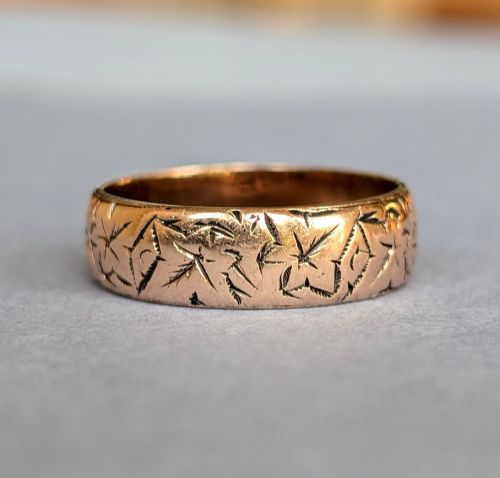
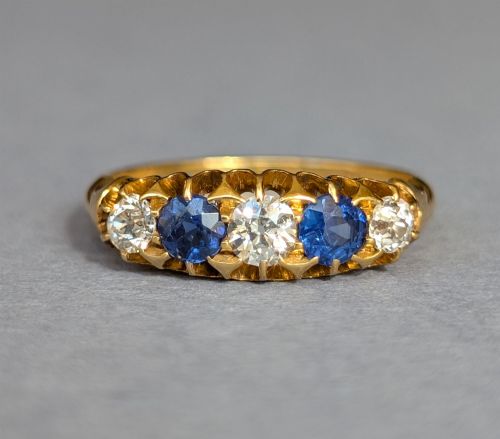
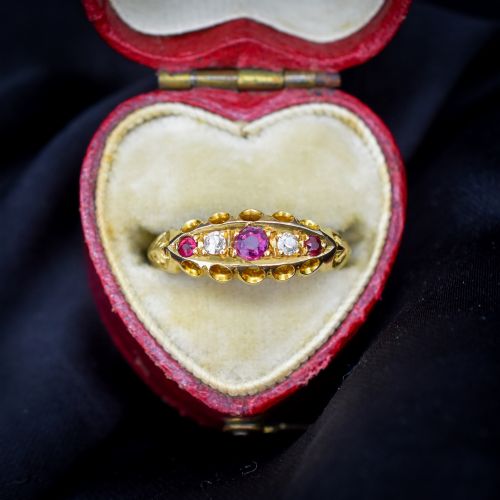
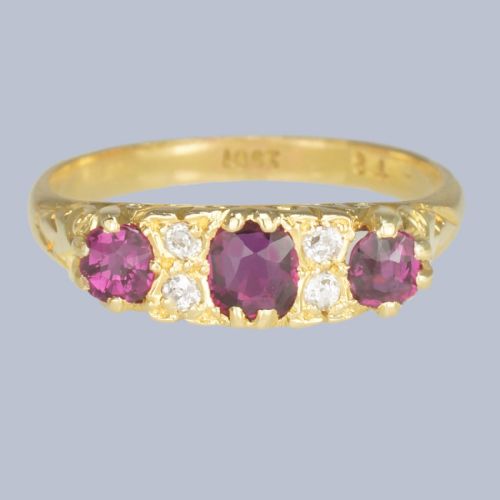
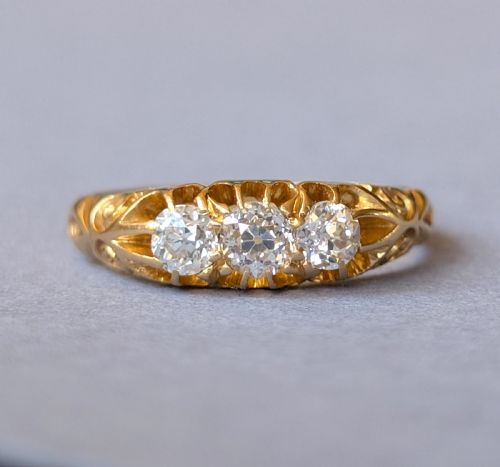
The selections available here span from late nineteenth-century mourning and sentiment pieces to early twentieth-century wedding bands and gem-set variations. These rings frequently incorporate engraved motifs, scrolling patterns, or flush-set gemstones directly into the metal band.
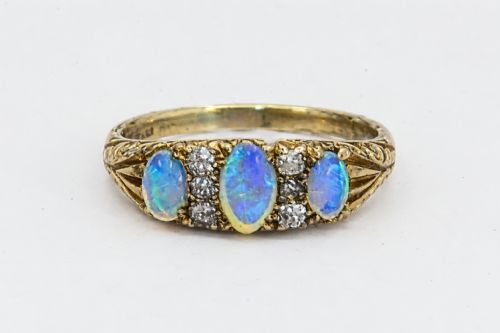
Most examples found in this inventory utilise yellow or rose gold in nine-carat, fifteen-carat, or eighteen-carat purities. Forms range from simple engraved hoops to elaborate boat settings and five-stone arrangements integrated into the band structure.
Materials and construction
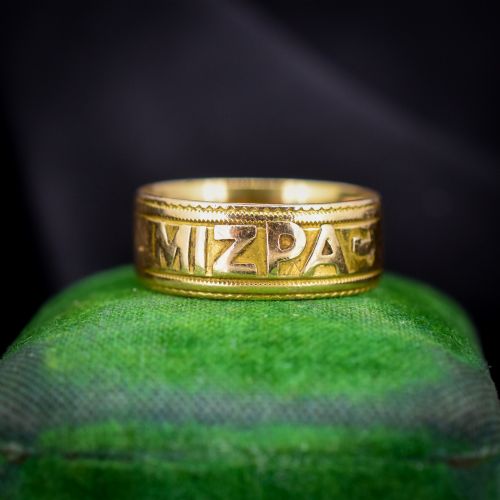
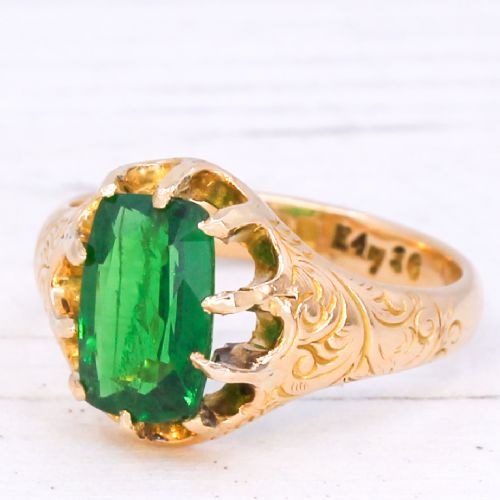
These rings were produced using traditional bench-work methods, starting with cast or forged metal bands shaped from eighteen-carat or nine-carat gold. Artisans engraved floral scrolls, geometric patterns, or sentimental inscriptions directly onto the solid metal surface using hand gravers.
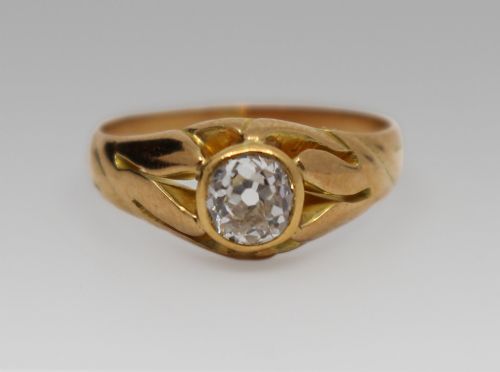
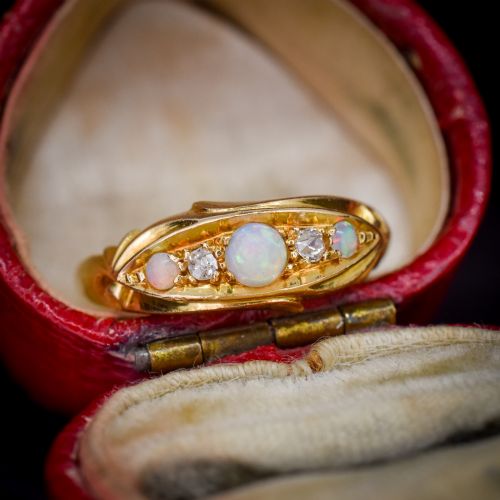
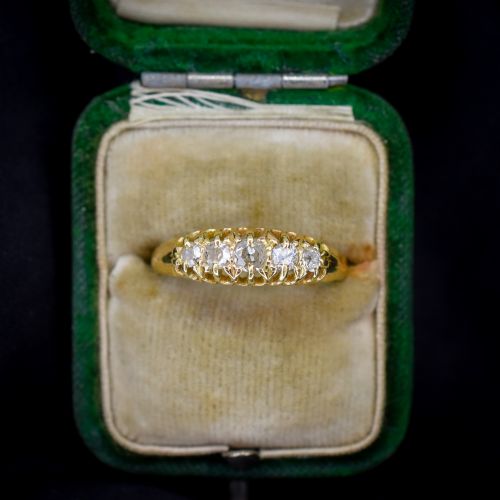
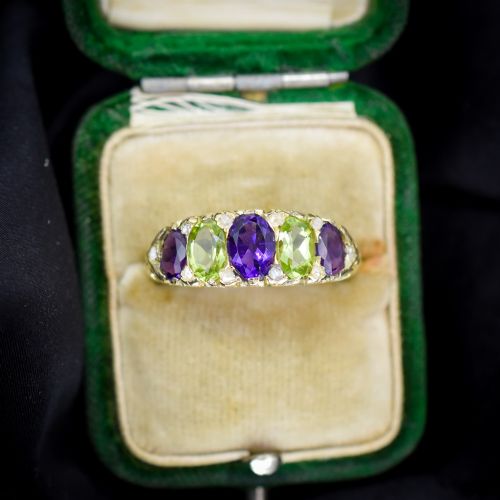
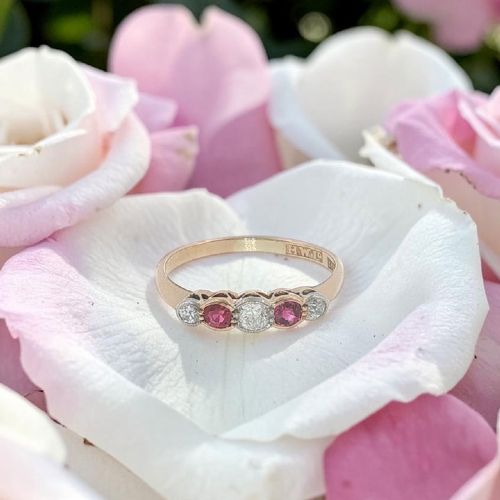
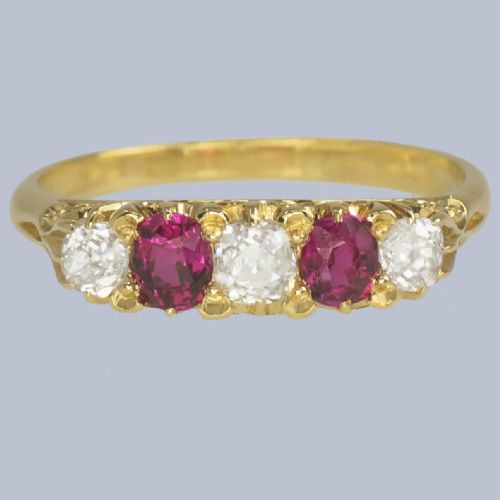
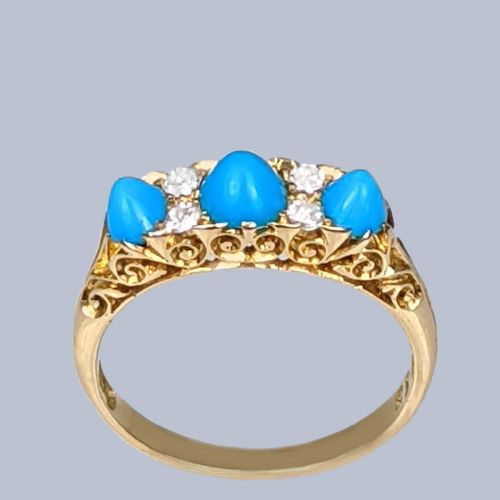
Gemstones including old-cut diamonds, rubies, opals, and turquoises were set into the gold bands using star settings, flush gypsy settings, or low boat mountings. This integration of stones directly into the structural band provided both security for the gems and a streamlined profile for daily wear.
Listings feature eighteen-carat and nine-carat gold alongside diamonds, opals, rubies, and turquoises across Victorian and Edwardian periods.
Judging quality in carved bands
Quality in these rings rests upon the crispness of the hand-engraving and the structural integrity of the gold shank over decades of use. Superior pieces maintain sharp detail in their carved motifs without thinning of the metal band from wear or previous resizing.
The selection of gemstones and the precision of their flush or star settings distinguish finer examples from standard production. Well-matched stones and clean, symmetrical mounting work indicate the hand of a skilled goldsmith rather than mass-commercial output.
The Carved Gold Band Ring Glossary
- Gypsy setting
- A mounting style where the gemstone is flush-set directly into the metal band so that the surface of the stone is level with or slightly below the surrounding gold.
- Boat ring
- A ring configuration featuring a central cluster or row of stones raised in a boat-shaped mounting that tapers gracefully toward the shoulders of the band.
- Mizpah
- A sentimental inscription or motif derived from the Hebrew word meaning watchtower, used on rings to denote an emotional bond between people separated in distance.
- Old-cut diamond
- A hand-faceted diamond cut prior to the standardisation of the modern brilliant cut, typically possessing a smaller table, higher crown, and open culet.
- Hallmark
- An official stamp applied to precious metal items indicating the purity of the gold, the assay office of origin, and often the date of manufacture.
Carved Gold Band Ring: Frequently Asked Questions
What periods do these rings come from?
The pieces available predominantly span the late Victorian era through the Edwardian period and into the mid-twentieth century. Dates range from the late nineteenth century up to the nineteen-fifties.
Craftsmanship from these decades relies heavily on hand-tooling, traditional stone setting, and higher purities of gold than are common in modern commercial jewellery.
How should I wear an antique gold band?
These rings suit daily wear either on their own as a statement band or stacked alongside complementary wedding and engagement rings. Their low profile makes them comfortable for continuous use.
Care should be taken with softer stones like opal or turquoise if worn daily, as these gems are more susceptible to impacts and harsh chemicals than diamonds or rubies.
How do I identify the gold purity?
Gold purity is typically identified through hallmarks stamped on the interior of the shank, denoting nine-carat, fifteen-carat, or eighteen-carat gold standards. Assay office marks can also reveal the city and year of testing.
Where hallmarks are worn or absent, professional testing using acid or electronic spectrometers provides an accurate measurement of the gold content within the band.