




Old English Pattern Silver
Old English pattern silver delivers understated elegance through its clean, rounded handle and subtle top crest, making it a timeless addition to any dining table.
Understanding Old English Pattern Silver
Old English pattern silver comprises a range of flatware and serving utensils characterised by a distinctive rounded terminal and a graceful downward curve at the end of the handle. When searching for old english pattern silver, buyers encounter functional tableware spanning from the Georgian era through to the twentieth century.
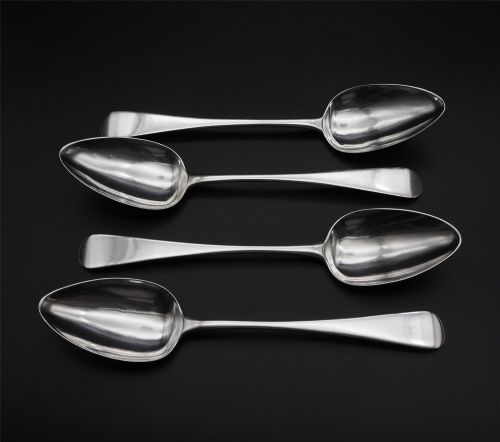
Examples on this page draw from Georgian, George III, George V, George VI, and Art Deco periods, predominantly rendered in sterling silver. Buyers are most likely to meet individual serving spoons, specialised scoops, or matched sets of flatware that reflect these traditional British periods.
Manufacturing and Materials
Items fashioned in this style consist entirely of solid sterling silver, worked by silversmiths into substantial handles and bowls. The metal provides both the necessary weight for daily dining and the durability required for functional serving utensils.
Silversmiths shaped the distinctive pattern by hammering and pressing the silver into the tapering, rounded profile characteristic of the design. Makers often incorporated subtle variations, such as thread borders along the edge of the handle on select pieces.
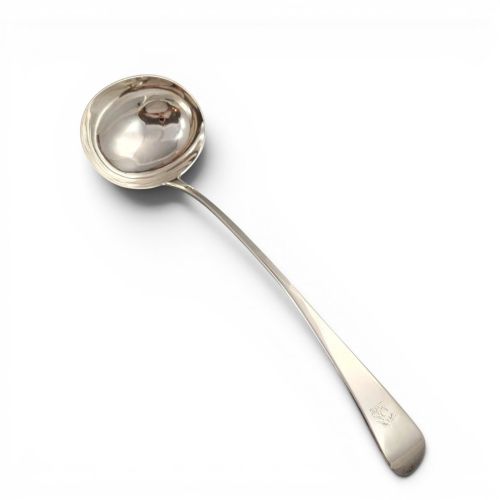
The archive records solid silver items ranging from delicate salt spoons to heavy salad servers and large soup ladles.
Assessing Quality and Distinction
The distinction between standard utility items and the finest examples rests upon the heaviness of the gauge and the crispness of the hallmarks struck into the metal. Superior pieces retain thicker silver walls in bowls and ladles, ensuring they resist bending during use.
The reputation of the maker and the clarity of regional assay office marks also elevate certain pieces, particularly those bearing the touchmarks of notable eighteenth-century workshops or specialised provincial makers.
Hampston and Prince·Hester Bateman·George Wintle·Emile Viner·Deakin and Francis·Robert Pringle·Josiah Williams and David Landsborough Fullerton
The Old English Pattern Silver Glossary
- Old English Pattern
- A traditional flatware design featuring a plain, rounded handle end that curves downwards away from the user. This style gained popularity in the late eighteenth century and remained a staple of British silversmithing.
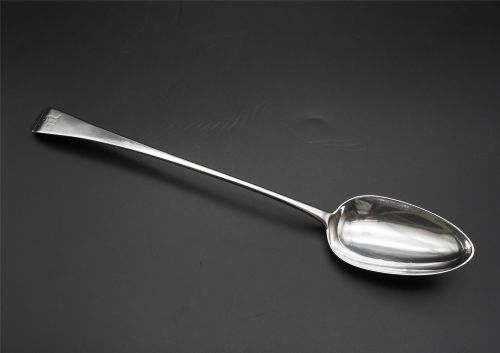
- Basting Spoon
- A large serving spoon used historically for spooning juices over roasting meat. These pieces measure considerably longer than standard tablespoons and feature deep bowls.
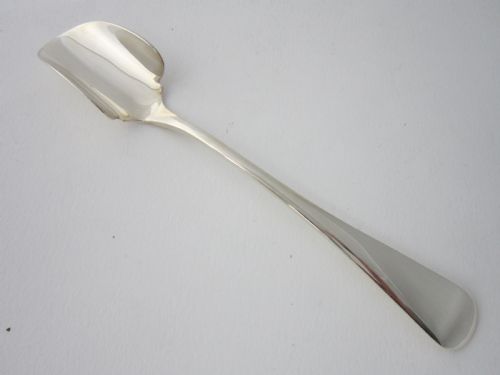
- Stilton Scoop
- A specialised utensil designed for digging into hard cheeses like Stilton, featuring a semi-cylindrical blade and a long handle. These implements were often executed in the same handle patterns as dining flatware.
- Hallmark
- A series of official marks stamped onto precious metal items to guarantee their purity, origin year, and the maker or sponsor responsible. British silver marks typically include a standard mark, a town mark, and a date letter.
- Sterling Silver
- An alloy of silver containing ninety-two point five percent silver by mass, and seven point five percent other metals, usually copper. This standard has served as the baseline for British silver manufacturing for centuries.
Frequently Asked Questions
How do I date old silver?
Dating relies primarily on the stamped date letter within the hallmarks, which corresponds to specific assay office records and monarch reigns. Additional clues come from the overall shape, handle proportions, and style of engraving.
Provincial pieces and older Georgian items often display distinct maker marks that narrow down the decade of production alongside the town mark.
Are these pieces safe for daily use?
Solid sterling silver flatware is robust enough for regular dining, provided it is washed by hand in mild detergent and dried promptly. Avoiding harsh abrasives preserves the soft polish and historical hallmarks.
Heavier serving pieces and ladles handle frequent use well due to the high gauge of silver utilised by period smiths.
What is a basting spoon used for?
Basting spoons were originally created for gathering pan drippings and pouring them over roasting meats in large Georgian kitchens. Their exceptional length kept hands safely away from the heat of the hearth.
Today, collectors appreciate them as statement serving pieces for large dining tables or as decorative historical artefacts.
How do I clean tarnished sterling silver?
Tarnish is removed safely using a specialised silver cloth or a gentle liquid silver dip that does not scrub away the underlying metal. Routine maintenance prevents the buildup of heavy black oxidation.
Store pieces in tarnish-resistant flannel rolls or specialised storage cabinets when not in active use to maintain the finish.