
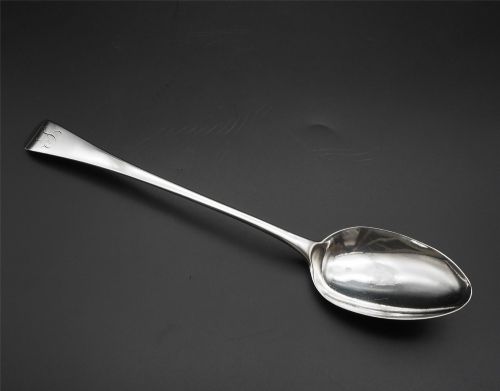
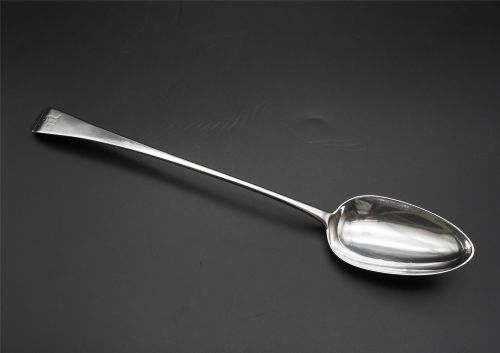
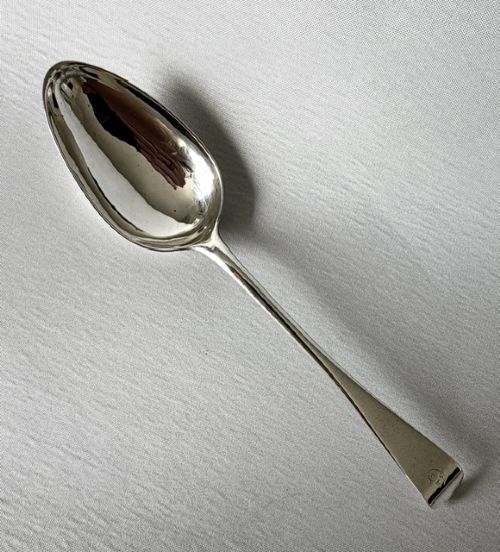
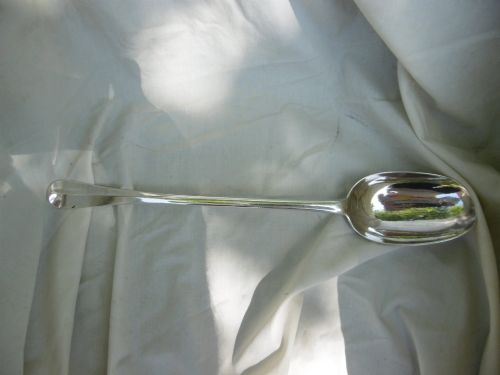


Georgian Basting Spoon
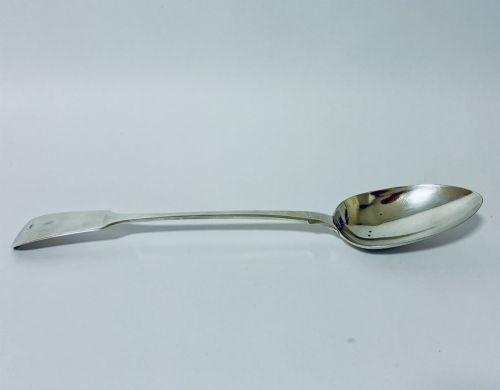
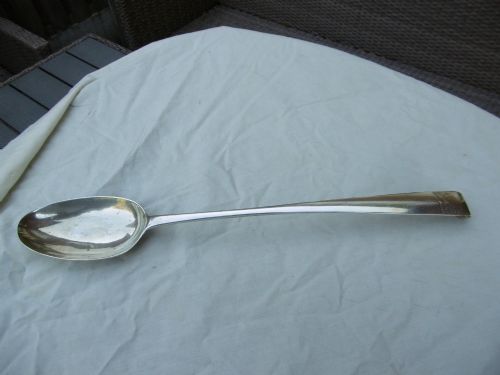
A georgian basting spoon provides length and heft for the dining table, taking the form of large silver or wooden servers from the eighteenth and early nineteenth centuries.
Georgian Basting Spoon
When searching for a georgian basting spoon, buyers encounter substantial silver utensils spanning the eighteenth and early nineteenth centuries. These large pieces served at the table for gravy, stuffing, and hash, measuring considerably longer than standard dining spoons.
The examples found here include provincial English, Scottish, and Irish pieces alongside London work. While silver predominates, occasional beechwood pieces appear from the period, reflecting domestic utility alongside grand dining silver.
How they were made
Makers shaped these utensils from sterling silver or higher purity Britannia silver, hammering ingots into sheet metal before cutting and forming the bowls and stems. Workers then applied punches for hallmarks, maker marks, and city marks directly onto the metal.
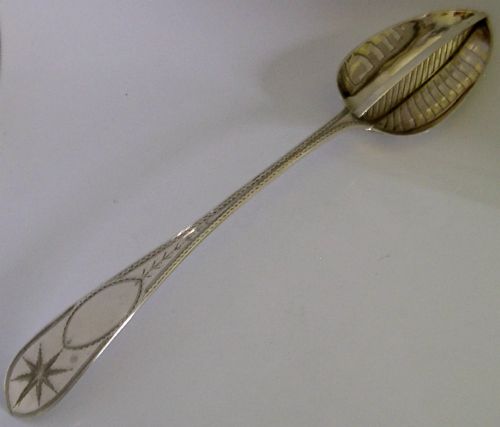
Provincial and Dublin silversmiths utilised traditional hand-forging methods, sometimes incorporating specialised piercing for straining bowls or engraving family crests onto the terminals.
A Scottish silversmith once hammered out a massive hash spoon weighing over two hundred and fifty grams.
What varies in quality
The weight of the metal distinguishes a heavier serving utensil from a lighter one, with substantial gram weights providing better balance in the hand. Crispness in the engraved crests and legible hallmarks from provincial assay offices add distinct character to individual pieces.
Completeness within pairs or matched sets elevates a piece, as does specialised functionality such as an integrated strainer or a hook end designed to rest on the edge of a vessel.
Andrew Archer·John Craig·William Scarlett·John Locker·John Wilks·Robert Gordon·Alexander Henderson·Hampton and Price·Bateman family
The Georgian Basting Spoon Glossary
- Britannia standard
- A higher purity silver standard introduced by law in England to discourage the melting of coinage. It contains ninety-five point eight percent pure silver.
- Hash spoon
- An alternative historical term for a large serving or basting spoon used for substantial dishes. These examples often measure over thirty centimetres in length.
- Old English pattern
- A popular handle style featuring a downward-turned end and a distinct mid-rib on the reverse. It became standard for flatware during the Georgian period.
- Provincial silver
- Items made and marked outside the capital, such as in York, Newcastle, or Scottish burghs. These pieces often display unique local maker marks.
- Straining spoon
- A variation featuring a pierced partition inside the bowl to separate liquids from solids during serving. Such pieces frequently include a hook end for resting on deep dishes.
Georgian Basting Spoon: Frequently Asked Questions
How long is a typical basting spoon?
These utensils typically measure between thirty and thirty-five centimetres in length. This extended reach kept hands safely away from hot dishes during service.
The substantial length distinguishes them immediately from standard dining flatware, making them suitable for deep serving bowls and platters.
What is the difference between a basting and a stuffing spoon?
Makers and contemporary owners used both terms interchangeably for the same large-format serving implement. Both types share the extended stem and capacious bowl needed for heavy kitchen and table use.
Regional preferences and individual workshop habits determined which term appeared in records, though the physical form remained identical.
How can I identify provincial Irish silver?
Makers stamped their work with city marks, such as the Hibernia symbol and specific town punches alongside maker initials. Dublin pieces often carry distinct date letters corresponding to the assay office records.
Examining these small stamped impressions reveals the geographic origin and exact year of production.