


Fiddle Pattern Spoon
These fiddle pattern spoon examples deliver sturdy silver service and traditional dining elegance from the Georgian and Victorian eras.
Identifying Fiddle Pattern Spoons
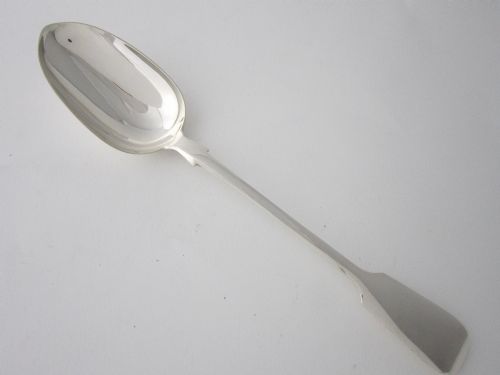
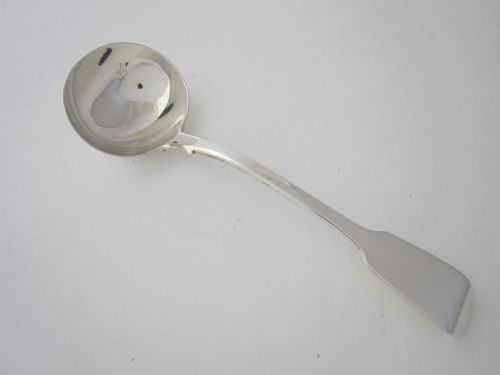
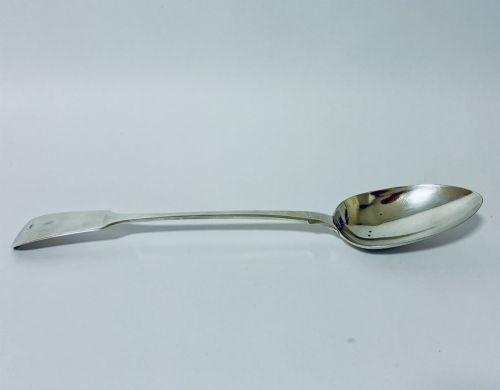
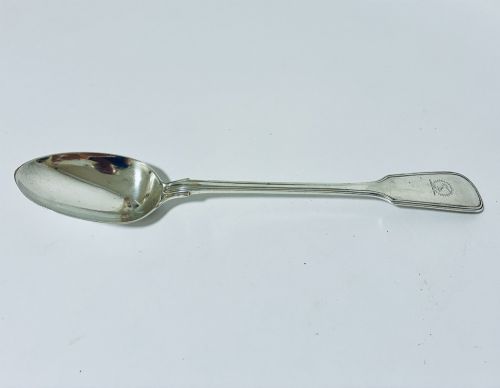
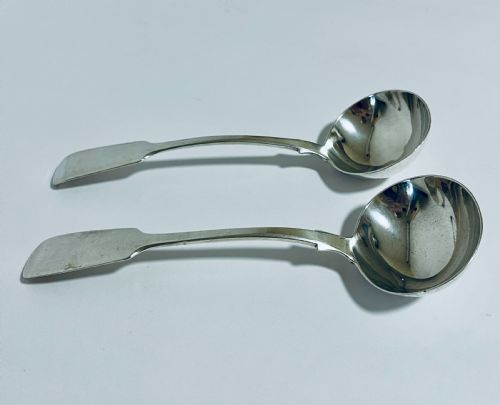
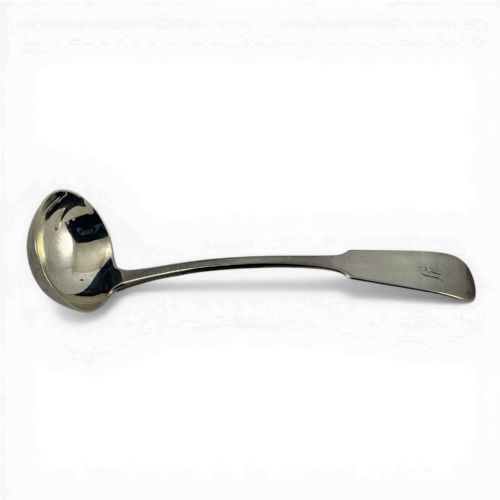
A fiddle pattern spoon takes its name from the distinctive violin-like contour of the stem, widening sharply near the terminal. This profile appears across numerous dining forms, from small condiment and salt spoons up to substantial basting and serving spoons.
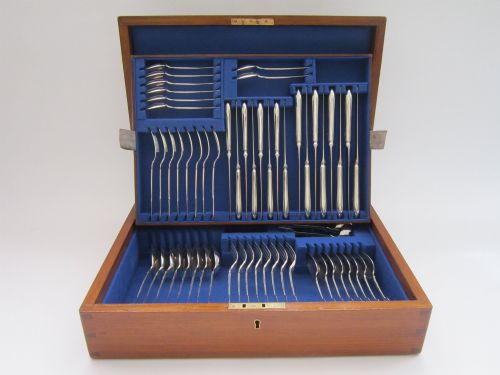
Most pieces seen here originate from the Georgian and Victorian periods, minted in sterling silver or solid silver. Buyers frequently encounter single serving spoons, matching sets of teaspoons, and specialised items like sauce ladles or caddy spoons.
Provincial pieces from makers in Dublin, Exeter and London demonstrate the wide geographic spread of this design. Whether configured as egg spoons, dessert spoons or stuffing spoons, the handle retains the characteristic shoulders and narrow stem.
Materials and Construction
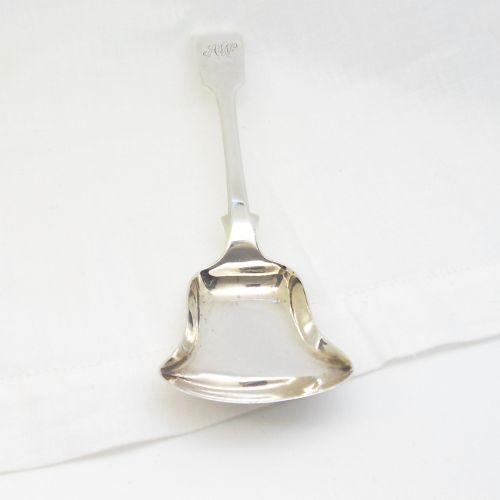
Silversmiths shaped these utensils from sterling silver or solid silver, hammering and pressing the metal to form the characteristic fiddle outline. Individual pieces often incorporate decorative variations such as thread borders, shell motifs or engraved family crests.
Holloware elements like bowls and stems were joined using traditional silversmithing techniques, frequently finished with rattail drops or crisp hallmarks stamped directly into the reverse of the handle.
Retail Price Guide 2026
Typical UK retail prices for fiddle pattern spoon, calculated from the Sellingantiques database of over a million retail prices indexed since 2003. This retail price guide relies exclusively on Sellingantiques data; no external sources or auction records are used, so the figures do not describe the wider market.
Listings feature sterling silver and solid silver pieces spanning Georgian, Victorian and 1800 periods.
Factors of Quality
The weight of the silver dictates the physical heft and balance in the hand, separating heavier basting spoons from lighter teaspoons. Crispness in the shoulders and well-defined terminals indicate superior initial striking by the silversmith.
Intricate additions like shell decorations, thread borders or engraved family crests elevate the visual complexity of the design. Preserved hallmarks and minimal bowl wear from daily service maintain the historical integrity of the piece.
Chawner And Co·John Smith·Edward Power·Elizabeth Eaton·William Eley
The Fiddle Pattern Spoon Glossary
- Fiddle pattern
- A nineteenth-century flatware design featuring a slender stem that flares out at the shoulder to resemble a violin shape before expanding at the terminal.
- Basting spoon
- A large serving implement used in traditional kitchens and dining rooms to spoon juices over meat during roasting or service.
- Caddy spoon
- A short-handled spoon specifically designed for measuring loose tea leaves from a caddy into a teapot.
- Hallmark
- A series of stamped official marks on precious metals indicating the standard of purity, the assay office, and the date letter.
- Rattail
- A slender tongue-like reinforcement running down the back of the spoon bowl from the base of the handle.
Frequently Asked Questions
How do I care for silver spoons?
Wash silver items gently by hand in warm soapy water and dry them immediately with a soft cloth to prevent water spots.
Store them in a tarnish-resistant environment and avoid harsh abrasive dips that can wear away engraved crests and original hallmarks.
Are these spoons safe to use?
Silver possesses natural antimicrobial properties, making these historical utensils entirely suitable for contemporary dining and serving.
Careful handling ensures that delicate bowls and antique hallmarks remain protected during regular use.
How can I date my spoon?
Check the reverse of the handle for stamped hallmarks, which typically include a date letter corresponding to the assay office records of London, Dublin or Exeter.
Stylistic details like family crests, thread borders or shell motifs also provide clues regarding Georgian or Victorian manufacture.