


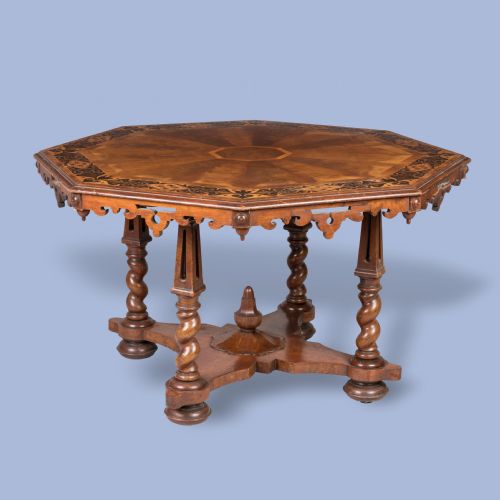
Octagonal Foyer Table
An octagonal foyer table serves as a striking centrepiece for an entrance hall, offering surface space and architectural geometry.
Octagonal Foyer Table
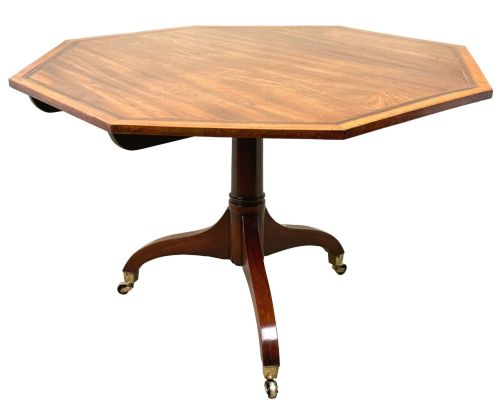
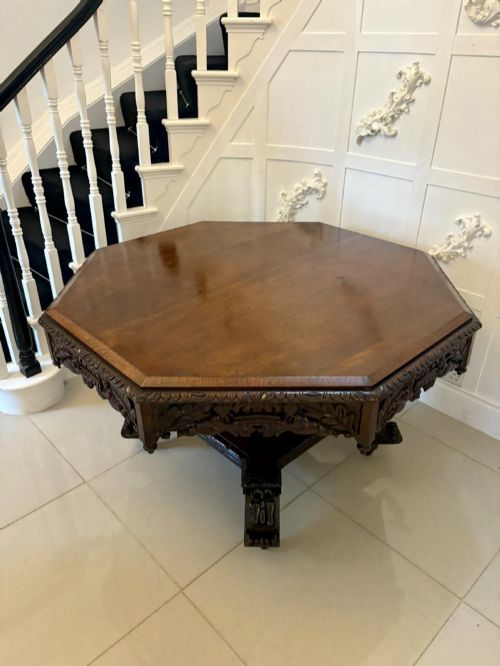
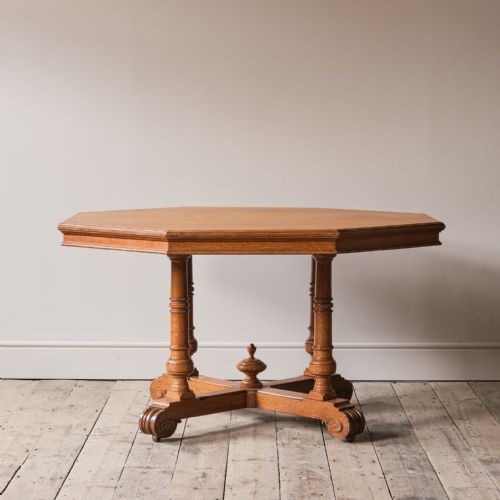
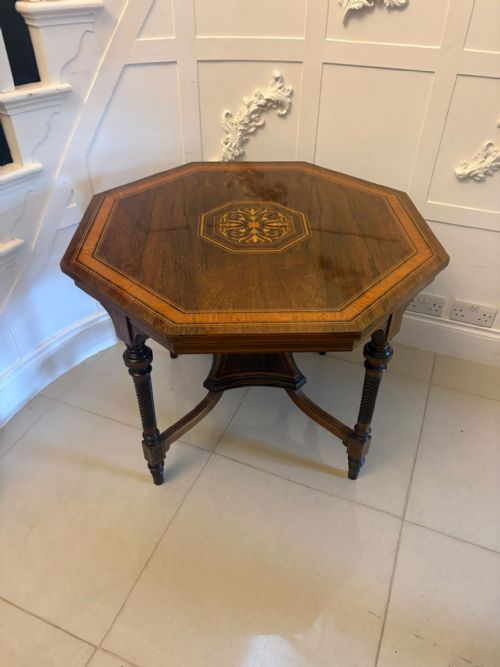
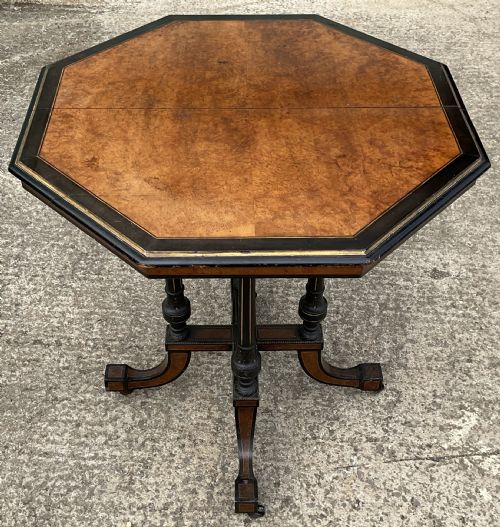
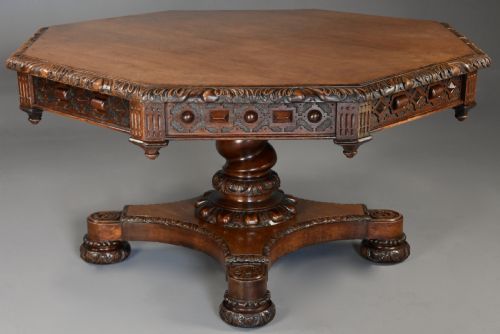
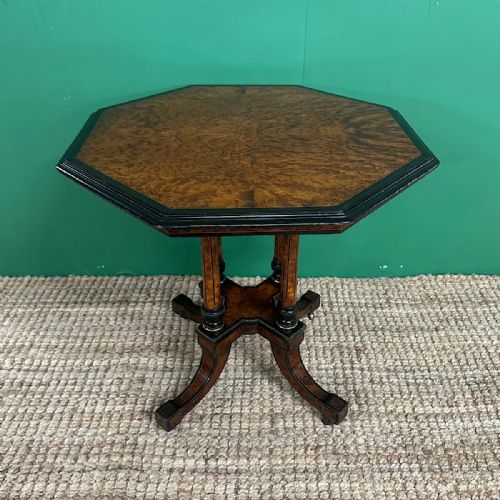
An octagonal foyer table is a distinct form of standalone furniture typically encountered as a centre or occasional table within the broader categories of Victorian, Edwardian, and Art Deco design. These tables frequently appear in rich timbers such as oak, mahogany, walnut, and rosewood, often featuring geometric eight-sided tops.
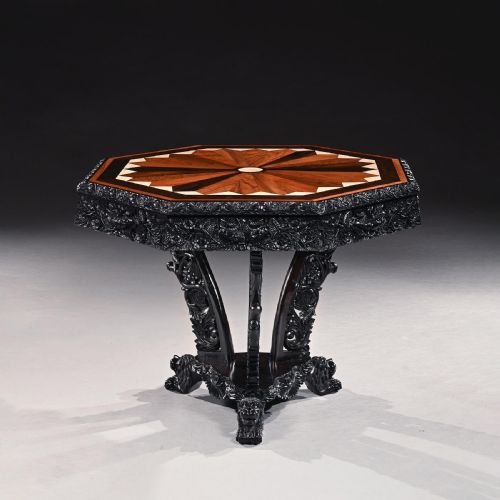
The selection ranges from robust nineteenth-century carved oak examples with Elizabethan and Jacobean influences to slender Edwardian mahogany pieces and later modernist Art Deco designs in ebony macassar. Buyers frequently encounter variants incorporating marquetry, parquetry, leather tops, or pedestal bases rather than traditional four-cornered legs.
How they were made
Cabinetmakers utilised dense hardwoods including oak, walnut, mahogany, and rosewood, often applying decorative veneers and contrasting boxwood stringing to emphasise the eight-sided geometry. Marquetry inlay and parquetry geometric patterns required high precision from nineteenth and early twentieth-century artisans.
Structural support was achieved through robust central pedestals or sturdy turned and carved legs, frequently reinforced with lower stretchers. Surface treatments ranged from polished French polish to specialised leather top inserts secured with brass tacking.
Listings span the Victorian, Edwardian, and Art Deco periods, utilising materials such as oak, mahogany, walnut, rosewood, brass, and glass.
What varies in quality
Quality rests primarily in the choice and handling of the timber, where dense, well-figured walnut, mahogany, or rosewood sets a higher standard than plainer secondary woods. The intricacy and precision of marquetry inlay, parquetry, and carved detailing distinguish standard production pieces from finer workshop outputs.
The architectural stability of the pedestal or leg assembly dictates the structural integrity of the eight-sided top. Superior examples maintain tight joinery and crisp moulding profiles across the multifaceted edges without timber shrinkage or warping.
The Octagonal Foyer Table Glossary
- Marquetry
- Decorative veneer work forming pictorial or geometric patterns using various coloured woods. It requires meticulous hand-cutting and fitting of thin wood veneers into a prepared ground.
- Parquetry
- Geometric mosaic woodwork used for patterned surfaces such as tabletops. Artisans arrange small blocks of timber to create repeating angular designs.
- Pedestal
- A central columnar support replacing traditional corner legs. This structure allows unhindered seating or standing access around an octagonal top.
- Specimen wood
- Timber selected for distinctive grain patterns or natural colour variations, often sourced from exotic regions. Makers displayed these varied timbers prominently on tabletops.
- Stringing
- Thin inlay lines of contrasting wood used to outline borders and geometric shapes. Boxwood is frequently utilised for this linear detailing against darker timbers.
Octagonal Foyer Table: Frequently Asked Questions
Where should an octagonal table go?
An octagonal table works best placed in the middle of a room or a spacious hallway where its eight-sided geometry can be admired from all angles. Because these pieces often function as centre or occasional tables, they provide an accessible surface without blocking room flow.
Positioning the table away from walls allows the pedestal or carved leg structure to remain fully visible. It offers a practical spot for lighting or decorative objects while anchoring the surrounding space.
How do I date an octagonal table?
Dating relies on observing timber choices, decorative techniques, and structural styles across Victorian, Edwardian, and Art Deco periods. Early nineteenth-century examples often display heavy oak construction with revivalist influences, while later Victorian pieces lean towards rosewood marquetry or walnut pedestals.
Twentieth-century iterations introduce streamlined modernist lines, ebony macassar, or simplified Edwardian mahogany frames. Examining the underside and joinery methods helps confirm the manufacturing era.
What is a centre table used for?
A centre table acts as a prominent focal point in large entrance halls, libraries, or principal rooms. Historically, these tables held lamps, reading materials, or decorative arrangements in the middle of the floor rather than pushed against a perimeter wall.
Their substantial proportions and finished surfaces on all sides made them versatile for daily use and interior display. Today, they serve a similar decorative and functional role in grand domestic settings.
Are these tables sturdy enough for daily use?
Solid hardwood construction in oak, mahogany, and walnut provides inherent structural strength for everyday placement. Central pedestal bases and heavily braced leg assemblies distribute weight evenly across the multifaceted top.
Routine care and stable indoor humidity protect the timber joints and veneer surfaces from loosening over time. Careful placement away from direct heat sources ensures the continued stability of the frame.