

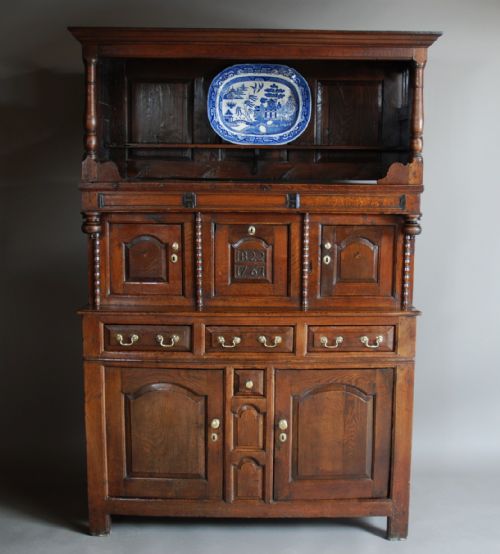
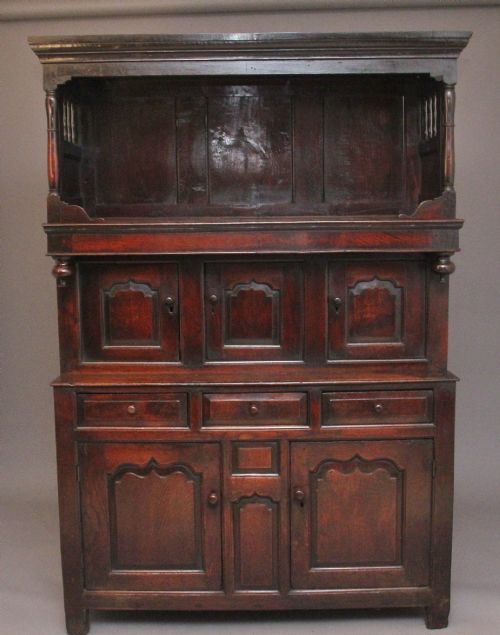


Oak Tridarn Press
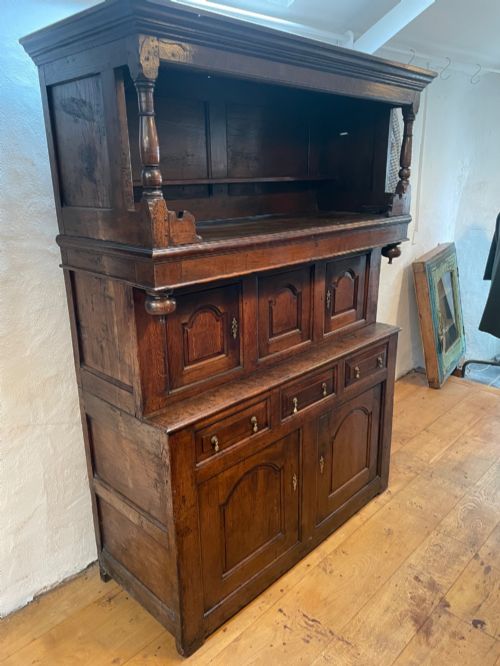
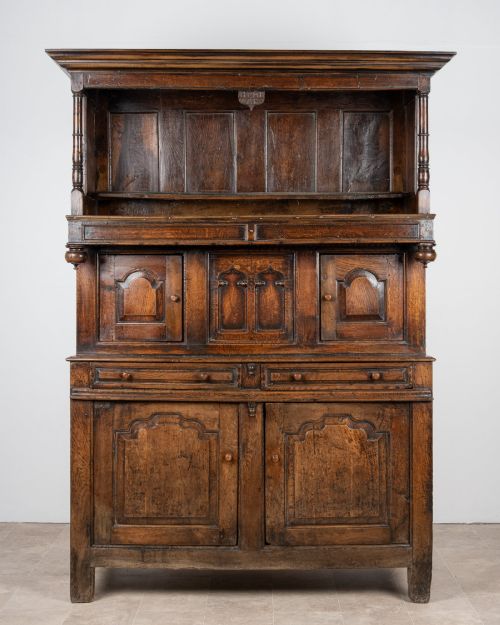
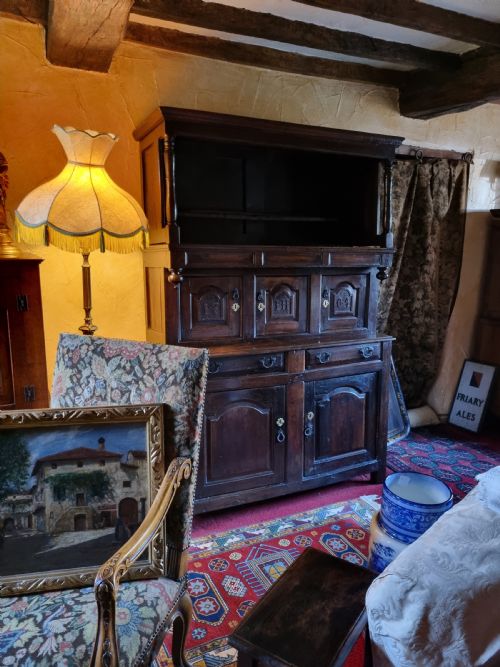
These oak tridarn press pieces are substantial Welsh three-tier cupboards built to display and store family belongings in regional homes.
Oak Tridarn Press
An oak tridarn press is a monumental three-stage Welsh cupboard featuring a canopied upper section above a middle compartment and base cupboards. These traditional forms originate principally from rural workshops and regional areas such as Snowdonia during the seventeenth and eighteenth centuries.
The version most commonly encountered on this page is the eighteenth-century oak tridarn or cwpwrdd tridarn, alongside closely related deuddarn two-part cupboards and court cupboards. Such pieces display the distinctive architectural framing, panelled doors and shelved upper stages characteristic of Welsh vernacular cabinet-making.
What varies in quality
The distinction between ordinary examples and finer pieces rests upon the crispness of carved ornamentation, the proportions of the three-tier superstructure and the survival of original timber components. Regional variations, such as pieces originating from specific areas like Snowdonia, introduce distinct structural flourishes that influence desirability among collectors.
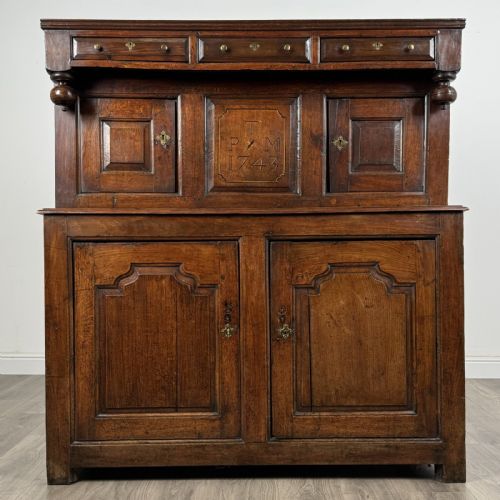
Patina and surface integrity play a major role, distinguishing pieces that retain their original colour and untouched timber surfaces from those subjected to excessive restoration or modern stripping. The presence of dated inscriptions or well-preserved hardware further separates standard utility cupboards from exceptional vernacular masterpieces.
Oak Tridarn Press Retail Price Guide 2026
Typical asking prices for oak tridarn press among the pieces listed under this phrase on Sellingantiques today, from the lower quarter to the upper quarter. They describe what is for sale here now, not the wider market.
Listings feature eighteenth-century and seventeenth-century periods, utilising oak and yew materials within Welsh vernacular and Georgian styles.
The Oak Tridarn Press Glossary
- Tridarn
- A traditional Welsh three-tier cupboard featuring an open or enclosed upper canopy, a middle section with small doors or panels, and a larger lower cabinet. This grand form evolved from the simpler two-part deuddarn during the seventeenth century.
- Deuddarn
- A two-part Welsh cupboard consisting of an upper cabinet resting upon a deeper base section, lacking the towering top stage of a tridarn. These functional pieces share the same regional vernacular joinery and heavy oak construction.
- Court Cupboard
- An early joined storage piece featuring multiple tiers and recessed upper sections, often richly carved with strapwork or floral motifs. These seventeenth-century ancestors to the tridarn served to display plate and store provisions in prominent rooms.
- Patina
- The deep surface sheen and mellow colour developed by aged timber through decades of handling, polishing and natural oxidation. A desirable finish shows subtle variations rather than a uniform modern varnish.
- Vernacular
- Regional domestic architecture and furniture constructed by local joiners using traditional methods and native materials rather than following academic metropolitan designs. Welsh country pieces exemplify this practical, sturdy approach to cabinet-making.
Oak Tridarn Press: Frequently Asked Questions
What is a tridarn?
A tridarn is a traditional three-piece Welsh cupboard featuring an open or enclosed canopy top, a middle stage and lower base cabinets.
Cabinet-makers in rural Wales built these monumental forms during the seventeenth and eighteenth centuries to store food, textiles and tableware.
How do tridarns and deuddarns differ?
A tridarn incorporates three distinct vertical stages including an upper canopy, whereas a deuddarn consists of only two main stacked sections.
Both forms utilise heavy oak framing and regional vernacular joinery, though the tridarn stands taller and provides greater display capacity.
Where were these cupboards made?
These cupboards were made primarily in rural Welsh workshops by local joiners utilising native hardwoods such as oak and yew.
Specific regional styles developed in areas like Snowdonia, where makers incorporated local decorative carving traditions into the joined framework.
How should I care for antique oak?
Antique oak furniture benefits from stable indoor humidity and occasional application of traditional beeswax to nourish the dry timber.
Avoiding direct sunlight and modern silicone sprays preserves the historic surface patination developed over centuries of domestic life.