
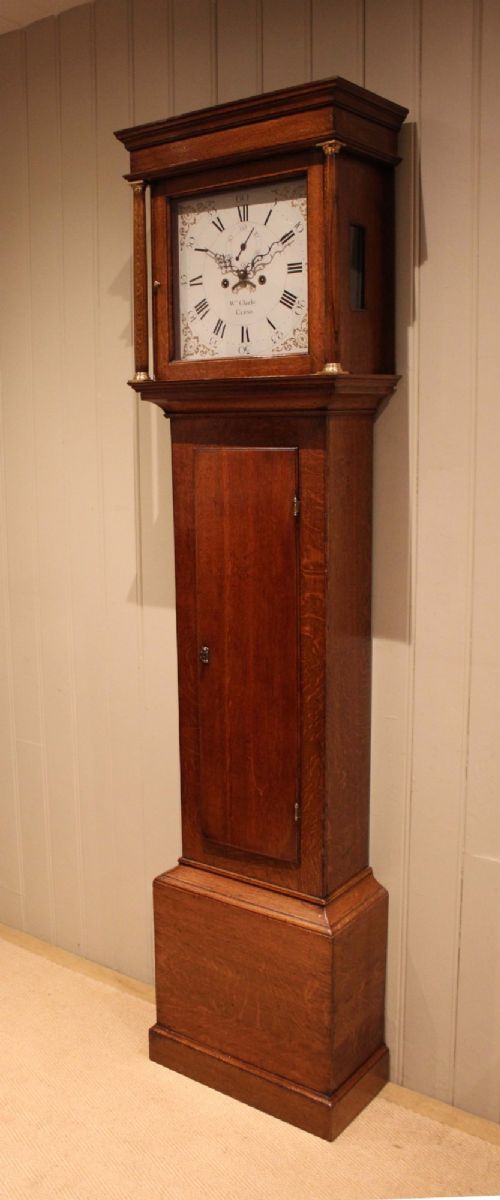
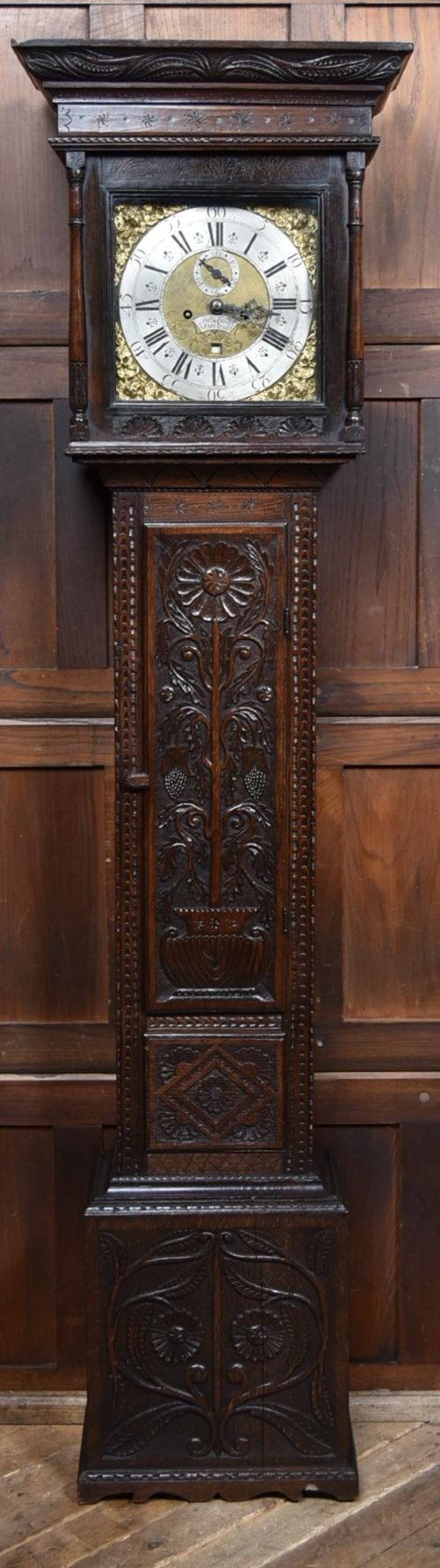
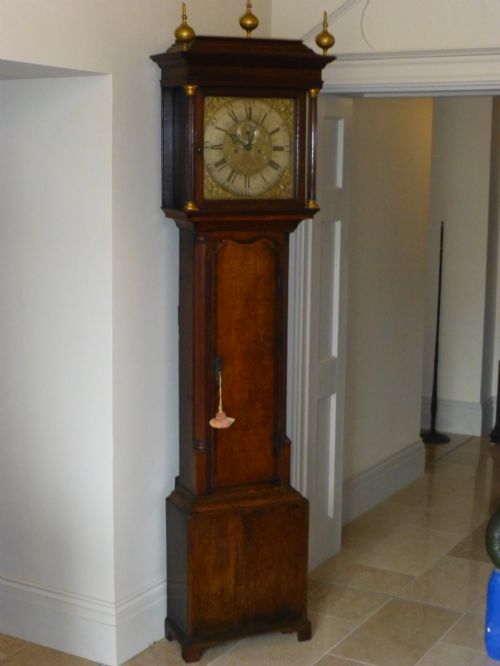
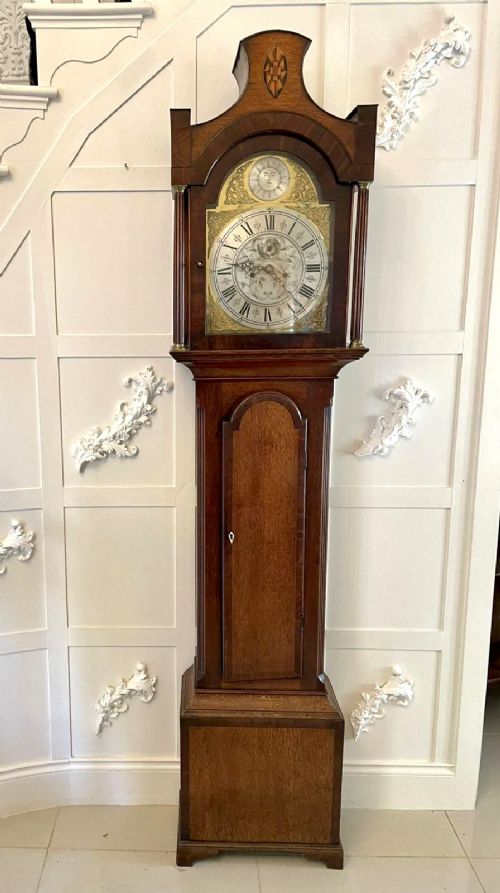
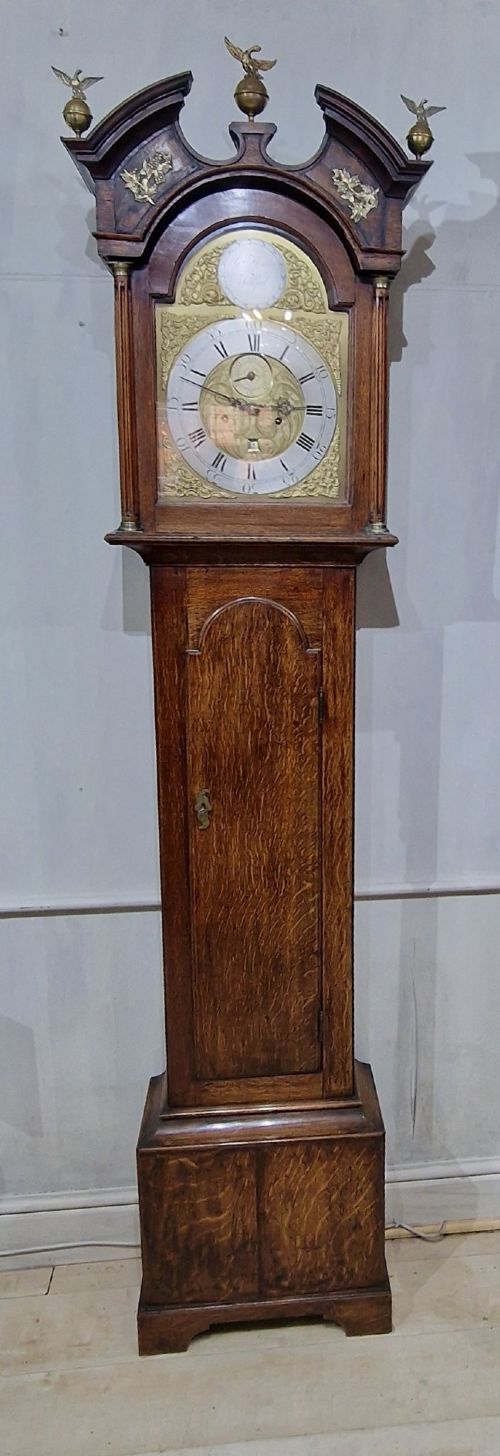
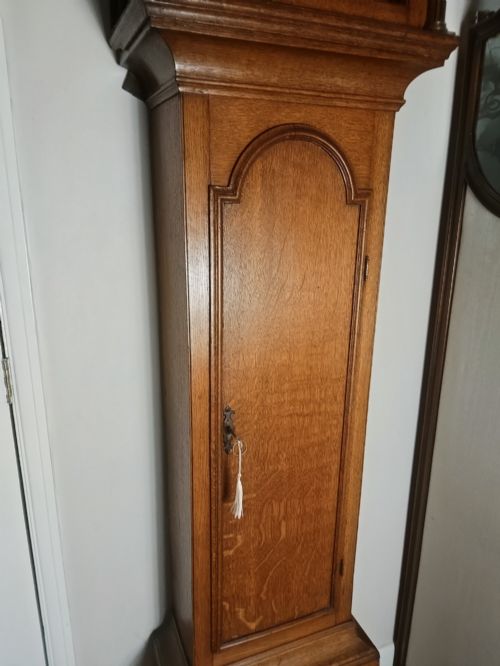
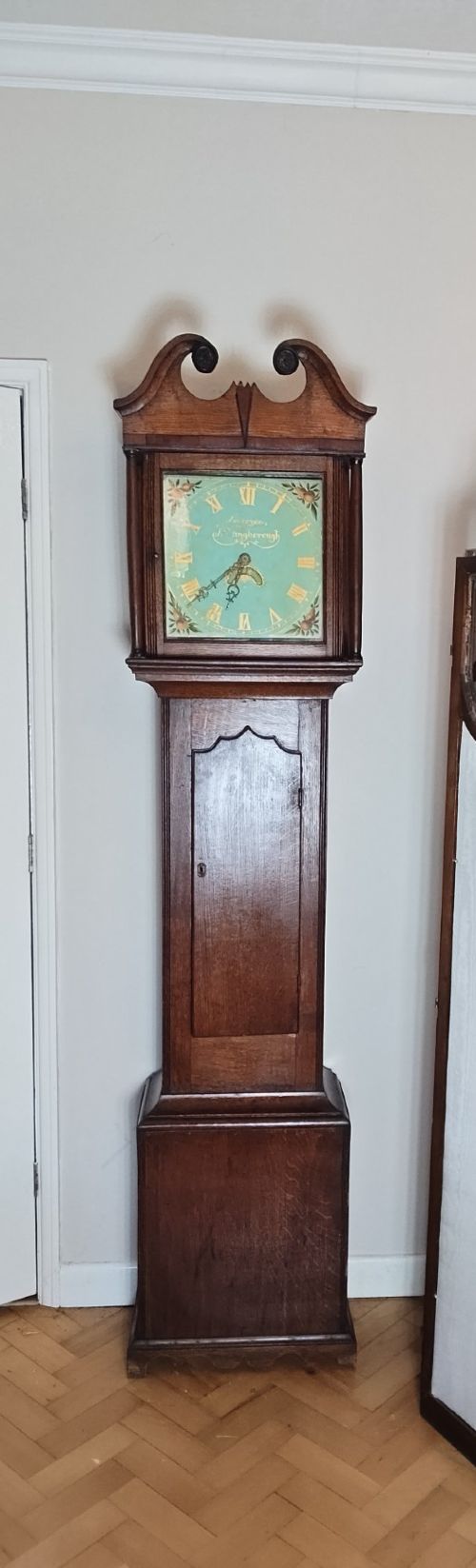
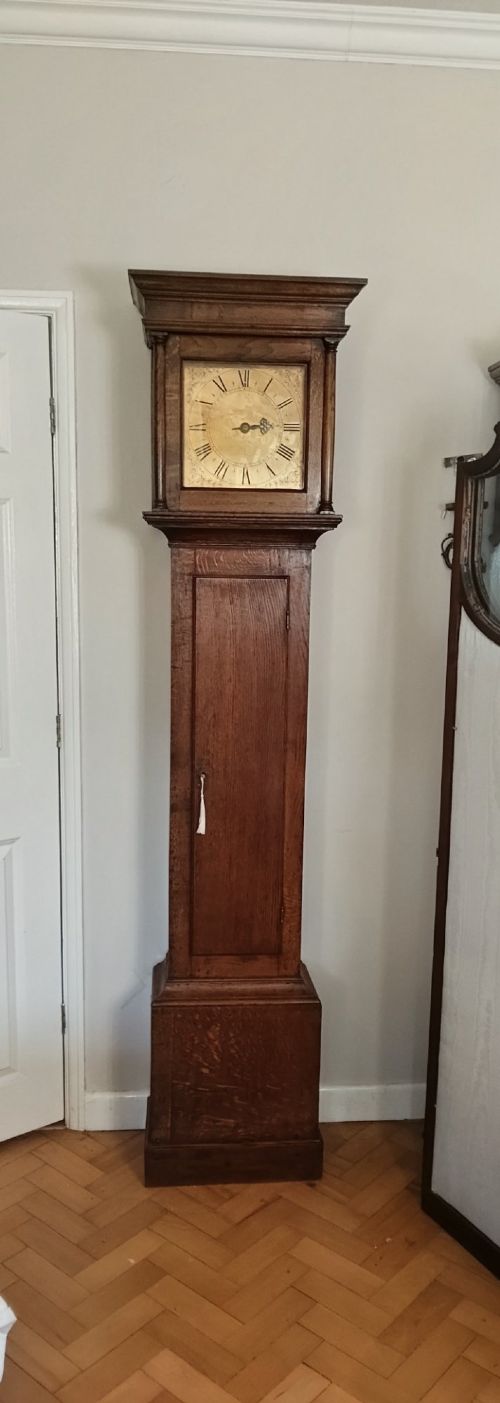
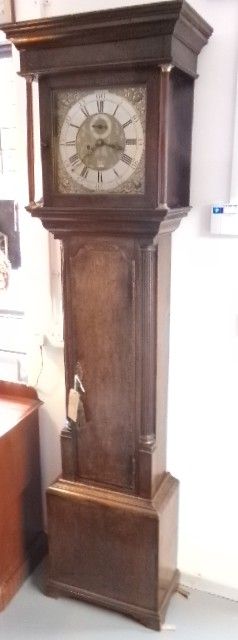
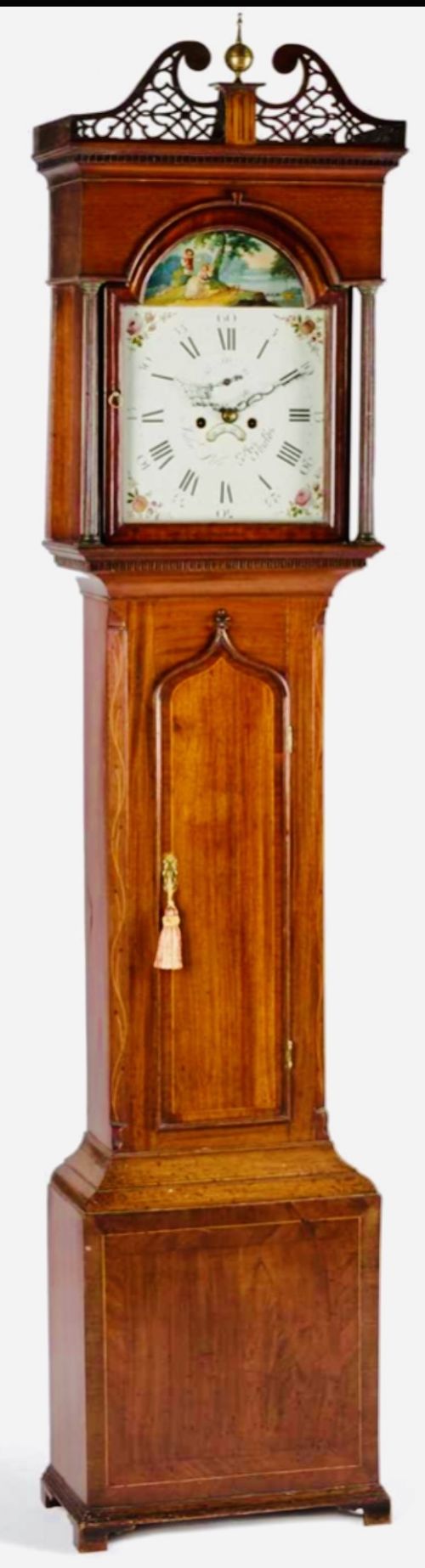
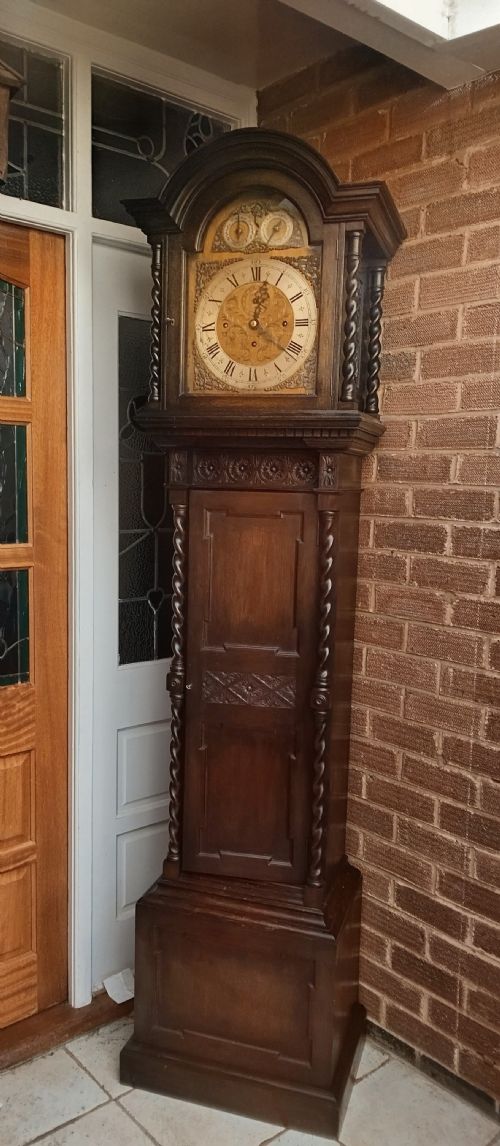
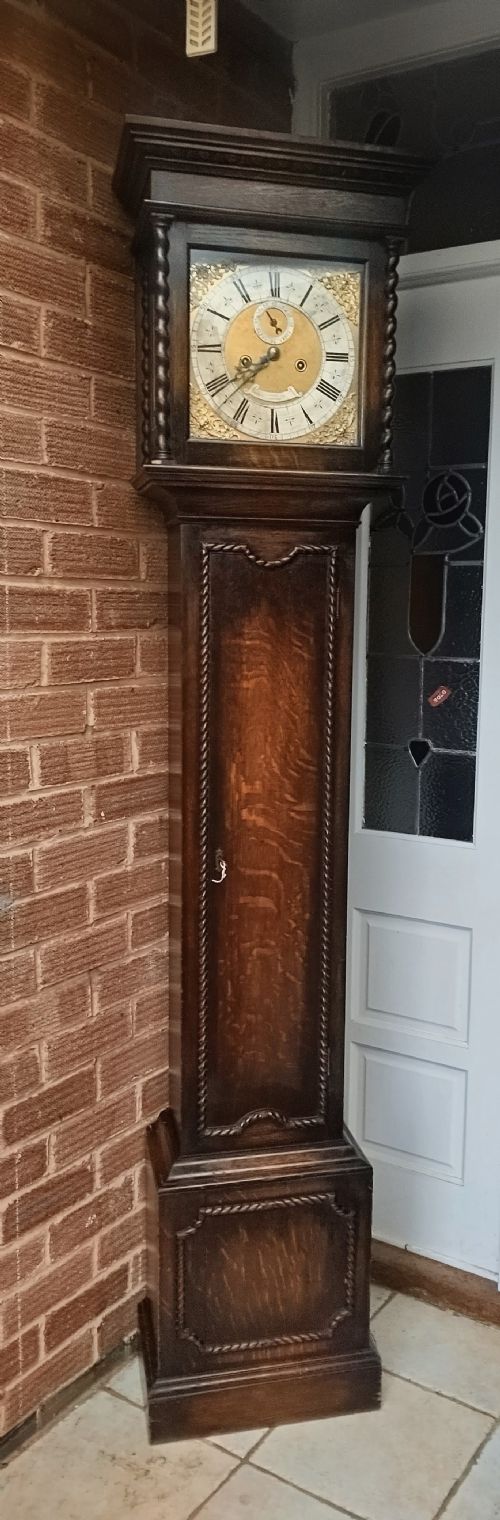
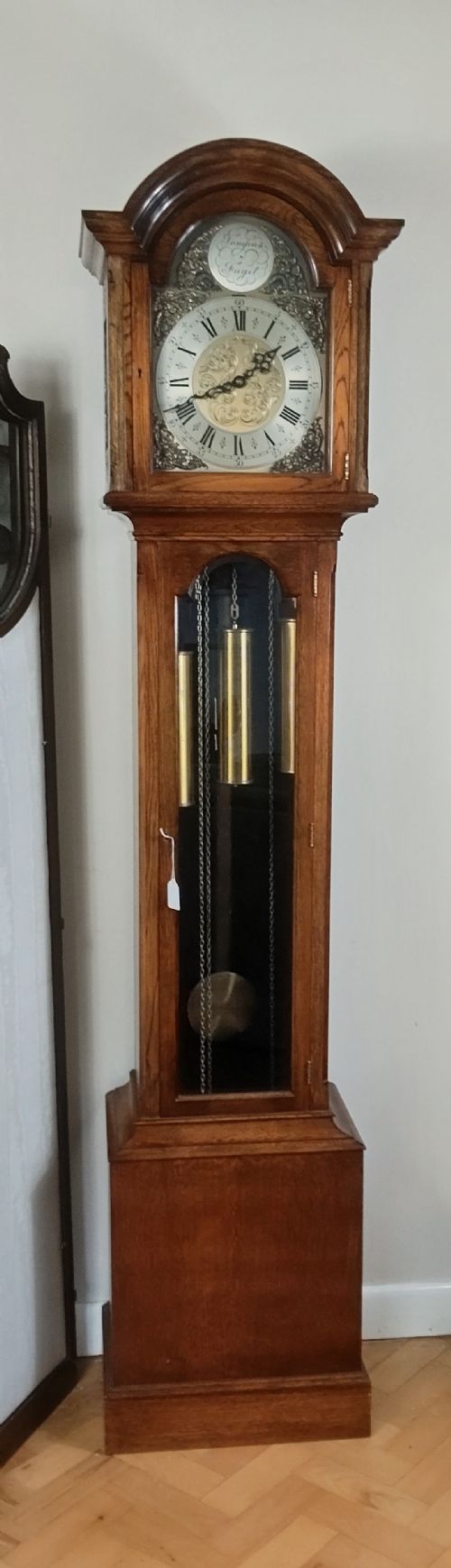
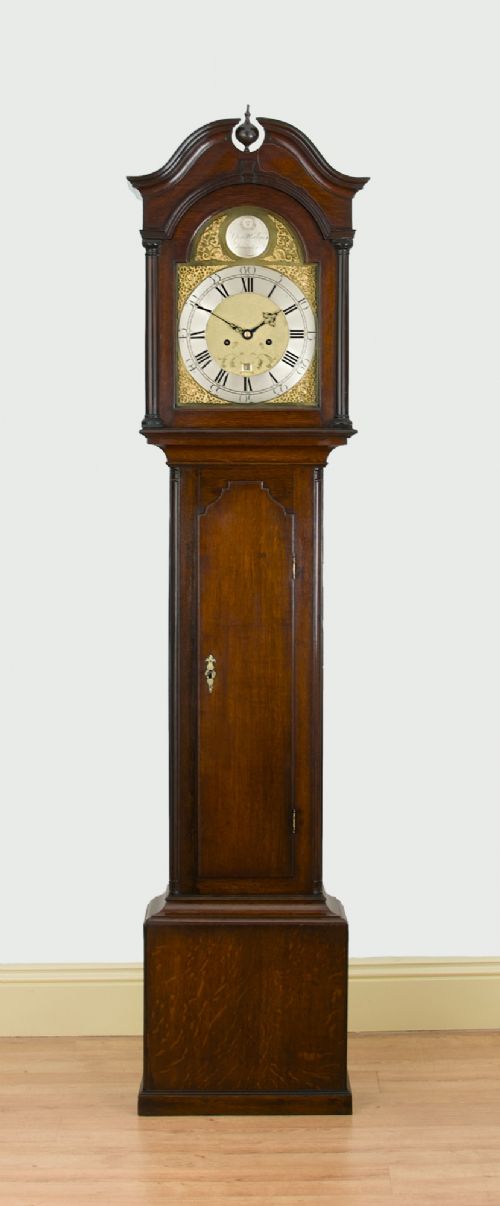


Oak Tallcase Clock
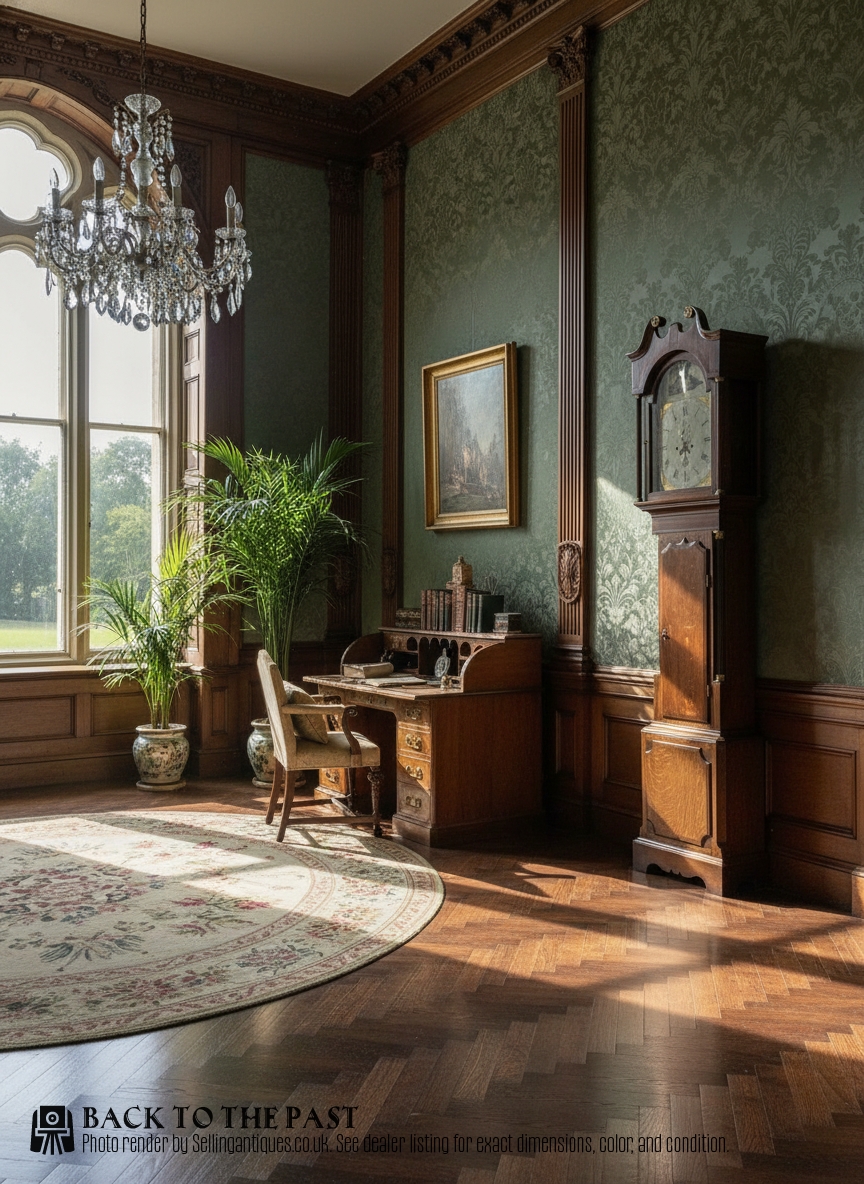
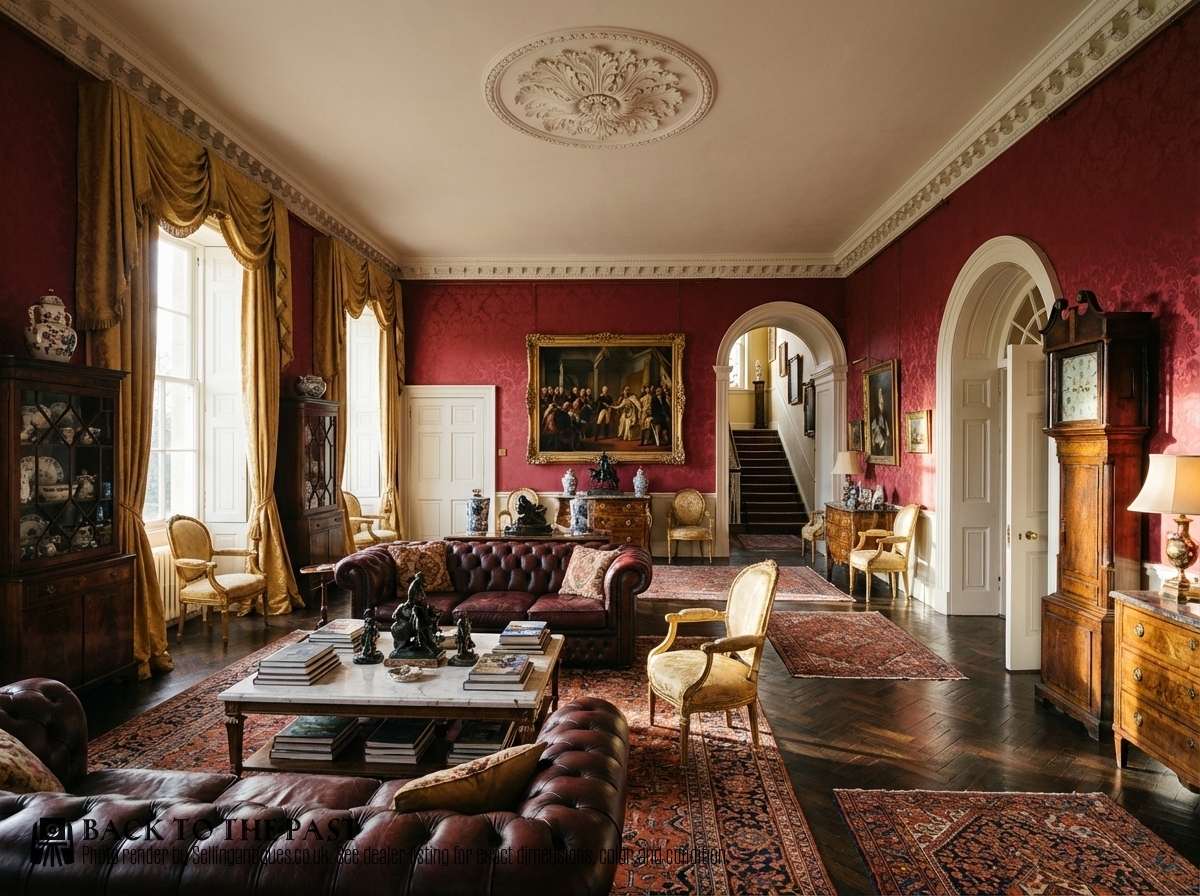
An oak tallcase clock grounds a room with steady motion, deep timber grain and the quiet company of a ticking movement.
Oak Tallcase Clock
When you search for an oak tallcase clock, you encounter floor-standing timepieces spanning the Georgian era, the eighteenth century, and later revivals. These objects combine substantial cabinetry with mechanical dial work, housing weights and pendulums behind glazed doors.
The versions most commonly met on this page date from the Georgian period and the eighteenth century, alongside occasional Edwardian, Victorian, and twentieth-century examples. They appear in regional styles carrying brass or painted iron faces, sometimes augmented by walnut or mahogany secondary woods.
Materials and construction
Cabinetmakers constructed the tall cases primarily from solid oak, occasionally integrating walnut or mahogany for contrast in banding and panels. Brass and painted iron formed the circular or square dial plates, while glass protected the visible face.
Internal movements combined brass gears, steel arbors, and metal components driven by suspended weights. Dial faces received hand-engraved details, applied numerals, and in some instances, painted moon phases or decorative scenes.
Oak Tallcase Clock Retail Price Guide 2026
Typical asking prices for oak tallcase clock among the pieces listed under this phrase on Sellingantiques today, from the lower quarter to the upper quarter. They describe what is for sale here now, not the wider market.
Some dials feature painted cottage scenes where the smoke from the tiny chimney gently shifts as the internal weights descend through the week.
Judging quality in tallcase clocks
The standard of a tallcase clock rests upon the crispness of the cabinetwork and the proportion of the trunk to the hood. Superior examples display thoughtful timber selection, harmonious grain patterns, and well-executed mouldings rather than plain or clumsy joinery.
Movement sophistication also divides the range, distinguishing simple thirty-hour timepieces from complex eight-day mechanisms with strike-silent options, multiple chimes, or revolving moon phases. The integration between the original dial, movement, and case determines the integrity of the piece.

Jn° Smith Macclesfd·Smith of Chester·James Hendrie Falkirk·Fisher Of Preston·George Hallifax Of Doncaster·Thomas Webbe of New Quay·Edward White Birmingham·Thomas Utting of Yarmouth·Richard Prew Of Tewksbury
The Oak Tallcase Clock Glossary
- Tallcase clock
- A weight-driven timekeeper housed in a tall wooden floor case with a pendulum swinging within the trunk. These are frequently known as grandfather clocks.
- Dial
- The visible face of the clock displaying the hours and minutes, typically constructed from brass or painted iron. It often bears the signature of the maker and their town of work.
- Moon phase
- A mechanical display on the dial tracking the lunar cycle through a rotating disk behind a shaped aperture. This complication appears on better eighteenth-century and Georgian examples.
- Eight day
- A movement requiring winding once a week rather than every thirty hours. These mechanisms utilise two distinct weight drops within the trunk.
- Strike and silent
- A mechanical function allowing the striking train to be turned off so the clock remains quiet during the night. It is operated via a small lever on the dial face.
Oak Tallcase Clock: Frequently Asked Questions
How do I wind an eight day clock?
Winding involves inserting a key into the winding holes on the dial face and turning it gently until the weight rises to its upper limit.
Care must be taken not to overwind the mechanism, stopping as soon as resistance increases at the top of the drop.
Where should I place a tallcase clock?
These clocks require a stable, dry interior wall away from direct sunlight, central heating vents, and heavy vibrations.
Securing the tall case to the wall via the bracket inside the hood ensures the pendulum swings evenly without catching.
Why does the clock lose time?
Timekeeping variations usually stem from changes in temperature, shifts in floor level affecting the beat, or a movement that requires cleaning and lubrication.
Adjusting the small nut at the bottom of the pendulum bob allows the clock to run faster or slower as needed.
How do I tell an 18th century clock from a later revival?
Eighteenth-century examples display hand-cut timber joints, patinated oak surfaces, and engraved brass dials unique to regional makers. Later revival pieces often exhibit machine-cut elements and twentieth-century mechanical fittings.
Examining the interior boarding and the fit of the movement within the case reveals the consistency of the period.