


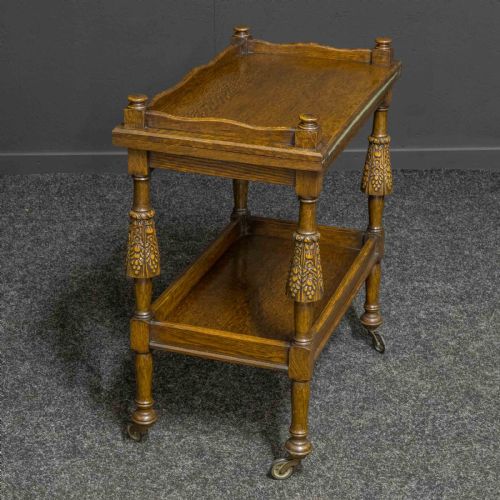

Oak Games Table
An oak games table offers practical versatility through clever folding leaves and tailored compartments designed for evening entertainment.
Oak Games Table
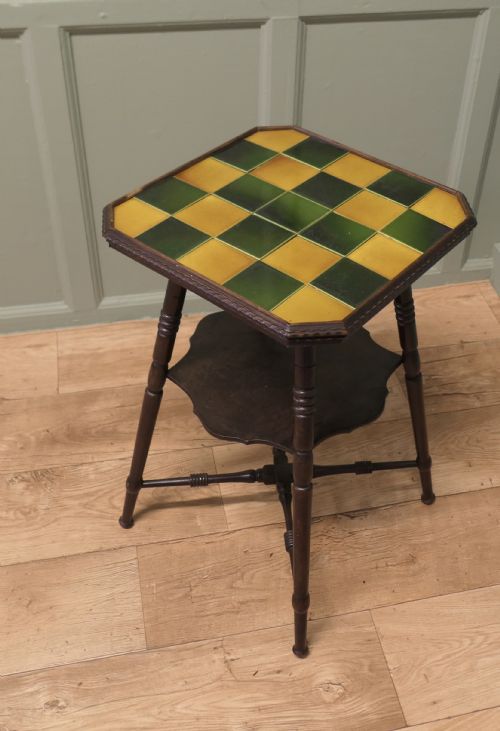
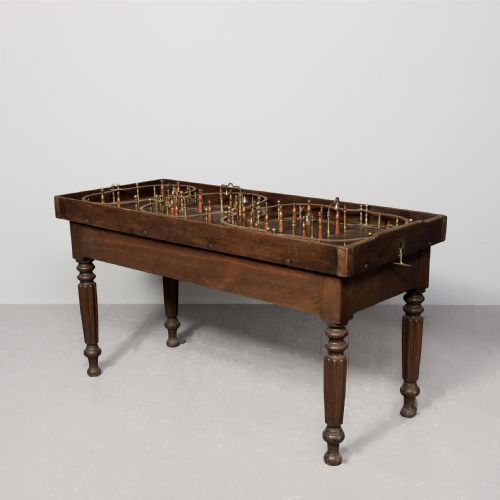
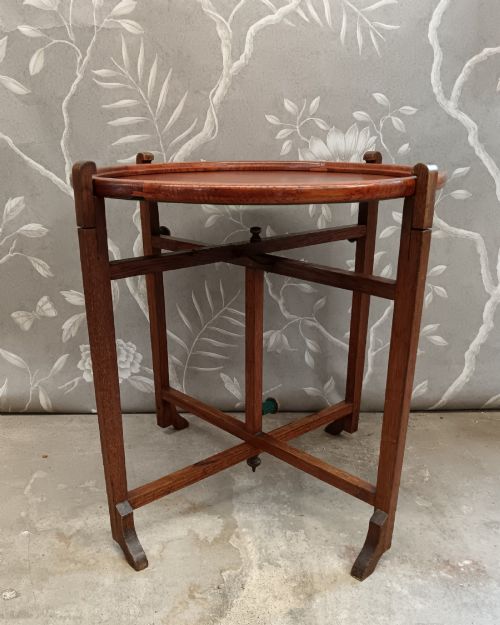
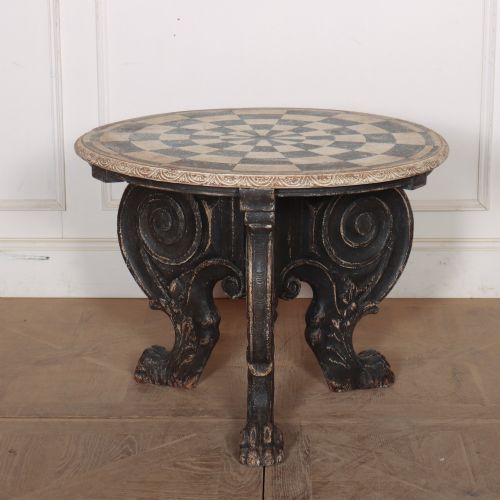
An oak games table serves as a dual-purpose piece, shifting easily from a compact side stand to a surface prepared for cards, chess or roulette. The selection spans the nineteenth century through the Edwardian era, taking forms such as fold-over card tables, trifold drop-leaf handkerchief surfaces, and octagonal poker tables.
Victorian and Arts and Crafts examples dominate the available designs, often incorporating clever mechanisms like revertable tops, envelope folds or sliding drawers. Makers utilised pollard oak and standard oak alongside contrasting materials to create substantial furniture suited to country house parlours and drawing rooms.
Buyers encounter variations ranging from French game blocks and German carved lamp tables to refined George IV pedestal designs. Many pieces combine tea and card functions, proving that domestic utility remained paramount alongside recreational use.
Materials and construction methods
Carpenters relied heavily on solid oak and pollard oak veneers, selecting timber with strong figuring for the primary display surfaces. Ebony, satinwood and painted wood frequently appear as contrasting stringing or inlaid details that accent the structural lines.
Functionality dictated construction, integrating brass hinges, iron support brackets and baize-lined playing surfaces within folding or rotating mechanisms. Ceramic casters and carved decorative motifs added mobility and distinct stylistic flair to heavy timber frames.
Cabinetmakers applied carving and turning techniques associated with the Gothic Revival, Aesthetic Movement and Arts and Crafts styles, balancing robust joinery with complex mechanical leaves.
Oak Games Table Retail Price Guide 2026
Typical asking prices for oak games table among the pieces listed under this phrase on Sellingantiques today, from the lower quarter to the upper quarter. They describe what is for sale here now, not the wider market.
Some tables double as tea trolleys, proving that Victorians took their refreshment with a side of competitive card play.
Assessing craftsmanship and execution
Quality rests primarily in the precision of the mechanical hinges, pivots and folding joints that allow the tables to transform smoothly without binding. Superior examples maintain structural rigidity when fully extended, regardless of whether the mechanism uses a swivel top, drop leaves or an envelope fold.
The choice of timber grain and the crispness of carved details separate standard production from high workshop output. Tables featuring pollard oak veneers, intricate inlaid woods, or integrated specialised components such as chess boards and counters demonstrate elevated cabinetmaking standards.
Shapland and Petter·William Trotter·Jones Marsh and Cribb·Charles Bevan
The Oak Games Table Glossary
- Pollard oak
- Oak timber harvested from trees that were pollarded, producing wood with highly decorative, clustered knot figure patterns.
- Baize
- A coarse woollen material, typically green, traditionally used to line the playing surfaces of card and gaming tables.
- Envelope fold
- A clever table top design where four triangular flaps fold diagonally over each other to resemble an envelope before opening out.
- Tantalus
- A locking drink cabinet with visible decanters, occasionally incorporated into larger games compendiums from the Edwardian period.
- Revertable
- Describing a table top that flips or reverses to reveal a different surface, such as a plain wood coffee side changing into a baize card arena.
Oak Games Table: Frequently Asked Questions
How do I operate a fold-over games table?
Most fold-over tables rely on a pivoting top that swings ninety degrees on its base to reveal a concealed compartment for cards and counters. Once rotated, the hinged leaf unfolds flat to create a stable, doubled surface supported by the frame.
Care must be taken not to force older brass hinges if dust has settled in the joints. Gently lifting the weight of the leaf while operating the pivot ensures smooth movement without straining the timber.
What games were played on these tables?
These pieces accommodated popular parlour pastimes of the nineteenth and early twentieth centuries, including whist, bridge, chess, backgammon and roulette. Specialised tables often featured inlaid chessboards or removable trays for chips and markers.
Multi-functional examples allowed households to transition rapidly from afternoon tea to evening card sessions within the same room. The inclusion of baize surfaces reduced noise and prevented game pieces from sliding.
How do I care for the baize surface?
Baize requires gentle maintenance, primarily light brushing with the grain to remove dust and debris. Moisture should be kept away from the wool fabric to prevent shrinkage and staining.
If the baize becomes worn over decades of use, professional restorers can replace the fabric while retaining the original wooden rebate lining. Protecting the surface from direct sunlight prevents the traditional green dye from fading unevenly.
How do I distinguish Victorian from Edwardian pieces?
Victorian examples often display heavier carved decoration, Gothic Revival influences or dark pollard oak surfaces with substantial proportions. They frequently utilise robust pedestals or turned legs with ceramic casters.
Edwardian tables tend toward lighter construction, incorporating Arts and Crafts simplicity or inlaid satinwood details. The mechanisms on later pieces often prioritize compact versatility, such as envelope folds and integrated shelves for players.