
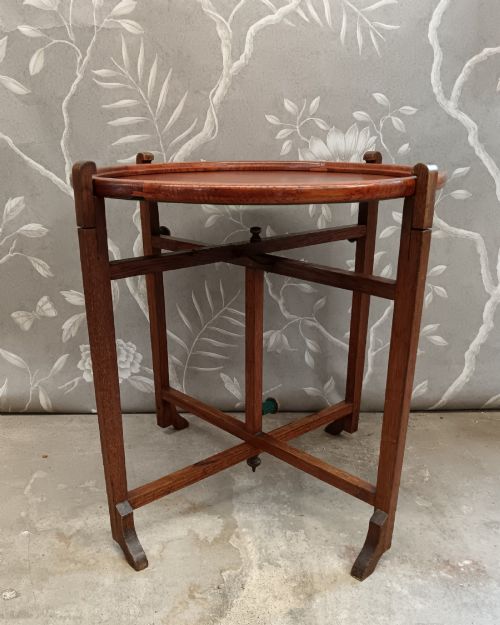


Brown Oak Card Table
A brown oak card table brings rich timber grain and clever folding mechanisms together for parlour games or occasional display.
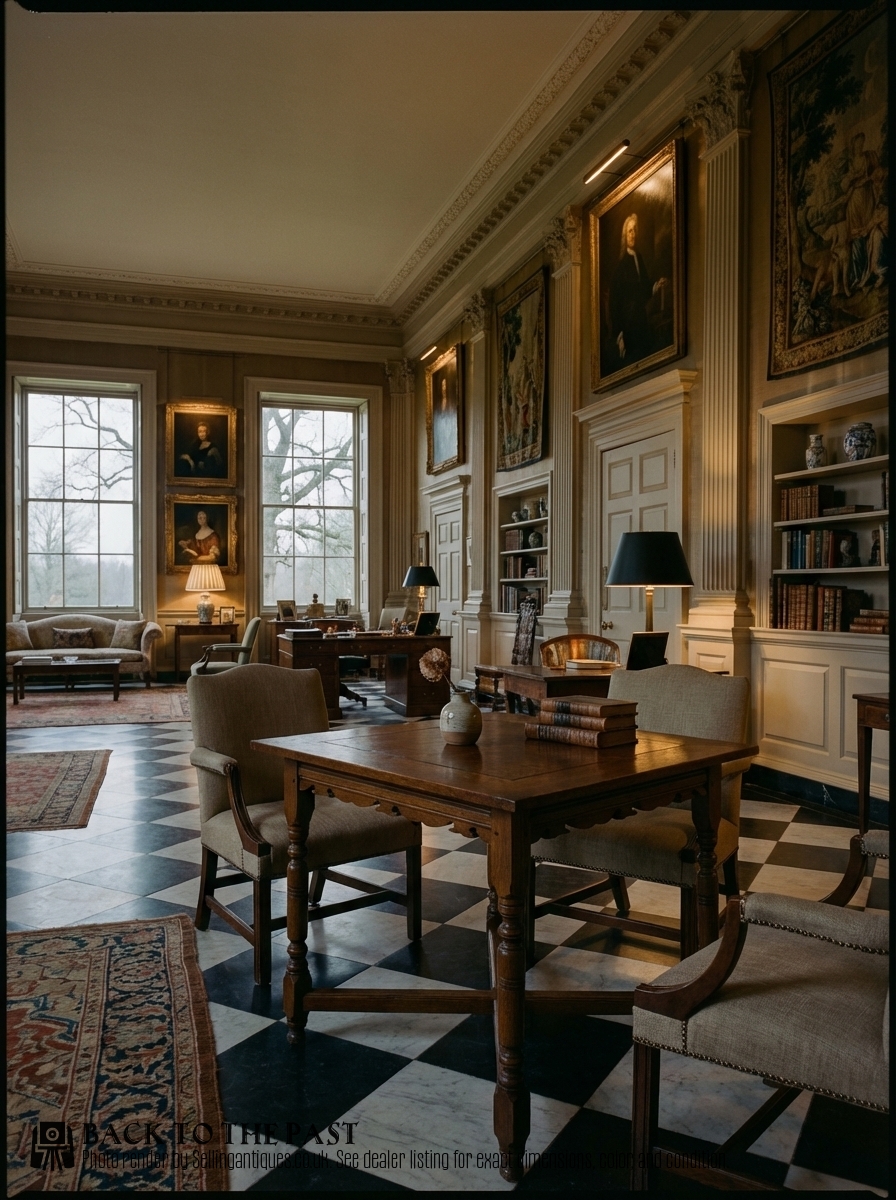
Brown Oak Card Table
A brown oak card table is a multi-functional surface designed for games and entertaining, appearing in forms such as fold-over card tables, games tables, and occasional tables. These pieces emerge across the nineteenth and early twentieth centuries, spanning Victorian, Regency, Edwardian, and Arts and Crafts periods.
Buyers encounter diverse stylistic expressions, from Aesthetic Movement ebonised details to George IV burr oak craftsmanship and Victorian Rococo Revival carving. The selection includes clever fold-over designs, handkerchief tables, and octagonal formats that adapt easily to modern interiors.
Materials and construction
Cabinet makers utilised solid oak and burr oak for primary surfaces, often incorporating contrasting timbers such as ebony for linear detail and ebonised wood highlights. Metal elements like brass and iron appear in hinges, swivels, and folding mechanisms.
Surfaces feature specialised inserts for gaming and writing, including baize and leather linings within folding leaves or drop-leaf configurations.
Listings feature oak, burr oak, and ebony materials across Victorian, Regency, and Arts and Crafts periods.
Judging quality and character
Quality rests in the selection of timber figure, particularly the depth and warmth of burr oak or plain oak grain, paired with precise joinery in the folding and pivoting mechanisms. Superior examples integrate contrasting ebony inlay or carved details that complement the structural form without cluttering the silhouette.
The sophistication of the design dictates distinction, separating standard utility tables from workshop-attributed pieces that display inventive geometry like trifold handkerchief tops or crisp Arts and Crafts execution.
William Trotter·Gillows
The Brown Oak Card Table Glossary
- Burr oak
- A figured timber harvested from tree growths, producing swirling patterns highly prized in cabinet making.
- Baize
- A coarse woollen fabric traditionally used to line the playing surfaces of card and games tables.
- Ebonised
- Timber treated with a dark stain or finish to imitate the appearance of ebony.
- Trifold
- A top construction featuring multiple folding leaves that expand or reconfigure the surface area.
Brown Oak Card Table: Frequently Asked Questions
How were these tables used originally?
These tables served as versatile furniture for drawing rooms and parlours, expanding to accommodate card games, chess, or writing before folding away to save space.
Many examples feature baize or leather inserts specifically intended to cushion playing pieces and reduce noise during parlour games.
How do I identify the period of a table?
Dating relies on observing structural characteristics, timber selection, and stylistic details such as ebonising, carving, or brass hardware. Regency examples often display classical proportions, while Victorian and Edwardian pieces incorporate varied folding configurations.
Comparing the stylistic markers, such as Aesthetic Movement geometry or Arts and Crafts simplicity, helps place the piece within its manufacturing era.
How do I care for a brown oak surface?
Maintenance involves keeping the timber away from direct heat sources and sudden humidity changes to prevent wood movement. Gentle cleaning with a soft cloth preserves the polish and natural grain.
Original baize or leather inserts require careful, dry maintenance to protect the textile and leather components from moisture.