

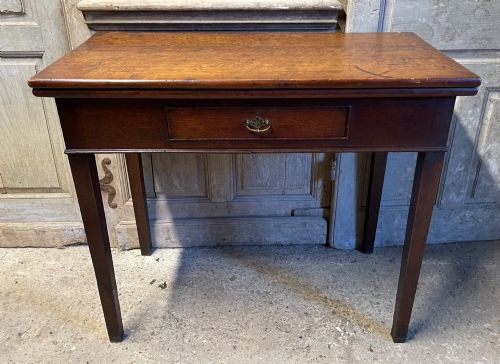
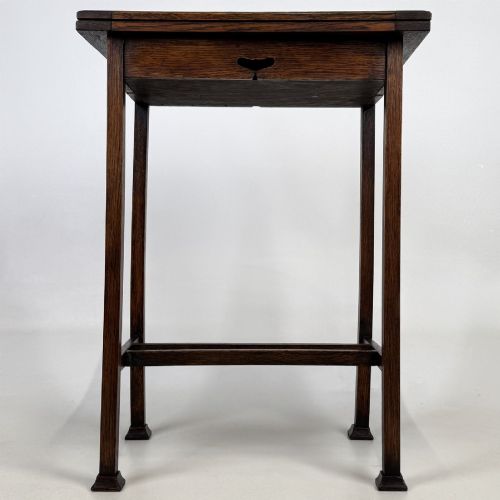
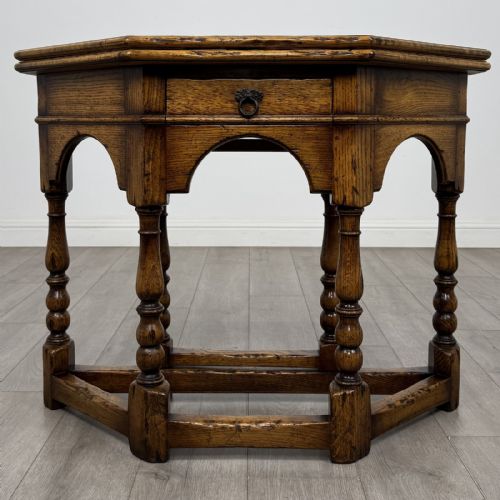
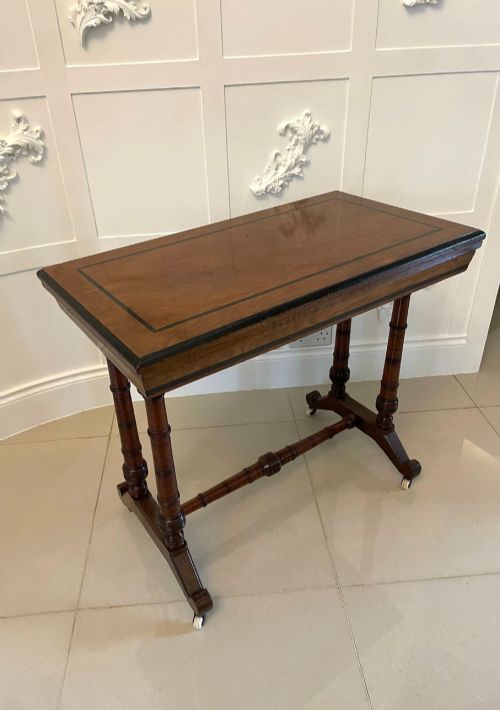


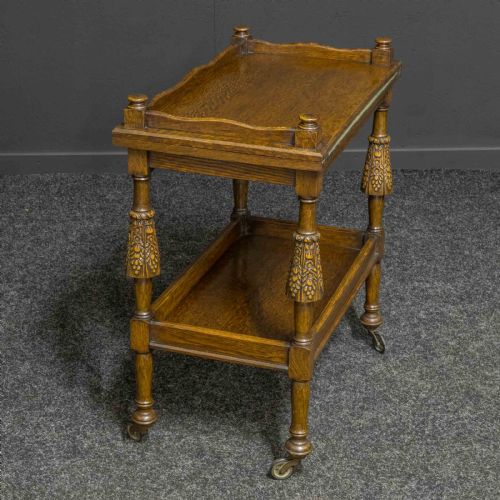
Folding Oak Games Table
A folding oak games table brings versatility and craftsmanship together, offering a clever surface for play that folds away when the evening ends.
Folding Oak Games Table
When you search for a folding oak games table, you encounter practical furniture designed for entertainment and daily use in various period settings. These pieces range from Victorian aesthetic movement designs to Arts and Crafts creations, reflecting the shifting tastes of domestic interiors.
Origins span the nineteenth and early twentieth centuries, capturing periods from the Regency era through to the nineteen-thirties. You meet occasional tables, tea trolleys, and dedicated card tables that demonstrate how British homes adapted furniture for leisure.
How they were made
Cabinet makers utilised solid oak and burr oak to construct the main frames and tops of these tables, often selecting figured timber to enhance the visual appeal. Ebony and ebonised wood provided dark contrast for edgings and decorative details, while brass and iron components formed the hinges and pivoting mechanisms required for folding actions.
Surfaces were frequently lined with baize to create a suitable texture for card games, inset neatly into the wooden framework. Joinery techniques ensured the swivel tops and drop leaves remained stable when open yet sat flush when closed.
Folding Oak Games Table Retail Price Guide 2026
Typical asking prices for folding oak games table among the pieces listed under this phrase on Sellingantiques today, from the lower quarter to the upper quarter. They describe what is for sale here now, not the wider market.
Listings feature oak, burr oak, ebony, brass, iron, and baize across periods spanning the nineteenth and twentieth centuries.
What varies in quality
The choice of timber creates a distinct separation in the hierarchy of these tables, moving from standard oak boards up to highly figured burr oak veneers. Finer examples display meticulous grain matching across the fold-over panels and precise inlay work in ebony.
Mechanical execution defines the upper tier of production, where swivel actions and revertable tops operate with absolute smoothness and secure locking. Simpler utilitarian models rely on straightforward hinges, whereas workshop-attributed pieces show refined carving and considered proportions.
William Trotter
The Folding Oak Games Table Glossary
- Baize
- A coarse woolen material used as a playing surface on card tables. It provides a soft, non-slip texture that protects both the cards and the wooden table top.
- Burr oak
- A growth on an oak tree that produces highly figured, swirling wood grain. Cabinet makers sliced this timber into veneers to create decorative patterns on prominent table surfaces.
- Ebonised wood
- Timber treated with a dark stain or finish to imitate ebony. This technique was popular in Victorian and Aesthetic Movement furniture to provide sharp visual contrast against lighter oak.
- Swivel top
- A table top design that rotates on its base to reveal a hidden compartment or to support a fold-out leaf. It allows a compact surface to double in size.
- Revertable
- A convertible furniture design where the top can be flipped or reversed to serve dual purposes, such as switching between a card playing surface and a coffee table.
Folding Oak Games Table: Frequently Asked Questions
How do you date an oak games table?
Dating relies on stylistic clues, construction methods, and materials associated with specific design movements. Pieces from the Regency era show different proportions compared to later Arts and Crafts or Edwardian examples.
Details like ebonised wood accents, brass hardware, and specific revival styles help narrow the decade of manufacture. Comparing the joinery to known period pieces confirms the timeline.
How were these tables used historically?
These tables were kept closed as side tables, tea tables, or occasional furniture during daily routines. When guests arrived for evening entertainment, the tops were unfolded or swiveled open to reveal a baize-lined surface for card games.
Some designs also functioned as tea trolleys or serving carts, demonstrating the multi-use nature of domestic furniture. They allowed households to host activities without dedicating permanent floor space to a large gaming surface.
How do you care for an antique oak table?
Maintaining an antique oak table involves keeping it away from direct sunlight and extreme temperature fluctuations that can dry out the timber. Regular dusting with a soft, dry cloth preserves the finish without harming the wood grain.
Care should be taken with the baize inserts and folding mechanisms to prevent unnecessary wear. Gentle cleaning appropriate for period wood finishes ensures the piece remains stable and attractive.