
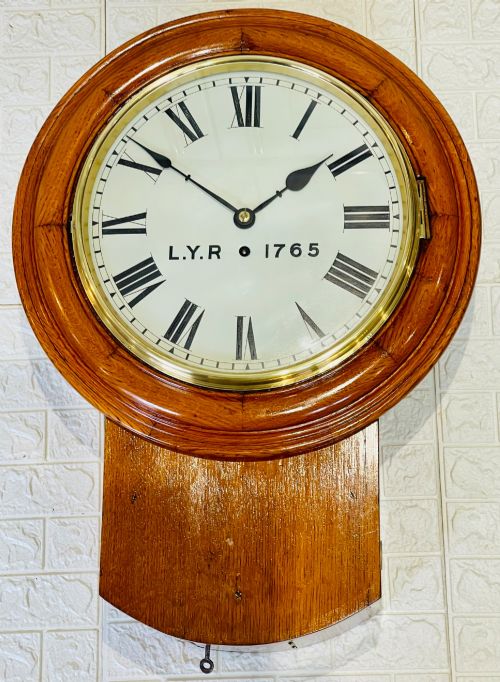
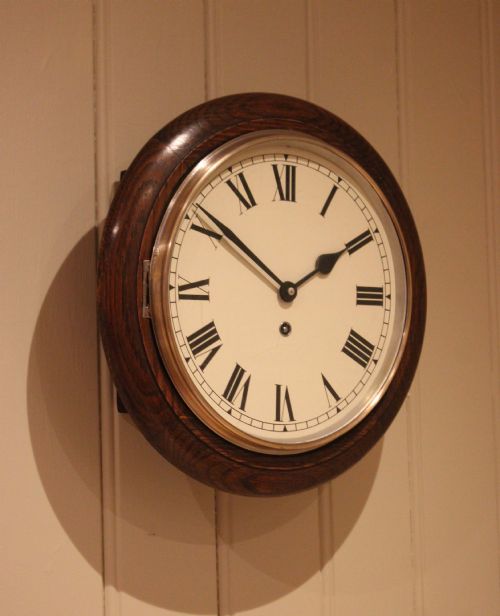
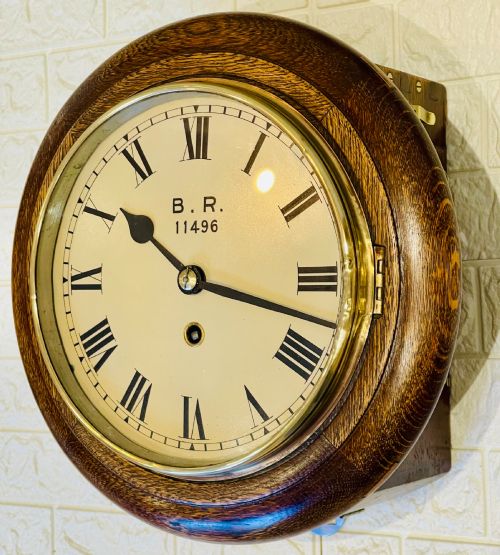
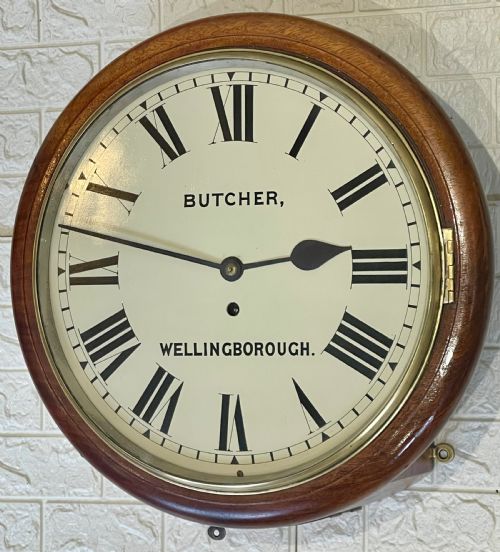
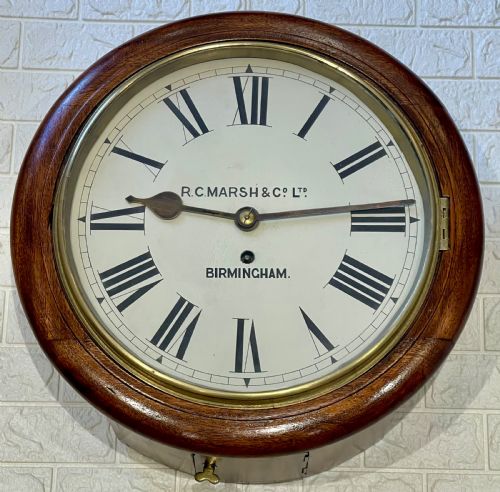


Oak Fusee Wall Clock
An oak fusee wall clock brings functional timekeeping and robust British craftsmanship into a room.
Oak Fusee Wall Clock
When you search for an oak fusee wall clock, you are looking at timepieces built for railways, offices, and public spaces alongside domestic interiors. These round dial clocks span the nineteenth and twentieth centuries, originating from periods such as the Victorian and Edwardian eras.
You will most commonly meet circular or drop-dial wall clocks housed in light, golden, or polished oak cases. Many examples trace their origins to British commercial, railway, and postal services, including pieces associated with the G.P.O. and British Rail.
The format ranges from small eight-inch dial timepieces to larger striking examples and specialised pieces like time recorders. These clocks combine utilitarian origins with the warm grain of oak timber, making them practical focal points for contemporary walls.
Judging quality in oak fusee wall clocks
Quality rests in the precision of the fusee movement and the condition of the oak case. Superior examples display crisp dial lettering, clean brass work, and well-maintained timber without excessive replacement parts.
The provenance and maker credentials also shape the standing of a piece. Clocks bearing signatures on the dial or associated with known retailers and makers command greater interest among collectors.
Oak Fusee Wall Clock Retail Price Guide 2026
Typical asking prices for oak fusee wall clock among the pieces listed under this phrase on Sellingantiques today, from the lower quarter to the upper quarter. They describe what is for sale here now, not the wider market.
Listings feature oak fusee wall clocks spanning the Victorian period through to the mid-twentieth century, incorporating brass, enamel, and glass components.
Dent of London·Gledhill Brook·Hamilton and Inches
The Oak Fusee Wall Clock Glossary
- Fusee
- A conical pulley connected to the mainspring by a chain or cord. This clever mechanism equalizes the diminishing power of the spring as it runs down.
- Drop dial
- A clock case featuring an extended lower section below the circular dial. This drop often accommodates a pendulum or a visible viewing window.
- Timepiece
- A clock that tells the time without striking the hours or quarters. These movements focus purely on sustained accuracy.
- Convex glass
- Curved glass protecting the clock face. This shape helps reduce glare from windows and interior lighting.
Oak Fusee Wall Clock: Frequently Asked Questions
What is a fusee clock?
A fusee clock uses a conical pulley system to regulate the power delivered from the mainspring to the gear train. This design ensures consistent force throughout the running cycle for steady accuracy.
Such movements were standard in British timekeeping where reliability mattered most, particularly in railway stations, offices, and public institutions.
How do I hang a wall clock safely?
These clocks are heavy due to their solid oak cases and brass movements. Secure the fixing directly into a wall stud or use a heavy-duty wall anchor rated for the weight.
Hang the clock firmly from its bracket or mounting point, ensuring the case sits flat against the wall so the pendulum swings evenly without catching.
How do I wind an eight-day clock?
Insert the winding key into the aperture on the dial and turn it gently until you feel resistance. Do not overwind the spring, as this can cause damage to the internal mechanism.
Eight-day clocks require winding once a week. Keeping to a regular schedule helps maintain consistent tension on the fusee chain and keeps time accurately.
How do I date an oak clock?
Dating involves examining the construction methods, the style of the dial, and any markings or signatures on the movement. Oak cases and enamel dial treatments shifted between the Victorian period and the mid-twentieth century.
Railway and postal service markings often provide clues to the active service period of the clock. Comparing these details against known production eras helps narrow down the decade of manufacture.