

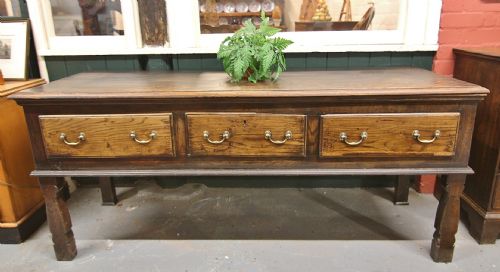
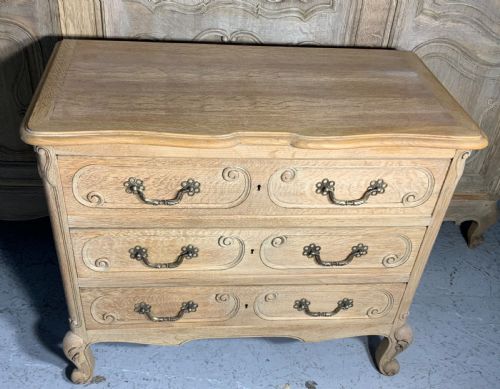
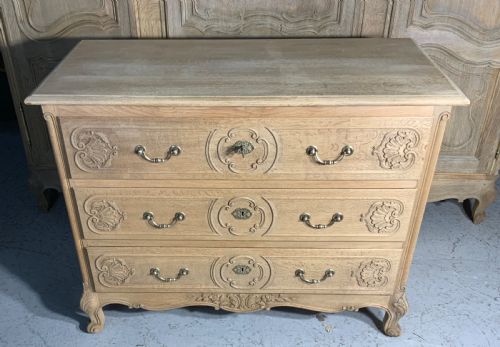
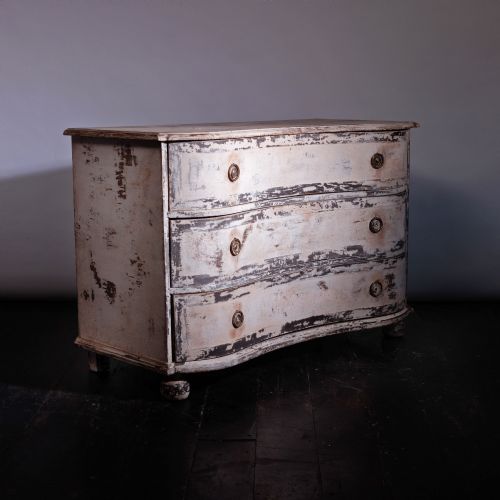

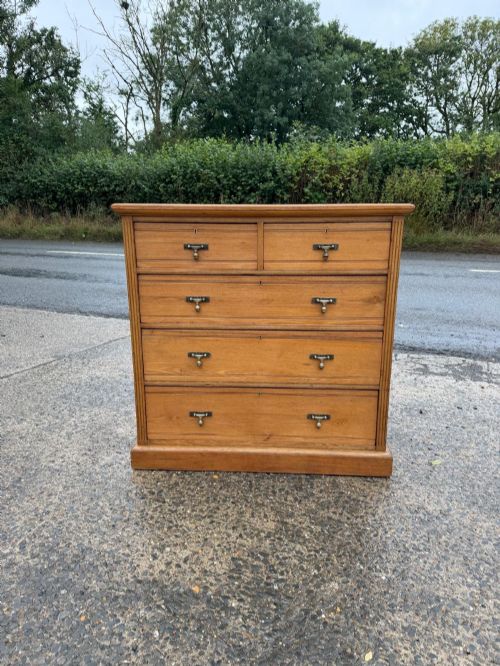
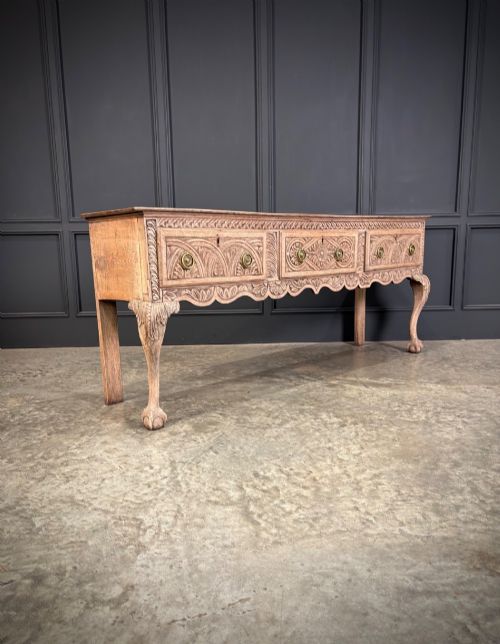
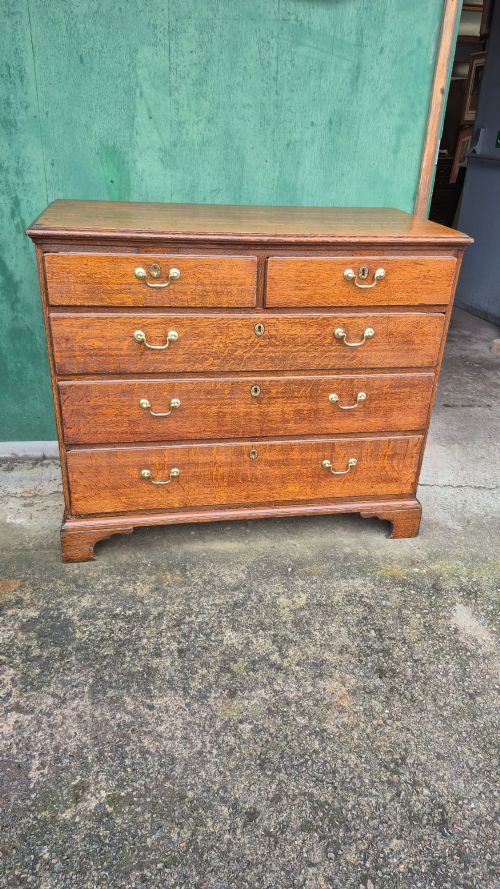
Oak Dresser Three Drawers
An oak dresser three drawers brings honest timber and dependable storage into a room, grounding the space with centuries of utility.
Oak Dresser Three Drawers
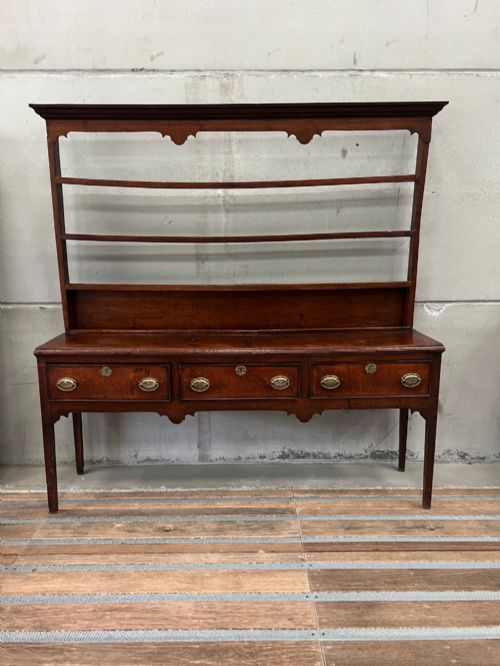
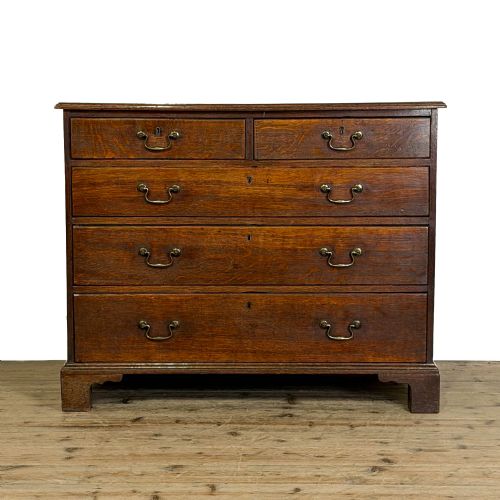
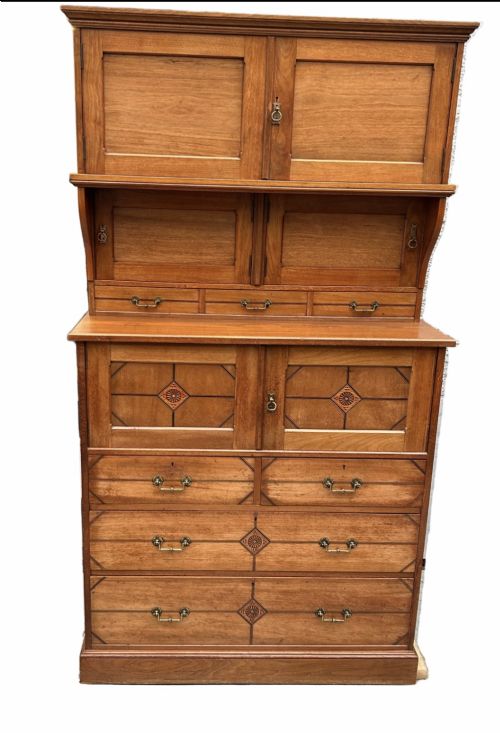
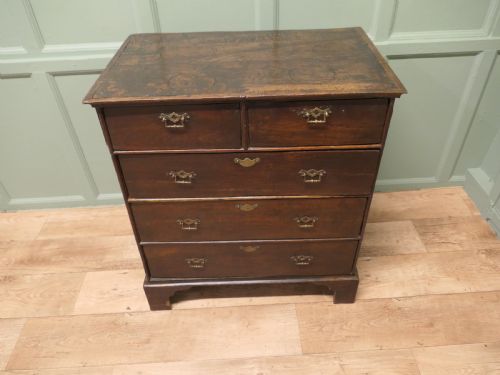
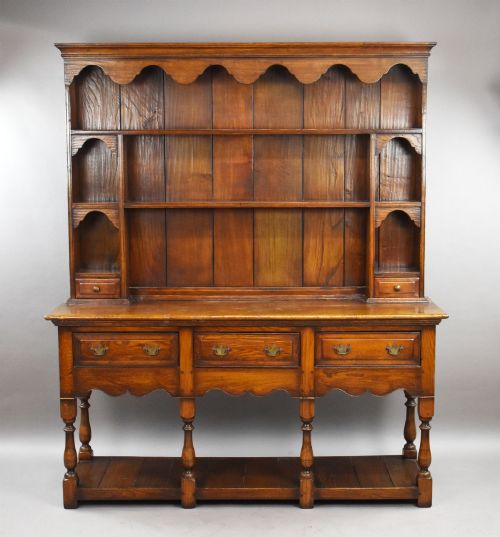
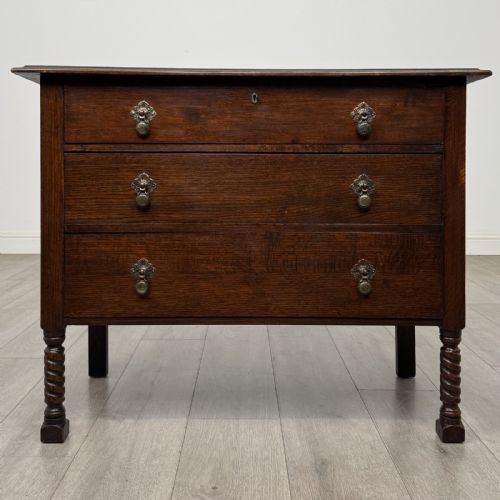
When you search for an oak dresser three drawers, you are looking at substantial storage furniture built primarily from native hardwood. The listings on this page show pieces spanning from the eighteenth century through the Georgian era, Edwardian period, and twentieth-century revivals.
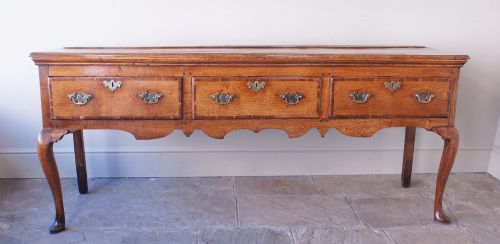
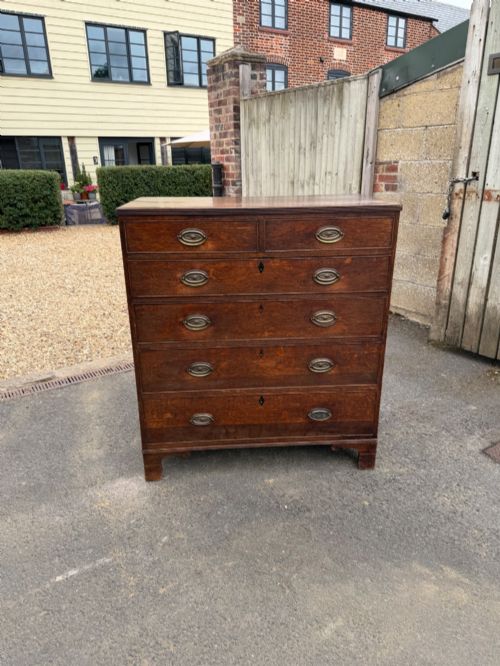
You will encounter two main forms sharing this description: low dresser bases designed with a row of three drawers beneath a wide top, and chests of drawers arranged for domestic linen or clothing storage. Many examples combine the main timber with elm or mahogany highlights, reflecting regional British and French vernacular traditions.
The origins stretch from Welsh and English country workshops to French provincial makers and later revival studios. Selecting one of these items means choosing a practical utility piece rooted in historical domestic life.
Materials and construction
Makers built these pieces using solid oak, frequently augmented with secondary timbers such as elm and mahogany for drawer linings or decorative banding. Metal hardware such as brass handles and hinges provide functional contrast to the dense grain of the timber.
Surface treatments recorded in the evidence range from original paint and limed finishes to bleached oak and traditional wax polishes. Joinery techniques prioritize durability, utilising framing methods suited to heavy daily use over generations.
Oak Dresser Three Drawers Retail Price Guide 2026
Typical asking prices for oak dresser three drawers among the pieces listed under this phrase on Sellingantiques today, from the lower quarter to the upper quarter. They describe what is for sale here now, not the wider market.
Materials documented across the inventory include solid oak, elm, mahogany, brass, and painted finishes.
Assessing quality and character
The distinction between standard examples and finer pieces lies in the crispness of the timber carving, the harmony of proportion, and the retention of original surface patination. Georgian and eighteenth-century items often demonstrate superior timber selection and more deliberate integration of secondary woods like mahogany crossbanding.
Later revival pieces and twentieth-century interpretations vary according to the fidelity of their regional styling and the condition of their original hardware, such as brass acorn handles or geometric mouldings. A cohesive aesthetic and untouched surface finish elevate an example above standard utility items.
H Ogden of Manchester
The Oak Dresser Three Drawers Glossary
- Dresser base
- A low sideboard form featuring working drawers above an open potboard or enclosed cupboard space. It served historically for food preparation and serving in large kitchens.
- Potboard
- An open lower shelf built into the base of a dresser to store pots and heavy kitchen utensils. This architectural feature appears frequently on eighteenth-century country examples.
- Crossbanding
- A decorative technique where thin strips of veneer, often mahogany, are applied across the grain of the primary oak surface. It creates a framed border effect around drawer fronts.
- Geometric moulding
- Raised wooden profiling applied in repeating symmetrical patterns onto drawer fronts or framing. This detail is characteristic of early periods such as the seventeenth and early eighteenth centuries.
- Cabriole leg
- A furniture leg that curves outward in a convex arc and then bends inward in a concave arc, terminating in a pad or foot. It reflects stylistic influences found on mid-eighteenth-century regional bases.
Oak Dresser Three Drawers: Frequently Asked Questions
What is an oak dresser three drawers?
It is a heavy timber storage item, typically featuring three horizontal drawers set within a low sideboard base or a vertical chest configuration. These pieces were designed for practical household organisation in dining rooms, kitchens, or bedrooms.
The listings demonstrate that these items were produced across several centuries, incorporating regional British and continental European cabinetmaking styles. They rely on sturdy hardwoods for daily resilience.
How do I date an oak dresser three drawers?
Dating relies on observing construction methods, timber choice, hardware styles, and overall proportions. Eighteenth-century versions often display hand- cut dovetails and pegged joinery, while Edwardian or later revival pieces show standardised manufacturing signs.
Hardware such as brass drop handles or backplates also offers clues, though handles are frequently replaced over time. Comparing the secondary woods, like elm or mahogany, helps align the piece with a specific period.
Where were these pieces used historically?
These items originated primarily in domestic kitchens, farmhouses, and formal reception rooms where reliable storage was essential. Dresser bases held tableware and cooking equipment, while chest configurations stored textiles.
Over time, their robust utility allowed them to transition into hallways and living spaces as display and storage surfaces. Their regional variations reflect the specific domestic needs of Welsh, English, and French households.
How do I care for antique oak furniture?
Maintain antique oak by placing it away from direct heat sources and sudden humidity changes, which can cause the timber to split. Apply a microcrystalline wax polish sparingly to nourish the grain and protect the surface patination.
Avoid using modern silicone sprays or harsh chemical cleaners, as they strip the historic finish. Regular dusting with a soft, dry cloth preserves the natural lustre of the wood.