
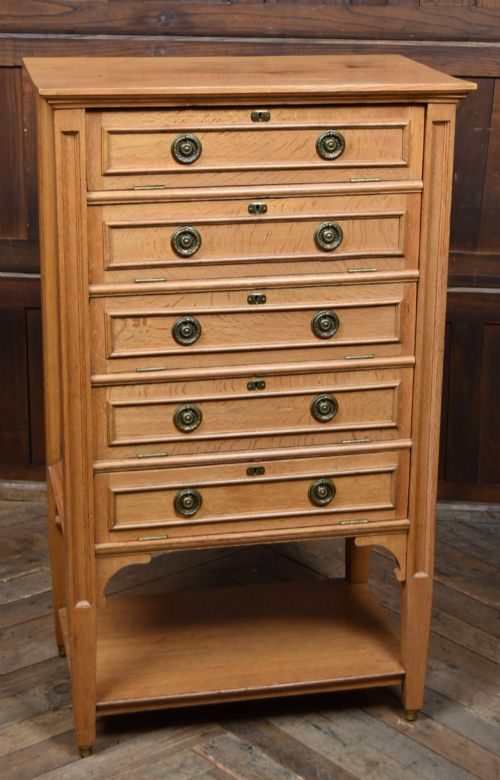
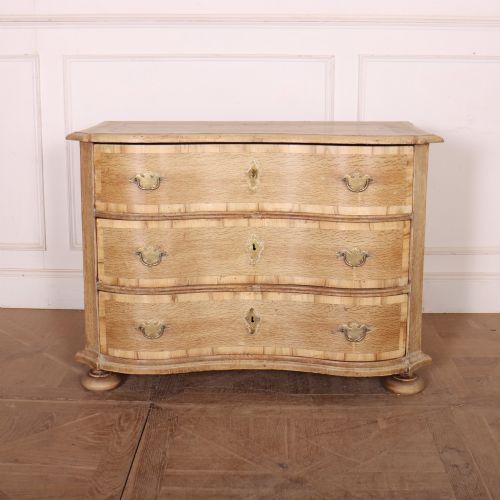

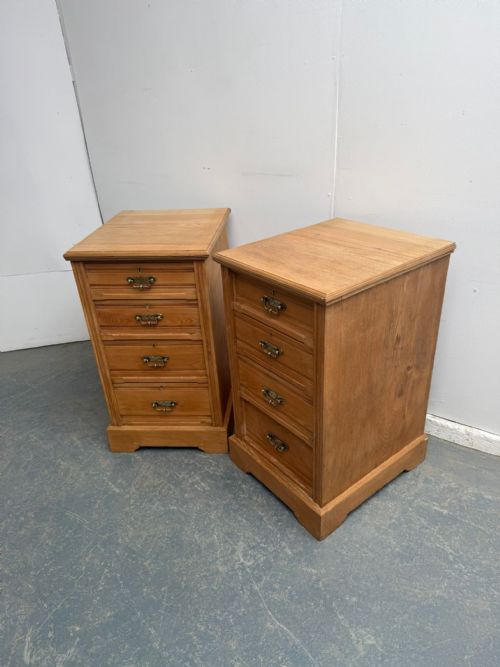
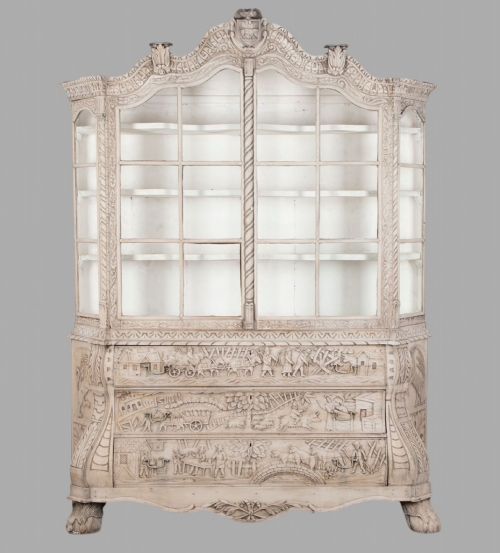
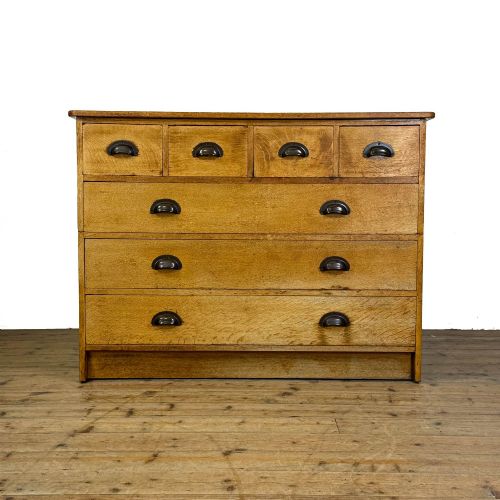


Light Oak Chest of Drawers
A light oak chest of drawers brings clean grain and calm presence into a bedroom, holding clothes while keeping the room feeling open.
Light Oak Chest of Drawers
A light oak chest of drawers spans centuries of domestic storage, appearing in vernacular country forms and refined urban styles alike. Buyers examining this page encounter pieces ranging from eighteenth-century Georgian proportions to Edwardian utility and twentieth-century limed finishes.
The selection frequently includes commodes, tallboys, filing cabinets and bedside chests alongside standard drawer configurations. Oak forms the constant baseline, often treated with bleaching, liming or waxing to achieve paler tones.
Origin points stretch from English workshops to French provincial makers and Austrian ateliers. The unifying element is a pale timber palette that keeps heavy furniture looking approachable.
How they were made
Makers relied primarily on solid oak, frequently paired with secondary timbers like ash or walnut and finished with brass or bakelite hardware. Surfaces received various treatments from traditional wax to liming and bleaching, which lightened the natural grain.
Construction methods evolved from pegged joints and hand-cut dovetails in earlier periods to machine-planed boards and simpler framing by the twentieth century. Glass elements and metal fittings appeared on specialised display cabinets and filing units.
Listings span from the 18th century through the Georgian, Victorian and Edwardian eras into 1930s modernist pieces.
What varies in quality
The division between everyday utility pieces and finer examples rests on timber selection and cabinetmaking precision. Grain matching across drawer fronts and the neatness of internal linings distinguish workshop standards.
Period integrity matters significantly, separating pieces with original surface treatments and hardware from later alterations or heavy restorations. Proportion and the subtlety of carved or panelled details determine visual success.
Maple & Co·Warings Waring & Gillow·Peter Waals
The Light Oak Chest of Drawers Glossary
- Limed oak
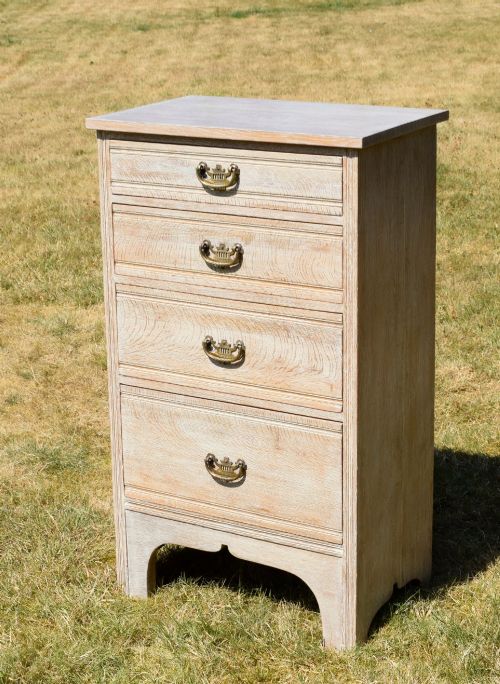
- Timber treated with a specialised pigment rubbed into the grain to create a pale, frosted appearance. This finish gained popularity in the early twentieth century.
- Commode
- A low chest of drawers, frequently French in origin, standing on relatively tall legs. The term often describes decorative pieces with serpentine fronts.
- Wellington chest
- A tall, narrow chest featuring a hinged vertical locking stile secured by a padlock. This design originated in the Victorian era to protect sensitive papers.
- Plan chest
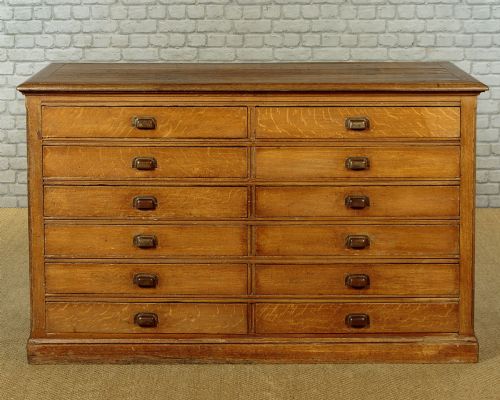
- A wide, shallow multi-drawer cabinet built for architectural drawings or maps. These units offer expansive top surfaces and deep storage utility.
- Dovetail
- An interlocking wood joint formed by interlocking wedge-shaped fingers. Hand-cut versions indicate older craftsmanship before industrial routing took over.
Light Oak Chest of Drawers: Frequently Asked Questions
How do I style a light oak chest in a modern room?
The neutral tone of pale timber pairs easily with crisp white walls or rich, saturated colours without overwhelming the space. Keep the top surface uncluttered with a single lamp or mirror to maintain the clean lines.
Allow the natural grain to stand out by avoiding heavy ornamentation nearby. These pieces anchor a bedroom or hallway while keeping the overall feel light and breathable.
Are these drawers suitable for daily use?
Most solid timber chests function reliably for everyday clothing storage when drawers slide smoothly on their runners. Period pieces may require occasional wax maintenance to keep the wood conditioned.
Check internal depths and drawer counts to ensure the layout matches your storage needs. Sturdy construction from oak ensures these items endure heavy daily use.
How do I identify an eighteenth-century piece?
Early examples often display hand-sawn boards, irregular dovetails and pegged frame construction rather than modern metal fixings. Timbers like oak and walnut show deep patination accumulated over generations of use.
Proportions tend to be heavier and more grounded, with simpler brass handles secured by hand-cast pins. Examining the interior linings reveals the manual labour involved in their creation.
What is the difference between limed and bleached oak?
Liming involves working a white pigment directly into the open pores of the oak to highlight the grain pattern. Bleaching chemically strips the natural amber tones from the wood itself for an even pale finish.
Limed surfaces usually present a more textured, tactile contrast across the boards. Bleached finishes offer a uniform lightness reminiscent of Scandinavian design.