
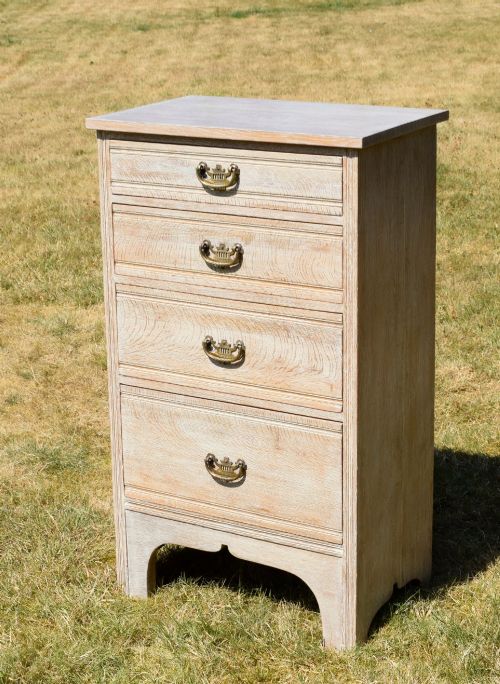
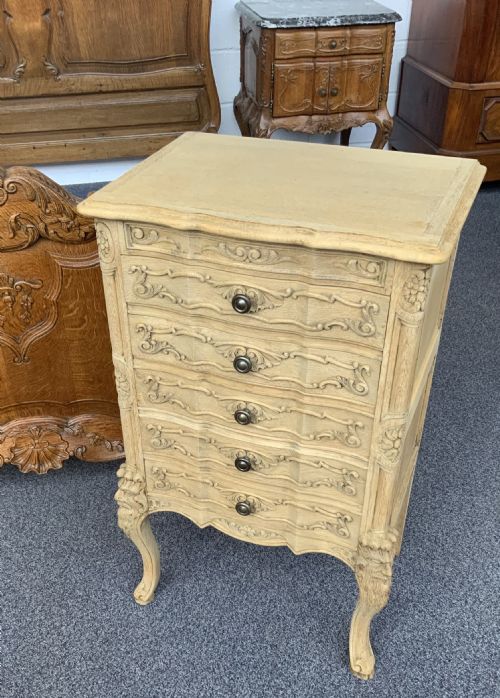
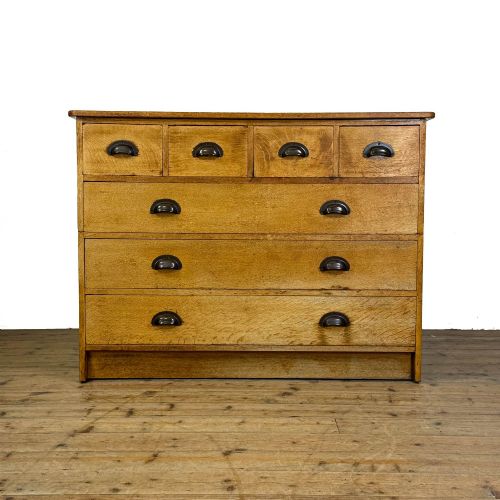


Pale Oak Chest of Drawers
These pale oak chest of drawers selections offer light timber tones and practical storage, suiting neutral interiors.
Pale Oak Chest of Drawers
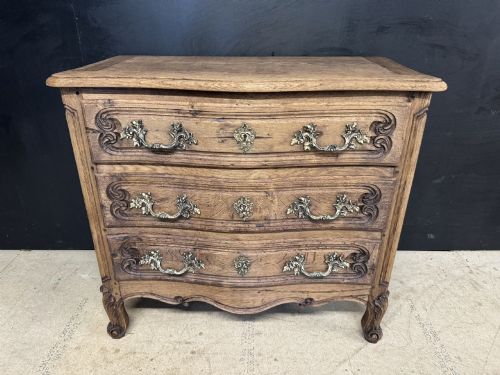
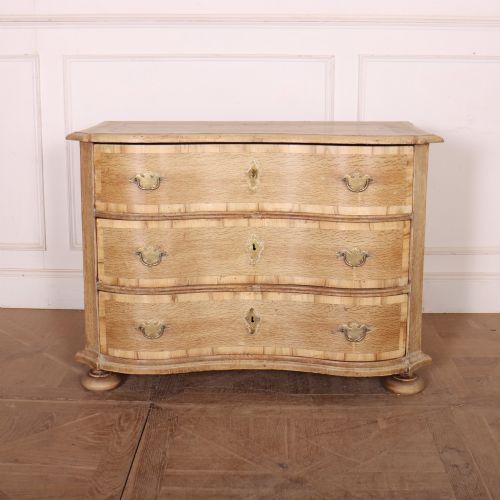
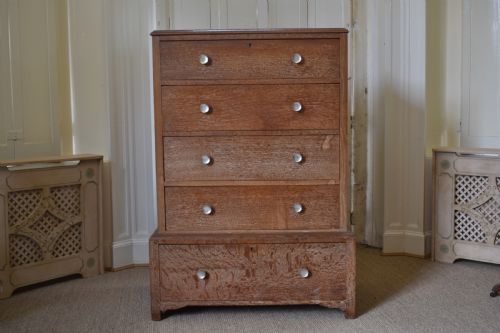
A pale oak chest of drawers provides essential bedroom or living space storage while introducing a lighter timber tone to interiors. When searching for a pale oak chest of drawers, buyers encounter pieces ranging from eighteenth-century country commodes to twentieth-century utility designs.
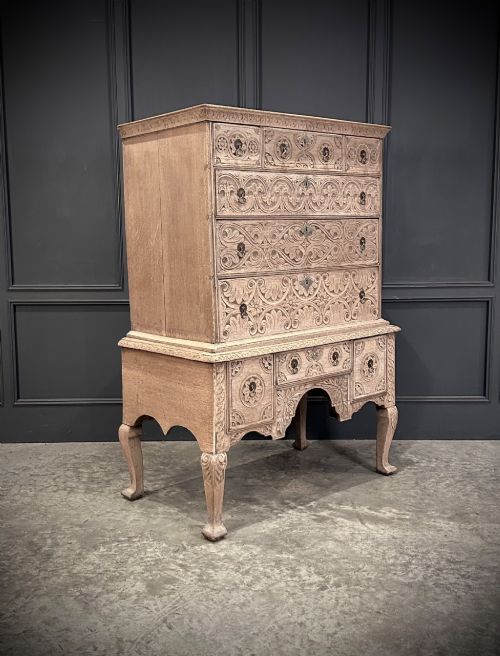
The selection includes tall chests, chests on stands, bombe shapes, and plan chests. These items originate from various European traditions, including French, Austrian, Dutch, and British workshops.
How they were made
Construction relies primarily on oak timber, treated with bleaching or liming techniques to achieve a lighter hue. Metal fittings such as brass handles and drawer pulls complete the structural composition.
Listings feature oak, bleached oak, and limed oak materials paired with brass hardware.
What varies in quality
Quality differences lie in the refinement of the carving, the subtlety of the bleaching or liming treatment, and the integrity of the timber joints. Pieces featuring regional styling like Austrian or Dutch rococo demonstrate greater craftsmanship than standard utilitarian forms.
Heals
The Pale Oak Chest of Drawers Glossary
- Commode
- A low chest of drawers or cabinet. This French term frequently applies to continental European examples.
- Limed oak
- Timber treated with a white compound to highlight the grain and lighten the overall colour. This finish gained popularity in twentieth-century furniture production.
- Chest on stand
- A storage unit elevated on a separate frame with legs. This configuration lifts the main body off the floor for a lighter visual presence.
- Bombe
- A swelling, convex furniture shape characteristic of rococo designs. This curved profile requires skilled woodworking to achieve.
Pale Oak Chest of Drawers: Frequently Asked Questions
What periods do these chests cover?
The available pieces span from the eighteenth century through to the mid-twentieth century. Examples include Georgian periods as well as Edwardian and 1930s designs.
Continental pieces from Austrian and French workshops sit alongside British examples.
How do limed and bleached oak differ?
Bleaching involves chemical treatment to lighten the natural pigment of the oak timber. Liming applies a surface pigment into the open grain for a contrasting whitish effect.
Both methods alter the natural dark tone of mature oak.
What is a chest on stand?
A chest on stand places a primary drawer section atop an open support frame with legs. This form reduces the heavy appearance of standard tall furniture.
Such pieces often date to the eighteenth century.
How do I maintain pale oak furniture?
Keep the timber away from direct sunlight and steady heat sources to prevent drying out. Dust regularly with a dry cloth and avoid harsh chemical cleaners.
Wax finishes may be applied sparingly to protect the surface.