
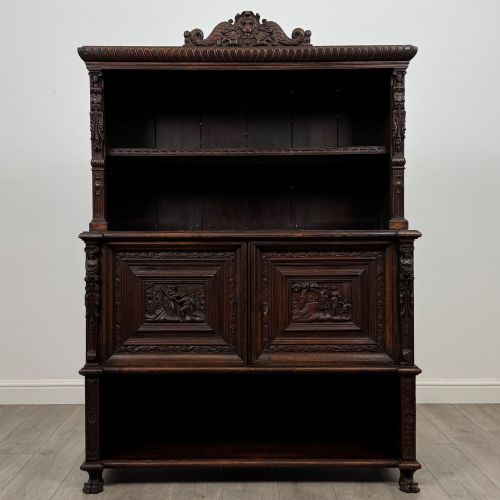
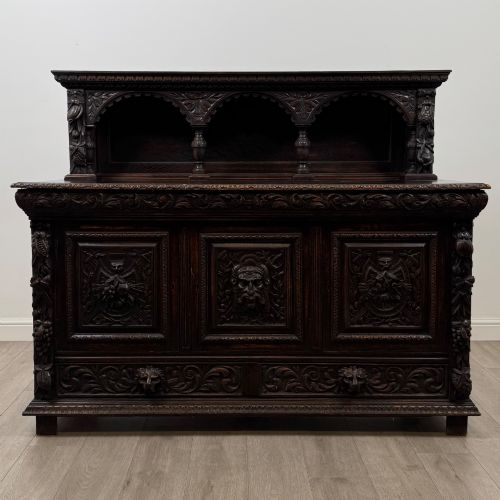
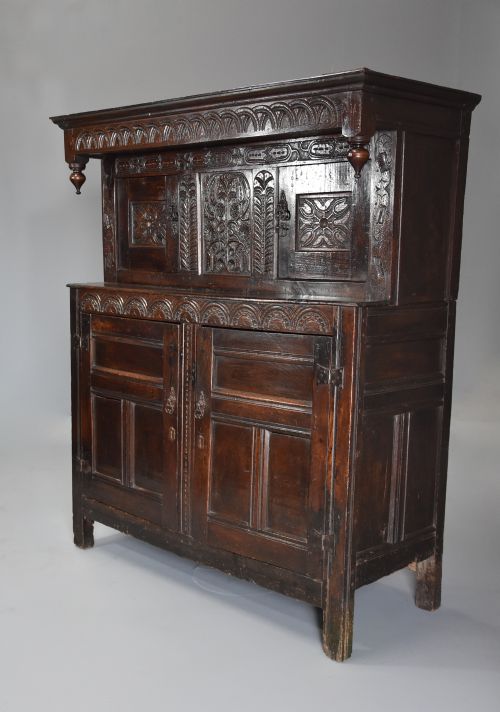

Oak Court Cabinet
An oak court cupboard is a substantial storage piece built with stacked tiers and carved panels, prized for holding household textiles and silver.
Oak Court Cabinet
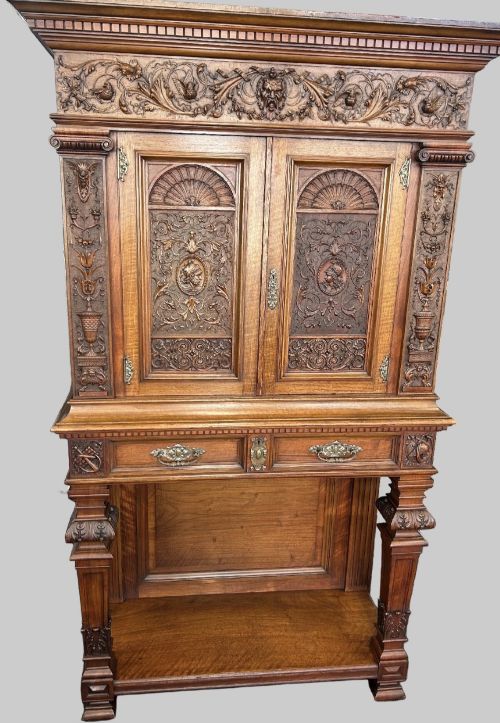
An oak court cabinet or court cupboard represents centuries of vernacular cabinet-making, with examples spanning from the sixteenth century through the Victorian era and the nineteen-twenties. Buyers seeking this form will find early joined constructions, regional Welsh deuddarns, and later revival interpretations.
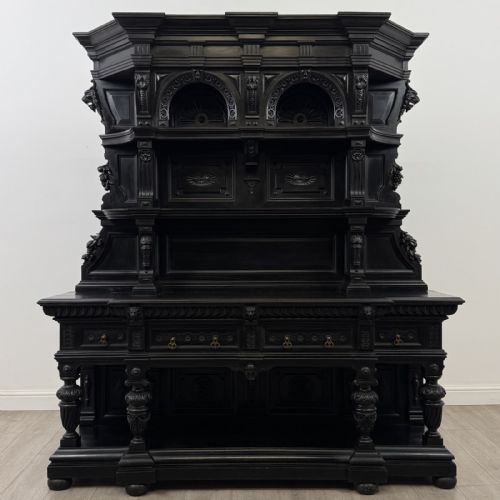
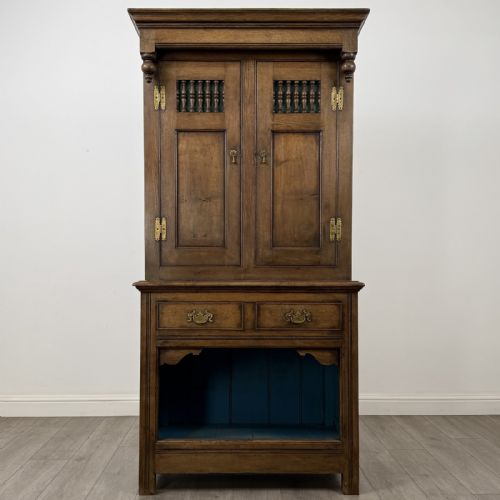
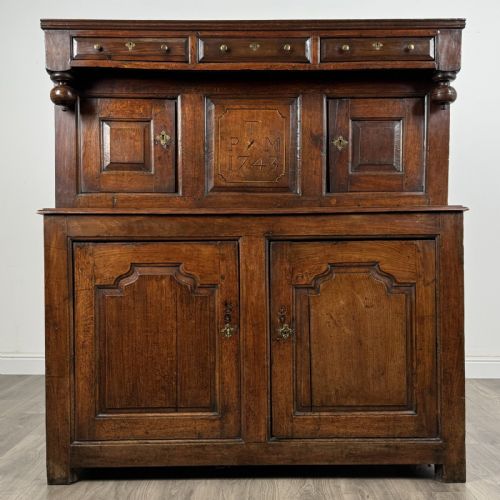
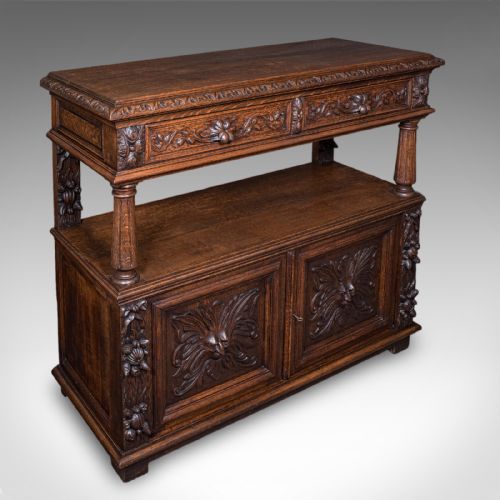
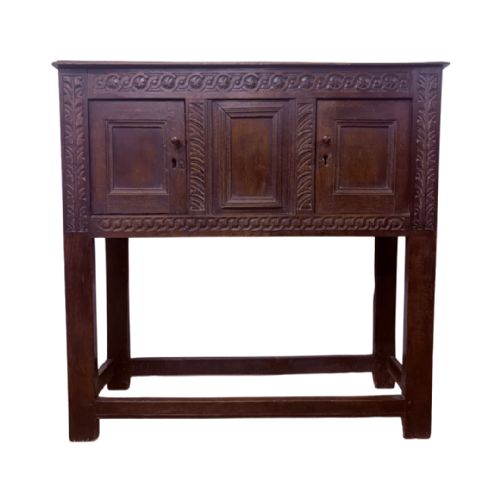
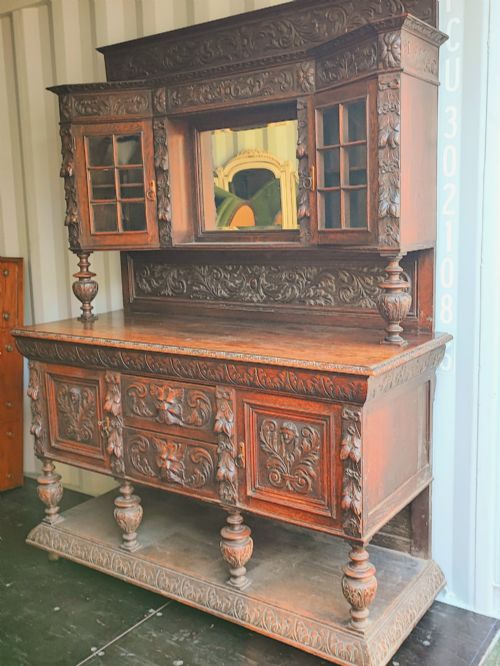
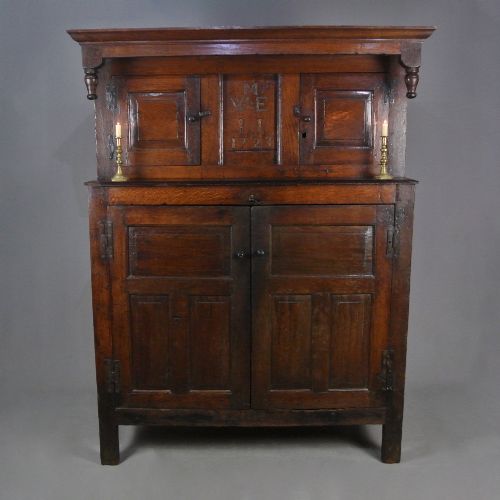
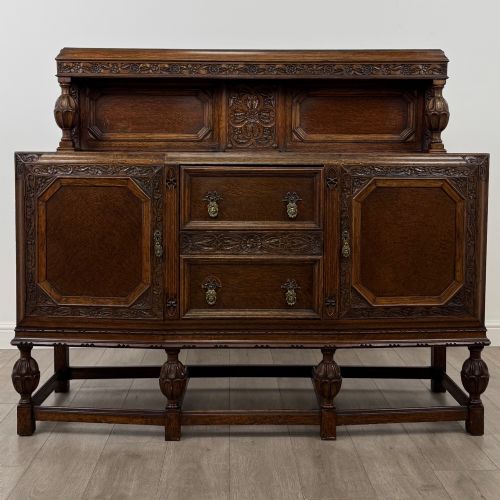
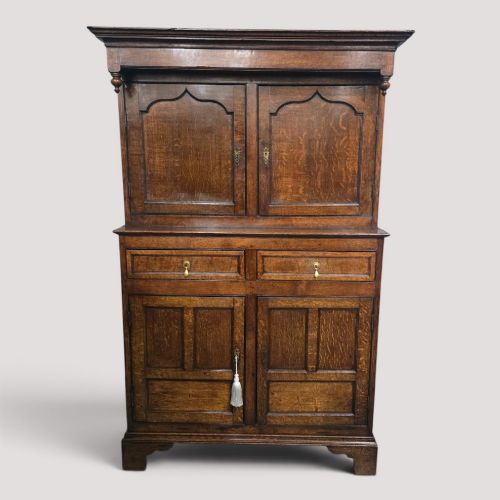
The pieces on this page range from compact provincial cupboards and small hutches to large, richly carved press cupboards and architectural sideboards. Regional variations include Welsh and Scottish pieces alongside English vernacular forms.
Materials and Construction
Joinery relies on solid oak frames assembled with pegged mortise and tenon joints, often incorporating walnut and fruitwood accents in early pieces. Surfaces are finished with hand-carved panels, turned legs, and occasionally inlaid decoration.
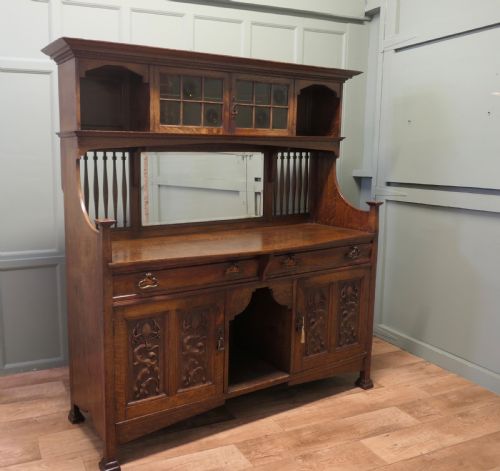
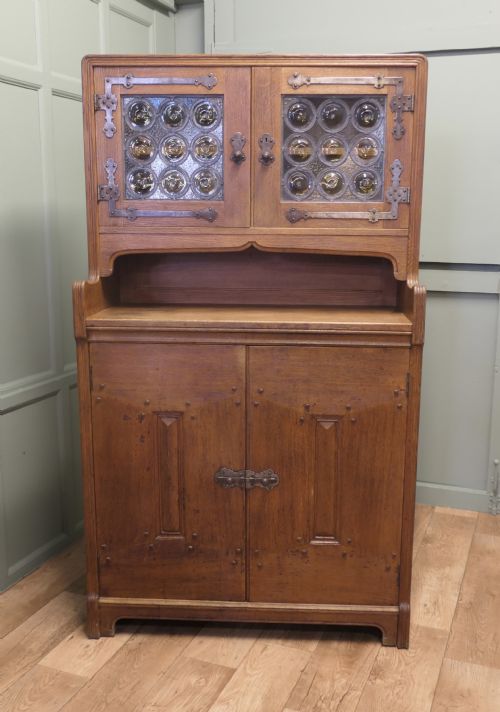
Hardware consists of forged iron and brass details, while later Victorian and Edwardian iterations incorporate mirrored backs, leaded glass, and wrought iron mounts.
Listings feature oak items spanning the sixteenth century to the nineteen-twenties, incorporating styles from Jacobean and Gothic revivals to Arts and Crafts.
Evaluating Quality
Quality depends upon the integrity of the original joined timber and the depth of the hand-carving on the canopy and frieze panels. Untouched surfaces displaying rich, natural patination distinguish superior early examples from later revivals.
The balance of proportions between the upper and lower tiers and the retention of original turning on the legs separate refined provincial items from heavier, later interpretations.
Shapland and Petter·Gillows·Liberty
The Oak Court Cabinet Glossary
- Deuddarn
- A traditional Welsh two-tier cupboard originating in rural homesteads. This regional form usually incorporates panelled doors and fitted drawers within its lower section.
- Joined oak
- A method of furniture construction utilising interlocking mortise and tenon joints secured with wooden pegs. This technique preceded the widespread adoption of frame and panel gluing.
- Patina
- The surface sheen and colour developed by timber through decades of handling, polishing, and exposure to light. Original patination is a key indicator of an untouched antique surface.
Oak Court Cabinet: Frequently Asked Questions
What is an oak court cupboard?
An oak court cupboard is a traditional tiered storage piece featuring an enclosed upper section supported by pillars above a lower cabinet. These items were historically used in great houses and farmhouses for storing food, silver, and textiles.
Today, they function well as statement storage pieces in dining rooms or hallways, offering deep shelving concealed behind panelled wooden doors.
How do I date an antique oak cupboard?
Dating relies on examining the construction methods, such as joined frame techniques, hand-cut peg fastenings, and tool marks left by early carpenters. Stylistic clues like Jacobean carving, linenfold panels, or Renaissance revival motifs also point to specific centuries.
Comparing the timber grain and surface patination helps differentiate seventeenth-century joined work from nineteenth-century revival interpretations.
Where were court cupboards placed?
Historically, court cupboards stood in the principal rooms of domestic dwellings, such as the hall or parlour, where hosts displayed wealth and hospitality. They held ceremonial plate, bread, and cheese for visiting guests.
In modern interiors, they suit large reception rooms or dining spaces where their substantial proportions and carved friezes serve as focal points.