
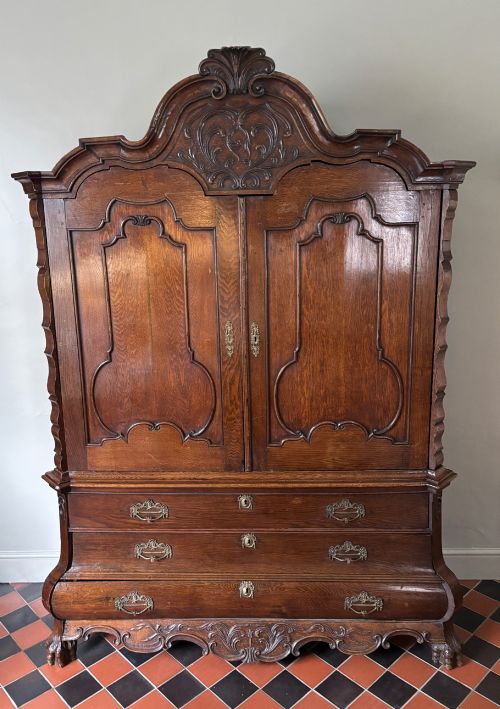
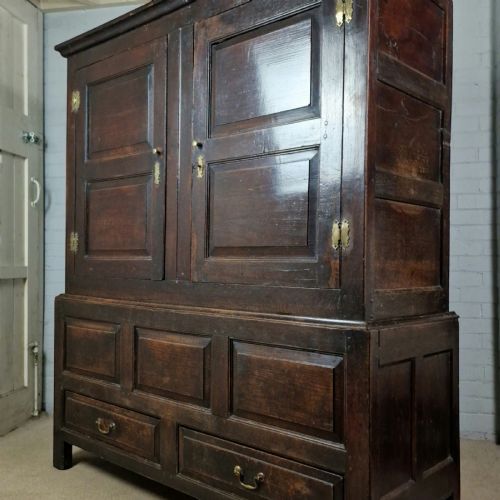
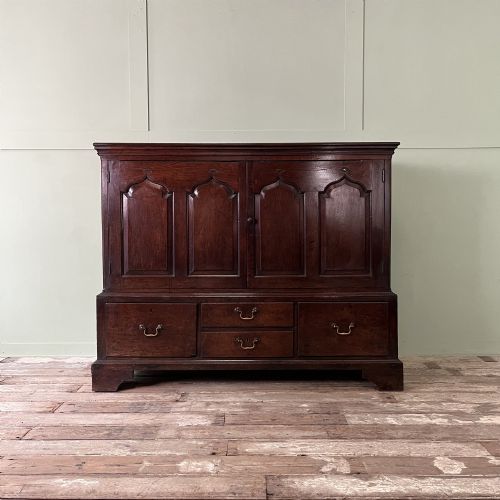
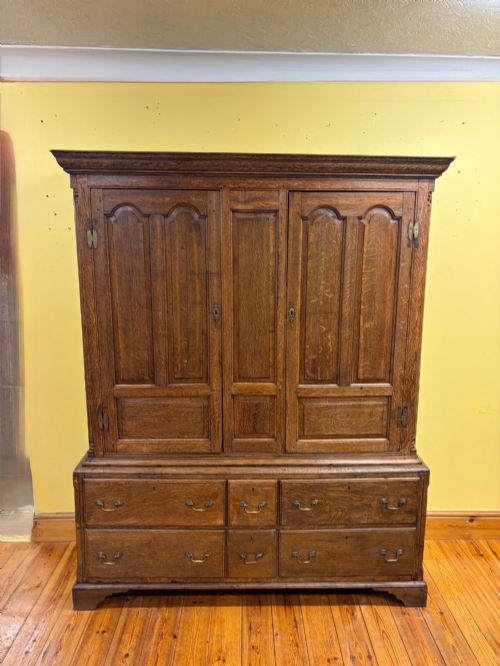
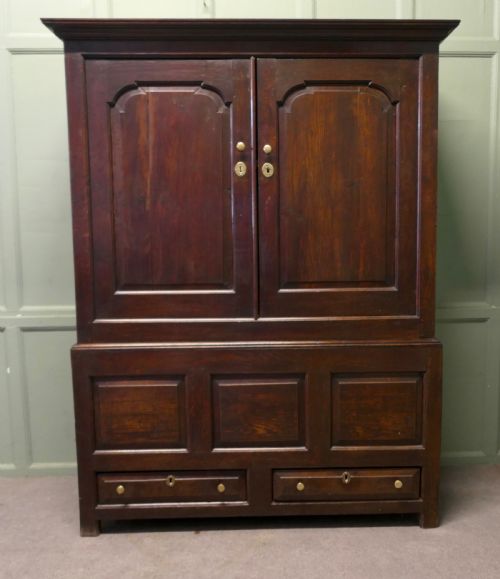

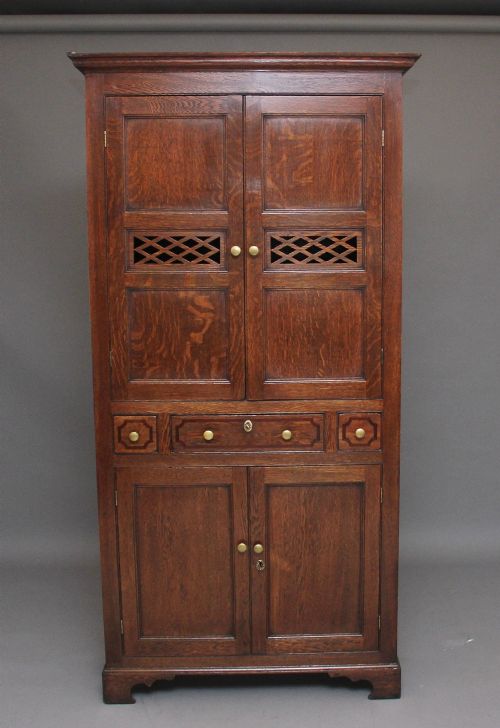
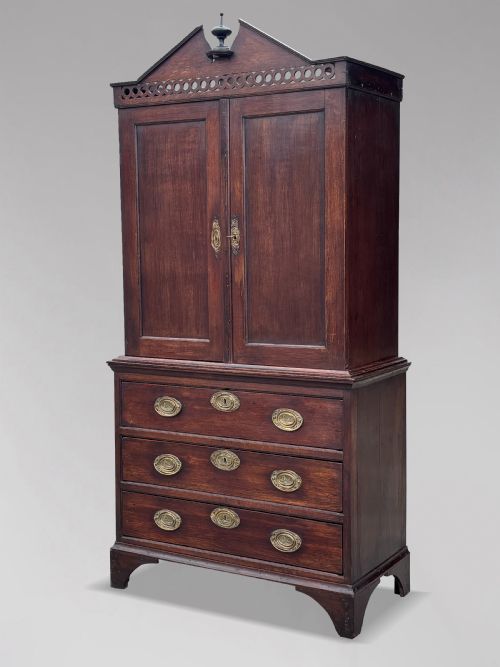
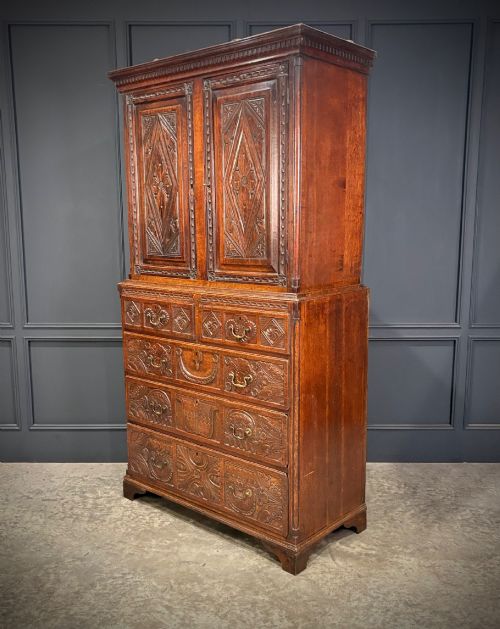


Georgian Oak Housekeeper Cupboard
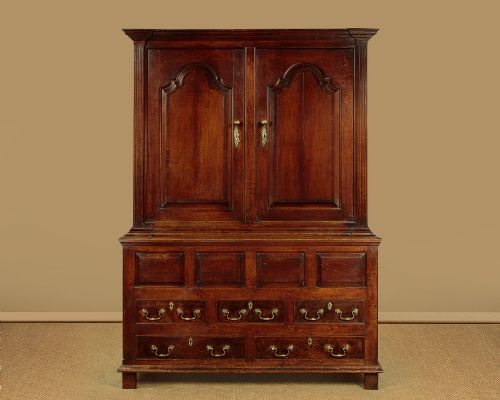
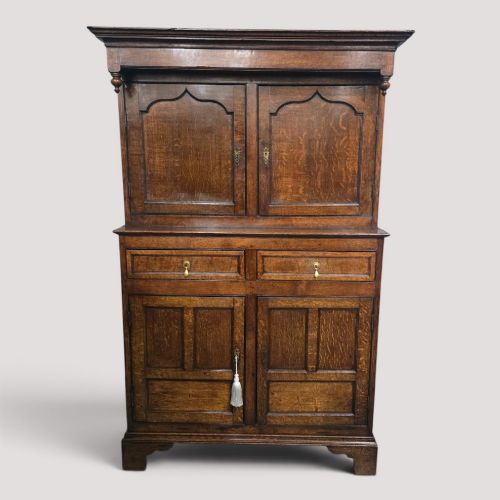
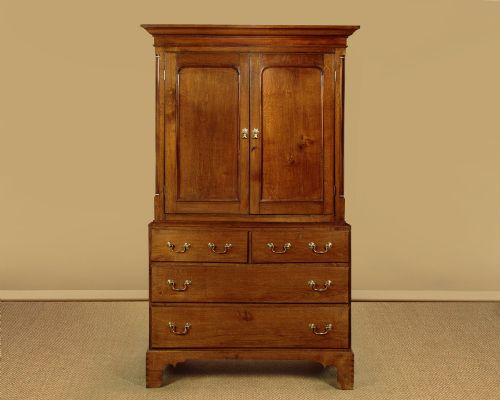
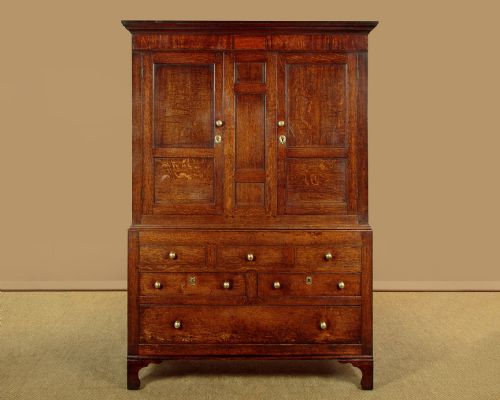
A georgian oak housekeeper cupboard offers substantial rural storage, uniting utilitarian domestic design with rich eighteenth-century timber.
Georgian Oak Housekeeper Cupboard
A georgian oak housekeeper cupboard typically presents as a large, two-stage architectural storage piece intended for country houses, rectories and farmsteads. These utilitarian furniture forms include regional variations such as Welsh vernacular presses, livery cupboards, and food larders dating primarily from the eighteenth and early nineteenth centuries.
Buyers encounter examples ranging from dwarf models and low linen presses to towering two-part tier cupboards incorporating hanging space, shelving, and lower drawer sections. Vernacular regional characteristics frequently link these large utility cabinets to specific rural workshops across England and Wales.
Materials and Construction
Construction relies heavily on domestic solid oak, occasionally augmented with secondary timbers like pine, alongside brass or iron hardware for hinges and escutcheons. Joinery methods embrace traditional panel-and-frame construction, dovetailing for drawer boxes, and occasional cross-banding in mahogany or marquetry inlay.
Surfaces display natural grain patterns developed through waxing and handling over centuries, while select regional examples feature painted finishes or bone inlay. The two-stage design allowed these substantial utility cabinets to be dismantled into separate upper and lower sections for transport within rural properties.
Listings feature eighteenth-century and nineteenth-century pieces constructed from solid oak, incorporating brass hardware, iron fittings, and mahogany cross-banding.
Evaluating Proportion and Timber
Proportion and scale dictate the distinction between utilitarian country work and more ambitious provincial cabinet making, where balanced panel layouts and restrained mouldings elevate the piece. The depth of colour in the timber and the retention of original brass hardware or panelled doors heavily influence the integrity of surviving examples.
Structural alterations, replacement feet, and heavily modified interior configurations separate untouched domestic survivors from heavily restored or later assembled cabinets. Original two-part carcases retaining their period backboards and functioning panelled doors represent the higher tier of survival for these large storage forms.
The Georgian Oak Housekeeper Cupboard Glossary
- Livery cupboard
- A tall storage cabinet traditionally utilised for storing food, provisions, or garments within domestic quarters. These functional pieces form a significant sub-category of larger housekeeper storage.
- Deuddarn
- A traditional Welsh two-stage cupboard featuring recessed upper tiers supported by turned columns or enclosed by panelled doors. These regional vernacular items often overlap with general housekeeper storage classifications.
- Press cupboard
- A large storage furniture form combining upper wardrobe or linen storage sections with lower banks of drawers. They provide deep interior capacity and frequently separate into two parts for transport.
- Cwpwrdd bara caws
- A traditional Welsh bread and cheese cupboard featuring pierced or spindle-turned panels for ventilation. These specific food storage forms appear within rural vernacular listings.
- Cross-banding
- A decorative cabinet-making technique where narrow strips of veneer are applied to the borders of doors or drawers so the grain runs perpendicular to the surrounding timber.
Georgian Oak Housekeeper Cupboard: Frequently Asked Questions
What rooms suit a housekeeper cupboard?
These large storage units fit spacious kitchens, boot rooms, or hallways where their deep proportions and extensive shelving provide functional capacity.
Their commanding scale requires adequate wall space and ceiling clearance, particularly for taller two-stage examples designed for country houses.
How do I care for antique oak?
Maintain a stable room environment away from direct heat sources and dramatic humidity fluctuations to prevent timber splitting.
Apply traditional beeswax periodically to nourish the surface and preserve the natural grain without sealing the historic wood.
Can these large cupboards be dismantled?
Many period examples are built as two-stage units, meaning the upper cabinet lifts off the lower drawer base for easier transport.
Confirming the sectional construction with individual dealers helps determine maneuvering requirements for stairways and narrow doorways.
How do I distinguish regional styles?
Welsh vernacular pieces frequently incorporate distinct local characteristics such as specific panel mouldings, ventilation slats, or integrated spice drawers.
English country examples tend to display straightforward architectural cornices and robust framing without local vernacular quirks.