



Georgian Oak Freestanding Cupboard
These georgian oak freestanding cupboard pieces bring sturdy timber presence and practical storage to a room, built to last for generations.
Georgian Oak Freestanding Cupboard
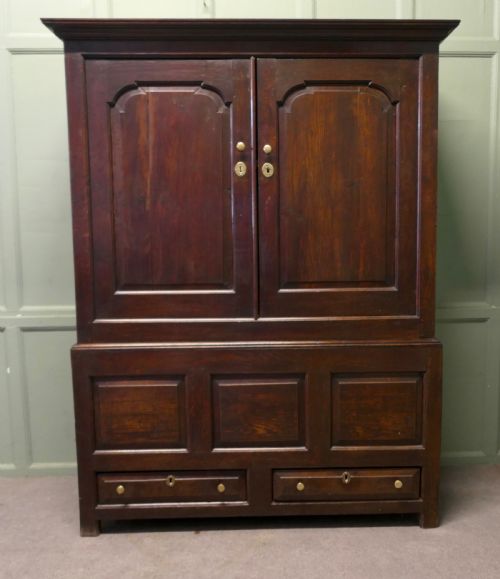
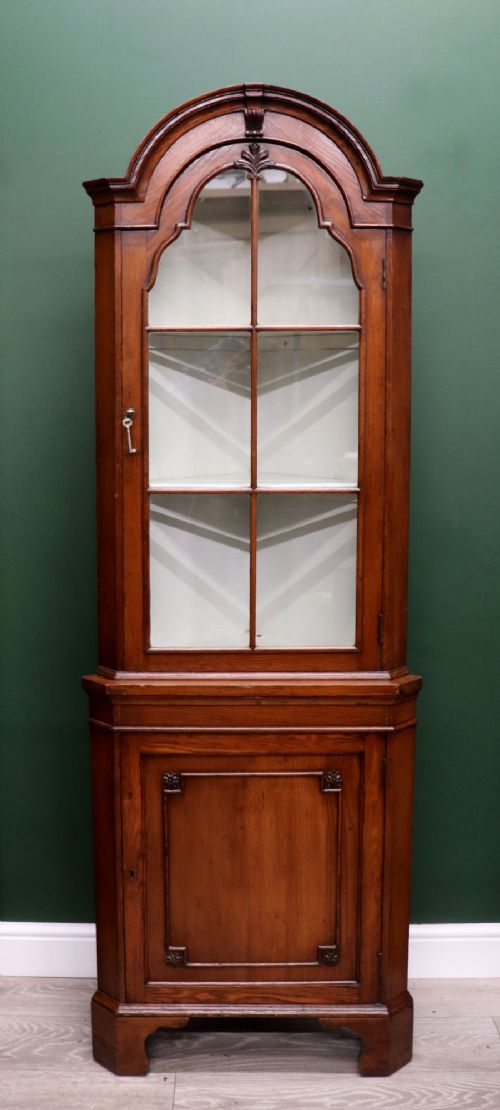
When you search for a georgian oak freestanding cupboard, you are looking at substantial storage furniture built from resilient timber during the eighteenth century and subsequent periods. The selection on this page relies heavily on corner cabinets and corner cupboards, alongside larger housekeepers cupboards, dressers, and two-part cupboards designed to sit independently against a wall.
Most items you will meet here date from the eighteenth century or the broader Georgian era, though you will also find later revivals and twentieth-century interpretations. These pieces originate from English and Welsh country traditions, showing the robust construction methods favoured by regional makers working in native timber.
The forms range from simple single-door corner units to multi-part standing cupboards with panelled doors and pot boards. Each piece offers a distinct architectural silhouette that anchors a corner or wall space while providing deep enclosed storage for household goods.
How they were made
The primary material across these pieces is solid oak, often complemented by secondary timbers like pine and accented with fruitwood inlay or brass hardware. Makers built these cupboards using traditional framing techniques, incorporating panelled doors and robust joints designed to withstand heavy daily use.
Surface treatments vary from the natural golden tone of bare timber to painted finishes and glass door panels added to display interiors. The construction relies on sturdy internal shelving and sturdy carcasses that allow these floor-standing units to remain stable without wall fixings.
Several pieces are specifically noted as originating from Welsh and English country workshops, where makers simply built what the farmhouse required.
What varies in quality
Quality in a georgian oak freestanding cupboard rests on the selection of timber and the crispness of the joinery. Finer examples display carefully chosen grain patterns in the oak and well-executed panel work that remains tight and square.
Hardware and secondary materials also distinguish the range, from simple brass hinges and escutcheons to refined fruitwood inlay work. The overall proportion and integrity of the original structure separate the master-built country pieces from later, heavier revivals.
The Georgian Oak Freestanding Cupboard Glossary
- Freestanding
- Designed to stand independently on the floor without requiring wall attachment or built-in installation. This allows the furniture to be moved between rooms as needed.
- Corner Cabinet
- A specialised cabinet built with an angled back to fit neatly into the corner of a room. It maximises floor space while providing accessible storage.
- Pot Board
- A lower shelf fitted beneath a dresser, traditionally used for storing pots and heavy kitchen utensils. It forms an integral part of Welsh and English country furniture design.
- Panelling
- woodwork construction method where framed wooden panels are set within grooves to accommodate natural expansion and contraction of the timber. This prevents the wood from warping over time.
Georgian Oak Freestanding Cupboard: Frequently Asked Questions
Where should I place a corner cupboard?
These cabinets suit unused room angles where standard rectangular furniture will not fit. They make efficient use of dead space while drawing the eye upward.
Ensure the floor is reasonably level so the freestanding carcass sits squarely against both adjoining walls without rocking.
How do I clean oak furniture?
Dust the timber regularly with a soft, dry cloth to prevent grit accumulation on the grain. Avoid silicone sprays or heavy modern polishes that can build up a sticky residue over time.
Feed dry oak occasionally with traditional beeswax applied sparingly and buffed to a soft sheen.
Can these hold heavy items?
Solid oak construction provides inherent strength, making these cupboards suitable for storing heavy tableware, books, or provisions. The internal fixed shelving is built directly into the frame to bear substantial weight.
Distribute heavier items evenly across the lower shelves to maintain overall balance within the freestanding unit.
How do I identify a Georgian piece?
Look for construction traits typical of the eighteenth century, such as hand-cut panels, pegged joints, and traditional brass hardware. The timber often displays a deep, warm patina developed through centuries of exposure and handling.
Compare the overall proportions and moulding profiles against documented examples from the same period to confirm the era.