

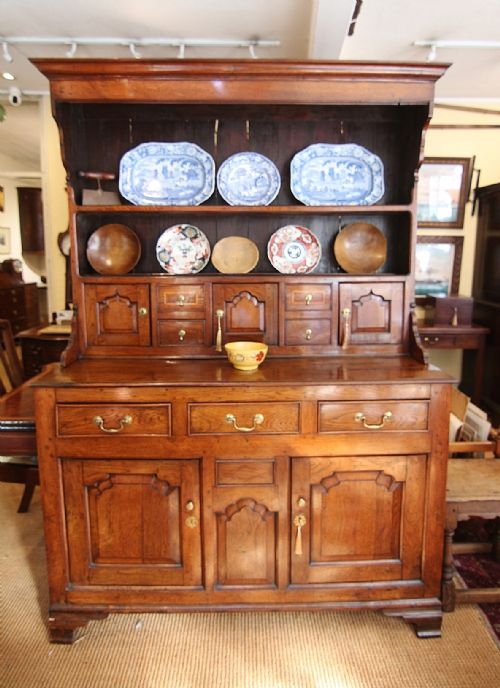
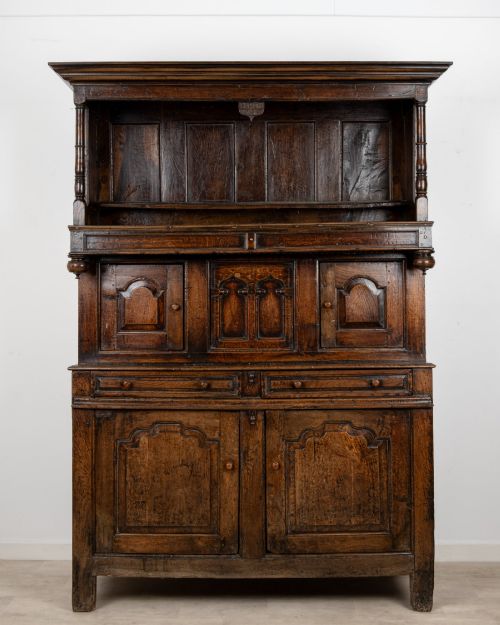
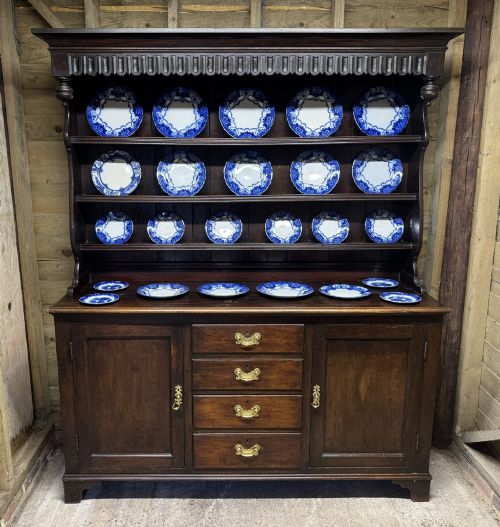
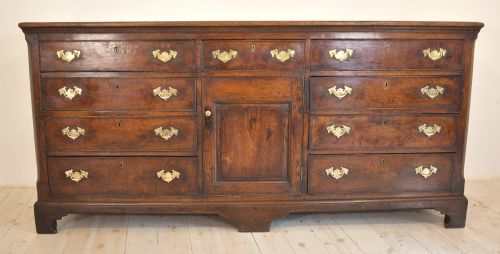
Georgian Country Oak Cupboard
A georgian country oak cupboard brings honest vernacular presence and sturdy utility to an interior through honest regional craftsmanship.
Georgian Country Oak Cupboard
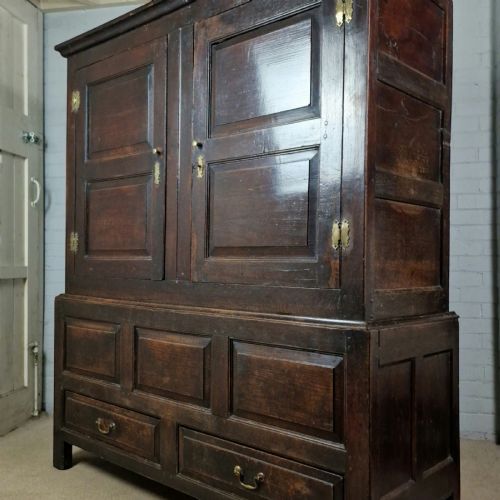
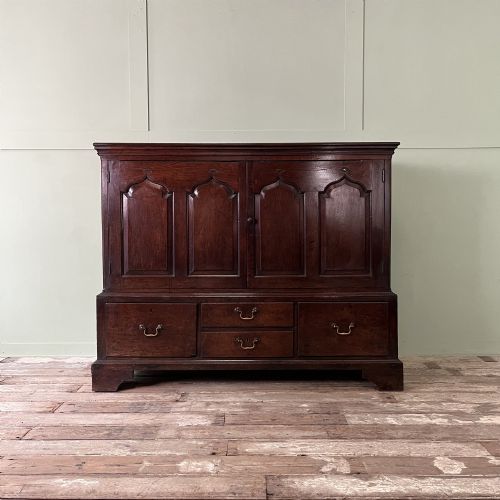
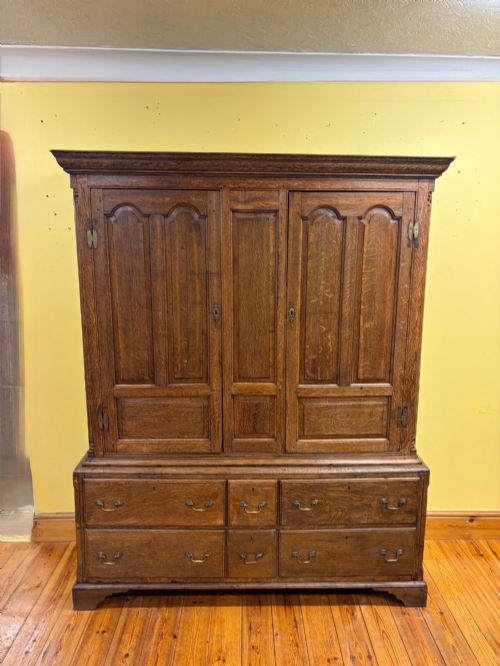
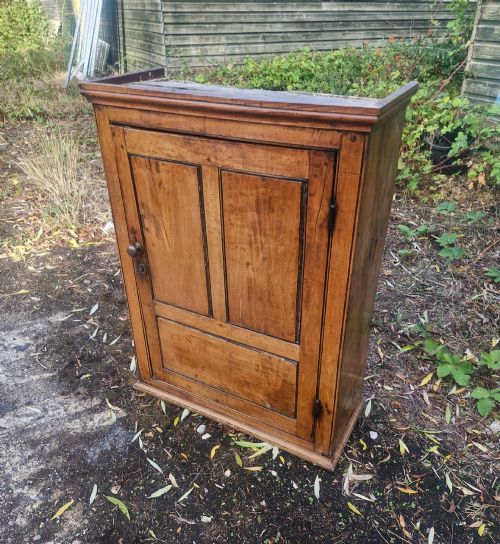
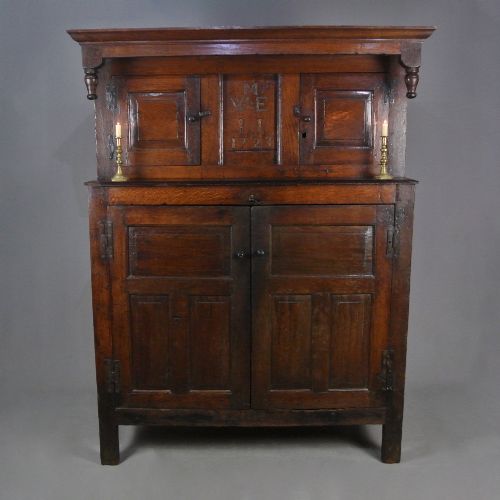
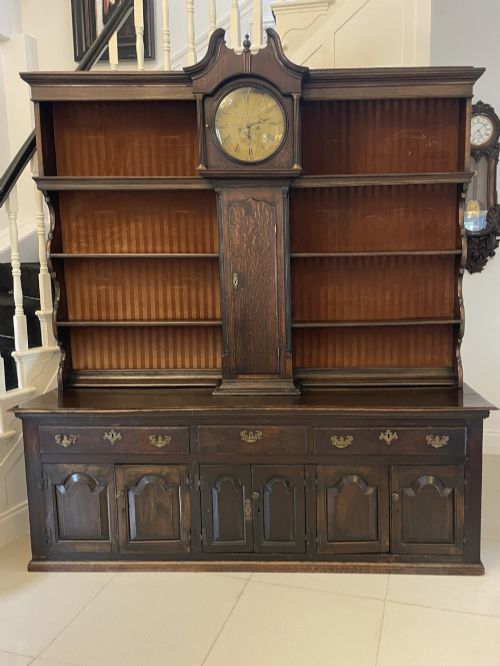
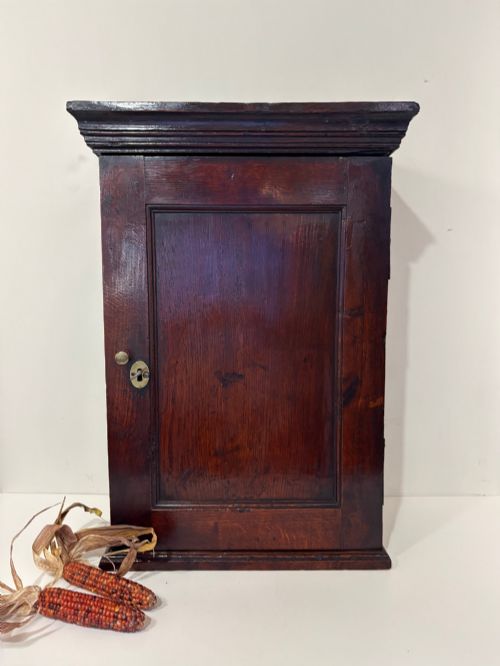
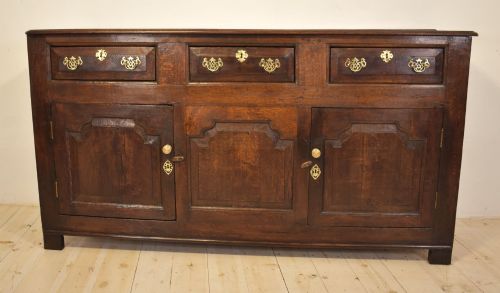
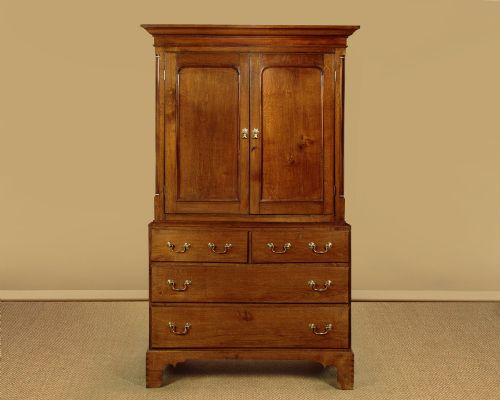
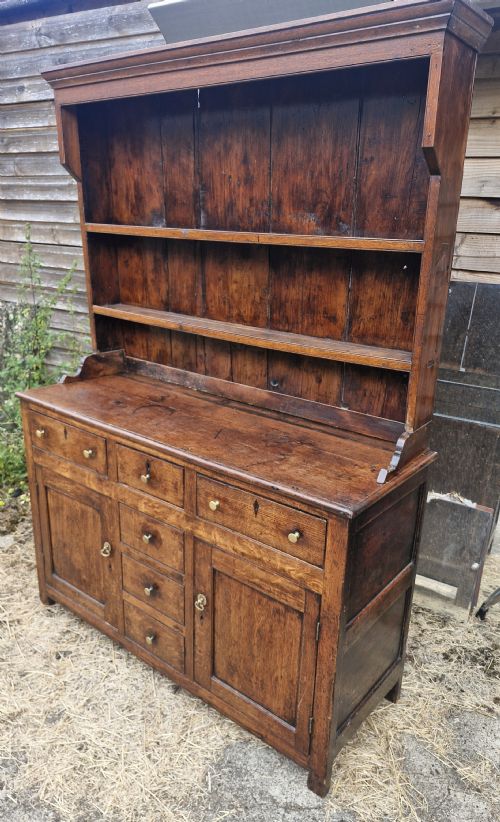
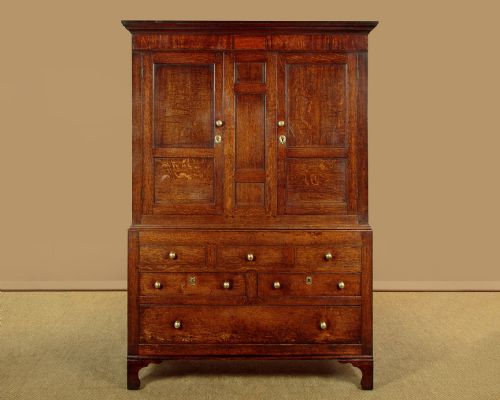
A georgian country oak cupboard encompasses regional English and Welsh vernacular storage forms, ranging from corner cabinets and wall-hung units to expansive housekeepers' presses and dresser bases. These items served functional domestic roles in provincial farmhouses and country houses, built to store provisions, linens, and tableware.
The pieces appearing most frequently on this page date primarily from the eighteenth and early nineteenth centuries, often associated with George III periods or regional traditions such as Welsh vernacular workshops. Forms vary from small hanging corner cupboards intended for domestic rooms to tall floor-standing livery and press cupboards.
Regional variations span across English counties and Welsh districts, yielding distinct characteristics in moulding, door configuration, and overall proportion. Buyers encounter floor-standing corner cabinets, dresser bases, and food or tack cupboards that reflect the daily domestic economy of their period of origin.
What varies in quality
Quality in these vernacular pieces rests on the integrity of the timber selection, the crispness of the original mouldings, and the survival of untouched surface patination. Examples exhibiting proportioned architectural details and minimal later alterations stand apart from heavily modified or stripped utilitarian units.
The degree of original hardware survival, such as brass H-hinges and escutcheons, influences the overall character and integrity of the piece. Superior examples retain their original pegged frames, backboards, and interior shelving schemes without extensive timber replacement.
Object types include dressers, press cupboards, corner cabinets, and bread and cheese furniture forms.
The Georgian Country Oak Cupboard Glossary
- Peg joined
- A method of vernacular construction where wooden dowels secure mortise and tenon joints instead of iron nails. This traditional technique allows the frame to flex with seasonal changes in humidity.
- Housekeeper's cupboard
- A large storage piece traditionally used for linens, dry goods, and household accounts. These often feature upper cupboard doors above a base configuration of drawers or smaller doors.
- Dresser base
- A low kitchen or dining room sideboard featuring drawers and cupboards beneath a flat top. They frequently served food preparation and storage functions in country houses.
- Cwpwrdd tridarn
- A traditional Welsh three-tier cupboard featuring an open middle section and enclosed upper and lower tiers. These regional forms represent specialised vernacular cabinet making.
- Livery cupboard
- An antique storage cabinet historically utilised for provisions or tack. They often incorporate slatted or panelled doors to permit ventilation.
- Corner cabinet
- A space-saving storage unit designed to fit squarely into a room angle. These occur in both wall-hanging and floor-standing formats.
Georgian Country Oak Cupboard: Frequently Asked Questions
What is a housekeeper's cupboard?
A housekeeper's cupboard is a tall storage furniture form designed for domestic utility, historically used to hold household linens, dried goods, and kitchen equipment.
These pieces typically combine upper cupboard doors with lower drawer or cupboard arrangements, providing substantial storage capacity for country houses.
Where were corner cupboards placed?
Corner cupboards were manufactured to occupy unused wall angles in provincial parlours, dining rooms, and bedrooms. Floor-standing and wall-hanging versions maximised room space while providing accessible storage.
Their triangular footprint allowed them to fit snugly into domestic interiors without obstructing central floor areas.
What timber was used?
Oak served as the primary structural and visual timber for these regional pieces, valued for its durability and local availability. Secondary woods such as pine occasionally appear in backboards and internal drawer linings.
Iron hinges, brass escutcheons, and occasional marquetry inlay complete the construction materials recorded across these listings.