
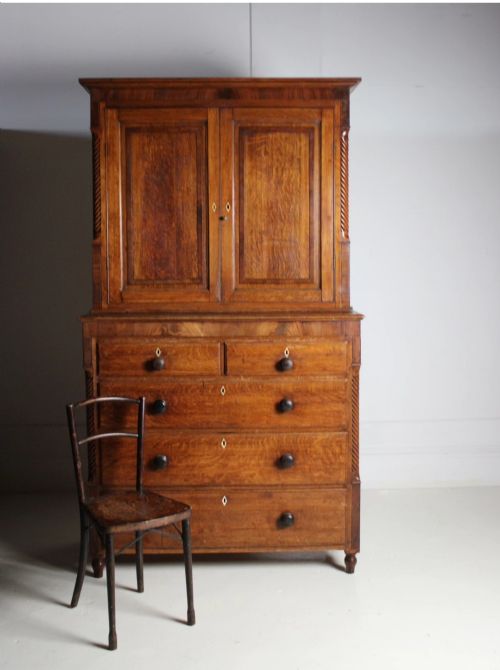
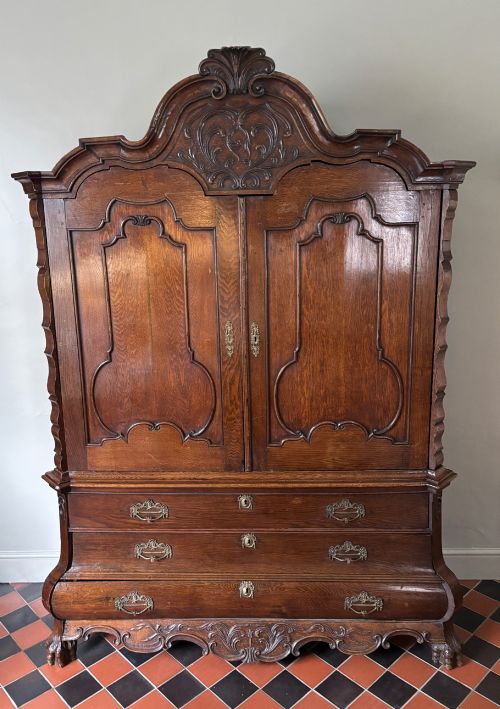
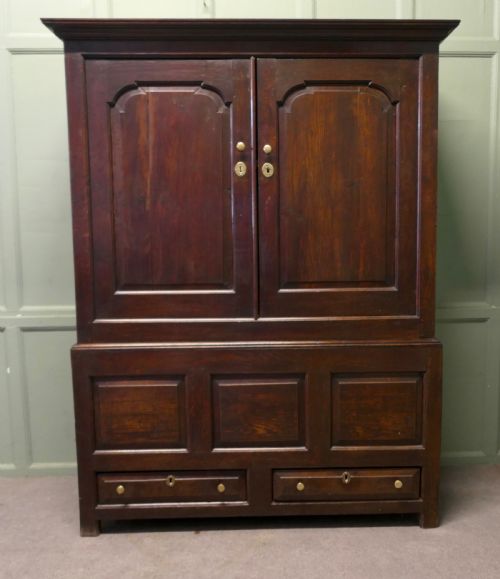


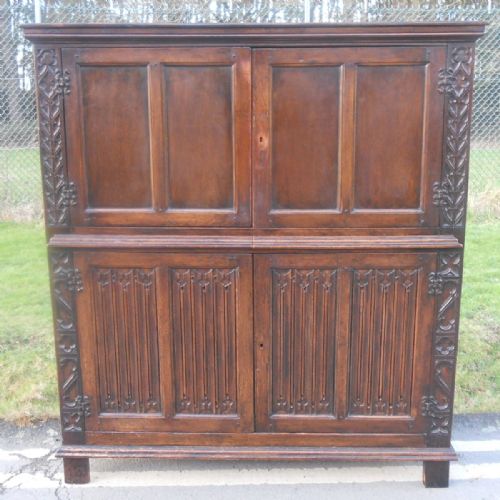
Large Oak Housekeeper Press
A large oak housekeeper press offers substantial domestic storage, combining upper cupboard space with lower drawers or shelving for family linen and provisions.
Large Oak Housekeeper Press
When a buyer searches for a large oak housekeeper press, they seek a heavy, utilitarian storage piece designed for traditional household administration. These items primarily date from the eighteenth and nineteenth centuries, reflecting periods such as the Georgian era and Victorian Gothic Revival. The pieces recorded in the evidence range from early eighteenth-century examples to later twentieth-century storage cupboards.
The forms span housekeepers cupboards, linen presses, press cupboards, and estate or cloakroom cupboards. Most pieces on this page are constructed from oak, often showing regional country house origins or Dutch Baroque influences. Buyers are most likely to encounter substantial timber constructions designed to house household linens, provisions, or clothing.
Materials and construction methods
The primary material across the evidence is solid oak, selected for durability and strength in heavy domestic furniture. Artisans combined this structural timber with secondary materials such as brass for handles and hinges, iron for operational hardware, and occasional bone or glass elements.
Construction relies on traditional cabinet-making techniques suited to heavy storage furniture. Cabinetmakers built these press cupboards with panelled doors, sturdy internal shelving, and deep drawer sections to accommodate bulky linens and household stores.
Some eighteenth-century cupboards retain faint traces of old chalk inventory marks inside the doors, left by housekeepers long ago.
Judging quality in domestic press cupboards
Quality in a large oak housekeeper press rests upon the integrity of the timber and the depth of regional craftsmanship. Finer examples display carefully selected oak boards with rich grain patterns, while lesser pieces rely on simpler utilitarian construction.
The sophistication of the hardware and the proportion of the architectural detailing separate standard utility cupboards from distinguished estate pieces. Original brass fittings and well-executed panel work elevate the status of an eighteenth or nineteenth-century press.
The Large Oak Housekeeper Press Glossary
- Housekeeper press
- A large storage cabinet traditionally used by a housekeeper to store household linen, blankets, and provisions. These pieces typically feature upper cupboard doors enclosing shelves and lower drawer configurations.
- Linen press
- A specialised tall cabinet designed specifically for the flat storage and pressing of household linens. The upper section usually contains sliding trays or shelves.
- Georgian
- The period of British design spanning the reigns of the first four Georges, noted for proportion and classical restraint in furniture. Pieces from this era often utilise solid oak with straightforward mouldings.
- Dutch Baroque
- A decorative style influencing British cabinet-making, characterised by robust proportions and rhythmic panel details. It appears on regional press cupboards from the eighteenth century.
Large Oak Housekeeper Press: Frequently Asked Questions
What is a housekeeper press used for?
A housekeeper press serves as a grand storage solution for household textiles, blankets, and dry provisions. The internal shelving and lower drawers accommodate bulky items that modern wardrobes struggle to hold.
Historically, these presses sat in large country houses or estate offices where the housekeeper managed daily domestic supplies. Today, they function effectively in contemporary kitchens, hallways, or bedrooms for general storage.
How do I date an oak press?
Dating relies on observing construction methods, timber patination, and stylistic details such as panel thickness and hardware. Eighteenth-century examples often display hand-planed surfaces and pegged joints.
Later nineteenth-century pieces, including those from the Victorian Gothic Revival period, introduce heavier decorative mouldings and different internal configurations. Comparing the handles, hinges, and timber colour helps narrow down the manufacturing decade.
Where should I place a large press?
These imposing cupboards require a wall with sufficient depth and height to accommodate their substantial proportions without dominating the room. Hallways, spacious dining rooms, and large bedrooms provide ideal locations for daily access.
Ensure the placement avoids direct heat sources that could dry out and split the historic oak timber over time. Adequate clearance for opening wide cupboard doors and pulling out lower drawers is essential.
Are these cupboards modular or one piece?
Most antique housekeeper presses are constructed in two or more sections to facilitate transport and placement within historic homes. The upper cupboard typically lifts off the lower drawer base.
This modular construction makes moving these heavy oak items manageable, though professional handling is still recommended due to the dense timber weight.